How to Link YouTube to TikTok the Right Way
Other
You're probably here because the setup looked easy, you linked something once, and then the problem showed up: TikTok views didn't turn into YouTube watch time. That's the gap most creators miss. How to link YouTube to TikTok isn't a checkbox task, it's a funnel design problem, and if the destination is weak or the clip is formatted badly, the traffic dies before it reaches the channel.
The fix is simple in theory and brutal in execution. Connect the accounts where TikTok allows it, send people to a destination that converts, and publish clips that feel native on TikTok instead of recycled leftovers from YouTube. If you treat both platforms as one system, the workflow becomes predictable instead of random.
Why Linking YouTube and TikTok Matters
A creator can do everything right on paper and still get little from cross-posting. A strong TikTok clip gets attention, but if the profile gives viewers no clear path to the full video, they keep scrolling. The job is simple: make the short clip the entry point and YouTube the next click.

Two platforms, two jobs
YouTube and TikTok serve different roles in the same distribution system. YouTube is where long-form, searchable, evergreen content lives. TikTok is where discovery happens fast and attention is won in seconds. This guide on promoting a YouTube channel follows the same logic, because promotion only works when the destination is clear.
Practical rule: do not ask TikTok to behave like YouTube. Use it to earn the click, then let YouTube handle depth.
The mistake I see most often is creators treating the profile connection as the finish line. It is not. The connection only matters if the next click lands on a channel, a video, or a page that makes sense for a TikTok viewer who just watched a short highlight.
Why the profile connection matters more than a pasted URL
A native account connection gives you a visible path from TikTok discovery to YouTube viewing. A pasted URL in a caption is just text, and text does not carry the same profile-level signal or the same low-friction path. That is why the funnel has to start with the account connection, then move into the content and destination design.
Use the connection as the backbone, then use the clip itself to create curiosity. That combination beats “link in bio” thinking every time. The viewer should know exactly what they are getting before they leave TikTok, and the YouTube destination should reward that click instead of making them hunt for the actual video.
Connecting Your YouTube Account on TikTok

Open TikTok, go to Profile, tap Edit profile, then tap Add in the links section and choose YouTube. TikTok sends you into the login and authorization flow after that. Once you approve it, the YouTube connection appears as a dedicated profile link instead of a plain pasted URL.
The exact path matters because TikTok treats this as a supported native connection, not a workaround. TikTok's official instructions route users through Profile → Edit profile → Add beside the links section → YouTube, then the sign-in and authorization steps, with availability varying by market, account configuration, or gradual product rollout. If you don't see the option, don't waste time force-refreshing for an hour. Assume it's an eligibility or rollout issue and move to the fallback.
What to check if YouTube doesn't appear
If the option is missing, check three things first. Is the app current? Is the account in a market where the feature is live? Is the account type or age configuration blocking the link surface? TikTok also notes that the feature isn't available everywhere, so the interface you see on someone else's account may not exist on yours.
The fallback is straightforward. Use a stable profile link, then use captions and on-screen direction to send viewers there. That keeps the funnel alive even when the native account link is unavailable.
A missing button isn't a strategy problem. It's a routing problem. Solve the routing before you change the content.
The other mistake is confusing the YouTube account connection with a generic website link. Those are not the same thing. The connection ties the social account to your profile. The website field is a separate surface, and TikTok's link availability rules can differ depending on market and account setup.
After the connection saves, test it immediately from a clean profile view. If you can't see the link as a viewer would, assume your audience can't either.
Profile Links vs Bio URLs vs Captions
A connected profile, a pasted URL, and a caption mention all sit in different places and behave differently. The native link is the strongest signal because it sits on the profile itself. A bio URL can work when available, but it still depends on the profile's allowed link surface. A caption mention is direction, not infrastructure.

Pick the surface that matches the job
If you want a durable route from TikTok to YouTube, use the profile-level connection first. If the platform won't allow that, use the best approved link field you have, then make the caption do the persuasion work. Don't rely on a typed channel name in the caption and expect it to function like a link.
A good reference point is a creator profile that uses each surface with intent, not as clutter. For example, the Xsways On Tiktok1 profile shows how a profile can be organized around a clear social presence instead of scattering the call to action across every line of copy. That's the model to follow, keep the path obvious.
Where this breaks in real life
The failure mode is simple. A creator pastes a YouTube URL into a caption, assumes the job is done, and gets no measurable traffic. That's because the caption is only directional text. The clickable path has to live in a supported link location, not inside the sentence itself.
If you want a deeper breakdown of destination setup, this link-to-video guide is useful because it focuses on where the click should land, not just where the link should sit.
My rule: one visible destination beats five scattered mentions. Clarity converts, clutter doesn't.
Keep the wording in the caption short and specific. Tell people what they'll get on YouTube, then point them there once. The caption should support the funnel, not become the funnel.
Formatting Clips So the Funnel Does Not Leak
A link can't save a weak clip. If the TikTok version feels like a sloppy export, viewers won't make it far enough to click anything. The clip has to earn the transition by feeling native, readable, and tight from the first frame.

Build for the phone first
The practical target format for TikTok is 9:16 at 1080 × 1920 pixels, which fills the full-screen mobile viewport; 16:9 source footage should be reframed so the subject stays inside the vertical safe area. That means the speaker's face, product, or screen content needs to stay centered with breathing room around the edges. If the layout depends on horizontal framing, it doesn't belong in TikTok without a rewrite.
Start with a self-contained hook. Then crop or reframe the shot, burn in readable captions, and keep enough margin so TikTok's interface doesn't cover your text. Export as an MP4-compatible file and upload it natively instead of leaning on a YouTube embed or a screen recording.
Avoid the four failures that kill retention
Letterboxing makes the clip look lazy. Center-cropped faces make the video feel broken. Captions hidden under the bottom navigation make the message unreadable. Recycling the entire long-form intro makes people swipe away before you've even delivered the point.
This repurposing guide matters because it's the editing discipline behind the funnel, not just the upload step. If you already have a back catalog, the fastest path is usually to extract one sharp moment, tighten the framing, and cut everything that smells like an intro ramble.
Use one simple quality check before publishing. Watch the clip at full phone size, read the subtitles, and make sure the CTA lands before the final second. If the clip feels easy to watch without sound, you're close. If it needs explanations, it's not ready.
Why Identical Uploads Undercut Both Platforms
Posting the exact same file to TikTok and YouTube saves a few minutes, then costs you results. The edit that earns a stop on TikTok is rarely the edit that earns a longer watch on YouTube. One platform wants instant clarity. The other rewards a stronger payoff, more context, and a destination worth committing to.
In practice, creators who cross-post often duplicate the same asset, and that is exactly why the tactic underperforms. The problem is not posting on both platforms. The problem is treating two different viewing behaviors like they need the same cut.
Make the clip fit the platform
TikTok has one job. Get attention fast enough to stop the swipe. YouTube has a different job. Turn interest into real watch time.
So build them that way. The TikTok version should act like a sharp preview with one clear promise. The YouTube version should deliver the full answer, story, demo, or breakdown. If your TikTok clip already feels complete, you gave away the reason to click through.
Mirror uploads flatten that difference. A vertical teaser and a full YouTube video are not interchangeable assets. One starts the session. The other should finish it.
Use tracked intent, not blind repetition
If you want to know whether TikTok is sending people to YouTube, set up a destination you can evaluate where the platform allows it. Match each clip to one specific long-form video, and keep the hook, topic, and CTA aligned. That makes performance easier to read and easier to improve.
Blind duplication creates noise. When the same edit appears everywhere, you cannot tell whether the TikTok version sparked interest or just collected passive views from people who were never going to watch more.
The better system is simple. TikTok gets the hook. YouTube gets the payoff. Each platform gets its own edit, and the funnel gets a real chance to work.
Designing the YouTube-Side Destination
A TikTok view means nothing if the YouTube destination makes the viewer work. If someone taps through and lands on a messy channel, an unfocused video page, or a place with no obvious next step, you lose the session right there. Linking YouTube to TikTok is a funnel problem, not a profile-setting problem. The TikTok side gets the click. The YouTube side has to earn the watch.
Skip hard-coded platform-limit claims unless you can verify them on your own account. Check how many links your channel profile currently displays in YouTube Studio, and remember that Shorts comments and Shorts descriptions do not function as reliable clickable link surfaces for this job. Build the path around places viewers can use.
Channel page or single video
Choose the destination based on intent. Send TikTok viewers to your channel page when the clip introduces your broader topic and you want them to discover a series, format, or publishing rhythm. Send them to one specific long-form video when the TikTok clip tees up a clear payoff and the next step should be obvious.
The mistake is sending everyone to the same generic destination.
If you use the channel page, organize it before you drive traffic there. Featured sections, thumbnails, titles, and playlists should all point in the same direction so the viewer can binge instead of bouncing. For organizing the destination, see how AccountShare explains playlists so returning viewers can move through related content without hunting for it.
If you use a single video, make sure the opening seconds pay off the promise from TikTok fast. Do not force the viewer to re-orient. Match the topic, phrasing, and expectation closely enough that the click feels like progress, not a reset.
Put the backlog to work
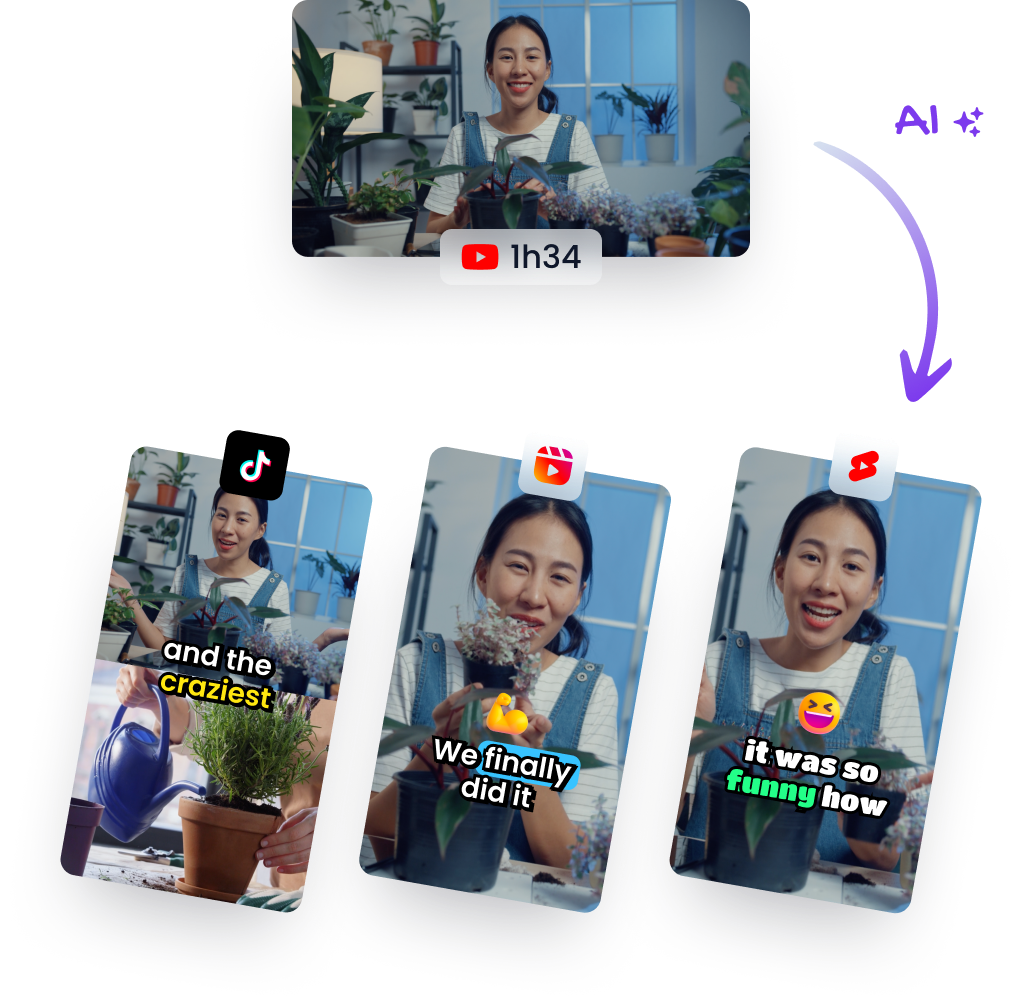
If you already have useful long-form videos, use them. Klap lets creators and marketers paste a YouTube URL or upload a file, then generate vertical clips with captions and reframing. That helps when volume is the bottleneck and you need more short-form entry points into an existing YouTube library.
Automation does not solve the funnel on its own, though. Review the hook, framing, subtitle timing, and CTA before publishing. The clip still needs to point to the right destination, and that destination still needs to be worth the tap.
Keep the landing path simple
A strong YouTube destination removes decisions. The viewer should see the right video, the right series, or the right next click immediately.
Audit your YouTube side like a landing page. Check the channel header, featured video, playlists, thumbnails, and the first screen on mobile. Every element should answer the same question: why should a TikTok viewer keep watching here?
Troubleshooting the Most Common Linking Failures
A broken YouTube to TikTok connection usually comes down to one of three things: the feature is unavailable on that account, the wrong link surface is being used, or the YouTube destination falls apart on mobile. Fix it in that order. Do not guess.
YouTube's in-app sharing and messaging feature also has its own limits. YouTube says sharing videos through Conversations requires users to be 18 years old and is only available in selected countries or regions, so missing buttons can reflect account or market restrictions, not a setup mistake (YouTube Help). The same pattern shows up on TikTok. One account gets a button, another does not.
Fast decision tree
- YouTube doesn't appear in TikTok's Add menu: start with the simple checks. Update both apps, confirm you are in a market where the feature is live, and review account type restrictions. If the option still does not appear, stop waiting for it and use the strongest approved link surface you have.
- The link saves but does not act like a real link: you are likely editing profile text or dropping plain text into a caption, not setting an outbound destination. Put the URL in the actual website or linked-account field. If viewers have to copy and paste, the funnel is already leaking.
- The website field is locked: check TikTok's current eligibility rules for your market and account type before assuming something is broken. Access to the website field changes by account status and region, so treat it as an eligibility issue first, not a publishing bug.
- The destination looks wrong on mobile: test the full path on a phone while logged out. Then confirm the YouTube video is public, the URL resolves cleanly, and the first screen gives the viewer the exact video or playlist you promised on TikTok.
Best debugging move: test the funnel on mobile, from tap to watch. Desktop checks miss the failure point that actually costs you views.
Keep your process tight. Connect the account if TikTok allows it. Pick one clear YouTube destination. Cut one TikTok-native clip built to earn the tap, then check outbound clicks and watch behavior the following week. That is how you find the break in the funnel.
If you want a faster way to turn existing YouTube videos into TikTok-ready clips, Klap handles extraction, reframing, and captions. Try it at Klap if you want a cleaner path from one long-form upload to a short-form clip that points viewers back to YouTube.