How to Link to Video: Your 2026 Creator's Guide
Other
You've probably done this before. You finish a video, copy the link, drop it into an email, Slack thread, LinkedIn post, or Instagram bio, and expect it to carry the work. Then someone replies that the video won't open, starts at the wrong point, or lands them on a page that gives no reason to keep watching.
That's usually not a video problem. It's a link problem.
A good link to video does more than send traffic somewhere. It controls the first few seconds of the viewing experience, reduces friction, and sets up everything that happens after the click. For creators, marketers, podcasters, educators, and agencies, that includes something much bigger than sharing: repurposing.
Why Your Video Link Strategy Matters More Than You Think
A bad link wastes good content. If the URL is broken, permission-gated, messy, or drops people at the top of a long recording instead of the useful segment, viewers leave before the video gets a fair shot.
That matters more now because short-form videos receive 2.5 times more engagement than long-form content, and 73% of consumers now favor them for product discovery, according to IRJMETS research on short-form video engagement and discovery behavior. If people already prefer faster, easier video experiences, your link has to remove friction, not add it.
Right near the start, it helps to see the cost of getting this wrong.

The link is part of the content
Creators often treat linking like admin work. It isn't. The link decides whether someone sees the right video, the right moment, and the right context.
A weak sharing workflow usually creates one of these problems:
- The viewer hits the wrong starting point and has to scrub through a long webinar or podcast.
- The recipient gets a permission error because the cloud file is still restricted.
- The page around the video distracts from the point with comments, sidebars, or unrelated recommendations.
- The URL is too generic to tell you what's being clicked.
Practical rule: If your viewer has to figure out where to watch, when to start, or whether they're allowed in, the link is already underperforming.
Why this affects repurposing too
The strongest long-form repurposing workflows start with one clean, reliable source URL. If that source link is wrong, every downstream task gets harder. Timestamps become unclear. Review rounds slow down. AI clipping tools pull from the wrong asset or from a version nobody intended to publish.
Treat the link to video as the first production decision after export. That single step affects sharing, collaboration, and everything you can build from the original recording later.
Mastering Links for Major Video Platforms
If most of your publishing lives on YouTube, small link tweaks make a big difference. You don't need complicated tools for this. You need the right version of the URL for the job.

YouTube Shorts views increased from 30 billion daily in 2021 to 50 billion daily in 2024, as noted in Zelios coverage of short-form video platform growth. That scale makes precision more important, not less. The easier you make it for someone to land on the right moment, the better your odds of holding attention.
Standard YouTube link
Use the standard share URL when the whole video matters.
Example:
https://www.youtube.com/watch?v=VIDEOID
This is the clean default for newsletters, bios, direct messages, and blog posts where the viewer should start from the beginning.
Use it when:
- The intro matters
- The video is already short
- You want comments and full YouTube context visible
Timestamp link
Use a timestamp when the value starts later. This is one of the most underused creator habits.
Example:
https://www.youtube.com/watch?v=VIDEOID&t=5745s
That sends the viewer to a specific second in the video. If you're sharing a webinar highlight, podcast answer, or interview quote, this is usually the smarter option.
A practical workflow:
- Open the video and find the exact point where the useful segment starts.
- Click Share on YouTube and check the timestamp option if available.
- Or edit manually by adding
&t=SECONDSsto the end of the URL. - Test the link in a private browser window before sending it anywhere public.
If the best part starts at 1:35:45, don't make viewers earn it.
If you're also planning downstream distribution on social platforms, it helps to think ahead about how the same source will be adapted for places like Instagram, where platform-specific planning matters, especially if you're already working on posting videos on Instagram with the right format and flow.
Subscribe prompt link
This is useful when the click goal isn't just watch time. It's channel growth.
Example:
https://www.youtube.com/@YourChannelName?sub_confirmation=1
Or, for some channel URL formats:
https://www.youtube.com/channel/CHANNELID?sub_confirmation=1
This opens your channel with a subscription confirmation prompt. It's a smart link for:
- creator resource pages
- end-of-newsletter CTAs
- profile pages
- speaker bios
The simple test that saves embarrassment
Before you publish any YouTube link, check three things:
CheckWhy it matters
Start point
Confirms the link opens at the intended moment
Visibility
Makes sure the video isn't private or unlisted by mistake
Mobile behavior
Verifies the link works where most viewers will tap it
That's the difference between “I shared my video” and “I guided someone to the exact viewing experience I wanted.”
Sharing Videos Securely from Cloud Storage
Not every video belongs on YouTube. Client drafts, course modules, internal walkthroughs, investor updates, and team review copies often live in Google Drive, Dropbox, or another cloud storage tool. In those cases, permission settings matter more than anything else.
Most video-sharing failures from cloud storage happen because the sender copies the link before checking who can open it.
Restricted versus accessible
The dangerous default is a restricted link. It works for you because you're already logged in. It fails for the client, colleague, or partner because they aren't on the approved list.
The safer choice depends on the situation:
- Restricted access fits private review cycles where only named people should see the file.
- Anyone with the link can view fits broad review, easier approvals, and situations where access speed matters more than tight gatekeeping.
Here's the trade-off:
SettingBest useCommon failure
Restricted
Sensitive drafts, legal review, internal files
Recipient sees a permission request instead of the video
Anyone with the link can view
Simple client review, fast approvals, broad sharing
You forget that the link may travel beyond the intended audience
Use permission settings intentionally
A clean sharing workflow usually looks like this:
- Decide whether the file is a draft or a final asset.
- Choose who needs access before copying the URL.
- Set the permission level based on that audience.
- Open the link in an incognito window or a different account.
- Send context with the link, not just the URL alone.
That last point gets missed. A cloud video link without context creates uncertainty. Tell the recipient what version they're looking at, whether downloads are allowed, and what feedback you want.
Two common scenarios
Client draft review
You want comments, not distribution. Keep access tighter. If your platform supports it, disable downloading and ask for timestamped feedback.
Final file for internal handoff
You want speed. Use a viewable or downloadable link that won't trigger access requests across departments. If the file is heading into email, campaign assets, or onboarding docs, make sure the team gets a version that opens reliably from any device. If you regularly send video through email, this guide on how to attach a video to email without creating access issues helps avoid the usual delivery mistakes.
The best cloud video link is the one that opens instantly for the right person and nobody else.
Advanced Linking Methods and Best Practices
Once the basics are solid, the next decision is format. Not every link to video should behave the same way. The right method depends on what you want the viewer to do after the click.
Direct file links
A direct file link points straight to a media file such as an MP4 hosted on your own site or a file server.
This works well when:
- You need a quick preview
- You're sharing a file for download
- You want to avoid platform clutter
It's less effective when:
- the viewer expects captions, comments, chapters, or platform-native controls
- mobile playback behaves inconsistently
- you need a more polished presentation layer
Direct links feel efficient, but they can feel abrupt. For portfolio work, product explainers, or educational content, a direct file often lacks the context that helps the video perform.
Embed codes
An embed keeps the video inside your page. That usually creates a better viewing experience because you control the surrounding text, CTA, layout, and next step.
Use embeds when:
- The page should keep the visitor on your site
- The video supports a product, service, or article
- You want the copy around the player to do part of the selling or teaching
A simple decision rule works well here:
GoalBetter choice
Fast file handoff
Direct link
Branded website experience
Embed
Public discovery on a platform
Hosted platform link
Clean campaign tracking
Shortened and tagged link
Shorteners and custom URLs
A link shortener isn't just for making long URLs look neat. It helps when you need cleaner presentation, campaign tracking, or branded links that people are more likely to trust and remember.
Use a shortener when:
- The original URL is ugly
- You want click tracking by campaign
- You're placing the link in bios, slides, or printed material
The trade-off is simple. Short links look cleaner, but they add another layer to manage. If you change destinations often or work across teams, document what each short link points to. Otherwise, you'll eventually lose track of what's live.
Best-practice filter
Before picking a method, ask three questions:
- Does the viewer need context or just the file
- Should the video live on my site or someone else's platform
- Do I need click data from this exact URL
Those answers usually tell you which route to take.
From Link to Viral Clips with Klap
A strong source URL does more than share a long video. It becomes the input for repurposing. That's its significant advantage.
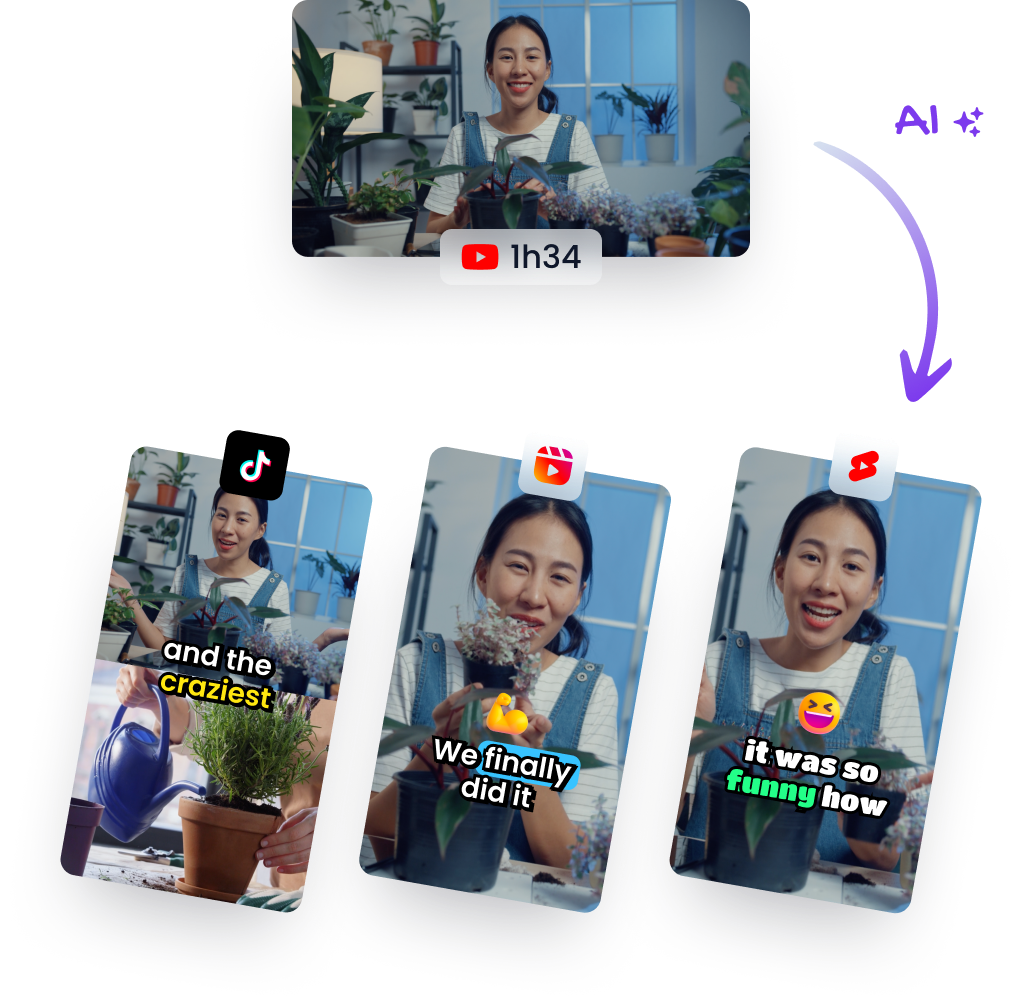
When you have a clean YouTube link or uploaded source file, you can feed that asset into an AI clipping workflow and turn one long recording into multiple shorter pieces for TikTok, Instagram Reels, and YouTube Shorts.

The shift is already visible in creator workflows. Over 800,000 creators and businesses use AI repurposing tools like Klap, with 68% cutting editing time by up to 90%, according to usage figures and survey findings referenced in this Klap-related Instagram post. That tells you something important: creators aren't treating the video link as the final output anymore. They're treating it as the raw material for a larger system.
How the workflow actually looks
The practical version is simple:
- Start with one reliable long-form source
- a YouTube upload
- a webinar replay
- a podcast video
- a training session
- Paste the URL into an AI clipping tool
- the system scans for strong moments, hooks, and usable segments
- Review the proposed clips
- tighten starts and ends
- fix captions
- choose aspect ratios
- reject anything that only works in full-context form
- Export platform-ready shorts
- vertical framing
- subtitles
- trimmed duration
- separate assets for different channels
One option is Klap's AI video clipping tool for turning long videos into short clips, which accepts video links and generates social-ready cuts from longer content.
Why the link quality matters here too
Weak linking habits often come back to hurt you. If the original URL points to the wrong upload, poor audio, an outdated edit, or a version with bad framing, the repurposing output inherits those problems.
There's another trade-off worth being honest about. Automation saves time, but volume doesn't guarantee useful clips. The more disciplined your source selection is, the better the outputs tend to be.
A video link isn't just a destination. In a repurposing workflow, it's the production brief.
If you create interviews, educational videos, product demos, or long podcasts, this changes the economics of every upload. One link can support a week or month of short-form publishing if the original asset is structured well enough to slice cleanly.
Troubleshooting Common Video Link Frustrations
Most video link issues aren't mysterious. They come from a short list of recurring mistakes: bad permissions, deleted files, incorrect embed formatting, regional restrictions, or links that technically work but lead to clips nobody wants to watch.
The technical fixes are straightforward. The strategic fix takes more judgment.

Fix the common technical failures first
If you see “Video unavailable,” “Access denied,” or a dead embed, work through these checks:
- Check privacy settings to confirm the video is public, unlisted, or shared correctly.
- Confirm the file still exists and hasn't been moved, replaced, or deleted.
- Test in another browser or private window so you aren't fooled by your own logged-in session.
- Review embed code carefully if the video is on a website and won't render.
The bigger issue is standalone value
Many repurposing workflows often break because a clip, despite being technically fine, fails to stand on its own.
Data shows 68% of short-form viewers skip clips that don't deliver a clear hook within 3 seconds, according to Content Marketing Institute discussion of repurposed video and standalone value. That means the link can work perfectly while the content still loses the viewer immediately.
A lot of AI-generated cuts from webinars, interviews, and podcasts suffer from this. They open mid-thought, depend on missing context, or promise a payoff that never arrives in the clip itself.
Don't judge a short clip by whether it exports. Judge it by whether a stranger understands it without the original video.
Manual review is still necessary. Check whether the clip:
- opens with a clear idea
- resolves a question
- makes sense without the surrounding conversation
- earns the click from the link that delivered it
A strong link to video gets the viewer in. A strong clip gives them a reason to stay.
If you already have long-form videos sitting on YouTube, in webinars, or in podcast archives, don't let those links stop at sharing. Use them as source assets. Klap turns video URLs and uploads into short, social-ready clips with captions, reframing, and editable outputs, so one link can power a much larger content workflow.