Videos on Instagram: Your 2026 Guide to Every Format
Other
Instagram stopped being a photo app a long time ago. The clearest signal is this: Reels account for 46% of all time spent on Instagram and are shared more than 4.5 billion times per day, while also getting 22% more interaction than standard video posts, according to Hootsuite’s Instagram statistics roundup.
That changes how you should think about videos on instagram.
Most creators still approach Instagram video like a production problem. They assume the answer is to film more, edit more, post more, and somehow keep every format fed. That usually leads to inconsistent quality, weak hooks, and a content calendar built on stress.
A better approach is simpler. Match each video format to a job. Get the technical setup right once. Then build a repeatable repurposing workflow so one strong piece of long-form content can feed Reels, Stories, feed posts, and follow-up clips without burning out your team.
Why Instagram Is a Video-First Platform in 2026
Instagram rewards video because users keep consuming it. That’s the practical reality behind the platform’s design, its ad inventory, and the way creators now earn reach.
When Reels take up nearly half of time spent on the app, you’re not deciding whether video matters. You’re deciding whether your content will fit how people already use Instagram. If your account still leans heavily on static posts, you can still make them work, but you’re operating against the platform’s strongest distribution lane.

The pressure comes from volume. Brands want consistency. Creators want discovery. Agencies need output that doesn’t collapse under deadlines. The mistake is treating every video as a fresh project. On Instagram, that’s rarely sustainable.
What smart teams do differently
They build around three rules:
- They choose format before they create: A Reel for discovery needs a different opening than a Story meant to warm up existing followers.
- They optimize for mobile from the start: Vertical framing, readable text, and fast pacing aren’t polish. They’re baseline requirements.
- They repurpose aggressively: One podcast, webinar, interview, or tutorial can produce multiple assets if you plan for extraction instead of one-and-done publishing.
Practical rule: On Instagram, better strategy usually beats more production.
That matters even more now because the platform is crowded. The win isn’t posting everywhere blindly. The win is knowing why each format exists, what audience mindset it serves, and how to turn existing footage into native-looking content.
Understanding the Four Pillars of Instagram Video
Instagram video works better when you stop treating every format like a minor variation of the same post. They serve different jobs.
A useful way to think about them is this. Reels are your billboard, feed videos are your coffee shop, Stories are your daily diary, and Live is your town hall. Same brand, different context.

Instagram’s format mix matters because videos on Instagram receive 67% more engagement than static image posts, and for influencers Reels average a 1.24% engagement rate versus 0.71% for traditional video posts, based on these Instagram video marketing statistics.
Reels bring people in
Reels are built for discovery. They’re the format most likely to reach people who don’t already know you, which makes them ideal for top-of-funnel content.
Use Reels when the goal is broad attention:
- Teach one sharp idea: A single takeaway performs better than a bloated summary.
- Show transformation quickly: Before-and-after, mistake-to-fix, myth-to-truth.
- Clip strong opinions: Contrarian but useful points often create comments and shares.
Reels are not where you explain everything. They’re where you earn the next click, follow, or profile visit.
Feed videos deepen the relationship
Feed videos work better when the viewer already has some context. They’re less about interruption and more about substance.
A polished feed video can hold:
- A fuller explanation: Product walkthroughs, mini tutorials, founder notes.
- Evergreen education: Content people can return to later.
- Message control: Better for ideas that need a bit more nuance than a Reel usually allows.
If Reels open the door, feed videos help people stay.
Stories keep the brand human
Stories aren’t usually the place for your most polished editing. They work because they feel current, casual, and close.
That makes them useful for:
- Daily updates: What you’re shipping, testing, or learning.
- Soft selling: Limited-time offers, reminders, launches.
- Community signals: Polls, replies, reposted customer content, behind-the-scenes moments.
Stories are where consistency matters more than cinematic quality. If your Reels create interest, Stories turn that interest into familiarity.
Stories don’t need to look expensive. They need to feel alive.
Live builds trust faster than edited content
Live video does what edited content can’t. It lets people judge your expertise, confidence, and clarity in real time.
That makes Live a strong fit for:
- Q&A sessions
- Product launches
- Interviews
- Office hours or coaching
- Event coverage
Live asks more from the audience, so don’t use it for lightweight updates. Use it when direct interaction is the point.
Instagram video format comparison
FormatAspect RatioMax LengthBest For
Reels
9:16
Up to 15 minutes
Discovery, reach, shareable short-form content
Feed Videos
Flexible, often vertical-friendly
Varies by post workflow
Evergreen education, deeper storytelling
Stories
9:16
Short sequential clips
Daily updates, urgency, community touchpoints
Live
Vertical, mobile-first presentation
Session-based live broadcast
Trust-building, Q&A, launches, direct interaction
The strongest accounts don’t pick one pillar and ignore the rest. They assign each pillar a role and create accordingly.
Mastering the Technical Specs for Flawless Uploads
Instagram compression is ruthless when you upload the wrong file. That’s why so many videos on instagram look softer after posting than they did in your editor.
For Reels and Stories, the safest baseline is 1080x1920 resolution, 9:16 aspect ratio, H.264 codec, and at least 30 FPS. According to Sprout Social’s video specs guide, non-compliant uploads can trigger automatic cropping or downscaling, which can slash visibility by up to 30%.
The specs that actually matter
You don’t need to obsess over every export setting. You do need to get the important ones right.
- Resolution: Export at 1080x1920 for vertical content so text, faces, and overlays stay crisp on mobile.
- Aspect ratio: Use 9:16 for Reels and Stories. If you force horizontally oriented footage into vertical without reframing, the result usually looks lazy.
- Codec: Export in H.264. It’s the safest choice for compatibility and stable playback.
- Frame rate: Keep it at 30 FPS minimum. Lower frame rates can make motion feel choppy, especially in talking-head clips with text animation.
What goes wrong when you ignore this
Bad formatting creates three avoidable problems.
First, Instagram may crop your frame in ways that cut off faces, captions, or product details. Second, server-side compression can flatten fine detail and make subtitles shimmer or blur. Third, the overall post feels less native, and native-looking content usually holds attention better.
If your viewer notices the formatting before they notice the message, the upload was wrong.
That’s why resizing should happen before export, not after upload. If you’re adapting horizontal footage, use a dedicated video resizing tool for vertical formats so you can control framing instead of leaving the crop to Instagram.
A practical export checklist
Use this before posting any Reel or Story:
- Check composition: Make sure the main subject sits safely within the vertical frame.
- Check text placement: Keep captions and title text away from edges and interface overlays.
- Check file format: MP4 with H.264 is the safest default.
- Check motion: Fast cuts can survive compression, but tiny text and fine patterns often don’t.
- Preview on a phone: Desktop playback hides issues that become obvious on mobile.
Feed videos need different discipline
Feed videos have more flexibility, but the same principle applies. Export for how the content will be consumed, not how it looked in the source project. If the footage was originally made for YouTube, webinar replay, or widescreen presentation, it usually needs reframing, bigger captions, and tighter visual hierarchy before it belongs on Instagram.
Most quality problems aren’t creative failures. They’re workflow failures. Fix the export process once, and every future upload gets easier.
How to Strategically Choose the Right Video Format
Most weak Instagram content isn’t weak because the idea was bad. It’s weak because the format didn’t match the goal.
A strong content strategy starts with one question: what are you asking this video to do? Reach new people, warm up existing followers, drive replies, or create trust before a sale? The answer should determine the format before anyone opens an editing app.
Use goal-first planning
Here’s a practical decision filter.
If the goal is awareness, choose Reels. They give your best chance of reaching non-followers and testing broad-interest angles. Keep the topic narrow and the opening immediate.
If the goal is nurture, choose a feed video, which allows you to explain a concept more fully, answer recurring objections, or publish a polished piece that deserves a longer shelf life on your profile.
If the goal is urgency or conversation, use Stories. They’re ideal for reminders, quick updates, reposts, and low-friction engagement like polls or question boxes.
If the goal is trust through depth, go Live. Real-time interaction removes polish as a crutch. Viewers see whether you can answer questions and hold attention without edits.
A simple way to map content
Instead of asking, “What should we post today?”, ask:
- What stage is the audience in: Cold, warm, or ready to act?
- What action matters most: Follow, reply, click, save, or buy?
- What format fits that action naturally: Discovery, explanation, immediacy, or interaction?
That framework keeps your content calendar from turning into random output.
What this looks like in practice
A coach launching a new offer might use:
- Reels to address a common misconception and attract new viewers
- Stories to answer objections and share daily reminders
- A feed video to explain the method in a calmer, more complete way
- Live for final Q&A before the deadline
A product brand might flip that sequence. Reels can showcase use cases, Stories can repost customer feedback, feed videos can demonstrate product details, and Live can support a launch or limited release.
The right format reduces friction. The wrong format asks the audience to behave in ways they didn’t come for.
That’s the hidden advantage of planning videos on instagram by intent. You waste less footage, write better hooks, and stop forcing one asset to do five jobs badly.
Creating Videos That Actually Stop the Scroll
Good Instagram videos don’t win on information alone. They win on attention first.
The opening seconds do most of the heavy lifting. People don’t decide carefully whether to keep watching. They react. A visual shift, a sharp claim, a familiar pain point, or a surprising result can all work. What fails is slow setup.

The first three seconds decide the rest
Hooks that tend to work on Instagram usually do one of four things:
- Name a mistake: “It's common to ruin this before even starting.”
- Promise a shortcut: “Here’s the faster way to do it.”
- Show a result: Start with the finished output, then explain.
- Create tension: “This looked polished, but one setting broke the upload.”
The point isn’t clickbait. The point is clarity at speed.
A strong hook also looks native. Big readable text, a face or clear focal point, and immediate movement usually outperform a static intro card. On mobile, dead air feels longer than it is.
Captions aren’t optional
A lot of creators still treat subtitles like an extra editing flourish. On Instagram, they’re part of the message delivery.
Captions help when people watch with sound off, but they also improve retention by reinforcing the core point visually. Short lines, high contrast, and clean timing matter more than fancy animation.
Useful caption habits:
- Keep lines short
- Highlight key words sparingly
- Match pacing to speech
- Avoid covering the speaker’s mouth or product
Why certain videos feel easy to watch
The best-performing clips usually feel inevitable. Each beat leads cleanly to the next.
That often comes from structure more than talent:
- Hook
- Context
- Payoff
- Call to action
If you want a simple reference for how short-form pacing works in practice, watch this example and pay attention to how quickly it establishes context before moving into motion and payoff.
Build a repeatable creative checklist
Before publishing, ask:
- Would this make sense with no audio?
- Is the hook visible before it’s fully explained?
- Does every cut earn its place?
- Is the CTA natural for the format?
- Would this be stronger as a shorter clip?
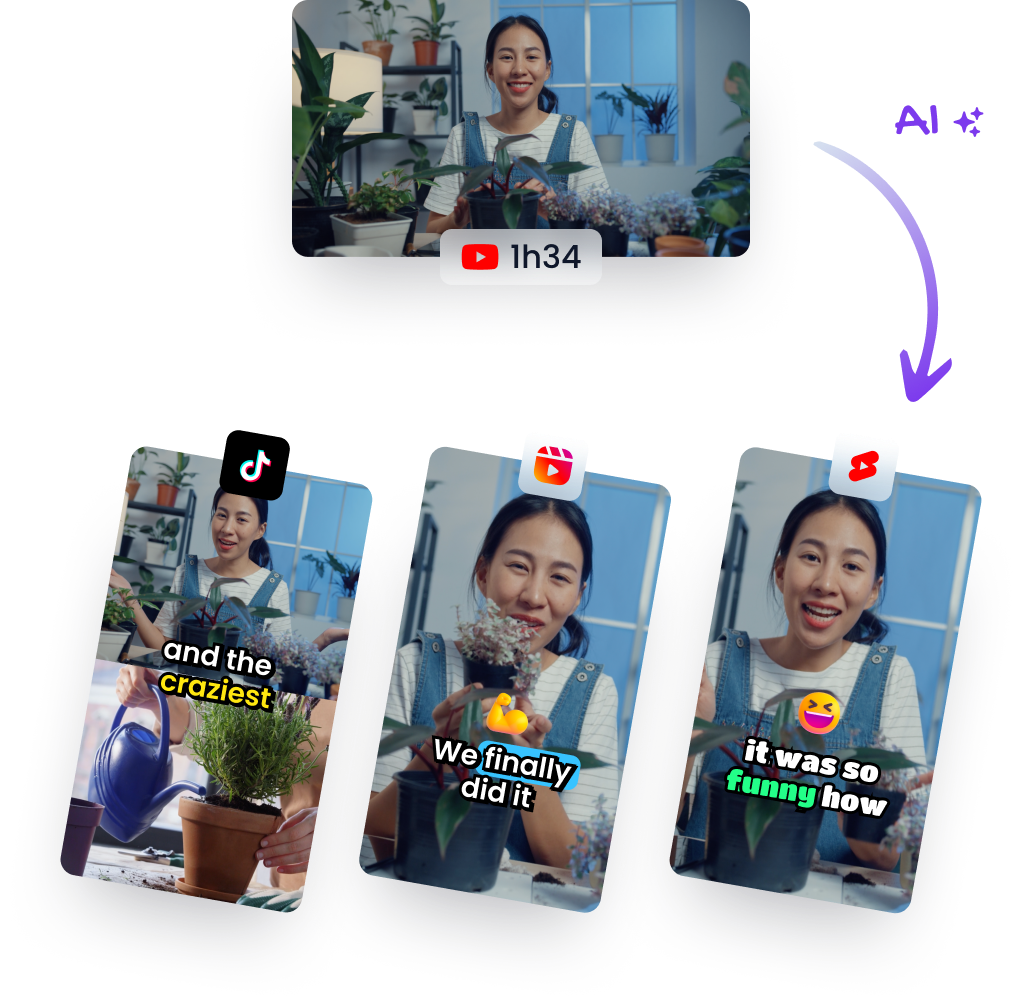
For long-form source material, a dedicated AI reel generator can speed up clipping, reframing, and subtitle creation. That’s useful when the bottleneck isn’t ideas. It’s editing throughput.
The easiest way to improve a weak Instagram video is usually to cut the intro in half.
The Smart Workflow for Repurposing Videos for Instagram
Most creators don’t have an idea problem. They have a production problem.
If you’re recording podcasts, webinars, interviews, tutorials, demos, or YouTube videos, you already have raw material for Instagram. The challenge is turning that material into clips that feel native to the platform instead of looking like leftovers.

Start with one anchor asset
A good repurposing system begins with one substantial video. That could be a customer interview, a solo teaching video, a product walkthrough, or a recorded event.
From there, extract content by moment, not by timeline. Don’t ask, “What happened at minute three?” Ask, “Where did the speaker make a clear point, tell a strong story, answer an objection, or deliver a useful soundbite?”
That shift matters because Instagram doesn’t reward completeness. It rewards self-contained moments.
A practical four-step workflow
Here’s a process that holds up for teams and solo creators.
- Upload the long-form source Bring in the master file or video link. This keeps your workflow centralized and avoids hunting through old projects.
- Identify clip-worthy moments Look for clean openings, strong opinions, concise teaching, emotional reaction, or visually distinct sections. The best clips usually start in motion, not in warm-up chatter.
- Reframe for vertical viewing Talking-head content often needs tighter crops. Interviews may need active speaker framing. Screen recordings need larger text overlays or punch-ins so they remain legible on a phone.
- Export in Instagram-safe settings Repurposing often breaks at this stage. According to Sotrender’s breakdown of Instagram video requirements, Instagram’s processing favors H.264 and specific bitrate settings such as up to 8 Mbps for 1080p, and deviations can trigger server-side re-encoding that reduces perceived quality by 20-35%. For repurposed clips, direct export in compliant settings matters.
Where AI actually helps
AI is useful when it removes repetitive editing labor, not when it replaces judgment.
For Instagram repurposing, the best use cases are:
- Finding likely hook moments
- Auto-reframing subjects into vertical
- Generating subtitles
- Producing multiple clip candidates from one source
- Speeding up review instead of manual rough-cutting
One workflow option is Klap’s guide to making Reels from existing video. The platform accepts long-form footage or links, analyzes the material for engaging segments, reframes clips for vertical formats, adds captions, and lets you review and export the results.
What to repurpose into what
Not every source should become the same kind of asset.
- Podcast interviews: Pull opinionated statements, quick lessons, and contrarian moments into Reels.
- Webinars: Turn FAQs into feed videos and break high-energy moments into Reels.
- Product demos: Split overview, use case, and objection-handling into separate clips.
- Educational videos: Publish one main Reel, then expand the strongest point in a feed video and support it with Stories.
Repurposing works when each output feels native, not when it feels chopped.
The real trade-off
Repurposing saves time, but only if you resist the urge to over-edit every clip. The goal isn’t to turn one source into twenty masterpieces. It’s to turn one source into several useful, platform-appropriate assets with a clear job.
That’s how you keep posting videos on instagram without rebuilding your content operation every week.
Your Action Plan for Instagram Video Success
Keep this simple.
First, choose the format based on the outcome you want. Use Reels for discovery, feed videos for depth, Stories for daily connection, and Live for trust-building conversations. When format matches intent, your content feels more natural and performs more predictably.
Second, optimize the creative and technical basics. Strong hooks, readable captions, vertical framing, and clean exports do more for Instagram video than complicated editing tricks. If the first seconds are slow or the upload looks compressed, the post starts behind.
Third, repurpose instead of constantly starting from zero. One strong long-form asset can supply multiple short clips, follow-up explanations, and Story content if you design your workflow around extraction.
If you want more tactical ideas for extending reach after the creative is done, Ascendly Marketing’s guide to advanced Instagram view tactics is a useful companion read.
The accounts that grow steadily usually aren’t creating more from scratch. They’re choosing better, packaging better, and reusing better.
Frequently Asked Questions About Instagram Videos
Does copyrighted music hurt Instagram video performance
It can create problems, especially for brands and business use. Audio rights affect what can stay up, what gets muted, and what can be used commercially. The practical move is simple. If you’re posting for a brand, use licensed music, original audio, or audio available for your account type inside Instagram.
If audio is central to the clip, always preview the published post. Music availability and usage rules can vary by account context and region.
What’s the best time to post videos on instagram
There isn’t a universal posting time that works for every account. Audience behavior differs by niche, geography, and format.
Use Instagram Insights to find patterns in when your followers are active, then test consistently. Look for relative lifts in watch time, shares, replies, profile visits, and saves. The best posting schedule is the one your own audience confirms through behavior.
Are Reels always better than feed videos
No. Reels are stronger for discovery. Feed videos are often better for context, explanation, and evergreen value.
If you’re trying to earn reach from new viewers, start with a Reel. If you’re trying to help interested people understand something more fully, a feed video can be the smarter choice. The format should match the job.
Why do my videos look worse after upload
Instagram compresses video aggressively, especially when the source file isn’t prepared well for the platform. Common causes include wrong aspect ratio, weak export settings, tiny text, and low-quality reframing from horizontal footage.
The safest fix is to export specifically for Instagram rather than reusing a YouTube or webinar export. Vertical composition, H.264, mobile-friendly text, and a clean preview on your phone go a long way.
Should I post the same clip to Reels, Stories, and the feed
You can, but don’t publish it identically everywhere by default. Each placement has a different viewer mindset.
A Reel may need a harder hook. A Story version might work better with a sticker, quick caption, or more casual framing. A feed version may need a stronger written caption and a cleaner cover. Reuse the idea, but adapt the packaging.
How long should an Instagram video be
The right length is the shortest version that delivers the payoff clearly. If the hook is strong and the pacing stays tight, viewers will give you more time. If the setup drags, even a short video feels long.
For practical editing, start by cutting anything that delays the point. Most Instagram videos improve when the setup gets shorter and the payoff arrives sooner.
If you already have long videos sitting on YouTube, in webinars, or in your podcast archive, Klap is a practical way to turn them into social-ready short clips with vertical reframing and captions, so you can keep your Instagram video pipeline moving without editing every post from scratch.