Reverse Video Search: Expert Tips & Tools 2026
Other

You're probably here because a clip is stuck in your head.
It might be a TikTok excerpt from a podcast, a reposted meme with the original watermark cropped out, or a B-roll shot you want to license properly before using it in a campaign. In social media work, this happens constantly. A short clip surfaces without context, and the primary task isn't just finding it. Instead, the crucial work involves figuring out where it came from, whether it's authentic, and whether you can safely build on it.
That's why reverse video search matters. It helps creators find the full source behind a clipped moment, verify whether a “new” viral post is old footage, and track where their own content is being reposted. It's part research skill, part verification habit, and part IP protection workflow.
Why You Need to Master Reverse Video Search
A lot of creator work starts with fragments.
You see a talking-head clip on TikTok with a strong hook, but the account that posted it didn't record the interview. Or you find a funny reaction video reposted on X, and you want the original because the repost is low quality and missing context. If you manage content for a brand, you also run into the less fun version: a partner sends over “found footage” for an ad cut, and you need to know whether it's licensed.
That's where reverse video search earns its keep. It helps with three things that creators deal with every week:
- Finding the full source: A short clip often performs because it strips away context. Reverse video search helps you trace it back to the full YouTube upload, podcast episode, or original social post.
- Verifying before repurposing: If a clip looks useful for commentary, remixing, or newsjacking, you need to know who made it first and whether the current uploader even owns it.
- Protecting your own work: If you publish original shorts, interviews, demos, or tutorials, reverse video search helps you monitor reposts and identify when someone has removed your credit.
Practical rule: If a clip is valuable enough to repost, quote, stitch, or turn into a campaign asset, it's valuable enough to verify first.
This is especially important in creator teams because speed creates sloppiness. Social managers move fast. Editors clip fast. Trends move even faster. Reverse video search slows you down at the right moment, before you attribute the wrong creator, reuse unlicensed footage, or build a post around a fake origin story.
The Foundation Why Video Search Starts with Images
It's often assumed reverse video search works like magic. Upload a clip, press search, get the source.
That's not how it usually works.
The practical foundation of reverse video search is still reverse image search. Guidance on the workflow consistently points to the same pipeline: extract one or more keyframes, run them through image search engines like Google Images, TinEye, or Yandex, then analyze the matches and source pages. That frame-first process remains the most reliable approach because most search engines still don't index entire video bitstreams directly, as explained in this reverse video search workflow guide.

Why the frame matters more than the clip
Picture trying to identify a movie from one still. If that still shows a generic hallway, you'll get nowhere. If it shows a distinctive actor, unusual set design, or visible title card, your odds improve fast.
That's why screenshot selection matters more than people expect. Reverse video search doesn't reward random pauses. It rewards distinctive frames that preserve the clues search engines can match.
Good candidates include:
- Recognizable faces: Hosts, guests, creators, or public figures
- Clear text on screen: Episode titles, captions, chyron text, slide headings
- Branding elements: Logos, channel bugs, lower thirds
- Specific environments: A recognizable studio, storefront, stage, or skyline
What this means for creators
This changes how you troubleshoot. If search fails, it doesn't necessarily mean the source is unfindable. It often means your chosen frame is weak.
I've seen this with podcast clips all the time. Search the moment where the speaker is mid-gesture against a plain background, and results are messy. Search the opening frame that includes the show branding and guest layout, and suddenly you can trace the full episode.
It also helps set realistic expectations around newer tools. A lot of AI products market “video search” as if they understand the whole file end to end. In day-to-day creator workflows, most tools still depend on strong image inputs. If you also work on creative production, that same image-first mindset is useful when you convert images to stunning videos, because you start noticing how much visual distinctiveness drives discoverability, not just aesthetics.
Reverse video search is best treated as a verification tool, not a perfect identity engine.
Your Go-To Method Extracting Frames for Image Search
If you only learn one reverse video search method, learn this one. It's accessible, free, and good enough for a surprising amount of creator research.
The workflow is simple. Pause the video, capture several strong frames, and run each one through image search engines. The reason this works is also the reason many searches fail: one screenshot often isn't enough. Guidance on practical workflows stresses using several distinctive keyframes, choosing high-entropy visuals like logos, faces, and signage, and cross-checking matches instead of trusting a single result. It also notes that there are currently no services that reliably perform reverse search directly on arbitrary video clips in the way people expect, which is why screenshots remain the operational input in most cases, according to this manual reverse video search guide.

Pick frames that carry clues
Don't capture action shots first. Fast movement, motion blur, and compression make matching harder.
Start with frames that include context:
- The branded moment
Look for title cards, watermarks, podcast layouts, or lower thirds. These are often easier to trace than the “best” visual moment. - The face shot
If a creator, guest, or host is clearly visible, save that frame too. Faces can surface matches that text-free shots miss. - The environmental frame
A distinctive room, desk setup, storefront, or event backdrop can help when branding is absent. - The text frame
If the clip includes subtitles, topic text, or an on-screen quote, grab a clean version. Even partial text can help you combine visual search with keyword search.
Run the searches in the right order
My default stack is Google Lens first, then Yandex, then TinEye.
- Google Lens for broad discovery: Good first pass when you want pages, reposts, thumbnails, and visually similar results.
- Yandex for tricky matches: Often worth trying when Google returns generic visual neighbors instead of actual source clues.
- TinEye for source tracing: Useful when you want to track where a frame has appeared across the web and compare versions.
When the source video is on YouTube, it also helps to start with a clean screenshot workflow. If you need a simple way to pull a higher-quality frame before searching, this guide on capturing videos from YouTube is useful because a cleaner frame usually gives image search more to work with.
Read results like an investigator
Search results don't hand you the truth. They hand you leads.
Use this checklist:
- Check upload context: Is the result a blog embed, a meme account repost, or a likely original channel?
- Compare timestamps qualitatively: Earlier appearances usually matter more than later reposts.
- Look for repeated branding: If multiple results point to the same creator name, show title, or visual package, that's a strong clue.
- Cross-check across engines: One match can mislead you. Several consistent matches usually mean you're on the right track.
Search three frames before you conclude a clip can't be found. The first screenshot often tells you very little.
Leveling Up with Specialized Reverse Video Search Tools
Manual search is still the core skill. But once you're doing this often, specialized tools save time.
The key thing to understand is that these tools usually don't replace the frame-based method. They automate it, organize it, or scale it. That's why they're useful for journalists, agencies, creator teams, and rights holders who need more than one-off searches.

Which tool fits which job
ToolBest useWhat it actually helps with
InVID & WeVerify
Verification and debunking
Pulls out keyframes and speeds up multi-engine searching
Berify
IP monitoring
Helps creators and brands watch for reuse of visual assets
Platform-native systems
Closed-platform enforcement
Useful when platforms offer their own copyright or matching workflows
InVID & WeVerify is the tool I'd recommend first if your work leans editorial, research-heavy, or misinformation-adjacent. It reduces the friction of grabbing frames and checking them across multiple engines.
Berify is more relevant if your problem isn't “Where did this come from?” but “Who is reusing my content without credit?” That's a different workflow. You're monitoring, not just investigating.
What changes at scale
Once companies move beyond manual searching, reverse video search becomes a retrieval problem. One industry explanation describes the large-scale pipeline as converting a query into an embedding, searching a vector database with cosine similarity, and returning ranked matches with metadata like timestamps and segment boundaries. That same explanation notes that approximate nearest-neighbor systems such as HNSW can return results in under 100 milliseconds when searching billions of vectors, which is what makes large-scale visual matching commercially feasible, according to this overview of vector-based reverse video search.
That matters if you're managing a large archive, policing unauthorized reposts, or trying to detect duplicates across a huge catalog. For an individual creator, it mostly explains why some paid tools feel dramatically faster or broader than manual search.
The jump from manual search to specialized tools isn't about magic. It's about speed, coverage, and workflow efficiency.
Platform-Specific Tricks for YouTube and TikTok
Some of the best reverse video search clues aren't in the frame. They're in the platform itself.
That's especially true for short-form video, where reposting culture strips away context fast. Many guides note that you still can't drag and drop a random video into a reliable consumer search engine the way you can with images, because most systems still depend on still-frame extraction. Recent practical coverage also points out that this is especially true on short-form social platforms, where high-quality frame capture and manual search tactics remain the dependable method, as explained in this guide to reverse video search on modern platforms.
On TikTok, follow the audio and the leftovers
TikTok reposts often leave traces.
Start with the obvious clues:
- Original audio credit: Tap into the sound page. If the clip uses original audio rather than a library sound, that trail can lead you closer to the earliest version.
- Partial watermark remnants: Cropped reposts often still show edges of usernames, text, or layout artifacts.
- Caption language and hashtags: These can hint at the original niche, region, or creator community.
If you're repurposing a source clip for short-form publishing, formatting matters too. A practical guide to converting videos to TikTok format is helpful after you've verified the source and have permission to reuse the content.
On YouTube, think transcripts and thumbnails
YouTube gives you different kinds of clues.
Use these tactics together:
- Search exact spoken phrases: If the clip includes a memorable line, search that phrase in quotes alongside
site:youtube.com. - Check the thumbnail logic: A lot of short clips originate from a full video whose thumbnail or title contains the same visual identity.
- Look at comments and descriptions: Viewers often mention the guest name, original episode, or related links even when the short itself is vague.
Read the platform like a human
Here, human judgment beats automation.
If a clip feels like a repost, it probably is. Look for awkward crops, inconsistent caption styles, missing creator tags, or a mismatch between the account niche and the content. A finance account posting a comedy podcast clip without context is a clue. So is a reaction page posting “original content” that still carries remnants of another platform's visual language.
Verification and Legal Tips for Content Creators
Finding the source is only step one. The harder question is whether you can use the clip.
A lot of creators stop too early. They locate the original upload, assume credit is enough, and move on. That's where problems start. Attribution and permission are not the same thing.

A practical creator checklist
Before you repurpose any third-party video, run this check:
- Confirm the original uploader: Don't rely on the account that posted the viral cut. Find the earliest credible source and verify the creator identity.
- Check the usage terms: Look for licensing language, platform permissions, or explicit reuse conditions.
- Ask for permission when the rights aren't clear: A short message solves a lot of problems.
- Document your due diligence: Save links, screenshots, and creator replies if the content is going into brand work.
- Treat fair use carefully: Commentary and transformation can matter, but they aren't a blanket shield.
Watermarks are a signal, not just an annoyance
When someone removes or obscures a watermark, that usually tells you something about the chain of custody. It suggests reposting, editing, or attempted de-attribution.
If you work with client content or agency edits, it helps to understand the production side of this too. This article on handling watermarks in professional videos is useful because watermark decisions affect both compliance and presentation. And if you're cleaning up assets you do have rights to use, a separate guide on how to remove a watermark from video can help you handle that process more carefully.
Credit is good practice. Permission is the safer standard.
Why this protects more than legal risk
Verification protects your brand voice too.
When you repurpose responsibly, you avoid publishing misleading context, miscrediting creators, or building content around a stolen asset. Audiences notice that stuff. So do creators. A clean sourcing habit doesn't just reduce takedown risk. It makes your content operation look more credible.
Your New Essential Creator Skill
Reverse video search is one of those skills that sounds technical until you use it a few times. Then it just becomes part of how you work.
You see a clip. You pause. You grab better frames. You search smartly. You check the platform clues. If it matters enough, you use a specialized tool. If you plan to repurpose it, you verify rights before you hit publish.
That tiered workflow is what makes reverse video search useful in real creator work. Manual frame searching handles everyday source-finding. Specialized tools help when you need speed or IP monitoring. Platform-specific tactics fill in the gaps that search engines miss.
AI will keep improving this category, and better end-to-end video understanding is clearly where the market is heading. For now, the strongest workflow is still the practical one: choose distinctive frames, investigate context, and verify before you reuse.
That's not just a research habit. It's a creator advantage.
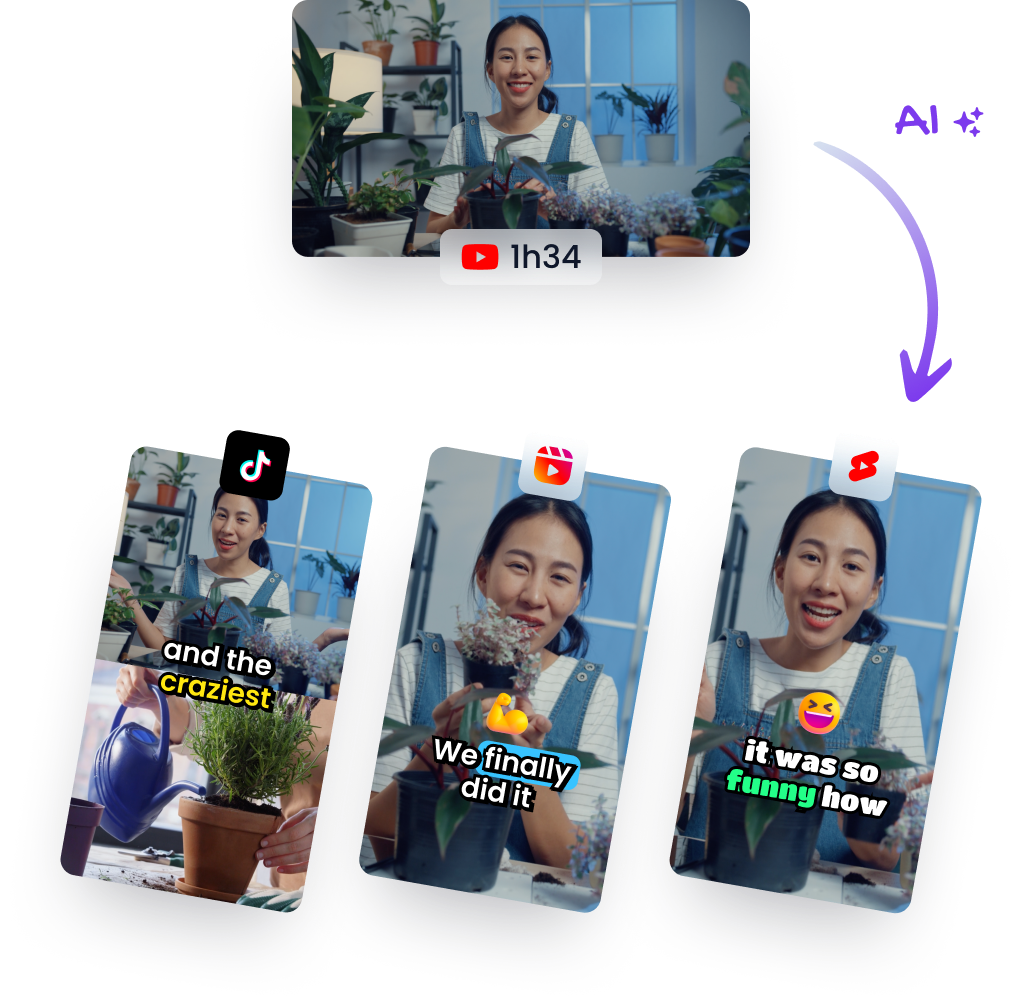
If you already have long-form videos and want to turn verified source material into short, social-ready clips faster, Klap is built for that workflow. It helps creators, podcasters, marketers, and teams turn longer videos into vertical shorts with reframing, captions, and quick editing, so you can spend less time chopping footage by hand and more time publishing.