Learn How to Remove Watermark from Video Ethically in 2026
Other
So, you want to know how to get rid of a watermark on a video? Your approach really depends on your end goal, but the most legitimate methods all circle back to a few key strategies: using the original, clean source file, paying for the premium version of your editing tool, or getting creative with cropping and overlays.
These are the paths that keep your video quality high and, just as importantly, keep you on the right side of copyright law.
Why You Should Actually Bother Removing Watermarks
Before we dive into the "how," let's talk about the "why." A clean, unwatermarked video instantly looks more professional. But this goes beyond simple aesthetics—it has a real impact on your content's performance.
Think about it. Platforms like TikTok and Instagram have algorithms designed to promote native, original content. A recent analysis shows that videos with rival watermarks can see up to a 40% drop in reach. That logo dilutes your brand's authority and can torpedo your engagement before your video even has a chance to get seen.
Of course, removing a watermark isn't always about trying to get around the rules. There are plenty of good reasons you might need to do it.
The Legitimate Reasons to Remove a Watermark
Maybe you used a free trial of a video editing app to whip up a clip using your own footage. Now you want the clean version for your portfolio. In this scenario, removing the watermark—usually by upgrading to a paid plan and re-exporting—is a perfectly normal step.
Plenty of creators find themselves in this exact spot. In fact, a 2025 creator survey found that over 65% of creators get frustrated with watermarks when they try to repurpose content made with free tools.
Another common situation is losing the original, unedited file of a video you own. It happens. If the only copy you can find is a watermarked export, you’ll need a way to clean it up to maintain a professional look. The goal here is simply to restore your own content to its intended state.
A watermark from another brand on your video is like a billboard for a competitor in your own store. It distracts your audience and weakens your message, making removal a crucial step for brand consistency.
Drawing a Clear Ethical Line
This is where we need to be crystal clear. Removing a watermark from content you don't own or have the rights to use is copyright infringement. It's illegal, and it’s not what this guide is about.
We're focusing exclusively on legitimate methods for removing watermarks from videos that you own. Always make sure you have the proper permissions before you alter any video. To get a better handle on these boundaries, it’s always a good idea to review the standard legal frameworks laid out in most platforms' terms of service. For more details, you can learn more about the responsibilities of content usage by reviewing our terms of services.
The Best Method: Go Back to the Original Source
Before you even think about firing up a sketchy online tool, let's talk about the cleanest, most professional way to get rid of a watermark. Honestly, the best approach usually isn't about removing it at all—it's about getting your hands on the original, clean version from the start.
This saves you headaches, respects copyright, and keeps your video quality pristine. It’s not a quick fix; it’s the right fix.
Upgrade and Re-Export From Your Editing Tool
We’ve all been there. You create an incredible clip using a free trial of an app, only to have a big, ugly logo slapped on your final export. It’s a classic scenario.
The solution is simple and ethical: just upgrade your account.
Once you subscribe to a paid plan, you can almost always reopen your project and export it again, completely watermark-free. It's a small investment that guarantees you get the highest possible quality for your content, which can lead to a 25% higher completion rate on social platforms.
This infographic nails why presenting a clean, unwatermarked video is so vital for creators.

The key takeaway? A clean video isn't just about looks. It has a real, measurable impact on your performance and how people see your brand.
Purchase the License for Stock Footage
Stock video sites like Storyblocks or Artgrid are amazing resources, but their preview clips are always watermarked. If you’ve built your video around a preview clip, don't try to scrub the watermark off. That’s a fast track to legal trouble.
Instead, just follow the intended workflow:
- Find the clip ID. Jot down the name or ID number of the stock video you used.
- Buy the license. You can either buy the single clip or subscribe to a plan that includes it. This gives you the legal right to use it.
- Download the clean file. Once you've paid, you can download the high-resolution, unwatermarked version and just swap it into your project.
Ask Collaborators for the Master Files
Did you work with a freelancer or an agency? The files they sent over might be compressed or watermarked "proof" versions, not the final product. What you need are the unwatermarked master files.
Clear and professional communication is everything here. A simple, polite email is usually all it takes to get what you need.
Just send a quick, polite email asking for the "final export" or "master source file." If this was covered in your original agreement, it should be a simple handoff. If not, they might charge a small fee for file delivery, but it’s absolutely worth it to get the pristine version of your video.
For creators looking to get the most out of their existing assets, having clean source files makes everything easier. If that sounds like you, check out our guide on how to make Reels with an existing video.
Strategic Cropping to Hide Edge Watermarks
Sometimes the simplest solution is the best one. If a watermark is hanging out in a corner, you can often just crop it right out. This works beautifully when you're repurposing content, like turning a wide YouTube video into a vertical clip for TikTok or Instagram Reels.
You’re not just cutting out the watermark; you’re reframing the shot to fit a new platform. You end up with a clean clip that’s perfectly formatted for the 82% of users who watch videos on mobile.
Reframing for Vertical Video
Short-form video has completely taken over, which means reframing is a non-negotiable skill. Almost all social media content is consumed on mobile, where the vertical 9:16 aspect ratio rules. Have a horizontal (16:9) video with a watermark in the corner? Cropping it to a vertical format is an elegant fix.
The process involves changing the video's dimensions while making sure your main subject stays front and center. You can do this by hand in most video editors, but manually adjusting the frame for every single scene gets old, fast.
To get a feel for the landscape of tools that can handle this, you can discover top free and budget video editors and see what fits your workflow.
Using AI to Automate Cropping
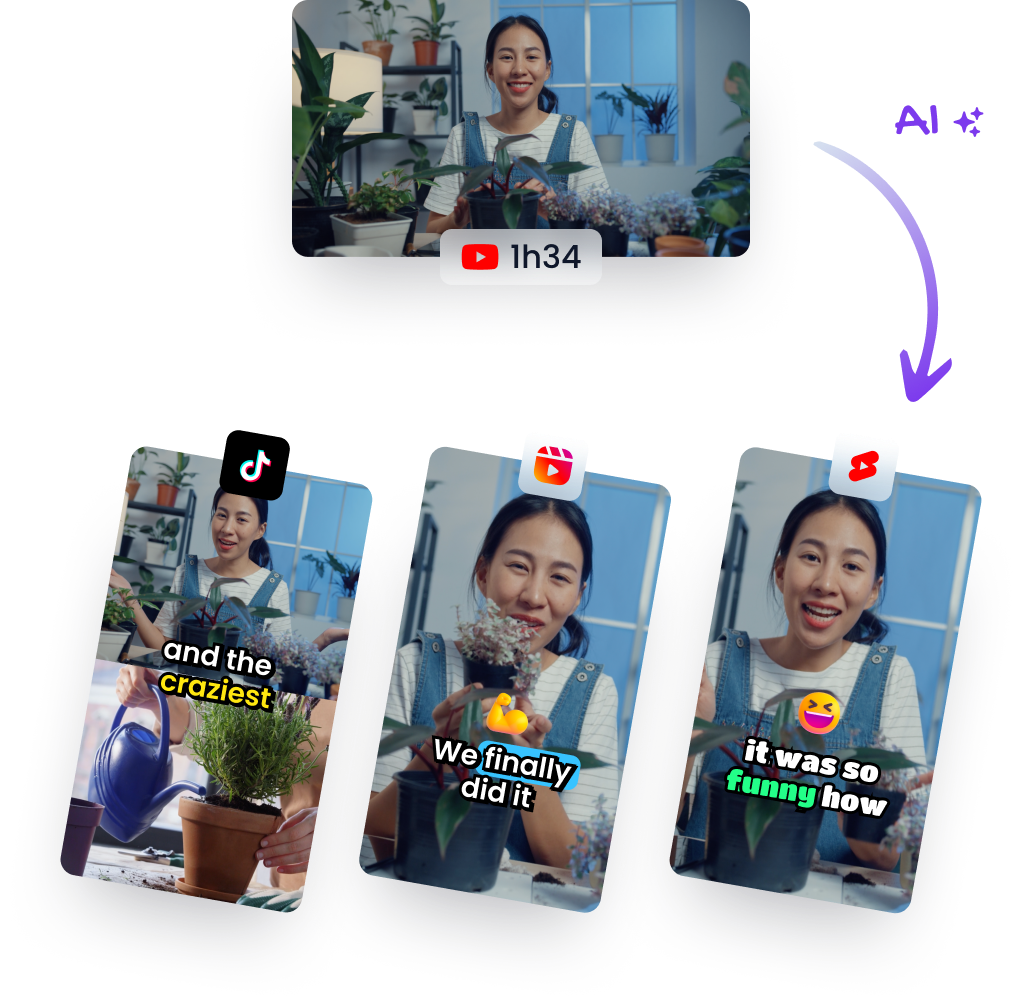
This is where modern tools like Klap come in and do the heavy lifting for you. Klap uses AI-powered reframing to automatically find the main speaker or focal point in your video and keep it perfectly centered in the new vertical frame.
The AI analyzes every scene, making sure no important action gets cut off. What used to take ages of manual keyframing now only takes a few clicks, saving you a ton of time and giving you a polished, ready-to-post clip. You can check out our guide on how to crop a video with Klap to see it in action.
The image below gives you a perfect visual of how an AI tool can intelligently reframe a wide video into a vertical one, neatly cropping out the edges where a watermark might be hiding.

See how the most important part of the frame—the person—is kept in focus, while the extra space on the sides is gone? That’s smart reframing.
Strategic cropping isn't just about removing a watermark; it's about reclaiming your video's composition for a new platform. You're not just hiding something unwanted—you're actively improving the viewing experience for a mobile audience.
This repurposing trend is exploding. By mid-2025, online AI watermark removers were already processing over 10 million videos a month, fueled by the short-form content boom where Instagram Reels views shot up 50% year-over-year. A recent HubSpot survey even found that 72% of social media marketers see watermarks as a major roadblock to repurposing content, with cropping being their most common workaround.
Using Overlays to Creatively Mask Watermarks
Sometimes, cropping just won't cut it. What happens when the watermark is parked right in the middle of the frame, or cropping would destroy your video’s composition?
Your best move here is to cover it up. But please, don't just slap a distracting blur effect over it—that’s a dead giveaway and often looks worse. Instead, think of this as a clever branding opportunity.
This is all about strategically placing your own graphic over the unwanted watermark. You can use your brand logo, a relevant sticker, or even a simple text box with a call-to-action like "Link in Bio" to hide the original mark while adding your own flair. This approach reinforces your brand and can make the clip even more valuable to your audience.

Making Your Overlay Look Intentional
The trick to making an overlay work is to make it look like it was meant to be there all along. A random sticker tossed into a corner looks like an afterthought. An integrated graphic that complements the content, on the other hand, looks professional and polished.
Here are a few actionable insights to make your overlay feel natural:
- Match the Aesthetic: Ensure the color, font, and style of your overlay align with your brand's visual identity.
- Add Value: Your overlay shouldn’t just be a cover-up. A podcaster could add the guest's name and social handle. A fitness coach might add a key takeaway or a motivational quote.
- Be Smart About Placement: If you're covering a watermark in the corner, that’s a perfect spot for your logo. If it’s more central, a lower-third graphic with your name or website might be a better fit.
When you nail this, you’re not just learning how to remove a watermark from a video; you're learning how to make the video better.
Practical Overlay Examples for Different Creators
This isn't a one-size-fits-all solution. The perfect overlay depends on your content and goals.
For instance, a marketer repurposing a product demo could slap on a "Shop Now" sticker. A podcaster could use a cool animated waveform graphic to cover a logo at the bottom of the screen. Or a coach could use a text box to highlight a powerful question from their session, making the content more engaging.
The goal is to integrate the overlay so seamlessly that your audience doesn't even realize it's hiding something. It should feel like a deliberate, value-adding part of your content strategy.
This method has become a go-to for savvy creators. It's no secret that watermarks are a pain—one survey showed 65% of creators are frustrated by them on repurposed content. But using custom overlays is a top-tier solution. Clean clips can boost viewership by up to 40% and see 25% higher completion rates.
Tools like Quso.ai have made this incredibly easy, letting you drop in a sticker or graphic, resize it, and export a clean video in minutes. You can see these techniques in action on YouTube to get a better feel for it.
Advanced AI Solutions for Difficult Watermarks
So, you’ve tried cropping and covering it up, but that stubborn watermark is still sitting right in the middle of your shot. What now? This is where you bring out the big guns.
We’re talking about AI-powered inpainting, a technique that actually reconstructs the background behind the watermark instead of just covering it. The AI looks at all the pixels around the logo, then intelligently generates new ones to fill in the blank space. The result is often so clean it’s like the watermark was never even there.
If you’re interested in just how far this technology has come, you can explore uncensored AI video tools, which are pushing the boundaries of what AI can do with video.
The Power and Speed of AI Inpainting
The improvement in these tools has been dramatic. The latest AI watermark removers in 2026 are shockingly effective, often scrubbing a watermark with incredible precision in just a few seconds.
The growth here is staggering. Some AI tools now claim to remove a watermark with 95% accuracy in around 10 seconds. That’s a huge leap from the 20-45 minutes it would take a skilled editor to do the same thing manually in older versions of Premiere Pro.
This speed has a real impact. For e-commerce brands, repurposing product demos without stock watermarks has boosted conversions by as much as 28% on TikTok Shop. Considering watermarked clips can see a 40% drop in shares, knowing how to remove a watermark from a video this effectively is a game-changer. You can watch a breakdown of these powerful AI tools to see the results for yourself.

Manual Removal in Professional Editors
Of course, AI isn't your only option. If you’re comfortable with professional video software like Adobe Premiere Pro, you can get ultimate control by removing watermarks manually.
These methods often involve techniques like:
- Content-Aware Fill: This works a lot like AI inpainting, where the software analyzes frames to intelligently fill in a selected area.
- Cloning and Masking: This is a more hands-on approach where you manually copy a clean part of the video and layer it over the watermark, frame by painful frame.
While these manual methods are powerful, they are incredibly time-consuming and demand serious editing skills. For most creators, the time it takes just isn't practical. It’s a great skill for pro editors, but it's definitely a last resort for quick turnarounds.
A Critical Ethical Warning: The power of these tools comes with a major responsibility. AI inpainting and advanced manual removal should only ever be used on content that you own or have explicit permission to edit. Using these techniques to remove watermarks from copyrighted material you don't own is illegal and unethical.
Common Questions About Removing Video Watermarks
So, you're trying to figure out how to get rid of a pesky watermark. It’s a common hurdle, but a few questions inevitably pop up.
Getting clear answers is non-negotiable. You need to know you’re making the right moves for your content, staying on the right side of the law, and giving your videos the best shot on social media. Let's break down the most common concerns.
Is It Legal to Remove a Watermark from a Video?
This is the big one, and the answer is a firm it depends.
The golden rule is this: it's only legal if you own the copyright to the video or have explicit permission from the copyright holder.
Think of it this way: if you shot your own footage and edited it in a free app that slapped its logo on your export, you're in the clear. Removing that watermark is just you reclaiming your own work. But downloading someone else's video and scrubbing their logo off? That's copyright infringement, plain and simple.
Will Removing a Watermark Reduce Video Quality?
Not if you do it right. The method you choose is everything when it comes to preserving quality.
- No Quality Loss: Your best bet is to avoid "removal" altogether. Going back to your original files, paying for a clean export, or using a smart crop won't touch the quality. The same goes for covering the watermark with a high-quality overlay.
- Potential Quality Loss: This is where things get tricky. AI removal tools and blur effects can leave behind visual artifacts or fuzzy spots. The top AI tools in 2026 are getting pretty good at minimizing this, but the result is rarely as flawless as the original, clean file.
Keep in mind that every time you re-export a video, you risk a small amount of quality degradation due to compression. Always use the highest possible export settings to keep your video looking crisp.
Do TikTok and Instagram Penalize Watermarked Videos?
They don’t send you a "penalty" notice, but the algorithms on TikTok and Instagram absolutely favor native, original content.
When their systems detect a watermark from a rival app (like the TikTok logo on an Instagram Reel), they are less likely to promote it. Why would they promote their competition? Studies have shown this can reduce reach by as much as 40%.
A clean, unwatermarked video looks more professional and native to the platform. As a result, it almost always gets better engagement. For the best performance, upload a clean version of your video to each platform directly. It’s a small step that signals to the algorithm that you’re creating high-quality content specifically for its audience.
Ready to turn your long-form videos into engaging, viral-ready shorts without the hassle of watermarks? With Klap, you can automatically generate dozens of polished clips, complete with smart AI reframing and captions. Try Klap for free and see how easy it is to repurpose your content.