What Is a Video Finder? an AI-Powered Guide for 2026
Other
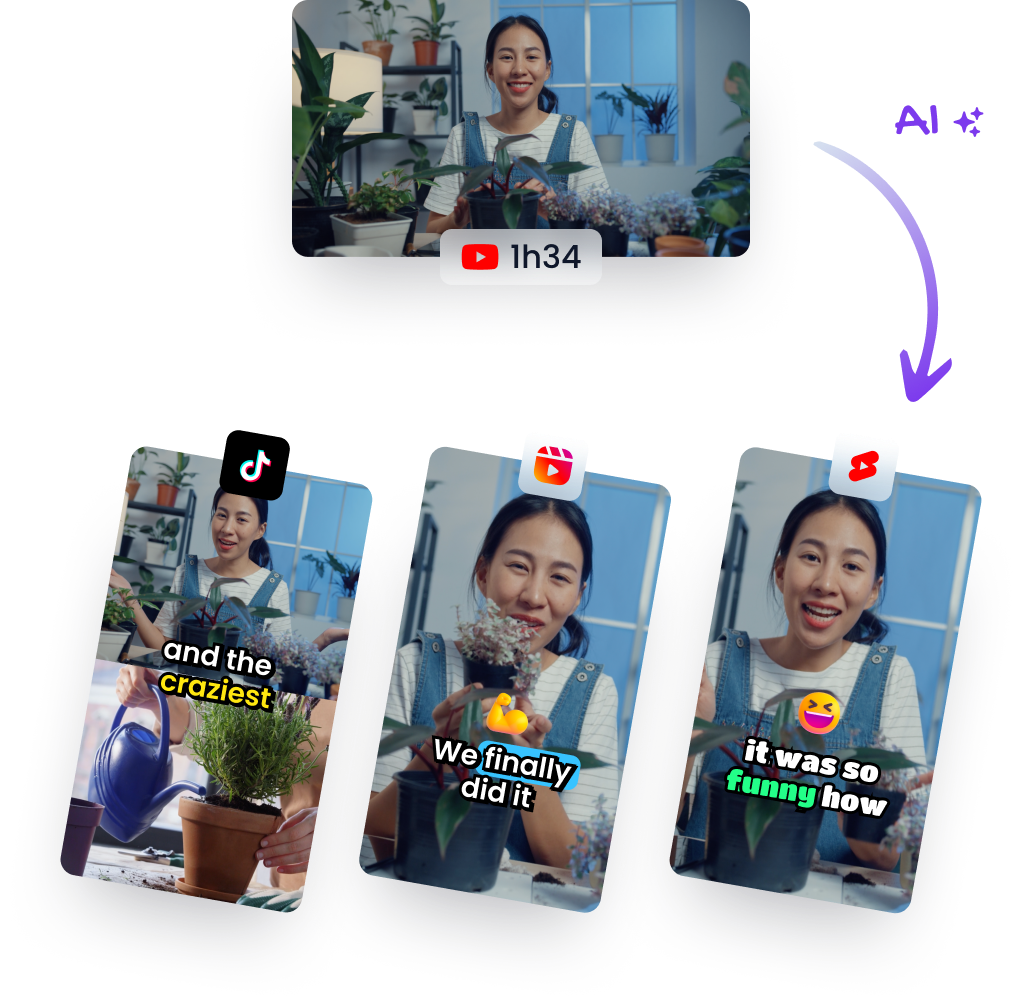
You've already done the hard part. You recorded the podcast, hosted the webinar, published the YouTube video, or ran the interview. The problem starts after that, when you need short clips for TikTok, Reels, Shorts, and LinkedIn, and the only way to get them is to scrub through a long timeline hunting for one usable moment.
That's where a modern Video Finder earns its place. It doesn't just help you locate a file. It helps you surface the part of a video that's worth publishing again.
The Hidden Gold in Your Long-Form Videos
A lot of creators sit on months of useful footage and still say they have “nothing to post.” What they usually mean is they don't have time to rewatch everything, mark timestamps, cut clips, resize them, caption them, and package them for short-form channels.
That bottleneck shows up everywhere. A podcast host has a sharp opinion buried deep in an interview. A SaaS marketer has a clean product insight hidden inside a webinar Q&A. A YouTuber has an older upload with several moments that would still work as Shorts today. The content exists. The extraction process is what breaks.
The old workflow is painfully manual.
- Watch the full recording: Often at accelerated speed, hoping not to miss a good hook.
- Mark rough timestamps: Usually in notes, comments, or a spreadsheet.
- Pull the clip into an editor: Then trim, subtitle, crop, and export.
- Repeat for every platform: Because horizontal source footage rarely fits vertical social formats out of the box.
If you're building these workflows yourself, integrating YouTube clipping for developers is a useful technical reference because it shows what clipping looks like when you move beyond manual editing and into structured systems.
The bigger strategic shift is simple. Repurposing isn't a side task anymore. It's the operating model for squeezing more reach out of the content you've already made. That's why understanding content repurposing workflows matters before you even choose a tool.
The fastest way to publish more short-form content usually isn't recording more. It's finding more value inside what you already recorded.
A good video finder solves that exact problem. It turns a messy archive into a searchable source of clip candidates, so you spend less time searching and more time deciding what deserves distribution.
What Is a Modern Video Finder
A modern video finder identifies usable moments inside a video, not just the video itself. For creators and marketers, that distinction matters because the true job is rarely “find the webinar file.” It is “find the 20 to 40 seconds where the point lands cleanly enough to publish.”
Older search systems were built around metadata. Filename, title, tags, maybe a short description. They helped teams retrieve assets from a library, but they could not tell you where a strong hook starts, where a product objection gets answered, or where a guest gives the one quote worth turning into a Short.
From file search to content understanding
The foundation for modern video finders was set when platforms like YouTube exposed search as a structured service through the YouTube Data API. Google's documentation for search.list explains that it returns matching resources and can identify video, channel, and playlist results, showing that large-scale video discovery depends on indexed systems rather than manual browsing (YouTube Data API search.list).
Modern AI tools take that indexing idea further. They index what is said, what appears on screen, how scenes change, and which segments are likely to stand alone as clips.

The practical difference looks like this:
ApproachWhat it relies onWhat it misses
Old-school search
Filename, title, tags
Spoken insights, visual context, exact clip moments
Modern AI video finder
Transcript, on-screen text, scenes, context
Less dependent on perfect metadata
More than keyword search
A good video finder does not stop at exact-match search. It uses semantic analysis to connect related phrases and ideas, so a search for “pricing pushback” can surface the section where a speaker says “clients think it's too expensive” even if the word “pricing” never appears.
That is the shift creators should understand. These systems are not just faster search bars. They are ranking engines for moments.
TwelveLabs describes this clearly in technical terms. Its Index API creates a video index across uploaded files so users can run semantic searches and retrieve timestamped matches, reflecting how video finding has moved from metadata lookup to moment-level understanding (semantic search over indexed video content).
In practice, stronger tools also layer in signal scoring. They may weigh transcript clarity, pace changes, scene cuts, on-screen text, and opening strength to estimate whether a segment can work as a standalone clip. If you understand that, the output becomes easier to judge. You are not looking at random highlights. You are looking at machine-ranked candidates that still need editorial judgment.
Why creators should care
This changes the workflow for repurposing. The first pass becomes selection, not hunting.
A creator can search a podcast for a strong contrarian opinion. A demand gen team can pull all moments tied to one campaign theme. A course creator can isolate short teaching segments without rewatching the entire lesson. Tools like Klap fit into this layer by helping teams move from long-form source material to clip candidates faster, which matters when the bottleneck is review and publishing, not recording.
Typical outputs include:
- Candidate hooks from interviews, webinars, and podcasts
- Theme-based moments tied to a campaign or content pillar
- Clear explanation segments that work for educational clips
- Scenes worth reframing for vertical social distribution
If you want the workflow around extraction and editing, Narrareach's guide to YouTube clipping is a useful companion. If you want to see how AI systems surface highlight moments in long videos, that is the layer to study.
The value is straightforward. A modern video finder helps teams spend less time searching through footage and more time choosing which moments deserve distribution.
How AI Video Finders Pinpoint Viral Moments
The output can feel magical the first time you use it. You drop in a long video and get back a set of clips that are already close to usable. But under the hood, the process is less magic than layered analysis.

It listens to the video
A strong system starts by turning audio into searchable text. Panopto describes a search engine that uses automatic speech recognition to capture and index every word spoken in videos, along with OCR to transcribe text shown on screen, making the library searchable by keywords and enabling people to find the exact moment a term is mentioned (Panopto video search).
That's a huge leap for long-form creators because the best moments often aren't in the title or description. They're spoken halfway through the recording.
This matters especially for:
- Podcasts: where the hook is verbal, not visual
- Webinars: where the strongest value often appears in Q&A
- Interviews: where one sentence can carry the clip
- Tutorials: where on-screen text supports the spoken explanation
It reads what's on screen
OCR is one of the most underappreciated parts of a video finder. If your video includes slides, product UI, lower thirds, or captions burned into source footage, on-screen text becomes another retrieval layer.
A webinar clip with generic dialogue can become searchable because the slide says “onboarding” or “customer retention.” A screen recording becomes easier to classify because the interface reveals the product area being discussed.
Practical rule: If your source videos include strong spoken language and readable on-screen text, AI clip discovery gets much more useful.
It segments the footage into meaningful chunks
The next job is segmentation. A useful video finder doesn't treat the whole upload as one undifferentiated blob. It tries to identify transitions in topic, pace, framing, or scene.
That segmentation is what makes clip suggestions feel coherent instead of random. Good systems tend to avoid returning isolated sentences with no setup. They look for complete moments that can stand alone when lifted out of the longer context.
In practice, that means the tool is trying to answer questions like these:
- Does this segment begin with a strong statement?
- Does it resolve into a complete idea?
- Is there enough context for a viewer who never saw the full video?
- Will the clip survive a vertical crop without losing the point?
It scores for hook potential
This is the part most creators care about, even if the tool doesn't show every signal explicitly. Some systems analyze openings, pacing, emotional intensity, or sentence structure to estimate whether a segment is likely to hold attention.
That doesn't mean the model “knows” what will go viral. It means it can detect patterns that often correlate with strong short-form clips: a bold claim, a surprising answer, a direct takeaway, a visible reaction, a clean before-and-after explanation.
A useful way to think about it is ranking, not prophecy.
SignalWhy it often matters for short clips
Clear opening line
Stops the scroll faster
Self-contained idea
Reduces dependence on prior context
Visible speaker energy
Makes the clip feel alive
Readable captions or text
Improves comprehension without sound
The best way to use these signals is with judgment, not blind trust. If the AI surfaces a clip with a punchy opening but weak substance, skip it. If it misses a niche but strategically important moment, pull that one manually. Understanding what makes a video go viral helps because it keeps you from confusing algorithmic scoring with actual audience fit.
A high-scoring clip that doesn't match your audience's intent will still underperform. The AI can narrow the search. It can't replace editorial taste.
Practical Use Cases for Creators and Marketers
The easiest way to judge a video finder is to look at real workflows, not feature lists.

The podcast host with no editing bandwidth
A podcast host records long interviews every week. The full episode goes live, then sits there. Short-form promotion becomes irregular because someone has to listen back, find quotable moments, trim them, add subtitles, and reframe the speaker for mobile.
With a video finder, the host starts from surfaced moments instead of a blank timeline. The system can flag strong statements, searchable topics, and sections where the guest lands a concise answer. That changes the repurposing job from “find something usable” to “review the shortlist and choose what fits this week's content plan.”
Creators often build consistency. Not because editing gets perfect, but because discovery gets faster.
The social media manager turning webinars into a content series
A social media manager usually isn't short on source material. They're short on time and clean extraction. Long webinars are packed with educational moments, but the strongest clips are buried inside dense intros, demos, and audience questions.
The better workflow is to treat the webinar like a clip library.
- Pull educational segments for LinkedIn
- Extract sharper hooks for Reels and Shorts
- Reuse Q&A moments for sales enablement or email embeds
For teams trying to sharpen that creator muscle, resources for video creators can be useful because they focus on the production and distribution side, not just the tooling side.
A short product demo makes this more concrete:
The YouTuber mining an old back catalog
This might be the most underused use case. Older uploads often contain moments that can work extremely well as Shorts today, especially if the original format was educational, opinion-driven, or interview-based.
The creator doesn't need to record new content to test new distribution. They need a way to find moments inside what already exists.
Older videos are often easier to repurpose because you already know the source material holds up well enough to publish once.
That makes a video finder valuable not just for fresh uploads, but for dormant archives. If you've got years of videos sitting untouched, the search layer becomes a tool for greater impact. It helps you turn past production effort into current reach.
Using a Video Finder A Step-by-Step Example with Klap
The workflow is easiest to understand when you see it as a practical sequence. One common setup is using a tool that accepts either a YouTube link or a direct upload, analyzes the source, and returns clip suggestions you can edit before export.

1. Import the source video
Start with the long-form asset you already have. In Klap, that means either pasting a YouTube URL or uploading a video file, as most creators don't want a separate ingest workflow just to test repurposing.
A good import step should feel boring. If it's complicated, adoption drops fast on real teams.
2. Let the system analyze the content
After import, the system scans the video for likely highlights. Transcript analysis, hook detection, and scene-level understanding then begin their work behind the scenes.
The important trade-off here is speed versus trust. Fast processing is helpful, but clip quality matters more. If a tool returns weak candidates quickly, you still end up doing manual search. The whole point is to shrink the review burden.
3. Review the suggested clips
This is the moment that tells you whether the tool is useful. You're looking for candidate clips that already feel close to publishable.
In practice, the review stage should answer four questions:
- Is the hook strong enough? The opening line has to earn attention quickly.
- Does the segment stand alone? Short clips fail when they rely on missing context from the full video.
- Will the framing work on mobile? A horizontal interview can become awkward fast in vertical crop.
- Are the captions usable? They may be edited, but they shouldn't need a full rewrite.
If every suggested clip needs heavy repair, the AI didn't save you much.
4. Edit for platform fit
Human judgment still matters. Trim the beginning tighter. Extend the end if the payoff lands late. Clean up caption phrasing. Adjust framing if the speaker moves or multiple people are on screen.
Different platforms reward different packaging, so don't export everything with the same assumptions.
- TikTok and Reels: Usually reward stronger hooks and faster starts
- YouTube Shorts: Often tolerates slightly more explanatory pacing
- LinkedIn: Usually benefits from a clearer informational angle
5. Export and distribute
Once the clip is tightened, export it in the format you need and move it into your publishing workflow. The key advantage isn't just that the clip is created. It's that the path from long video to social asset is much shorter than building each piece by hand.
That's why the best video finder workflows feel less like editing from scratch and more like curating from prepared options. The tool handles the heavy lifting of discovery and pre-formatting. You handle the final editorial call.
Choosing the Right Tool and Best Practices
Not every video finder is solving the same problem. Some are built for archive search. Some are better at semantic retrieval. Others are designed around repurposing long-form content into social clips.
What to evaluate before choosing
Start with a short checklist.
- Search depth: Can the tool find moments inside videos, or only locate whole files?
- Transcript quality: If speech recognition is weak, clip discovery gets weaker too.
- On-screen text handling: OCR matters more than is often realized.
- Clip usability: Are suggestions close to publishable, or just rough timestamps?
- Editing controls: You'll want to adjust timing, captions, and framing.
- Export fit: Vertical formatting and subtitle handling matter for short-form teams.
One technical area is easy to overlook. A comprehensive video finder should identify metadata such as aspect ratio, frame rate, and codec, because those properties affect whether a found clip is suitable for repurposing into a vertical short without unnecessary re-encoding or upload issues (MediaInfo technical metadata fields).
Do this if you want better outputs
The source video still shapes the result. AI can help, but it can't rescue every recording.
- Use clear audio: Speech-driven indexing depends on being able to hear the speaker.
- Leave breathing room around key points: Clips are easier to trim when the speaker doesn't begin mid-thought.
- Review every suggestion: The shortlist is machine-generated. Publishing decisions should still be human.
- Adjust for platform context: A clip for LinkedIn doesn't need the same packaging as a clip for TikTok.
What usually goes wrong
Teams often expect the tool to replace editorial thinking. It won't.
Common mistakes include trusting the first suggested clip, exporting every asset with identical captions, ignoring technical fit, and treating virality labels as fact rather than rough prioritization. Another frequent problem is feeding the system low-quality source material and then blaming the ranking.
The tool finds candidates. You still decide what deserves your brand, your audience, and your distribution slot.
A video finder is most valuable when it removes repetitive searching, not when it tries to automate taste.
If you already have long videos on YouTube, webinars, interviews, or podcasts, Klap gives you a practical way to turn them into short-form clips without starting every edit from scratch. Paste a link or upload a file, review the AI-generated highlights, make your edits, and export social-ready cuts for Shorts, Reels, or TikTok.