What Makes a Video Go Viral: The Real Formula, Explained
Other
Ever wondered why one video gets a million views overnight while another, equally good one, gets none? It's not just luck.
Going viral feels like catching lightning in a bottle, but there's a practical science behind it. A video usually explodes when it hits a perfect trifecta: a powerful psychological trigger, a killer creative format, and a smart understanding of platform algorithms. To have a shot, your content has to hook viewers within the first three seconds, stir up a strong emotion like surprise or laughter, and be ridiculously easy to share.
The Blueprint for Viral Videos

So, what really makes a video blow up? It's easy to think it's all random, but behind every viral hit is a predictable pattern where psychology, creativity, and distribution click into place.
The biggest myth is that you need a Hollywood budget or a celebrity co-sign. The truth is, some of the most shared videos come from creators you've never heard of. They just cracked the code—they know how to grab attention, hold it with a great story, and play the algorithm like a fiddle.
Deconstructing the Viral Formula
At its heart, a viral video is a masterclass in human connection. It doesn't just show you something; it makes you feel something. That feeling is what makes you hit the share button, sparking a chain reaction that turns a few views into millions.
Virality isn't an accident. It's an engineered outcome that starts with understanding why people click, why they watch, and most importantly, why they share.
To make this happen, you need a roadmap. Think of it as a blueprint built on three core pillars. Nail each one, and you’re no longer hoping for virality—you’re building for it. Let's break down each of these pillars with actionable steps you can start using today.
For more hands-on advice, you can also explore our other articles on content creation.
The Three Pillars of Video Virality
Every viral video is built on a solid foundation. These three pillars are the core ingredients that can turn a simple clip into a cultural phenomenon. Understanding how they work together is the first real step toward creating content that truly connects and spreads.
Here’s a quick breakdown of what makes up that foundation.
The Three Pillars of Video Virality
PillarDescriptionKey Elements
Psychology
Tapping into the core human emotions and cognitive biases that drive people to share.
High-arousal emotions (awe, humor, surprise), social currency, and deep relatability.
Creativity
The art of packaging and presenting your content to grab and hold attention from the first second.
Irresistible hooks, compelling storytelling, genuine novelty, and perfect pacing.
Technology
Optimizing your video to align with how social media platform algorithms discover and distribute content.
Algorithm-friendly formats, trending sounds, smart captions, and strategic timing.
Understanding these pillars is your starting point. Now, let’s get into the specifics of how to apply them.
Cracking the Code of Human Emotion

Behind every share, like, and comment, there’s a real human emotion. Videos don't go viral because of flawless production quality; they go viral because they make someone feel something so strongly that they have to pass it on. This is the absolute core of virality—it's less about the content itself and more about the reaction it sparks.
Think of a viral video like a juicy secret. When you hear a good one, what's your first instinct? To find someone and tell them. A video works the same way, acting as a vehicle for feelings like awe, laughter, surprise, or even anger. These are what researchers call high-arousal emotions, and they're the fuel for viral sharing because they push people to take action.
The Power of High-Arousal Emotions
Not all emotions are created equal when it comes to getting a share. Feelings like sadness or contentment might make a viewer feel something, but they're often passive. High-arousal emotions are different. They demand an outlet and create a physiological jolt that makes us want to do something. Studies have shown that content eliciting high-arousal emotions like awe and anger is 20-30% more likely to be shared.
This is exactly why videos that make you gasp, laugh out loud, or just say "wow" are the ones that get shared the most. They deliver an emotional payload that feels too good, too shocking, or too funny to keep to yourself. Think about the last video you shared—I'll bet it triggered one of these powerful feelings.
That emotional spark is what makes someone stop the endless scroll. In a sea of endless content, a genuine emotional hook is the ultimate pattern interrupt. It cuts through the noise and forges an immediate, personal connection.
Tapping into Social Currency
Beyond raw emotion, people share content for another crucial reason: social currency. We share things that make us look good. It could be being the first to show your friends a hilarious clip or passing along a video with a clever insight. Either way, sharing is a form of self-expression.
This breaks down into a few key motivations:
- Looking Smart: Sharing a video that explains a complex topic simply or reveals a slick life hack makes the person sharing look knowledgeable and helpful.
- Being Funny: Passing on a genuinely funny video is like giving the "gift of laughter," positioning yourself as a source of humor and good vibes.
- Feeling Like an Insider: Sharing something niche, clever, or part of an inside joke makes people feel like they belong to a special group.
When you're creating a video, stop and ask yourself, "What does sharing this say about the person who shares it?" If the answer is that it makes them look smart, funny, or in-the-know, you're on the right track.
This is what gives a video its viral legs—it hands viewers valuable social currency they can "spend" to build up their own identity. For instance, emotional hooks and smart algorithm plays like curiosity gaps have been proven to send a video's virality through the roof. One creator's TikTok series, where a video simply revealed viewers' algorithmic 'group' assignment, blew up to 84 million views and 9 million likes. It sparked a chain reaction where thousands of others copied the format. To see just how powerful this is, you can explore more on how these social media trends shape virality.
Building Emotional Resonance and Value
Finally, two other psychological drivers are absolutely critical: emotional resonance and practical value. Emotional resonance is that "that's so me" feeling. When a video perfectly captures a relatable experience—like the sheer frustration of assembling IKEA furniture or the pure joy of a pet's goofy antics—it creates an instant bond.
That sense of shared experience makes people feel seen and understood, which is a powerful motivator for sharing. You see it all the time in the comments, filled with people tagging friends and saying, "This is literally us."
Then there's practical value, which is straightforward but incredibly effective. Videos that offer real help, like a quick recipe, a DIY repair tip, or a productivity shortcut, are inherently shareable. They provide immediate utility, turning the sharer into a helpful resource for their circle. By engineering these psychological triggers into your content from the very beginning, you stop just making content and start creating connections.
Creative Elements That Hook and Hold Attention
While emotion gives a video the fuel to spread, the creative execution is the vehicle that actually delivers it. You can have the most powerful message in the world, but if it's packaged poorly, nobody will stick around long enough to hear it.
This is where the art of the hook and the science of retention come into play. It’s about turning a fleeting moment of interest into sustained engagement by mastering the creative elements that grab a viewer and refuse to let go.
Mastering the All-Important Hook
You have about three seconds. No, that’s not an exaggeration—it’s the unforgiving reality of the scroll. Your video’s hook is the single most critical creative element because it decides whether someone gives you their time or swipes away forever. A weak opening is a guaranteed flop.
A powerful hook isn't just about being loud or flashy. It's about planting an immediate question in the viewer's mind that they absolutely need to have answered.
- Start in the Middle of the Action: Don't waste precious seconds on slow, boring introductions. Drop the viewer right into the most exciting, confusing, or dramatic part of your story.
- Pose a Bold Question: Kick things off with a question that challenges a common belief or hits on a viewer's pain point. Think, "Are you making this one mistake with your money?"
- Create a Curiosity Gap: Present a statement that feels incomplete or surprising, forcing the viewer to watch to find out what happens next. Something like, "This is the one thing I'll never buy again."
These techniques work because they shatter the passive scrolling experience. They demand attention and promise value, intrigue, or entertainment right from the very first frame.
Retaining Viewers with Storytelling and Pacing
Once you've hooked a viewer, the real challenge begins: holding their attention. This is all about retention, and great retention is built on strong storytelling, dynamic pacing, and visual aids that keep the brain locked in.
The explosion of short-form video since 2020 is a perfect example of this in action. The format’s power lies in its ability to satisfy our shrinking attention spans. In fact, recent research shows that only 36% of U.S. adults follow the news closely, a sharp drop from 51% in 2016. This signals a broader cognitive overload that makes quick, digestible content king. Just look at indie musician Sophia James's 'Group 7' TikTok experiment—a simple video "hacked the system" and pulled in over 84 million views in just a few weeks. You can find more insights on how digital trends are shaping content consumption on wearesocial.com.
The goal isn't just to stop the scroll; it's to make the viewer feel like they can't scroll away because they're too invested in what happens next.
To get there, you need a clear narrative structure, even in a 30-second clip. A simple problem-solution or setup-payoff arc gives the video momentum. Pacing is also crucial. Keep the energy high by varying your shot lengths, using quick cuts, and incorporating sound effects or music.
And today, dynamic captions are essential. They do more than just make your content accessible; they guide the viewer's focus and emphasize key points, keeping their eyes glued to the screen. To take your editing to the next level, check out our guide on the best TikTok editing apps.
Finding Gold with Novelty and Pattern Interrupts
Finally, true virality often comes down to novelty. Our brains are hardwired to notice things that are new, unusual, or unexpected. This is the power of a pattern interrupt—an element that shatters a viewer’s expectations and forces them to pay attention.
A pattern interrupt could be anything from a surprising visual gag to a controversial opinion or an unconventional camera angle. The goal is simple: break the monotony of the feed and offer something fresh.
This is especially valuable for creators sitting on a mountain of long-form content. A single 45-minute podcast or a lengthy webinar is a goldmine of these moments. It contains dozens of powerful soundbites, surprising statements, and unique insights just waiting to be turned into viral short-form clips. The key is finding those golden nuggets that break the mold and present a familiar topic in a completely new light.
How to Optimize for Social Media Algorithms
Making a video that connects with people is a massive win, but it’s only half the battle. Now, you have to convince the platform's algorithm that your masterpiece is worth showing to millions. Think of the algorithm as the ultimate gatekeeper—your video’s fate is in its hands.
These algorithms aren't just mysterious code; they’re smart systems with one core mission: keep people on the platform as long as humanly possible. To do that, they push content that gets tons of engagement and keeps viewers glued to the screen. If you learn to speak their language, you stop just posting content and start unlocking serious reach.
Key Metrics That Algorithms Love
At their heart, all social media algorithms are looking at the same human behaviors to decide if a video is any good. The exact recipe changes from platform to platform, but they all reward content that nails these fundamentals.
- Watch Time and Completion Rate: This is the big one. If people watch your video all the way to the end (high completion rate) or, even better, watch it again, you’re sending the strongest possible signal that your content is addictive. A video that holds attention is a video the algorithm wants to promote.
- Shares: A share is the ultimate stamp of approval. When someone sends your video to a friend or posts it on another platform, they're vouching for it. Algorithms see this as a massive vote of confidence, signaling your content can pull new people into the app.
- Comments: Comments mean your video started a conversation. Content that makes people laugh, argue, or ask questions is gold because it keeps them typing, replying, and staying engaged with the platform.
- Saves: A save means your video was so useful or entertaining that someone wants to come back to it later. This is a huge green flag for how-to guides, educational tips, or just incredibly funny content.
Platform-Specific Optimization Tactics
While the core signals are universal, each platform has its own personality. You have to tailor your strategy to fit the unique quirks of each network if you want to go viral.
TikTok This is the king of discovery. TikTok's algorithm is obsessed with trending sounds and effects. Jumping on a popular audio track can give your video an immediate rocket boost, putting it in front of an audience that's already hooked on that trend. The "For You Page" is literally built to serve up new content, making it the best place for creators to have their breakout moment.
Instagram Reels Instagram tends to favor original audio and a more polished, aesthetic look. While trending sounds definitely work, the platform sometimes gives an extra push to creators who kick off their own audio trends. High-performing Reels also have a halo effect, boosting the visibility of your entire profile.
YouTube Shorts On YouTube, Shorts are a powerful piece of a much larger channel strategy. The algorithm uses Shorts to introduce your content to new audiences. A viral Short can become a major pipeline, driving viewers directly to your long-form videos and fueling subscriber growth. Consistency and a well-defined niche are everything here.
The core principle is simple: Don't just repurpose; re-optimize. A video that works on TikTok might need a different caption, sound, or even a slightly different edit to succeed on Instagram Reels or YouTube Shorts.
Technical Must-Haves for Virality
Beyond the creative and engagement side, getting the technical details right is completely non-negotiable. Bad quality can kill a great video before the algorithm even gives it a chance.
- Aspect Ratio: Always, always post in 9:16. This vertical format fills the entire phone screen and creates an immersive experience. Anything else looks amateur and often gets punished by the algorithm.
- Video Quality: Upload in the highest resolution you can, at least 1080p. A grainy, blurry video is an instant turn-off and a guaranteed scroll-past.
- Captions and Hashtags: Use bold, dynamic on-screen captions to grab and hold attention. In the description, use a smart mix of broad and niche hashtags to help the algorithm understand what your content is about and show it to the right people.
Timing and platform-specific tweaks are what separate the good from the viral. And increasingly, this is being powered by AI automation. Platforms are now smart enough to auto-generate different versions of a video to see what performs best. For example, Google Ads uses AI to automatically create vertical 9:16 cuts from landscape videos, saving creators countless hours. To really nail this, understanding and implementing proven social media engagement strategies is key to maximizing your video's potential.
Turn Long-Form Content into Viral Shorts with AI
So, now you know the secrets behind viral videos—the psychology, the creative hooks, and the platform algorithms. But knowing is one thing, and doing is another.
If you have a library of long-form content like podcasts or webinars, applying all these principles consistently can feel like a mountain of a task. Let's be real: the manual process of hunting for and editing viral-worthy clips is incredibly time-consuming.
Imagine scrubbing through a two-hour interview just to find that one perfect 30-second moment. It’s like searching for a needle in a haystack. This is where the creative grind burns most people out, leaving a goldmine of potential viral moments completely untouched.
But what if there was a smarter, faster way? This is where AI completely changes the game. It turns the tedious chore of content repurposing into a sleek, scalable system, letting you apply every viral principle we've talked about without chaining yourself to an editing desk.
The Problem with Manual Repurposing
For creators with tons of existing video—podcasters, coaches, marketers—the value is already there. The challenge is getting it out. The typical manual workflow for creating just one short clip is a multi-step nightmare that drains both your time and creative energy.
- Manual Discovery: First, you have to re-watch hours of footage, manually dragging the playhead back and forth to pinpoint a segment with a strong hook, an emotional punch, or a unique insight.
- Tedious Editing: Once you find a clip, you have to slice it out, reframe it from a 16:9 landscape view to a 9:16 vertical format, and then painstakingly add captions to grab the attention of silent scrollers.
- Repetitive Exporting: Then comes the export. And then you have to do it all over again for the next clip. And the next.
This workflow just doesn’t scale. It's no surprise so many creators burn out or abandon repurposing altogether, missing out on a massive opportunity to grow their audience on platforms like TikTok, Reels, and Shorts.
A Smarter Workflow with AI
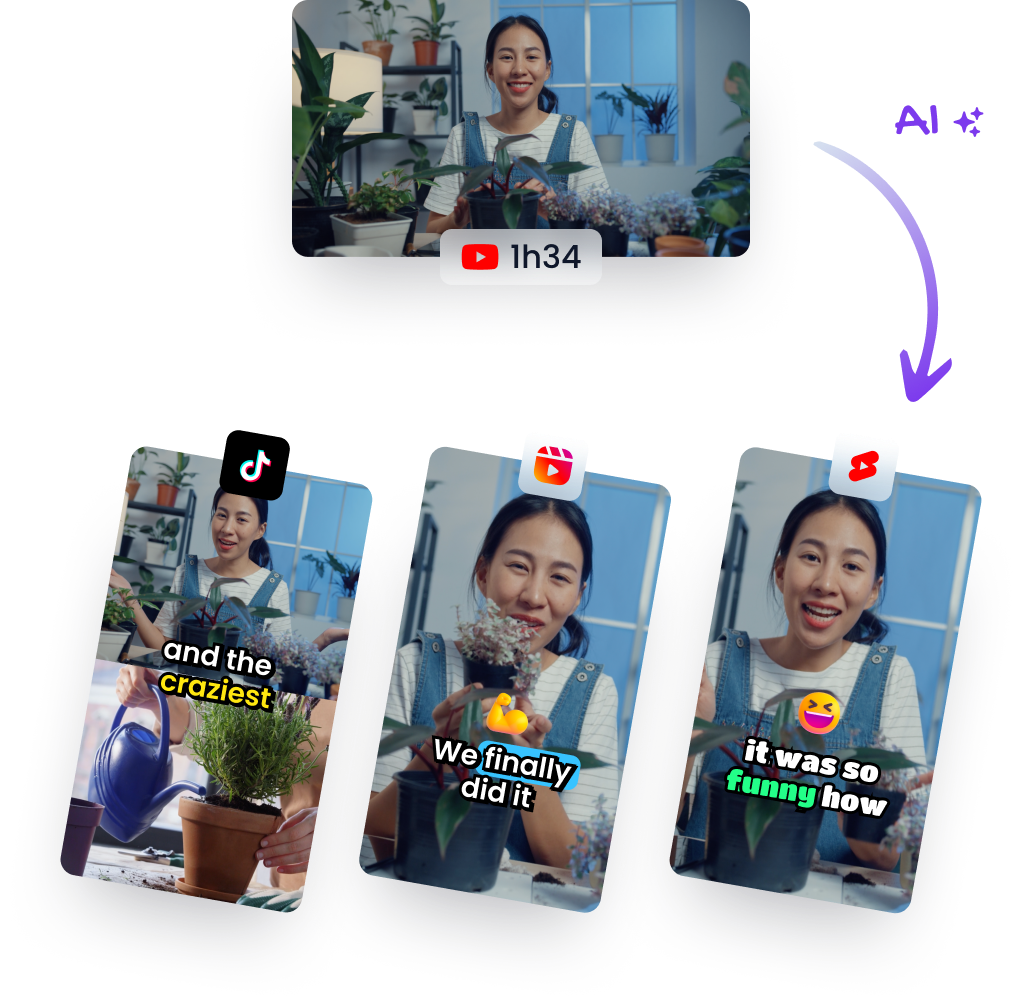
AI-powered tools completely flip this model on its head. Instead of you hunting for the best moments, the AI does it for you. It analyzes your video’s transcript, identifies the most engaging topics and potential hooks, and automatically serves up a selection of ready-to-post short clips.
This approach transforms your workflow from a manual chore into a simple, three-step process to get your content ready for the social algorithms.
This flowchart shows just how clean the process becomes when you let AI handle the heavy lifting of creating, optimizing, and posting.

As you can see, AI automates the most time-consuming parts of optimization, freeing you up to focus on quality and consistency.
How AI Accelerates Virality
Tools like Klap are built to automate the exact creative and technical tweaks we've covered. Think of it as a creative partner that makes it easy to turn your existing library into a steady stream of viral-ready shorts.
- AI-Powered Hook Detection: The AI scans your transcript to find the most compelling questions, surprising statements, and emotionally charged moments. It instantly solves the "needle in a haystack" problem.
- Automatic Reframing and Captions: It intelligently reframes the shot to keep the speaker centered in the 9:16 vertical format and adds dynamic, word-by-word captions that are proven to boost viewer retention.
- One-Click Publishing: Instead of juggling multiple editing tools, you get a dashboard of ready-made clips that you can fine-tune and publish directly to your social platforms in minutes, not hours.
The table below breaks down just how much time and effort this saves.
Manual vs AI-Powered Repurposing Workflow
TaskManual Workflow (Time per Clip)AI-Powered Workflow (Time per Clip)
Finding the Clip
15-45 minutes
1-2 minutes
Editing & Reframing
10-20 minutes
Automatic (0-1 minute)
Adding Captions
10-15 minutes
Automatic (0-1 minute)
Export & Prep
5-10 minutes
1-2 minutes
Total Time
40-90 minutes
2-6 minutes
The difference is night and day. What used to take over an hour per clip can now be done in the time it takes to make a cup of coffee.
By automating the most repetitive tasks, you free up your creative energy to focus on what matters most: producing high-value content. AI handles the rest, ensuring every clip is perfectly optimized to capture attention.
As AI continues to shape how content is made and shared, understanding the bigger picture of artificial intelligence can give you a serious strategic advantage. This shift lets creators move from being just producers to becoming efficient content strategists.
If you're ready to get started, you can see how a long-to-short video converter can streamline your own strategy. By embracing these tools, you can finally unlock the full viral potential hidden inside your long-form videos.
Your Viral Video Launch Checklist
Alright, we've covered a ton of theory. But theory is one thing—execution is where the magic happens. Before you smash that "publish" button, run through this final checklist.
Think of it as your pre-flight check. It’s designed to turn all the principles we’ve talked about into a simple, gut-check process. Answering these questions honestly will help you spot any weak spots and give every video the best possible shot at connecting with an audience and taking off.
Psychology and Emotion
Does your video actually connect with a human being? Emotion is the fuel for virality. Without it, your content is just more noise on the internet.
- Emotional Trigger: Does the video spark a strong, high-energy feeling? Think awe, surprise, gut-busting laughter, or intense curiosity.
- Shareability Factor: Will sharing this make the viewer look good? Does it make them seem smart, funny, or in-the-know (social currency)?
- Relatability: Does the content hit home on a personal level? Is it something that makes viewers nod and think, "Yep, that's me"?
Creative Execution
A brilliant idea is worthless if the delivery falls flat. The creative choices you make are what stop the scroll and keep people watching from the first second to the last.
Your hook decides if they watch the first three seconds. Your story and pacing decide if they stick around for the rest. Don't skimp on either.
- The 3-Second Hook: Is the opening immediate and irresistible? Does it kick off with a burning question, drop you right into the action, or create a curiosity gap they have to see filled?
- Story and Pacing: Is there a clear beginning, middle, and end, no matter how short? Does the pacing feel punchy, using quick cuts and different shots to keep the energy up?
- Novelty: Are you showing people something they haven't seen before? Or are you taking a familiar idea and putting a completely fresh spin on it? Is there a pattern interrupt that shatters their expectations?
Technical Optimization
Don't let clumsy technical mistakes kill your video's chances. The algorithm is smart—it rewards content that’s perfectly formatted for the platform and gives users a great viewing experience.
- Aspect Ratio: Is the video formatted in 9:16? You need to fill that entire mobile screen. No excuses.
- Video Quality: Is the footage crisp and clear? Aim for at least 1080p resolution.
- Captions: Are there big, bold, dynamic captions on screen? They’re crucial for grabbing viewers watching with the sound off and for emphasizing your most important points.
Distribution Strategy
Finally, you have to speak the platform's language. Sending the right signals to the algorithm is how it finds the perfect audience for your video.
- Hashtags: Have you used a solid mix of broad, popular hashtags and smaller, niche ones to tell the algorithm exactly what your video is about?
- Trending Elements: Did you jump on a relevant trending sound or effect? This is especially critical on a platform like TikTok.
- Call to Action: Are you giving viewers a reason to engage? A simple question in the comments can work wonders.
Got Questions? We've Got Answers
Alright, let's get into the nitty-gritty. Putting all this viral theory into practice always brings up a few key questions. Creators are constantly trying to figure out that sweet spot between quality, quantity, and sticking to their niche. Here’s a no-fluff breakdown of the common hurdles.
How Many Videos Should I Post to Go Viral?
Everyone wants the magic number, but it doesn’t exist. The real key? Consistency. It’s way more powerful than just dropping one big video and hoping for the best.
Think of it this way: every video you post is another piece of data you’re feeding the algorithm. It helps the platform learn who you are and who to show your stuff to. For fast-paced feeds on TikTok and Reels, a good rhythm to aim for is 3-5 high-quality videos a week.
But let’s be clear: quality trumps quantity, every single time. One killer video with a hook that grabs you by the collar will always do better than ten mediocre clips. The goal is to build a posting habit you can actually stick to without letting the core principles—the stuff that makes content worth sharing—slide.
Can a Video from a "Boring" Niche Actually Go Viral?
Absolutely. There are no "boring" niches, just uninspired angles. The secret is finding a way to connect your topic to a universal human feeling or a problem that tons of people secretly worry about.
Take an accounting firm, for instance. Instead of a dry video on tax codes, they could create a clip titled, "The one money mistake 90% of people make." That single sentence taps directly into our curiosity and financial anxiety. Instant hook.
Look for the universal themes hidden in your niche:
- Aspiration: Show people the dream outcome they're chasing.
- Frustration: Call out a common pain point everyone in your audience hates.
- Curiosity: Drop a surprising fact or bust a myth everyone believes.
Every industry has its own drama, secrets, and mind-blowing truths. Your job is to dig them up and frame them in a way that makes a broader audience lean in. That’s how you prove any topic can go viral.
What Are the Biggest Mistakes I Should Avoid?
So many creators shoot themselves in the foot with a few common slip-ups. The absolute worst one? Creating clickbait without a payoff. A great hook makes a promise. If the rest of the video fails to deliver on that promise, you don't just lose a viewer; you lose trust. The algorithm will notice the low watch times and bury your content.
Another major pitfall is ignoring the culture of each platform. A polished video that would crush it on YouTube might fall completely flat on TikTok if it doesn’t use trending audio or embrace that raw, authentic vibe. The golden rule is to always adapt, never just copy-paste your content across different platforms.
Ready to stop grinding and start creating? You can turn your long-form content into a steady stream of viral-ready clips without all the manual work. With Klap, you can automatically pinpoint the best hooks, slap on dynamic captions, and generate perfectly framed shorts in minutes.
Try Klap for free and turn your videos into viral shorts today.