How to Get More Views on TikTok: 2026 Growth Playbook
Other
Most TikTok advice starts with the same prescription: make the video shorter and post more often. That can help, but it misses the more important question, can you keep a viewer watching long enough for TikTok to distribute the clip beyond its first audience? A large analysis summarized by Buffer found that videos longer than 60 seconds generated 43.2% more reach and 63.8% more watch time than shorter videos, even though most posts still fall below that length.
That changes how to think about how to get more views on TikTok. You don't need to chase ultra-short virality at the expense of context. You need clearer openings, stronger retention, useful payoffs, and a repeatable way to turn long-form material into complete vertical stories.
Why Your TikTok Views Depend on Retention Not Luck
TikTok views can feel random because one post reaches a large audience while another, made with similar effort, stalls. The more useful explanation is distribution quality. TikTok has to understand what your video is about, decide which viewers might care, and evaluate how those viewers behave after the clip appears in their feed.
That makes the first seconds especially important. If the topic is unclear, the viewer has no reason to wait for the point. If the opening creates curiosity but never delivers a payoff, viewers may leave before the video earns stronger recommendation signals. A polished edit can't compensate for a vague premise.
A practical guide to video completion rate is useful here because completion isn't an isolated vanity metric. It reflects whether your structure gives viewers a reason to continue. Watch time, rewatches, shares, comments, and saves all help explain why some clips keep circulating while others stop after initial testing.
Distribution starts with legibility
Your audience shouldn't need to decode the video. State the subject in spoken dialogue, on-screen text, or both. A cooking creator might open with “This is why your pasta sauce tastes flat,” while a B2B consultant could say, “Your product demo loses buyers before the pricing slide.”
Those openings work because they establish a problem immediately. They also create a question the viewer wants answered. By contrast, “Come with me while I work on a new recipe” offers atmosphere but little tension, and “Today we're discussing marketing strategy” gives context without a clear payoff.
Account health matters too. Independent guidance on sudden TikTok view drops identifies early watch behavior, unclear openings, duplicated content, and moderation-related distribution issues as possible causes. When views fall suddenly, don't assume your creative ability disappeared overnight. Check whether the video is legible, original, properly formatted, and aligned with the audience TikTok has learned to associate with your account.
Practical rule: Treat every underperforming post as a distribution diagnosis before treating it as a creative failure.
The shortest edit isn't automatically the strongest edit. A brief teaser that withholds the useful information can lose to a longer clip that frames a problem, develops the answer, and gives viewers a satisfying conclusion. Posting more can expand your chances, but it won't fix weak retention. The rest of the growth process should improve the viewer's decision to stay.
Crafting Hooks That Stop the Scroll in Two Seconds
A hook has one job: make the video understandable and interesting before the viewer scrolls. Don't begin with a greeting, a logo animation, or a long setup. Put the problem, promise, or conflict in the first spoken phrase and reinforce it visually from the opening frame.
Compare these openings:
- Weak: “So I've been thinking about content creation lately.”
- Strong: “Your best TikTok idea may be hidden inside an old podcast.”
- Weak: “Here are some things I learned from launching a product.”
- Strong: “This product launch failed because the demo started with features.”
- Weak: “Let me show you my editing process.”
- Strong: “I removed the first ten seconds, and the story finally made sense.”
The stronger lines give viewers a reason to continue. They name a specific subject, introduce tension, or promise a transformation without explaining every detail upfront.

Build the opening in layers
Start with the verbal hook, then add visual confirmation. Use bold on-screen text that matches the topic, captions from the first frame, and an opening shot with a face, object, or movement that clarifies the subject. The text shouldn't repeat a generic title. It should sharpen the promise, such as “Why your webinar clips feel boring” or “The retention mistake in most tutorials.”
Specificity usually beats hype. A direct question can work when it reflects a real viewer concern: “Why do your views drop after the first upload?” A contrarian claim can work when the video supports it: “Shorter isn't always better on TikTok.” A concrete comparison can work when the contrast is easy to understand: “One edit gives context. The other starts with a teaser.”
Use the TikTok hook examples as prompts, not scripts. Your strongest opening should sound native to your topic and voice. A finance creator, fitness coach, and interview host shouldn't use the same dramatic phrasing.
Audit every draft before publishing
Ask these questions while watching the video with the sound off, then again with the sound on:
- Can a stranger identify the topic immediately?
- Does the first frame show movement, a face, or a relevant object?
- Does the text remain readable on a small screen?
- Does the spoken line create a question or promise?
- Does the next moment reward the opening rather than stall?
Remove throat-clearing phrases and move the most useful sentence earlier. If the payoff arrives late, add visual changes, tighter cuts, examples, or on-screen progression so the viewer feels that the video is moving somewhere.
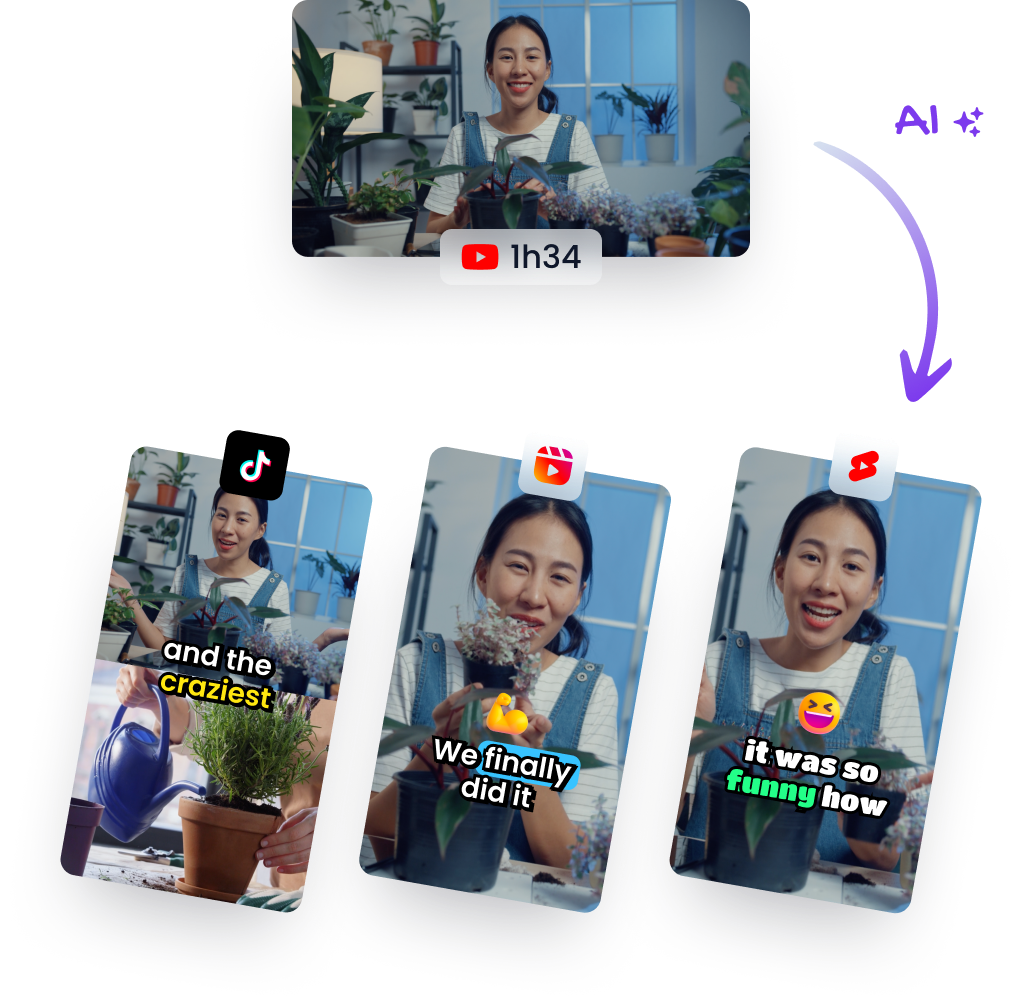
The following example demonstrates the principle through a visual format:
A hook shouldn't promise a result the clip can't deliver. Misleading curiosity may create an initial stop, but it damages trust and can produce weak downstream engagement. The goal is not merely to interrupt scrolling. It's to make the right viewer confident that staying will be worthwhile.
Why Longer TikTok Videos Are Quietly Winning
Short videos dominate creator habits, but reach does not require every idea to fit a rapid edit. Digital Information World's report on Buffer's findings found that videos longer than 60 seconds generated more reach and watch time than shorter clips. The practical point is not to stretch a weak idea. Give a strong idea enough time to earn attention, explain the context, and deliver a useful conclusion.
Creators often cluster in short formats because their editing habits come from Vine and Reels workflows. Those formats reward quick setup and fast payoff, so cutting footage down can feel safer than testing a slower explanation. That choice also removes the examples, objections, and details that keep a viewer watching.
A separate Metricool analysis of 1,001,817 videos across 87,600 accounts found that the most-viewed videos averaged 54 seconds, while videos between 2 and 5 minutes generated the highest average views across account sizes. The useful lesson is to match runtime to the job. A simple tip may need less time. A tutorial, interview answer, or case study may need several minutes to make its point clearly.

Give longer clips a complete structure
Extra footage does not create retention. Build a clear sequence:
- Open with the tension: Name the problem or surprising claim.
- Add progression: Use examples, objections, steps, or consequences.
- Deliver the payoff: Resolve the question and give the viewer something usable.
- End cleanly: Stop once the point lands instead of adding a weak outro.
For a podcast clip, remove the greetings and begin with the strongest sentence. Add enough context for a new viewer, then preserve the disagreement or explanation that makes the exchange worth watching. For a webinar, combine the problem, relevant teaching moment, and practical conclusion into one vertical narrative rather than posting an isolated fragment.
Pacing still matters. Cut pauses, repeated phrases, and detours. Use angle changes, relevant B-roll, text progression, screenshots, or visual emphasis to mark movement. Captions should support the argument without covering the speaker's face or turning every frame into visual noise.
The comparison between short-form and long-form video content helps clarify what to preserve when repurposing a longer recording. A teaser can attract attention, while a complete answer gives viewers more reasons to watch, save, share, or revisit. Longer content earns reach only when each segment has a job.
Using Sounds Trends and Hashtags the Smart Way
Sounds and hashtags belong to the discovery layer, but they can't rescue a video that loses viewers immediately. Use them to clarify context and join relevant conversations, not to replace a strong idea.
Start with TikTok's Discover page and in-app search. Brandwatch's guidance on TikTok hashtags recommends using those surfaces to find trending hashtags rather than stuffing random tags into every caption. Search your topic, inspect the language people use, and choose tags that accurately describe the clip's subject and audience.
A useful workflow looks like this:
- Search the topic: Enter the phrase a viewer might use to find the video.
- Review related language: Note recurring terms, questions, and community labels.
- Check relevant trends: Look for sounds or tags that fit the subject rather than forcing a mismatch.
- Pair the trend with an original angle: Add commentary, a test, a response, or a specific example.
- Remove irrelevant tags: If a tag doesn't help classify the video, it wastes attention in the caption.
Trending audio works best when it supports the concept. A business educator might use a recognizable sound under a visual list of common sales mistakes, while keeping the spoken explanation clear. A creator shouldn't attach a popular sound to an unrelated tutorial just because the audio is active. That may create a surface-level trend signal while confusing the viewer and weakening the video's identity.
Write captions that add information
Your caption has limited space to do useful work. Don't repeat the exact sentence already displayed on screen. Add search context, clarify the audience, or invite a focused response.
Weak caption: “What do you think? #fyp #viral.”
Stronger caption: “A practical way to turn one customer interview into several TikTok clips. Which part would you publish first?”
The second version tells TikTok and viewers what the video covers. It also asks a question connected to the content, rather than requesting empty engagement. Keep the prompt easy to answer, such as asking viewers to choose between two approaches or share the obstacle they're facing.
Hashtags can support classification, but quality remains the main condition. A small set of relevant tags is more useful than a crowded list of broad tags. Your spoken words, on-screen text, caption, and visual subject should all point toward the same topic so the platform can place the video in front of interested viewers.
Finding Your Posting Frequency Sweet Spot
More uploads do not automatically create more views. The useful question is how often you can publish without weakening the retention that earns For You Page distribution. Buffer's analysis of 11.4 million TikTok posts across more than 150,000 accounts found that moving from one post per week to 2 to 5 posts per week correlated with 17% more views per post. Accounts publishing 6 to 10 posts per week saw 29% more views per post, while those publishing 11 or more posts per week saw 34% more.
Those results show correlation, not a promise that higher volume will improve every account. The same research found median views stayed roughly flat around 500 across posting volumes, while top-performing posts increased the gap. Publishing more gives you more chances to find a strong format, but weak openings and repetitive subjects can still produce ordinary results.
Build a pipeline you can sustain
A dependable schedule beats an ambitious one that leaves you rushing edits. Build a weekly batch from one podcast, webinar, interview, or other long-form source:
- Collect raw material: Mark useful moments and complete ideas in the original recording.
- Write alternate openings: Create several hooks for one idea so you can test different framing.
- Create complete cuts: Make every clip understandable to someone who has not seen the source or another post.
- Prepare the packaging: Add readable captions, topic-specific text, descriptions, and relevant tags.
- Schedule the batch: Keep room to adjust later posts based on viewer response and feedback.
Publish 2 to 5 times per week when that pace preserves quality. Increase frequency only if you can maintain clear openings, clean audio, readable captions, and distinct ideas. Use a lower cadence when extra uploads force unfinished clips or repeated points onto your profile.

Review performance by format rather than upload count alone. If one opening produces stronger watch behavior, make several variations. If a topic earns views but little response, strengthen the payoff or give viewers a more useful prompt. Frequency should create more learning opportunities, not just fill your profile.
Reading Your Analytics and Turning Long Videos Into Views
Raw views tell you how far a clip traveled. They don't tell you why it traveled, whether viewers found it useful, or what to repeat. A better review pairs views with engagement rate by views, watch behavior, traffic source, and the structure of the video itself.
Benchmark context helps. Socialinsider's TikTok benchmark report places engagement rate by views at around 3.85% in Q2 2026, after hovering near 4.20% to 4.30% for five consecutive quarters, and reports a 9% year-over-year rise from 3.85% in 2024 to 4.20% in 2025. Treat the roughly 4% level as a diagnostic reference, not a universal pass-or-fail rule.
If a clip receives views but remains below that benchmark, inspect the hook, clarity, payoff, and shareability. If it meets or exceeds the benchmark, don't copy the video mechanically. Replicate its underlying structure with a different example, question, or source segment.
Turn existing footage into a testing system
Long-form content gives you more than one chance to find a strong idea. A podcast may contain a sharp disagreement, a personal story, a practical answer, and a memorable explanation. A webinar may provide several separate problems and solutions. Each segment needs its own opening and must work for someone who never saw the original.
The production checklist is straightforward:
- Select a complete idea: Avoid clips that depend on several minutes of missing context.
- Reframe for mobile viewing: Keep the active speaker or relevant object visible in a vertical composition.
- Tighten the introduction: Remove greetings, technical setup, and slow transitions.
- Add captions: Make the argument readable without relying entirely on sound.
- Export variations: Test different hooks or runtimes without changing the central lesson.
Klap can support this workflow by analyzing uploaded or linked long-form video, identifying potential segments, reframing footage for vertical formats, adding captions, and letting the user review and adjust clips before export. Use it as an editing accelerator, not as a replacement for editorial judgment. The strongest result still depends on selecting a useful idea and checking whether the opening makes sense to a new viewer.
Use a simple diagnostic table
What you seeLikely causeWhat to do next
Views are low from the start
The topic or opening isn't immediately clear, or distribution may be limited
Rewrite the first spoken line, strengthen on-screen context, and check originality and account health
Views are healthy but engagement is weak
The clip attracts attention without offering a strong reason to respond, save, or share
Improve the payoff, add a specific prompt, or make the utility more obvious
Watch time is strong but the clip feels incomplete
The video holds curiosity but withholds resolution
Add the missing context and deliver a clear conclusion
Engagement is competitive
The format has a promising structure
Produce variations using new examples, openings, and source segments
Review analytics at the same point each week. Compare the opening, length, topic, and payoff of your strongest and weakest clips. Keep a short record of what changed, then use the next batch to test one meaningful variable instead of changing everything at once.

Your Week-One Action Plan for More TikTok Views
Start by repairing the clip with the clearest retention problem, not by adding more posts. Choose one existing video and rewrite its opening so a new viewer understands the topic and payoff immediately. Watch it without sound to check readable text, then listen with sound and cut any sentence that delays the main idea.
Repurpose one long-form segment into a complete TikTok. Let it run beyond 60 seconds when the subject needs room for context, progression, and a satisfying conclusion. Length alone will not improve reach. A longer video earns its place when viewers keep watching because each section advances the idea.
Package the post for discovery after the edit is complete. Search TikTok's Discover page and in-app search for language your audience uses. Add a relevant sound only when it supports the concept, and write a caption that adds context rather than repeating the title. Judge the test by watch behavior and meaningful interaction, not just an early view burst.
Set a publishing rhythm you can maintain without weakening the work. The 2 to 5 posts per week range covered earlier gives you a practical starting point. Do not increase output when extra posts dilute the hook or repeat the same clip. Batch several edits from one recording so consistency comes from a process.
Retention and usefulness beat raw output. Make viewers glad they stayed, then repeat the structure that earned that response.
At week's end, compare views, watch behavior, and engagement rate by views across the test clips. Keep the strongest format, replace the example, and make another variation. If TikTok supports a broader acquisition program, Auspia's traffic growth system for B2B SaaS can connect content activity with a wider traffic strategy.
Disciplined iteration creates a useful content library. A stronger hook improves one clip, a repeatable narrative structure improves the next batch, and long-form recordings provide more material without requiring a new production from scratch.
Klap turns long-form videos from YouTube uploads, podcasts, and webinars into vertical TikTok-ready clips with AI-assisted segment selection, captions, and mobile reframing. Visit Klap to turn existing footage into a repeatable testing pipeline for stronger retention and more views.