How Long Should an Instagram Reel Be for Maximum Engagement
Other
The strongest Instagram Reels performance currently sits in the 45–60-second range, with a 0.35% engagement rate and 10,374 median views, while videos longer than three minutes fall to 0.15% engagement. But the right answer to “how long should an Instagram Reel be” depends on whether you're chasing discovery, retention, storytelling, or qualified traffic.
That distinction matters because there isn't one universal winning duration. A short clip can earn more completions, while a longer, well-paced clip can create more total viewing opportunity and stronger interaction. After testing different formats across creator and brand accounts, the practical rule is simple: choose the shortest length that delivers the idea properly, then let your objective determine the starting range.
The Data Behind Instagram Reel Performance in 2026
A large 2026 analysis of roughly 140,000 Instagram Reels from business accounts found that 45–60 seconds was the strongest performance band. It recorded the highest engagement rate, 0.35%, and the highest median views, 10,374, while Reels longer than three minutes dropped to 0.15% engagement. Socialinsider's Instagram Reel length analysis provides the clearest current benchmark for brands deciding whether a clip needs more room to develop.
That doesn't mean every Reel should run for almost a minute. Another analysis of 315 Reels from 96 accounts found the strongest engagement-per-view range was 15–30 seconds at 9.4%, compared with 7.5% for 0–15 seconds, 4.5% for 30–60 seconds, and 7.8% for 60 seconds or more. The difference comes from the KPI being measured. Engagement rate, engagement per view, completion, and reach don't always point to the same duration. Influencer Marketing Hub's comparative data shows why a single “ideal length” claim can be misleading.

Why bloated clips struggle
Every extra second creates another chance for a viewer to leave. A Reel needs enough time for a hook, development, and payoff, but unused pauses, repeated explanations, and slow openings reduce the chance that viewers reach the end or replay the video.
A useful way to think about the data is this:
- Shorter is useful when the idea is simple and completion is the priority.
- Mid-length often works well when the content needs context, proof, or a clear payoff.
- Longer only makes sense when the topic earns the additional attention.
Retention is the operating metric behind these decisions. Instagram doesn't publish a universal duration formula, so creators should treat video completion rate as a diagnostic signal rather than assuming that a shorter video automatically wins. A 20-second tip that finishes cleanly can outperform a padded 60-second explanation, while a focused 55-second tutorial can outperform a rushed 15-second version.
Instagram Reel Length Limits You Need to Know
Instagram Reels launched in August 2020 with a 15-second cap, then expanded to 30 seconds, 60 seconds, and 90 seconds before Instagram announced support for 3-minute Reels in January 2025. By mid-2026, reporting indicated that some accounts could upload Reels of up to 20 minutes, although the rollout and practical limits can vary by account and creation method. Metricool's overview of Instagram Reel length tracks this shift from a strict short-form product toward a much wider technical ceiling.
That history changes the question. You're no longer deciding between a handful of fixed options. You may be able to record or upload a much longer video, but the fact that Instagram accepts it doesn't mean viewers will watch it or that distribution will favor it.

Recording limits and upload limits aren't identical
Several 2026 explainers note that Reels can be created as short as 3 seconds and, on newer rollouts, can extend to 20 minutes, but the available duration depends on how the Reel is made and whether the account has access to the extended rollout. In-app recording may be capped lower than an uploaded video. Zeely's explanation of Reel duration covers this distinction.
Before editing, check your own Instagram creation screen and upload workflow. If the app offers a shorter recording option, you can still edit the source externally and upload the finished clip if your account supports that route. The technical ceiling is now less important than the audience's willingness to stay.
For creators repurposing videos on Instagram, this means you can work from a long interview or webinar without publishing the entire source as one Reel. Pull out the sections that stand alone, then choose a duration that matches the purpose of each clip.
Choosing the Right Reel Length for Your Goal
The best duration depends on what you want the viewer to do. A discovery clip needs to earn the next swipe, while an educational clip may need enough time to establish a problem, explain the answer, and make the viewer trust the advice.
GoalRecommended LengthWhy It Works
Discovery and reach
15–30 seconds
Concise enough to deliver a fast hook and clean payoff, with less room for dead time
Watch time and engagement
45–60 seconds
Matches the strongest engagement and median-view band in the large 2026 business-account analysis
Storytelling and education
60–90 seconds
Allows more context, examples, and narrative progression when the subject needs it
Repurposing long-form content
Multiple cuts from 15–60 seconds
Lets one source produce separate teasers, insights, and highlight clips for different objectives
Discovery favors compression
For a quick opinion, visual transformation, product detail, or single tip, start around 15–30 seconds. Cut the setup aggressively. Put the result, tension, or surprising point in the opening, then resolve it before the viewer has to work to find the value.
This range also gives you flexibility. A 15-second teaser can create curiosity, while a 30-second explanation can answer a straightforward question without feeling rushed. The shorter analysis cited by Moonb's discussion of Reel length supports separating completion-focused clips from engagement-focused clips instead of forcing both into one format.
Engagement needs enough room for substance
If the objective is comments, saves, or meaningful engagement, test 45–60 seconds first. That duration gives you space to make a claim, support it with an example, and end with a useful conclusion. It's long enough to create substance without automatically becoming long-form content.
Storytelling is different. A personal lesson, tutorial, or customer problem may need 60–90 seconds because the viewer needs context before the payoff. Don't stretch a 20-second idea to fill that range. Use it only when the narrative has real beats.
Creators building a broader publishing system can also use practical social media tips for makers to connect Reel choices with wider content planning, rather than treating every upload as an isolated reach experiment.
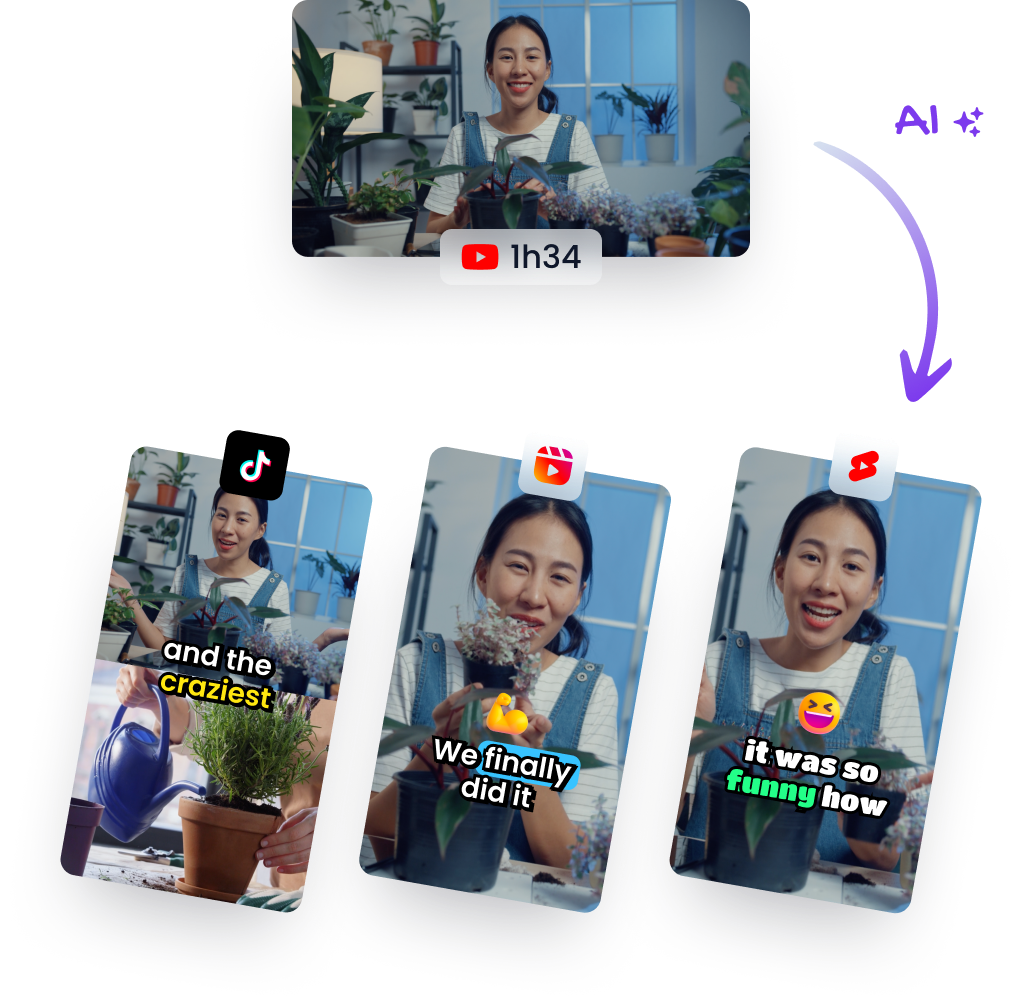
How to Turn Long Videos into Perfect Reels with Klap
Long-form content usually contains more usable material than creators realize. A podcast conversation, webinar, interview, or YouTube upload may include several complete ideas, but finding them manually takes time and often leads to inconsistent clips.
A practical workflow looks like this:
- Import the source. Upload the video file or connect a YouTube link. Start with material that has clear speech, a defined topic, and moments that can make sense without the original introduction.
- Let the AI identify segments. Klap scans the source for engaging sections and prepares short clips. Look for moments with a strong claim, a clear question, a useful explanation, or a natural emotional shift.
- Review the edit instead of accepting it blindly. Auto-selected clips still need editorial judgment. Remove throat-clearing, repeated phrases, and context that only makes sense inside the full episode.
- Choose the target duration. Create a 15-second teaser when discovery matters, then keep a fuller 60-second highlight when the idea benefits from supporting detail.
- Correct the mobile presentation. Reframe the video for vertical viewing, check the speaker's position, and make sure captions don't cover faces or important screen content.
- Export the finished versions. Review the opening and final frame on a phone before publishing.

The advantage of producing several versions from one source is strategic, not just operational. You can test a compressed quote for discovery, a mid-length explanation for engagement, and a longer narrative for viewers who already know the account. Klap's long-video-to-short-video converter supports this type of workflow with automated segment selection, reframing, captions, and resizing, followed by manual review.
The editor still owns the decision. AI can surface a strong passage, but it can't fully judge whether the opening makes sense to a cold viewer, whether the payoff arrives soon enough, or whether the clip reflects the brand's point of view.
Editing Techniques That Keep Viewers Watching
Duration only creates an opportunity. Editing determines whether the viewer uses it.
A 60-second Reel can feel exhausting when the speaker spends the opening explaining who they are, repeats the premise, and leaves the main point until the end. A 90-second Reel can feel effortless when every section changes the viewer's understanding, adds visual evidence, or advances the story.
Build momentum from the first frame
Open with the most useful or intriguing moment. That might be a direct claim, a visible before-and-after, a question, or a result that creates a reason to continue. Don't spend the opening on a logo animation or a general greeting unless the greeting itself carries value.
Use visual changes to support the spoken structure. A cutaway, close-up, text reveal, screen recording, or change in framing can refresh attention without making the edit chaotic.

Remove friction, not personality
Cut pauses, filler, duplicate explanations, and transitions that don't add meaning. Keep natural emphasis, reactions, and small moments that make the creator feel human. Over-editing can make a useful explanation feel nervous or difficult to follow.
Captions should reinforce the message for viewers watching without sound. Keep them readable, synchronize them with the spoken words, and place them where they won't compete with the subject or Instagram's interface.
Practical rule: If a sentence doesn't create curiosity, deliver information, show evidence, or move the viewer toward the payoff, question whether it belongs in the Reel.
End with a clear next action or a loop-friendly visual. A tutorial might invite a save, an opinion clip might ask for a response, and a product demonstration might direct viewers to the next step. The call-to-action should match the objective, not appear as a generic instruction added at the last second.
Testing and Optimizing Your Reel Length Over Time
Your audience may respond differently from the broader market. Treat duration as a variable to test, not a permanent brand rule.
Start with similar ideas that have comparable complexity and audience relevance. Publish one concise version and one fuller version, while keeping the hook quality, visual standard, caption clarity, and call-to-action as consistent as possible. If the topics differ too much, you won't know whether length caused the result.
Track the signals that match the objective:
- Completion rate: Shows whether viewers reached the end, especially useful for discovery-focused clips.
- Engagement rate: Helps evaluate comments, likes, shares, and saves relative to the audience response.
- Reach: Indicates whether the Reel found viewers beyond your existing followers.
- Drop-off points: Reveal the exact moment where pacing, clarity, or relevance weakened.
The available evidence already shows why you need multiple measures. One large analysis found 45–60-second Reels at 0.35% engagement, while another found 15–30 seconds strongest for engagement per view at 9.4%. Those findings aren't necessarily contradictory. They answer different performance questions, so your own test should define the KPI before you publish. Swarmify's analysis also reports 0.35% engagement for 45–60 seconds and 0.15% beyond 180 seconds, reinforcing the value of testing a clear mid-length baseline against longer edits.
When viewers consistently leave during setup, shorten the opening. When they stay but don't interact, improve the payoff or prompt. When longer clips hold attention and generate stronger actions, give that format more room.
Final Thoughts on Finding Your Ideal Reel Length
The answer to “how long should an Instagram Reel be” isn't a single number. For broad engagement, 45–60 seconds is the strongest current starting point in the large business-account analysis, while shorter 15–30-second clips can be more efficient when completion and discovery matter. Reels beyond three minutes face a clear performance warning in the available data, especially when the additional length doesn't create more value.
Choose the objective first. Then select the shortest duration that lets the hook, explanation, and payoff work without feeling compressed. Edit for momentum, add captions, remove dead space, and review the result on a phone before publishing.
Long-form creators don't need to turn every episode into one oversized Reel. Use an AI workflow to identify several independent moments, produce different durations from the same source, and compare the results against the metric that matters most to your account. That approach replaces guru formulas with a repeatable editorial process.
Klap turns long-form videos from sources such as podcasts, webinars, and YouTube uploads into short, vertical clips with AI-assisted segment selection, captions, reframing, and resizing. Visit Klap to create multiple Reel lengths from one source video, then test which format best fits your audience and objective.