YouTube Shorts Format: Complete Spec and Best Practices
Other
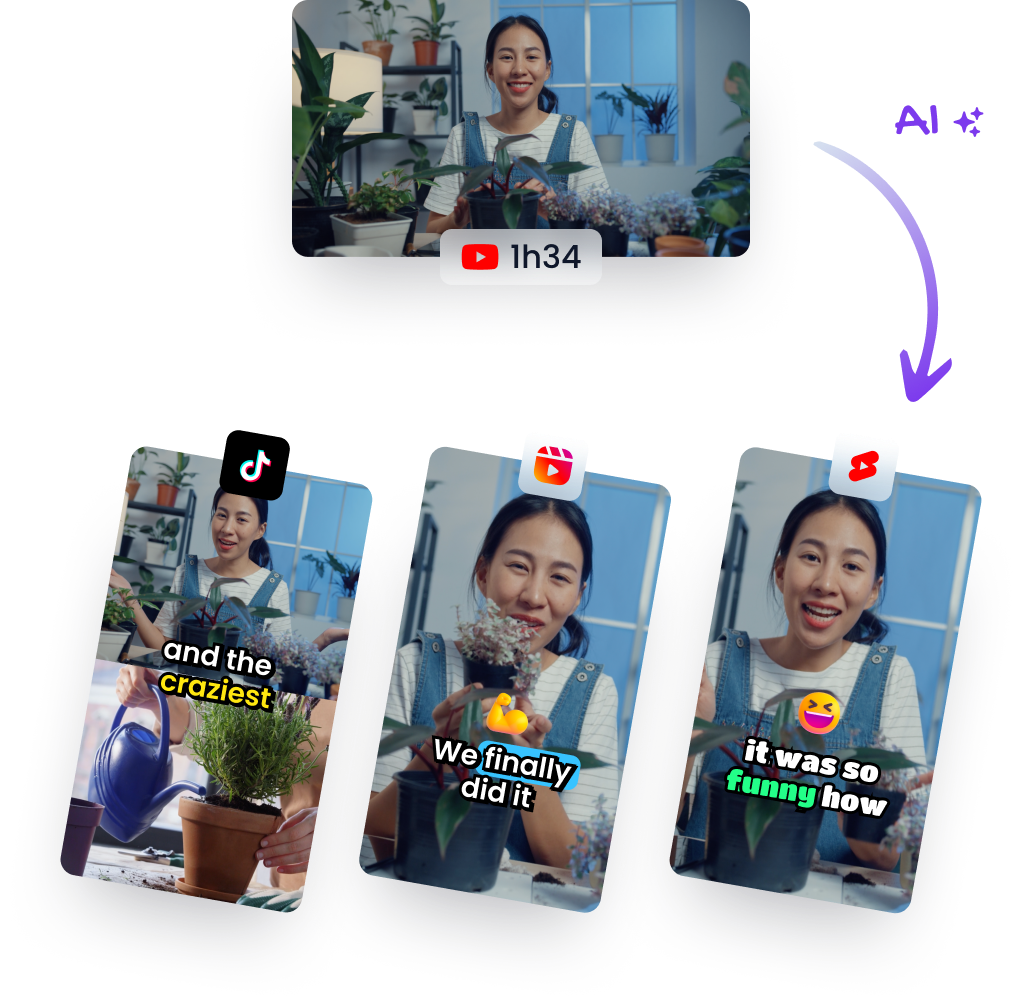
You've finished a long-form interview, webinar, or tutorial and found a moment that could work as a Short. Now comes the production judgment: should you crop it tightly into a quick hit, or keep enough context for the idea to land? The YouTube Shorts format gives you room to choose, but the export settings are only the starting point. Framing, captions, and the way you measure results all affect whether a clip earns attention beyond its first play.
Why the YouTube Shorts Format Matters in 2026
You're at the edit timeline with a useful segment selected. The speaker makes a sharp point, but the setup takes a few seconds, and the original footage is horizontal. Cut too aggressively and the clip feels abrupt. Preserve too much and viewers may swipe before the point arrives. The format decision is really an editorial decision: what must stay for the moment to make sense, and what can go?
Shorts began as a mobile-first creation and viewing experience, not merely a shorter duration setting. YouTube announced its Shorts beta on September 14, 2020, in India, with mobile-made videos of 15 seconds or less. In YouTube's one-year update, the average number of daily first-time Shorts creators had more than doubled between September 2020 and September 2021, a sign that the format was making it easier for new creators to publish (YouTube's Shorts beta announcement and update).
That origin still shapes good production. A Short needs a clear opening, enough context to make the subject understandable, and a vertical composition that reads on a phone. But Shorts can now accommodate more than a one-line punchline or teaser. For teams working from longer recordings, the opportunity is to select self-contained moments and adapt them for discovery, rather than treating each clip as a compressed trailer for the full video.
The practical decisions go beyond length. You need an export that fits the platform, a cut that gives the idea enough room, captions that remain legible across screens, and metrics that separate attention from starts. The sections below move from technical specs to duration, metadata, captions, analytics, and a repeatable repurposing workflow.
Core Technical Specs Every Short Must Meet
Before editing details, set the canvas. YouTube supports Shorts uploads up to 1080p. A full portrait export at 1080 × 1920 pixels and 9:16 uses the available vertical space; 1080 × 1080 square video is also supported, but fills less of a phone screen (YouTube's Shorts upload guidance).
That platform ceiling does not mean every source file needs to be recorded at the same resolution. Higher-resolution source footage can be resized for delivery, but the final composition should be checked at the size viewers will see. Do not crop a 16:9 frame and assume the speaker, captions, and other key details will remain in view.
| Spec | Platform limit | Recommended export | Notes |
|---|---|---|---|
| Resolution | Up to 1080p | 1080 × 1920 | Use 9:16 for full portrait coverage. |
| Aspect ratio | Square or taller for eligible Shorts | 9:16 portrait | A square canvas is valid, but less immersive on a phone. |
| Square alternative | Supported | 1080 × 1080 | Useful when a vertical crop would remove important context. |
| Frame rate | Choose based on source footage | Match the source | Avoid changing frame rate without a reason. |
| File format and codec | Use a YouTube-accepted upload format | Export a standard compatible video file | Check the current upload guidance before standardizing an export preset. |
| Audio | Keep the original mix intelligible | Review speech and music on a phone speaker | A technically valid upload can still sound muddy or uneven. |
Treat resolution and aspect ratio as composition choices, not boxes to check. Before exporting, inspect the crop around every speaker change and cut. Automated reframing may keep a face centered in one shot, then cut off a second speaker when the conversation shifts. Give the subject and captions room away from the screen edges, where interface elements may cover them.
Frame rate and bitrate are different from the platform's format eligibility rules. Match the export to the source unless motion or the edit calls for another choice. For more guidance on choosing dimensions for YouTube videos, see this practical overview of YouTube video size and aspect ratio.
Length, Duration, and When to Break the 60-Second Habit
The old 60-second ceiling encouraged editors to compress every story into a minute. That constraint changed on October 15, 2024, when YouTube began classifying eligible square or vertical videos up to three minutes long as Shorts. The expanded rule applies to videos uploaded on or after that date; older uploads retain their previous long-form classification (YouTube's Shorts duration eligibility rules).

More available runtime changes what you can repurpose. A useful interview answer might need a brief question, a setup, and the answer itself. Forcing it into a shorter cut can strip out the context that makes the answer valuable. Yet a longer limit isn't a reason to keep every pause, tangent, or repeated point.
Choose the cut that serves the idea
Start with the complete thought, not a preset duration. If the main point lands cleanly without much explanation, a compact cut may work. If viewers need a setup to understand why the answer matters, leave it in. A longer excerpt earns its place when each beat advances the idea, not because there's room.
Don't rely on a universal completion-rate claim to make the decision. Compare cuts from your own channel using retention and completion data, then look at whether viewers continue to the next useful beat. A shorter cut can attract more starts while losing the part that makes viewers care. A longer cut can preserve meaning but create more opportunities for a swipe.
Editing rule: Remove material that doesn't move the idea forward. Keep context that changes how viewers understand the point.
For a repurposing team, the longer limit can also reduce the pressure to split one complete explanation into disconnected fragments. Build a short version and a fuller version when both tell a coherent story, then judge each by its audience response rather than assuming the shortest edit is strongest.
Metadata, Titles, and Description Patterns That Get Clicks
A Short's title has to make sense beside the video, not just beside the original long-form upload. A long-form title often explains the topic for viewers who are choosing what to watch. In the Shorts feed, the opening frame and first spoken line do more of the immediate work, so the title should add useful context rather than repeat every word on screen.
Write the clearest idea early. A title like “Why Your Podcast Intro Loses People” signals a specific problem; a title copied from a broad interview may not tell a scrolling viewer what this clip delivers. Keep the opening phrase understandable on its own, and avoid promising an answer the clip doesn't provide.
Give each metadata field one job
Title: State the topic, tension, or useful takeaway. Reuse the long-form title only when it describes this particular segment accurately.
Description: Add a concise explanation, relevant context, and a path to the full video when that helps the viewer. Use the primary topic naturally; don't turn the field into a string of repeated keywords.
Hashtags: Choose a small set that describes the subject or format. Relevant tags help label the clip, while a stack of loosely related tags can make the metadata look cluttered. Don't treat hashtags as a substitute for a clear edit.
Thumbnail and opening frame: Review how the clip appears in the surfaces where viewers encounter it. The first frame should be visually understandable, especially when the video begins mid-conversation. A title can't repair an opening that looks like an accidental crop or starts before the speaker's point is clear.
Before publishing, compare the title with the clip itself. If the title says “three ways,” the viewer should hear or see those ways in the video. Metadata should set an honest expectation and help the right viewer recognize the subject, not manufacture curiosity that the edit can't satisfy.
Captions and Subtitles as a Production Element
Captions shape how a Short reads. They help viewers follow speech when sound is unavailable, but they also determine how much visual space the speaker and scene have. Treat them as part of the edit from the first vertical review, not as a final overlay added after framing is locked.

Start with clean, readable text. Keep captions away from the very bottom and edges, where platform controls or crop changes can interfere. Use strong contrast against the image. A subtle shadow or solid backing can help when the background changes, but avoid styling so heavy that every word competes with the speaker.
Build captions around the footage
Automatic captions are a useful draft, not a final proofread. Correct names, product terms, acronyms, and jargon by listening to the audio. A captioning error can change the meaning of a sentence, and viewers may notice it before they understand the clip.
Line breaks matter as much as font choice. Keep each caption phrase short enough to scan while the speaker continues, and avoid covering the mouth, a product demonstration, or a meaningful visual detail. When the speaker moves, check that the text placement still works rather than letting captions collide with the subject.
Animated word-by-word captions can add emphasis to a punchy clip, but constant motion makes a dense explanation harder to follow. Use animation where it helps viewers track the thought; use calmer captions when the speaker is already moving quickly or the scene carries important visual information.
The audience may not always be holding a phone close to their face. YouTube describes Shorts as mobile-optimized, while its documentation also notes that Shorts ads can appear on connected TVs and other large-screen devices (YouTube's documentation on Shorts ad placements). That makes distance legibility a worthwhile review: if the caption can't be read at a glance on a larger screen, simplify it or increase its visual clarity.
What Actually Counts as Success After the 2025 View Change
Raw views no longer tell the whole story. YouTube now records a Shorts view whenever a Short starts or replays, without requiring a minimum watch time. It also retains a separate engaged views metric for Shorts revenue sharing and YouTube Partner Program eligibility (explanation of the Shorts view-counting change).

A clip can therefore receive starts without holding attention. That doesn't make views useless: they still show whether people are encountering the video. But treating the public view count as a complete measure of quality can hide a weak opening, a confusing setup, or a mismatch between the promise and the payoff.
Read the clip as a sequence of signals
Use a small set of metrics to diagnose different parts of the viewing experience:
- Engaged views help distinguish qualified viewing from a start or replay.
- Average percentage viewed shows how much of the clip people watch relative to its length.
- Completion and rewatches help identify whether the ending lands or viewers return to a moment.
- Subscribers gained indicate whether the clip gives viewers a reason to see more from the channel.
- Downstream long-form clicks show whether the Short helps move interested viewers to the full video.
Compare clips with similar goals and content, not just similar view counts. An excerpt designed to introduce a podcast may need to earn a click to the full episode. A self-contained tip may be valuable even if viewers don't continue elsewhere. The success test depends on what the clip is meant to do.
A hook should earn attention from the right audience, not merely trigger a start. If viewers leave as soon as the hook gives way to the explanation, test whether the opening overpromises or whether the edit takes too long to deliver. Use the retention curve to revise the cut, then judge the new version against the metric that matches its purpose.
Repurposing Long-Form Video Into Shorts Step by Step
A strong repurposing workflow begins with the idea, not the crop. First, scan the long video for a complete point that can stand on its own. The opening seconds aren't automatically the best source; a later answer, demonstration, or clear contrast may offer a stronger hook.

Four decisions from source to export
Find the moment. Select a segment with a clear claim, useful reveal, or question viewers can understand without watching the full recording. Keep enough setup to make the point credible. If the segment depends on an earlier reference, add context or choose another excerpt.
Reframe for the viewer. Automated speaker tracking can speed up a first pass, especially when a single person speaks directly to camera. Review the crop when speakers change, gestures matter, or the subject moves. Manual adjustments are often necessary for a conversation, a screen demonstration, or a shot where the environment explains the point.
Caption and brand. Correct the transcript, choose a readable style, and keep logos or other branding from competing with the content. Review the finished vertical cut on a phone-sized display. A face that looks fine in the editing window may become too small after reframing.
Export and verify. Render the final portrait composition at the intended resolution, then check the opening, crop, captions, speech level, and ending. Don't trust the preview alone: play the exported file and confirm that the edit hasn't shifted or cut off important details.
Tools can help with the first pass, but they don't replace editorial review. Klap is one option for analyzing longer videos, selecting potential clips, reframing footage, and preparing captions. For ideas on choosing source material, see this guide to repurposing a long YouTube video.
The workflow is easier to judge when you see it in motion. This walkthrough shows a video-to-Shorts process:
<iframe width="100%" style="aspect-ratio: 16 / 9;" src="https://www.youtube.com/embed/K1xoDOxn6mw" frameborder="0" allow="autoplay; encrypted-media" allowfullscreen></iframe>Export Settings That Work Across Shorts, Reels, and TikTok
A vertical master can be a useful starting point for YouTube Shorts, Instagram Reels, and TikTok, but don't assume one export is ready for every destination. Each platform has its own interface, publishing options, and placement rules. Check the current requirements for the account and format before locking a shared preset, especially for duration, file limits, and cover handling.
The most reusable choice is a well-composed vertical edit with clean speech, legible captions, and no critical information pressed against the edges. Then review each platform's preview separately. A caption that clears one app's controls may sit under another app's buttons, and a cover frame that looks intentional in one feed may not be the one viewers see elsewhere.
| Shared production choice | Platform-specific review |
|---|---|
| Compose a portrait version that keeps faces and key action visible. | Check the current duration and upload requirements for each platform. |
| Keep captions readable and away from interface controls. | Adjust caption placement against each app's preview and overlays. |
| Export a clean master without platform branding. | Review cover or thumbnail options where the platform offers them. |
| Preserve clear dialogue and intentional music. | Confirm that audio is suitable and permitted for the destination. |
A clean export also makes it easier to test different audio choices per platform. If a clip needs a music bed, creators looking for a rights-conscious starting point can find AI tracks for Shorts, then check that the selected track fits the destination's publishing and licensing terms.
Don't bake a secondary platform's watermark into a master you plan to upload elsewhere. Keep a clean source export, apply each platform's adjustments to a separate version, and watch every final file before publishing. The goal isn't identical delivery everywhere; it's a consistent idea presented in a way that fits each viewing experience.
Monetization Rules Every Shorts Creator Should Know
Shorts revenue doesn't work like an ad attached to an individual long-form video. YouTube distributes Shorts ad revenue from advertising shown between videos in the Shorts Feed, through a system separate from Watch Page monetization. To earn through this model, a creator must be in the YouTube Partner Program and accept the Shorts Monetization Module (YouTube's Shorts monetization policy).
YouTube's published structure gives creators 45% of their allocated share of the Shorts Creator Pool. Music licensing is handled before creator-pool distribution, including when music is used. That means a high public view count shouldn't be treated as a direct earnings forecast: eligibility and monetized viewing matter, and a clip's appearance in the Shorts Feed is part of the model.
Check eligibility before selecting the clip
A repurposing team should review the source and the final cut for policy compliance before publishing. A clip can attract attention yet fail to qualify for monetization if it violates applicable policies or uses material in a way that creates rights problems. Review music and third-party footage rather than assuming a short excerpt is automatically safe.
This changes the clip-selection question. Don't ask only whether a segment could draw views; ask whether it can be published in an eligible form and whether it serves the channel's broader goals. A useful explainer may support audience growth or lead viewers to a full episode, while a high-reach clip may have limited revenue value if it isn't eligible.
For a practical overview of revenue routes and eligibility considerations, see this guide to monetizing YouTube Shorts. Keep view performance, engaged attention, eligibility, and earnings as separate measures. They answer different questions about the same clip.
Pre-Upload Checklist for Every Short
Run a short quality check before publishing. It catches the mistakes that often survive an edit because each decision seemed acceptable in isolation.
Before export
- Confirm the hook: The first moment makes the subject clear and gives viewers a reason to stay.
- Save the source segment: Keep the original time range and a version with enough context to revise the cut.
- Review the crop: Faces, gestures, demonstrations, and key details remain visible in portrait framing.
Export and upload
- Set the canvas: Use the appropriate portrait or square composition from the spec sheet, and verify the final render rather than relying on the project settings.
- Check the captions: Correct names and jargon, review contrast, and move text away from important visuals and interface areas.
- Write accurate metadata: Make the title specific to the clip, use a concise description, and add only relevant hashtags.
- Play the exported file: Check speech clarity, opening timing, crop changes, and whether the ending feels intentional.
After publishing
- Review the published appearance: Check the clip on a mobile display and confirm that the title and opening frame work together.
- Read the retention signals: Compare engaged views, average percentage viewed, completion, rewatches, subscriber gains, or long-form clicks according to the clip's purpose.
- Make one useful edit decision: If viewers leave before the payoff, examine the setup or pacing before changing unrelated elements.
A checklist is most useful when it stays attached to the production workflow. Keep the spec sheet and review steps beside the editing template so each Short gets the same final scrutiny.
Common Questions About the YouTube Shorts Format
Do hashtags determine whether a Short gets views?
Hashtags help label a clip, but they cannot fix an unclear opening or a title that misrepresents the content. Add a few relevant tags when they clarify the topic. Skip unrelated tags.
Should I edit for sound-on or sound-off viewing?
Make the visual story clear without audio, then make sure the dialogue and music work with sound on. Captions support silent viewing; clear speech gives listeners another reason to stay.
Can I turn someone else's long-form video into Shorts?
Clipping another creator's video does not automatically make the edit lawful or fair use. Rights depend on permission, licensing, and the specific use. Get permission or use footage you have the right to publish.
Does posting more often beat making a stronger clip?
A higher publishing pace cannot make a weak cut hold attention. Choose a schedule that leaves time to select strong moments, check the framing, and learn from retention data. Judge each clip against its purpose, rather than assuming that posting more often will improve results.
Are Shorts only watched on phones?
No. Shorts are designed with mobile viewing in mind, but people also watch them on connected TVs and other large screens. Independent reporting put connected TVs at 15% of Shorts viewing in the United States in early 2025. Keep faces and key visual details readable at a distance, and avoid captions so dense that they are hard to follow on a larger display.
Turn an existing YouTube video, podcast, or webinar into vertical clips with Klap's AI-assisted clip selection, reframing, and captioning tools. Try Klap to prepare Shorts from long-form footage, then review each export for framing and pacing.