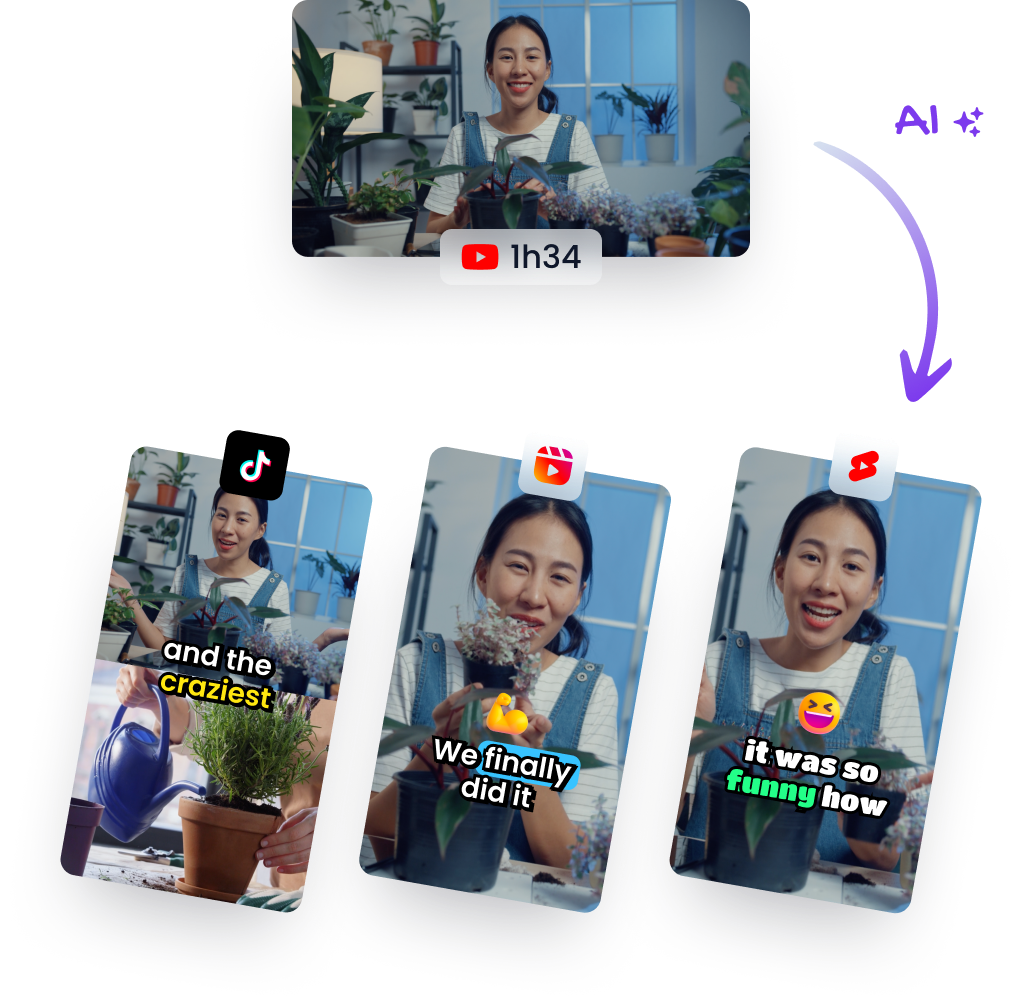
Our Complete Guide on How Much YouTube Shorts Pay per 1,000 Views
Content Monetization

Quick Summary
This guide explains how much YouTube Shorts pay per 1,000 views and how creators can maximize earnings. Revenue comes from a shared Creator Pool, with music costs deducted first, and payouts depend on engagement, niche, audience location, and content strategy. For more tips, insights, and tools to grow your Shorts revenue, explore our blog.
Want to Know How Much YouTube Shorts Pays per 1,000 Views?
Many creators assume YouTube Shorts pay the same as regular videos in terms of ad revenue per 1,000 views. The reality is more complex.
Shorts use a distinct monetization model that combines revenue distribution from the Creator Pool with measurable audience engagement signals, both of which directly shape how much creators earn per 1,000 views.
In this Klap guide, we break down how much YouTube Shorts actually pays per 1,000 views, explain how the Creator Pool and ads work, and outline strategies to help you maximize your earnings.
Why Listen to Us?
At Klap, we work with creators and teams who publish YouTube Shorts at scale. Our AI-powered tools are used to repurpose long-form content into Shorts, optimize videos for vertical feeds, and maintain engagement through captions and reframing. This exposure to real-world Shorts workflows provides insight into how monetization works in practice, what affects eligible views, and why earnings per 1,000 views vary widely between creators.

What Determines How Much YouTube Shorts Pay Per 1,000 Views?
YouTube Shorts are vertical, short-form videos initially limited to 60 seconds but now supporting up to 3 minutes, giving creators more flexibility within the Shorts feed. But earnings per 1,000 views does not work like the traditional long-form ads.
Shorts revenue comes from a shared ad revenue pool. Ads run between videos in the Shorts feed, and total revenue is combined, then distributed to eligible creators based on their share of total views. After YouTube’s cut, creators receive a percentage of the remaining pool.
How much you earn per 1,000 views depends on several factors: the overall size of the revenue pool, your percentage of total Shorts views, your audience’s location (higher-CPM countries typically earn more), and your niche. Finance and business content often earn more than entertainment or meme-style clips.
Because payouts are tied to a pooled model rather than direct ads on your video, Shorts RPM is typically lower and more variable than long-form content.
How YouTube Shorts Monetization Actually Works
YouTube Shorts monetization works differently from long-form videos.
Instead of ads running on individual Shorts, YouTube places ads between videos in the Shorts feed. Revenue from those ads is pooled monthly and distributed to eligible creators.
Here’s how it works step by step:
Step 1: Calculate Total Revenue
YouTube first calculates the total ad revenue generated from Shorts views in a specific country.
Step 2: Deduct Music Licensing Costs
From this total, YouTube subtracts music licensing costs before forming the Creator Pool.
Step 3: Determine Allocation Based on Music Usage
The portion that goes into the Creator Pool depends on how many music tracks are used in the Shorts:
- No music used: 100% goes to the Creator Pool
- One music track used: 50% goes to the Creator Pool
- Two music tracks used: 33% goes to the Creator Pool
Step 4: Form and Distribute the Creator Pool
After deductions, the remaining amount becomes the Shorts Creator Revenue Pool. YouTube then distributes it to creators based on their share of eligible Shorts views that month.
Example: If your Shorts account for 1% of views, you receive roughly 1% of the pool.
Step 5: Apply Revenue Split
From the amount you receive:
- Creators keep 45%
- YouTube retains 55%
- This split is fixed and does not depend on niche, audience size, or individual video CPM.
Note: Spam, deleted Shorts, or policy-violating content don’t count toward revenue. Also, the 45%/55% split applies after the Creator Pool is formed and covers ads between Shorts, not ads on individual videos.
How to Qualify for YouTube Shorts Monetization
YouTube Shorts monetization has two tiers, each unlocking different earning opportunities.
Tier 1: Fan Funding Access (Early Monetization)
Purpose: Earn directly from your audience, not ads
Requirements:
- 500 subscribers
- 3 public uploads in the last 90 days
- Either 3,000 valid long-form watch hours in the last 12 months or 3M valid Shorts views in the last 90 days
Unlocked Features: Super Thanks, Super Chats, Super Stickers, Channel Memberships
Not Included: Shorts ad revenue, access to the Creator Pool
Ideal for: Creators with an engaged audience but limited reach
Tier 2: Full Shorts Ad Revenue (Creator Pool)
Purpose: Earn directly from ad revenue plus all Tier 1 features
Requirements:
- 1,000 subscribers
- Either 10M valid Shorts views in the last 90 days or 4,000 long-form watch hours in the last 365 days
Unlocked Features: Shorts ad revenue from the Creator Pool + all Tier 1 fan funding options
Earnings Overview:
- Ads run between Shorts, not on individual videos
- Revenue is pooled, music costs deducted first
- Remaining revenue split: 45% creators / 55% YouTube
- Payout is based on total Shorts views, not individual CPM
Non-negotiable requirements (Both tiers)
- Follow YouTube monetization policies
- Avoid reused or copyrighted content
- Have an approved Google AdSense account
- Enable 2-step verification on your Google account
How Much Do YouTube Shorts Pay for 1,000 Views?
There’s no fixed rate for 1,000 Shorts views. Unlike long-form videos, where earnings are tied directly to ads, Shorts payouts come from a shared revenue pool.
Your earnings depend on your share of eligible views compared with other creators, so two channels with the same view count can earn very different amounts.
Since Shorts use a pooled system with deductions like music licensing, it’s more accurate to track earnings via RPM rather than a flat rate. RPM (Revenue Per Mille) shows how much you earn per 1,000 eligible views after YouTube’s revenue-sharing calculations, reflecting your actual payout rather than direct ad performance.
YouTube Shorts operates at a massive scale. YouTube has publicly stated that creators upload millions of Shorts every day, and the Shorts feed generates 200 billion views daily across the platform. Because ad revenue is distributed across such a large and competitive ecosystem, creator earnings per 1,000 views depend heavily on relative performance rather than fixed advertising rates.
Expected Earnings for YouTube Shorts
Based on creator reports and industry data, most monetized Shorts creators can expect a typical RPM (Revenue Per Mille) of $0.01 to $0.06 per 1,000 views, while higher-performing creators may earn $0.15 or more per 1,000 views.
These ranges aren’t guaranteed. Creators in regions with higher advertising rates, like the U.S., Canada, and Western Europe, often earn more because ads there contribute more to the Shorts Creator Pool.
CPM (Cost Per Mille) measures what advertisers pay for 1,000 impressions, but Shorts creators don’t earn directly from CPM. YouTube pools all ad revenue and distributes it based on eligible views.
Other factors affecting RPM include:
- Engagement and watch time: Higher interaction increases your share.
- Music usage: Licensed tracks reduce revenue flowing into the pool.
In short, 1,000 Shorts views can give a rough estimate, but final payouts depend on YouTube’s overall revenue distribution.
Note: Using licensed music reduces the total pool, but your share and 45% cut stay the same.
How Creators Use YouTube Shorts to Support Revenue
Creators use YouTube Shorts differently depending on their content strategy and monetization goals.
Podcast and Long-Form Creators
Often repurpose highlights from interviews or episodes into Shorts. While Shorts RPM is relatively low, the increased discoverability helps drive subscribers toward long-form videos, where ad revenue per view is typically higher.
Want to repurpose your podcast for more views? Check out our guide to boosting reach with repurposed podcasts.
Small Businesses and Solo Creators
Tend to use Shorts as top-of-funnel content. Shorts increase visibility and audience growth, while monetization often comes later through memberships, services, or longer videos rather than Shorts ad revenue alone.
Curious how to streamline your Shorts workflow? Here’s a guide to creating viral YouTube Shorts efficiently.
Media Teams and Content Publishers
Usually focus on volume and consistency. By publishing Shorts regularly at scale, they increase their share of eligible views in the Creator Pool, which can lead to more stable monthly Shorts earnings over time even if RPM remains modest.
Want to see how to create Shorts that stand out while supporting your revenue strategy? Check out our guide on making short video clips that get noticed.
Are YouTube Shorts Worth It?
YouTube Shorts can boost visibility, attract subscribers, and drive viewers to higher-performing videos, but they don’t guarantee revenue. Unlike long-form content, Shorts payouts come from a shared Creator Pool, so earnings per 1,000 views are generally lower. Success depends on consistency, engagement, and leveraging tools to streamline shorts production.

Tools like Klap help creators repurpose long-form videos into Shorts, add captions and B-roll, and optimize vertical formatting, reducing editing time and allowing more focus on publishing and performance.
By combining strategic Shorts production with consistent uploads, creators can maximize reach, grow their audience, and increase their share of the Creator Pool.
Try Klap to simplify your Shorts workflow and scale content efficiently.