How to Make a Reel on Facebook in 2026: The Definitive Guide
Other
So, you want to learn how to make a reel on Facebook. In a nutshell: you open the Facebook app, tap "Create Reel," and then either record a new video or pick one from your camera roll. From there, you can add all the standard creative touches—music, text, and effects—before you publish it.
But before we dive into the step-by-step how, let's talk about why making Reels should be at the top of your to-do list.
Why Facebook Reels Are Essential for Growth in 2026

If you're still on the fence about short-form video, it's time to make a decision. This isn't just a fleeting trend anymore; it's the main attraction, and Meta's algorithm is giving it priority placement.
For anyone building a brand or business online, this is a huge opportunity. Reels give you a direct line to a massive audience that's actively looking for quick, entertaining video content. This isn't just about collecting likes; it’s about building a genuine community and achieving tangible results.
The Power of Performance and Reach
Let’s be honest, the numbers speak for themselves. When you look at the data, Facebook Reels consistently outperform other content types. They offer an incredible way to get your message in front of people who don't even follow you yet.
Consider these powerful stats:
- Superior Engagement: On average, Reels achieve an engagement rate of 1.83%, outperforming standard video posts by a significant 22%.
- Massive Viewership: Across all of Meta's apps, Reels now generate over 140 billion daily plays.
- Unstoppable Growth: This format has experienced double-digit growth for three consecutive years, rocketing from 78 million users in 2020 to an astounding 800 million by 2023. You can find more eye-opening Facebook statistics on Charle.co.uk.
To put it simply, people love short-form video. They’re already there, waiting for content. The real challenge is keeping up with the demand. If you need more ideas on this, we've got plenty of other content creation articles that can help.
To give you a clearer picture, here’s a quick comparison of how Reels stack up against other formats on Facebook.
Facebook Content Engagement Comparison
The data below shows the average engagement rate for different types of content on Facebook. As you can see, Reels are leading the pack by a significant margin.
Content TypeAverage Engagement Rate
Facebook Reels
1.83%
Video Posts
1.50%
Image Posts
0.25%
Link Posts
0.05%
Status Updates
0.10%
These numbers highlight why prioritizing Reels in your content strategy is no longer a choice but a necessity for meaningful reach and interaction.
Adapting to Modern Viewing Habits
Here’s a hard truth many creators overlook: most people are scrolling in silence. A staggering 85% of Facebook users watch videos with the sound off.
This means your visuals and on-screen text have to do all the heavy lifting.
Captions aren't just a nice-to-have; they're a must. Adding them can boost your video completion rates by as much as 15%, making sure your message actually gets across, even when the volume is at zero.
This is where having a smart workflow is a total game-changer. If you already have long-form content like YouTube videos or podcasts, manually chopping them up for social media is a massive time-sink.
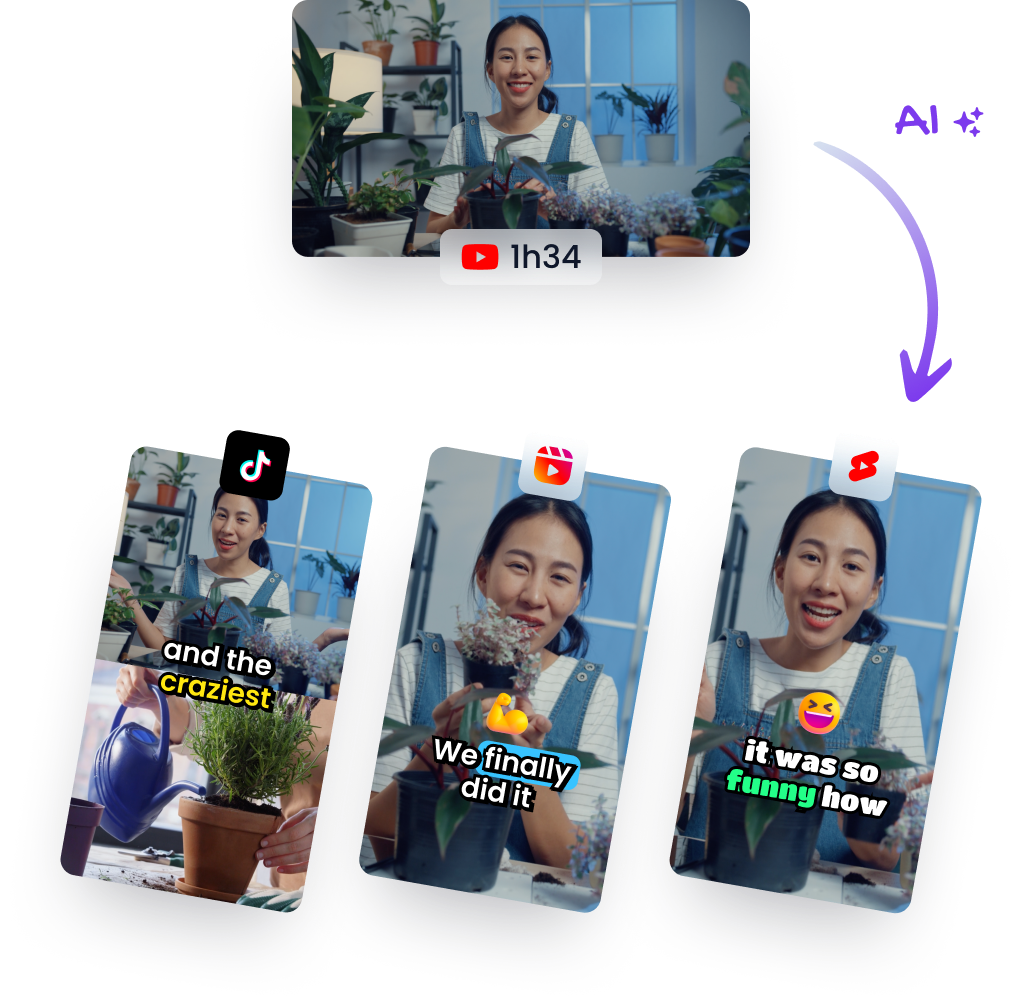
This is exactly what tools like Klap are built for. Our AI finds the most interesting parts of your long videos, automatically adds dynamic captions, and formats everything perfectly for Reels. It lets you pump out more content without burning yourself out, turning one long video into a dozen potential hits.
Creating Your First Reel Inside the Facebook App

Getting started with Facebook Reels means getting comfortable inside the app's own creator studio. While it might look simple at first, Facebook’s native tools are surprisingly powerful for creating engaging content directly from your phone.
To begin, simply open the Facebook app and tap the “Create Reel” button. You’ll usually find it near the top of your Feed or on your profile. This opens the Reels camera, which is your creative hub. From here, you have two main options: record fresh video clips on the spot or import existing footage from your phone’s gallery.
Recording and Trimming Your Clips
The key to a dynamic Reel isn't a single, long shot. It's all about quick, varied clips. Think in small, bite-sized segments. You can record multiple clips by holding the record button, releasing it to stop, and then holding it again for the next shot. This is a great way to create fast cuts, show different angles, or build a quick visual story.
Once you have your raw footage, it’s time to tighten it up. Use the “Trim” tool to shave off any awkward pauses at the beginning or end of each clip. This is a critical step for your Reel's pacing. Removing even a few seconds of dead air can make your video feel much more energetic and keep viewers engaged. A clean, tight edit is what stops the scroll.
Don't underestimate the power of a tight edit. With viewer attention spans getting shorter, a Reel that gets straight to the point is more likely to be watched all the way through, signaling to the algorithm that your content is valuable.
Leveraging Facebook’s Creative Tools
This is where you can add your personal flair. The right-hand side of the camera screen features a menu of creative tools designed to make your Reel stand out.
- Audio: Tapping the music note icon opens Facebook's extensive audio library. Using trending songs can give your Reel an immediate visibility boost, as the algorithm often promotes content that uses popular sounds. You can search for specific tracks or browse what's recommended.
- Timer: A lifesaver if you're creating content by yourself. You can set a 3 or 10-second countdown before recording begins, giving you enough time to get into position for hands-free shots.
- Green Screen: This feature lets you replace your real background with any photo or video from your camera roll. For example, if you're a travel creator talking about Paris, you could place a picture of the Eiffel Tower behind you without leaving your home.
- Effects: This opens up a library of AR filters and special effects that can instantly change the mood of your video. Experiment with them to find a style that aligns with your brand.
By mastering these basic tools, you can produce a polished and effective Reel without ever leaving the Facebook app. Think of it as a mini video studio in your pocket. Whether you're sharing a quick tutorial, a behind-the-scenes moment, or jumping on a trend, the native editor has everything you need to get started.
Editing and Polishing Your Reel for Maximum Impact
Recording your clips is just the first step. The real magic happens in the editing process—this is where you transform raw footage into a polished, scroll-stopping Reel that demands attention.
A sharp edit is the difference between a Reel that gets swiped past and one that gets shared. It all starts with timing. Be ruthless here. Trim every bit of fluff and every half-second of dead air until only the most essential, fast-paced moments remain. This creates a punchy energy that keeps people watching.
Layering Your Audio for a Professional Feel
With your clips tightly paced, it’s time to think about sound. Even though many people watch with the volume off, audio is still a powerful tool for setting the mood and hooking anyone listening in. Facebook’s editor lets you balance the volume of your original audio against any music you add.
For example, if you're making a tutorial, you’ll want to lower the music to around 10-15% when you’re speaking. Then you can crank it back up during the visual parts. It gives your Reel a clean, broadcast-like quality. You can also add a voiceover later, which is perfect for telling a story over a montage of clips.
One of the most common mistakes I see is letting the music drown out the original audio. Always check the final sound mix. If you can't hear yourself clearly, your message is completely lost.
The Make-or-Break Role of Text and Captions
Now for what I consider the most important part of any Reel edit: on-screen text. With up to 85% of Facebook users watching videos without sound, your text isn't just an add-on; it's the main event. It’s what makes sure your message actually lands.
Think of your on-screen text as a visual tour guide for your video. Here's how to get it right:
- Use Dynamic Timing: Don't just slap a block of text on the screen for the whole video. Make words and phrases pop up and disappear in sync with what’s happening. This movement keeps the viewer's eyes glued to the screen.
- Choose Clear, Bold Fonts: Pick a font that’s dead simple to read on a small screen. Use high-contrast colors, like white text with a black outline, so it stands out no matter what’s in the background.
- Mind Your Placement: Keep your most important text in the "safe zone"—the center of the screen. If you place it too close to the top or bottom, it’ll get cut off by Facebook’s own interface elements.
Adding captions is absolutely non-negotiable. It makes your content accessible and dramatically improves watch time. You can use Facebook's auto-captioning feature and then just clean up any mistakes.
This simple step makes a huge difference. For those looking to make this even faster, learning how to make Reels with existing video can be a game-changer, since many repurposing tools handle the captioning for you.
Finally, don't sleep on stickers and effects. A well-placed "poll" or "quiz" sticker can instantly turn passive viewers into active participants. This boosts your engagement and signals to the algorithm that your content is worth showing to more people.
Repurpose Content into Reels with AI Using Klap
Coming up with fresh content every day is a serious grind, especially when you’re already juggling a million other tasks. For busy creators, podcasters, and marketers, the thought of pumping out a steady stream of Facebook Reels can feel downright impossible.
But what if you didn’t have to start from scratch every single time?
That's where repurposing comes in. Instead of letting your valuable long-form content—like webinars, interviews, or YouTube videos—gather digital dust, you can turn it into a goldmine of short-form clips. It’s the ultimate productivity hack for scaling your video output without multiplying your workload.
The Smart Way to Make Facebook Reels
Let's be real: manually scrubbing through an hour-long video to find a few good 30-second moments is painful and slow. That's exactly why AI-powered tools like Klap are changing the game for content creators. The process couldn't be simpler: just upload a video file or paste a YouTube link.
From there, Klap's AI gets to work. It analyzes your entire video, sniffing out the most compelling hooks and potentially viral moments, and automatically generates a series of short clips. It’s like having an expert video editor who knows exactly what grabs attention on social media. You can see how it works for yourself with Klap's AI reel generator.
This workflow takes all the heavy lifting out of the editing process. The infographic below breaks down the core steps involved in polishing any Reel before you hit publish.

This visual shows the fundamental editing sequence—trimming for pace, adding audio for mood, and overlaying text for clarity—which AI tools can handle for you in seconds.
From Long-Form to Viral Short in Minutes
Beyond just finding the best moments, Klap handles the technical details that are crucial for success on Facebook. It automatically reframes horizontal videos into the vertical 9:16 format that dominates mobile viewing and generates dynamic, easy-to-read captions.
With mobile driving 85% of Reels traffic, a perfectly framed vertical video isn't just a best practice—it's essential. Klap's auto-reframing makes sure your subject is always centered and your video looks professional on any phone.
Once the AI generates the clips, you get full control. You can review each one, easily adjust the start and end points, tweak the caption text, or customize the style to match your brand. When you’re happy with the results, you just export them and get them ready for Facebook. For those interested in getting a deeper look at this kind of technology, exploring some AI courses can be a great next step.
This approach is backed by hard data. Facebook Reels currently lead engagement with a 0.23% rate—way ahead of other formats—and people now spend nearly 40% of their time on the platform watching videos. By repurposing your existing library with a tool like Klap, you can efficiently tap into this massive audience and turn one long video into multiple high-performing assets.
Proven Tactics for Publishing and Boosting Reach
You've done the hard work of creating and editing a killer Reel. But hitting "Publish" is where the real game begins. What you do in the moments after publishing is what separates a Reel that fizzles out with a few dozen views from one that takes off and reaches thousands.
It all starts with your caption. Think of it less as a description and more as a conversation starter. Ask a direct question, drop a surprising fact from your video, or try a fill-in-the-blank prompt to get people typing in the comments. That first wave of engagement is a powerful signal to the Facebook algorithm that your content is worth pushing to a wider audience.
Crafting a Scroll-Stopping Presence
Before anyone even presses play, they see two things: your cover photo and the first line of your caption. You have to make them count. A custom cover photo that’s clear, high-quality, and visually intriguing isn't just a nice-to-have; it's your Reel's billboard on your profile and in the feed.
Strategic hashtags are your ticket to joining bigger conversations. Don't just cram your caption with a dozen generic tags. A smarter approach is to use a focused mix of broad and niche hashtags.
- Broad Hashtags: Use 1-2 popular tags like
#facebookreelsor#shortformvideo. These help the algorithm categorize your content. - Niche Hashtags: Add 3-5 specific tags directly related to your video's topic (e.g.,
#contentmarketingtipsor#kitchenhacks). This is how you attract a highly relevant audience actively looking for your expertise. - Branded Hashtags: If you have a unique hashtag for your brand or a specific content series, always include it. This builds community and makes your content easy for fans to find later.
A well-crafted cover isn't just cosmetic; it’s a critical part of your hook. Test different cover images—some with bold text, others with a compelling action shot—to see what best captures your audience's attention and drives clicks.
Leveraging Algorithmic Boosters
The Facebook algorithm rewards creators who use its native features, and jumping on trending audio is one of the easiest ways to get an instant visibility boost. When you use a popular song or sound, Facebook is more likely to show your Reel to people who have already engaged with other videos using that same audio. You're basically riding a wave of existing interest.
Timing your post is another simple but powerful lever you can pull. While there's no universal "best time to post," you can find your sweet spot by digging into your Facebook Page Insights. Find out when your followers are most active and schedule your Reels to go live during those peak windows. Posting when your audience is already scrolling gives your content the best possible chance to gain immediate traction.
Here are a few call-to-action (CTA) ideas you can adapt to get the comments and shares rolling in:
GoalExample CTA
Drive Comments
"Which of these tips was most surprising? Let me know below! 👇"
Encourage Shares
"Know someone who needs to hear this? Share this Reel with them!"
Build Community
"What topic should I cover next week? Drop your ideas in the comments!"
By combining a compelling caption, smart hashtags, a custom cover, trending audio, and a clear CTA, you create a powerful publishing formula. This approach to how to make a Reel on Facebook ensures your content doesn't just get made—it gets seen.
Stuck on Your Facebook Reels? Here Are Some Quick Answers
Even with the best strategy, hitting a roadblock with Facebook Reels is common. Maybe you're confused about music rights, wondering why your views have flatlined, or just trying to figure out the perfect length.
We get it. Getting these details right is often what separates a Reel that flops from one that flies. Here are some of the most common questions we see, with direct answers to get you back on track.
What Is the Ideal Length for a Facebook Reel?
Facebook gives you up to 90 seconds for a Reel, but don't feel like you need to use all of it. In fact, you probably shouldn't.
Our data shows the sweet spot for keeping viewers hooked is much shorter, typically between 15 and 30 seconds. Your real goal is to land your main point or hook within the first three seconds. If you can't, viewers are already scrolling to the next video.
If your topic absolutely requires more time, make sure your editing is fast-paced, with plenty of on-screen text and visual changes to hold attention.
Can I Use Copyrighted Music in My Business Reels?
This is a huge point of confusion, and getting it wrong can get your content taken down. The rules are different for personal and business accounts.
Personal profiles get access to Facebook's massive library of popular, copyrighted music. Business Accounts, on the other hand, are restricted to a royalty-free audio collection to avoid legal trouble.
Stick to the pre-approved business library for all your Business Reels. If you use a copyrighted song from a personal account, Facebook will likely mute your audio or remove the video entirely. It’s not worth the risk.
What Is the Easiest Way to Turn a YouTube Video into a Reel?
Manually scrubbing through long videos to find short, punchy clips is a massive time-sink. The most efficient way is to use an AI repurposing tool.
Platforms like Klap do the heavy lifting for you. Just paste in a YouTube URL, and the AI analyzes your video to find the most engaging parts. It then automatically generates several vertical clips with dynamic captions already added.
This turns what could be hours of editing into a task that takes just a few minutes.
Why Are My Facebook Reels Getting No Views?
It’s incredibly frustrating to put effort into a Reel only to see it get almost no views. This usually comes down to one of a few common problems.
Here’s a quick checklist to diagnose what might be going wrong:
- A Weak Hook: Does your video grab attention immediately? If the first three seconds are boring, you’ve already lost the viewer.
- No On-Screen Captions: The vast majority of users watch videos on silent. Without captions, your message is completely lost.
- Poor Discoverability: Are you using relevant hashtags? Are you trying out trending audio from the royalty-free library? These help the algorithm understand and push your content.
- Posting Sporadically: The algorithm favors consistency. Posting Reels on a regular schedule signals to Facebook that you’re an active creator, which can boost your reach over time.
Ready to stop wasting hours on manual editing and start scaling your video content? Klap uses AI to turn your long-form videos into viral-ready short clips in minutes. Paste a link, review your clips, and get ready to flood your feed with high-quality Reels. Try it for yourself at Klap.