How to Make Short Video Clips That Get Noticed
Other
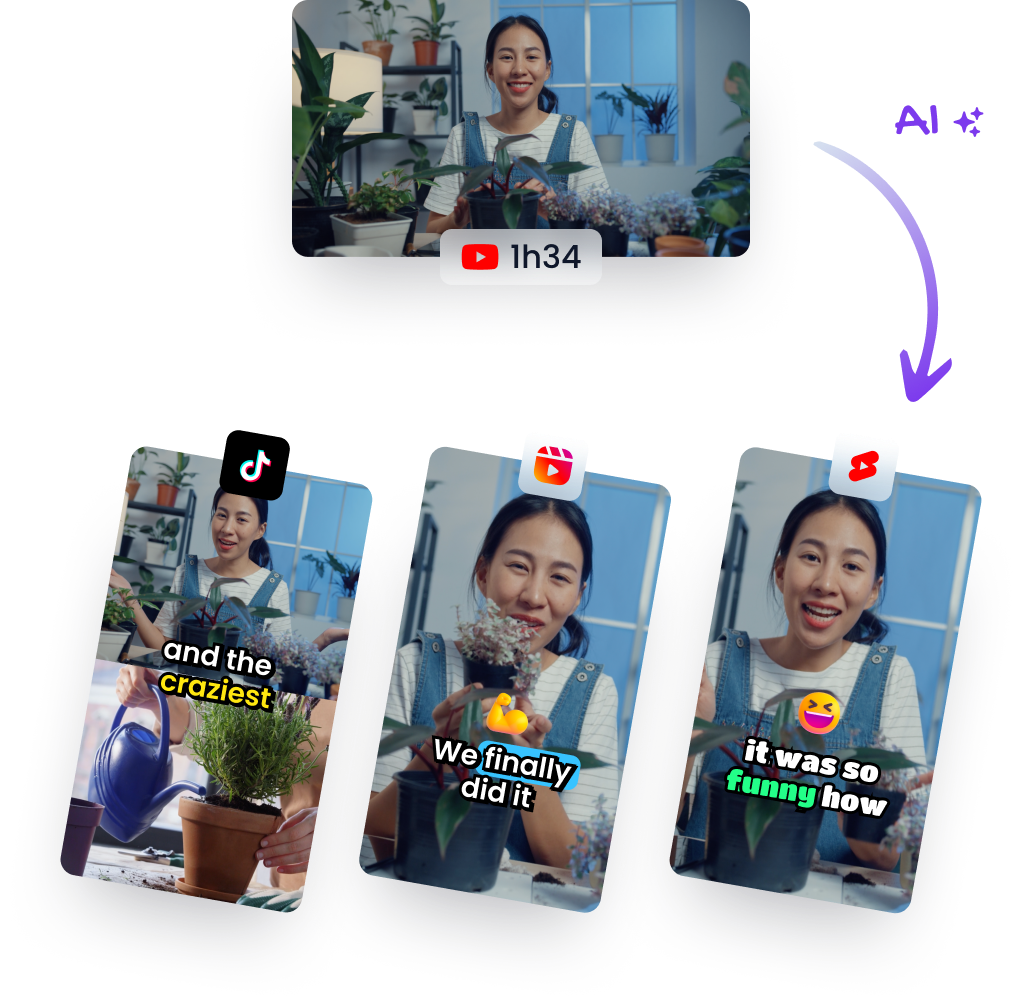
Turning your long-form content into short, punchy video clips is all about finding those gold-nugget moments, slapping on an irresistible hook, reframing for vertical feeds, and adding dynamic captions. It's how you can take a single podcast or webinar and turn it into a dozen scroll-stopping clips for TikTok, Reels, and Shorts.
The Power of Short Clips in Modern Social Media

If your social feed feels like an endless river of quick, bite-sized videos, you're not wrong. Platforms like TikTok, Instagram Reels, and YouTube Shorts have completely rewired how we consume content. This isn't just a passing trend—it's a real shift driven by shrinking attention spans and algorithms that reward you for getting to the point, fast.
For creators and brands, this is a massive opportunity. All that long-form content you've already created—your podcasts, webinars, interviews, and product demos—is an untapped goldmine. Every single piece is packed with dozens of potential clips just waiting to be pulled out.
Why Short-Form Video Dominates
The magic of short clips is simple: maximum impact in minimum time. Social media algorithms are designed to keep people on the app as long as possible. The easiest way to do that? Push content that's highly engaging and dead simple to share. Short clips are practically built for this. They deliver a quick hit of entertainment, a useful tip, or an emotional moment that keeps viewers scrolling for more.
The numbers are just staggering. YouTube Shorts, for example, pulls in over 70 billion daily views. That alone tells you just how massive the appetite for bite-sized content is. Marketers are all in, too, with 71% saying that clips between 30 seconds and two minutes give them the best ROI. Even more telling, 81% of consumers actually want more short-form videos from the brands they follow. You can dig into these video marketing statistics to see the full picture.
It's all about working smarter, not harder. Instead of grinding out a dozen new assets from scratch, you can slice up a single long video and get a week's worth of high-performing social media content out of it.
Learning how to make great short video clips isn't just another marketing trick anymore. It's a core skill for staying relevant and getting seen. By turning your long-form videos into engaging, shareable moments, you can:
- Reach New Audiences: Tap into the huge communities on platforms built entirely around short-form content.
- Boost Engagement: Clips naturally get more likes, comments, and shares, which tells the algorithm your content is worth showing to more people.
- Increase Brand Visibility: Posting consistently keeps your brand top-of-mind and helps you build a real, loyal following over time.
Finding Viral Moments in Your Existing Videos

Let's be real—your long-form content is probably sitting on a goldmine of viral clips. The problem is, finding them feels like searching for a needle in a digital haystack.
To get it right, you have to stop thinking like a long-form creator and start thinking like a short-form editor. You’re not trying to summarize; you’re hunting for self-contained "gold nuggets" that deliver a quick punch of value.
Instead of rewatching your entire video from start to finish (who has time for that?), you need a smarter strategy. The best moments almost always tie back to a strong emotion or a crystal-clear takeaway that makes perfect sense to someone with zero context.
What to Look For
As you scan your footage, keep an eye out for a few specific types of content that just plain work on short-form platforms. These are the building blocks of a clip that people actually want to share.
Look for moments that have:
- A Controversial Opinion: Did someone say something that challenges a common belief? A strong, even polarizing, take is a fantastic scroll-stopper.
- Actionable Advice: Is there a segment where you give a single, clear tip someone can use right away? Think, "Here's the one thing you need to do to improve your..."
- A "Wow" Fact or Surprising Data: Did you share a statistic that makes people lean in? Numbers that defy expectations are incredibly compelling.
- A Relatable Story: We're all wired to connect with personal anecdotes. A short, impactful story about a failure or a win can build an instant emotional bond.
The goal isn't to tell the whole story of your video. It's to isolate a single, powerful idea that can stand entirely on its own and make someone feel something—curiosity, surprise, or even validation.
Understanding what makes a Viralsociety tick is all about mastering this mindset. It's the core shift you need to make short video clips that don't just get views, but get passed around.
Using AI to Accelerate the Process
Manually scrubbing through hours of footage is not just slow, it's a terrible use of your creative energy. This is where AI-powered tools like Klap completely change the game.
Instead of just guessing, these platforms analyze your video's transcript and audio to pinpoint the most promising segments for you. An AI tool can detect shifts in tone, moments of high energy, key questions, or definitive statements, then intelligently flag them as potential clips—often finding gems you might have missed.
For example, Klap’s AI scans your video and automatically suggests clips based on the topics it identifies as engaging. It does the initial "hunting" for you, serving up a curated list of potential viral moments. This cuts your editing time down massively, letting you focus on polishing the best clips instead of searching for them from scratch.
For more on this, check out our guide on how to create YouTube Shorts from existing videos.
Crafting a Hook That Stops the Scroll

On social media, you don’t have minutes to earn a viewer’s attention—you have seconds. Seriously. The average user decides whether to keep watching a video within the first three seconds. This makes the hook the single most important part of your clip.
If you don't grab them immediately, they're gone.
A powerful hook does one job: it makes someone stop their endless scroll and wonder, "What happens next?" This isn't about cheap clickbait; it's about creating a genuine "information gap" that makes them feel compelled to stick around for the payoff.
The best hooks are almost always hiding in plain sight within your longer content. Look for moments of high conviction or surprise—a bold claim, a challenging question, or a statement that completely flips common knowledge on its head. These are the sparks that ignite curiosity.
The Hook-Value-CTA Formula
The most reliable short clips follow a simple but incredibly effective structure. Think of it as a framework that ensures you deliver a complete, satisfying story in under a minute.
- Hook: The first 1-3 seconds. This is your scroll-stopper. It could be a question ("Are you making this huge mistake?"), a bold statement ("This one tool changed everything for me."), or a preview of the end result ("Here’s how I turned this… into this.").
- Value: This is the core of your clip, where you deliver on the promise of the hook. You answer the question, back up your statement, or explain the process. Keep it concise and clear.
- Call-to-Action (CTA): The final piece. Tell your viewers exactly what to do next. It can be as simple as "Follow for more tips" or asking a question to kickstart the comments.
A great hook earns you their attention. The value you provide makes them feel it was worth it. The call-to-action gives them a way to stay connected. Miss any one of these, and the clip’s potential plummets.
To help you visualize this, here's a breakdown of what a high-performing clip looks like from start to finish.
Anatomy of a High-Performing Short Clip
ComponentPurposeExample
The Hook (0-3s)
Immediately grab attention and create an information gap.
"Stop using your savings account. It's actually losing you money."
The Setup (3-7s)
Briefly provide context for the value you're about to deliver.
"Inflation is at 8%, but your bank is only giving you 0.5%. Here's what to do instead..."
The Payoff (7-25s)
Deliver the core value promised by the hook. This is the "how-to" or the "why."
"Move your emergency fund into a high-yield savings account or a money market fund..."
The CTA (25-30s)
Tell the viewer what to do next to continue their journey with you.
"Follow me for more tips on how to make your money work for you."
Each part builds on the last, creating a seamless and satisfying viewing experience that feels complete, even in just 30 seconds.
Practical Hook Examples That Work
Generic advice won't get you very far, so let's look at specific types of hooks you can pull directly from your footage. For a deeper dive into the visual side of this, this guide on crafting engaging product videos has some fantastic insights into scripting for high performance.
Here are a few proven hook strategies I've seen work time and time again:
- The "You're Doing It Wrong" Hook: Challenge a common practice head-on. A financial advisor could start a clip with, "Your savings account is actually losing you money." This immediately makes anyone with a savings account lean in and ask why.
- The Contrarian Take Hook: Find a moment where you share an unpopular but well-reasoned opinion. A clip starting with, "Everyone says you need eight hours of sleep, but here's why they're wrong," is instantly intriguing.
- The Story-Driven Hook: Drop the viewer right into the middle of a story. Instead of a slow build-up, start with the most dramatic part, like, "So there I was, in front of 500 people, and my slides completely crashed." People will stick around just to hear how it ends.
This is where AI clipping tools like Klap really shine. They're built to recognize these patterns by analyzing transcripts for questions, strong declarative sentences, and lists. The AI automatically flags these moments as prime candidates for a hook, giving you a massive head start on creating clips that connect from the very first frame.
So you’ve found the perfect moment in your long-form video. That's a huge win, but it's only half the battle. Now comes the fun part: turning that raw segment into a polished, mobile-first clip that’s ready to stop the scroll on TikTok, Reels, and Shorts.
The biggest mistake I see creators make is just cropping their horizontal video and calling it a day. That almost never works. You often end up with the speaker awkwardly off-center or crucial parts of the shot getting cut out. The goal isn't just to make it fit—it's to completely re-imagine the shot for a vertical screen.
Reframe Your Shot for a 9:16 World
For short-form video, the vertical 9:16 aspect ratio isn't just a suggestion; it's the standard. It fills the entire phone screen, creating an immersive experience that grabs and holds attention. When you reframe, your main goal is to keep the subject—whether it's a speaker's face or a product demo—front and center at all times.
Doing this manually can be a real headache, involving a ton of keyframing and constant tiny adjustments. This is exactly where AI tools like Klap shine. Klap’s Auto Reframe feature intelligently finds the main speaker or point of interest and automatically adjusts the frame to keep them perfectly centered, even if they move around. It's like having a virtual camera operator who knows exactly how to compose a shot for vertical viewing.
Think of it this way: a horizontal video is like watching a play on a wide stage. A vertical video is an intimate close-up. Your editing choices need to reflect that shift, focusing the viewer's eye on exactly what matters most.
Inject Energy with Pacing and Visuals
Viewer attention on social media is measured in seconds. To keep them hooked, your clip needs energy. You don't need a bunch of flashy effects; instead, focus on two key elements: pacing and subtle visual tweaks.
- Quick Cuts: Get ruthless with your trimming. Cut out every bit of dead air—long pauses, filler words like "ums" and "ahs," and anything repetitive. You want to create a tight, fast-paced rhythm that keeps the story moving forward so the viewer never has a chance to get bored.
- Subtle Zooms: A slow, gentle zoom-in when the speaker is making a key point is a simple but powerful trick. It adds a layer of intensity, draws the viewer in, and visually emphasizes what's being said. It's a small change that makes a huge difference.
This kind of efficiency is what makes short-form video the king of ROI right now. For creators, it means repurposing what you already have is the smartest way to work. Got a webinar? Klap’s AI can find the hooks, tighten the timing, add subtitles, and export clips ready for Reels and Shorts. In fact, AI can save creators up to 80% of the time and money typically spent on manual editing, turning one long video into 5-10 high-quality clips. For more on this, check out these insights on how AI is shaping video marketing trends on Visla.us.
Make Captions Your Secret Weapon
Let's be real: studies show up to 85% of videos on social media are watched with the sound off. This means captions aren't just a nice-to-have anymore—they're an absolute must. But plain, boring subtitles aren't going to cut it. To really stand out, you need dynamic, styled captions that are easy to read and look great.
Modern tools now offer "karaoke-style" captions where words are highlighted as they're spoken. This does more than just translate the audio; it actively guides the viewer's attention and keeps their eyes glued to the screen.
Platforms like Klap generate these dynamic captions for you automatically. It transcribes your audio with incredible accuracy and gives you a bunch of engaging styles and fonts to choose from that match your brand. You can dive deeper into the specifics in our guide on how to add captions to YouTube Shorts. This single feature saves a ton of time and makes sure your clips are accessible and engaging, even in a silent feed.
Publishing Your Clips for Maximum Reach
You've made a great clip. That's a huge win, but your job isn’t quite done. Simply hitting 'post' and hoping for the best is a recipe for getting lost in the noise. A smart launch strategy is what separates clips that fizzle out from those that find a massive audience.
Each platform—TikTok, Instagram Reels, and YouTube Shorts—has its own algorithm and, more importantly, its own audience expectations. What kills it on one platform can totally flop on another. This means you need a tailored approach for each one, focusing on the small details that actually drive discovery.
Mastering Platform-Specific Tactics
Your caption is so much more than a description; it’s your first conversation starter. On Instagram Reels, for example, captions that ask a direct question can seriously boost comments, which is a powerful signal to the algorithm. For TikTok, keeping captions short, punchy, and tied to a trending sound or challenge almost always performs better.
Hashtags are your secret weapon for connecting with people who don't follow you yet. But don't just guess or throw in the most popular ones. The best approach is to use a strategic mix:
- Broad hashtags: These target a wide audience (like #marketingtips).
- Niche hashtags: This is how you reach a highly engaged, specific community (think #videopodcastclips).
- Branded hashtags: Perfect for building a community around your content (like #KlapAI).
This whole process is about refining your raw footage until it's a polished, vertical-ready asset that feels native to the platform.

This workflow—reframing, animating, and captioning—is the technical core of what it takes to make short clips that people actually want to watch on their phones.
Building Momentum and Analyzing What Works
Consistency is everything. Aiming to post 3-5 clips per week tells the algorithms that you're an active creator, which often gets you more favorable placement in user feeds. It also pays to post when your audience is most active to give your content a strong initial push.
Don't just post and ghost. You have to pay attention to your analytics. The two most important metrics for short-form video are retention rate (what percentage of your video people actually watch) and shares. A high retention rate tells the platform your clip is engaging, while shares are the ultimate sign that your content provides real value.
Digging into this data helps you understand what truly connects with your audience. If clips with a certain type of hook or on a specific topic consistently get more shares, that's your cue to make more of that. For a deeper dive into these nuances, check out our comparison of TikTok vs. YouTube Shorts.
This cycle of publishing, analyzing, and refining your approach is how you get really good at making short video clips that consistently hit the mark.
Answering Your Burning Questions About Short Clips
Even with a game plan and the right tools, it's natural to have a few questions pop up when you're turning long videos into short clips. Nailing down the answers to these common hurdles is what separates the creators who get stuck from the ones who move forward and get results.
Let's clear the air on the big ones.
How Long Should My Clips Actually Be?
While platforms are getting more generous with their time limits, the sweet spot for grabbing and holding attention is almost always between 15 and 45 seconds. This isn't about being short for the sake of it; it's about being concise. The goal is to land a complete idea without a single wasted second.
Here’s a simple way I think about it:
- Got a single, powerful tip or a jaw-dropping statistic? Aim for 15-20 seconds. That's just enough time to set the stage and deliver the punchline.
- Telling a quick story or walking through a simple how-to? You can push that to 30-45 seconds. This gives you a little more room to breathe, establishing the problem and then neatly delivering the solution.
The golden rule is to find your core message, deliver it as efficiently as possible, and be ruthless about cutting everything else. While a highlight reel might work at two minutes, for the endless scroll of a social feed, shorter is always stronger.
Do I Really Need Professional Software to Make Good Clips?
Absolutely not. In fact, we're at a point where audiences often trust authentic, less-polished content more than something that looks like a high-budget commercial. Your phone is more than capable of capturing fantastic footage, but the real magic isn't in the camera—it's in the edit.
The barrier to entry has never been lower. The focus has shifted from owning expensive software to having a clear message and a smart workflow.
This is where AI tools like Klap become your secret weapon. They handle the tedious, technical stuff that used to take hours—like finding the most interesting moments, reframing your shot for a vertical screen, and adding those all-important dynamic captions. It frees you up to focus on the story you're telling, not wrestling with a complex editing timeline.
How Many Clips Can I Realistically Get From One Long Video?
This really depends on how packed with value your original video is. A dense, hour-long webinar filled with actionable advice could easily give you 10-20 amazing clips. On the flip side, a more relaxed, conversational podcast might only have 5-8 truly standout moments.
Using an AI tool is the best way to squeeze every last drop of potential out of your footage. It often spots fantastic segments you might have scrolled right past during a manual review. Suddenly, that one long video isn't just one piece of content—it's your social media calendar for the next two weeks.
Ready to stop wasting hours scrubbing through timelines and start creating clips that actually get seen? With Klap, you can turn any long-form video into a goldmine of viral-ready shorts in minutes. Just upload your video and let our AI do the heavy lifting—finding the hooks, reframing the shots, and adding perfect captions. Give it a try for free and see just how simple content repurposing can be.