Generate Shorts From YouTube Videos The Smart Way
Other
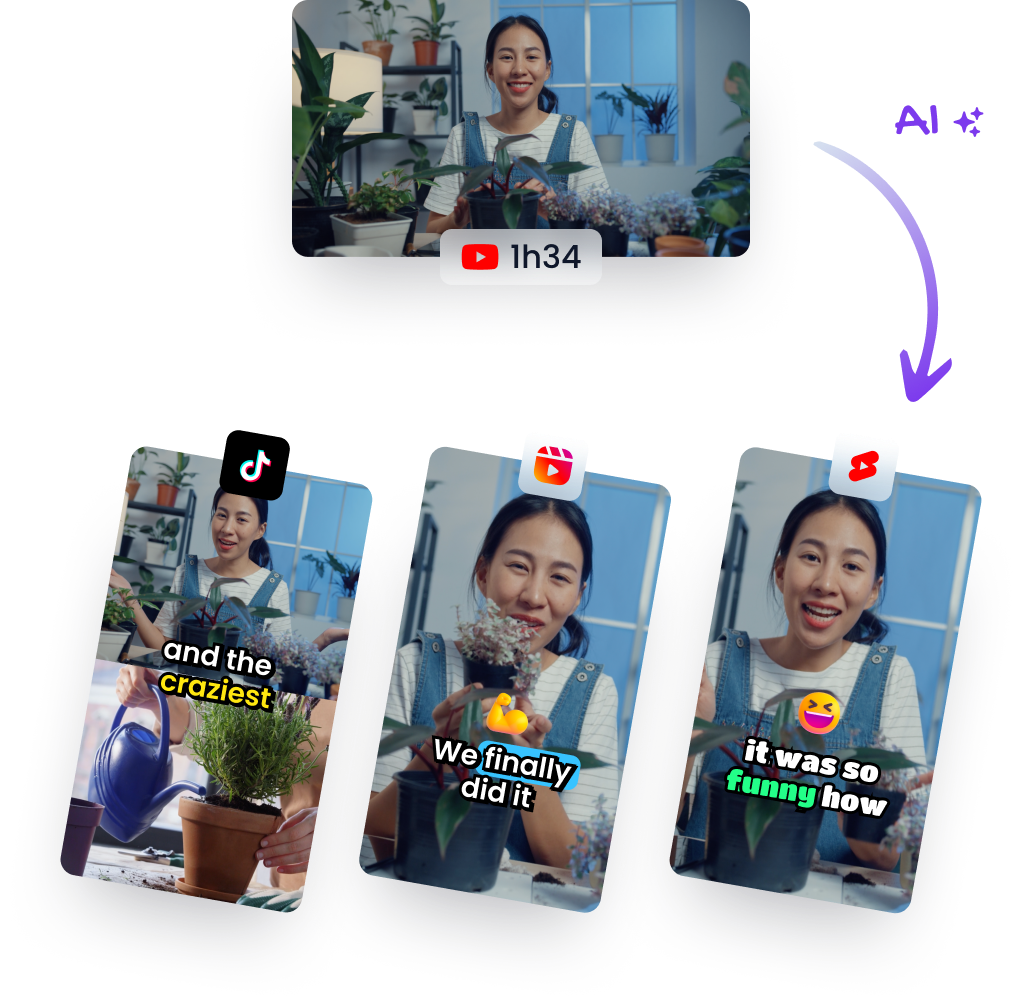
If you've got a library of long-form videos, you're sitting on a goldmine of potential viral moments. The fastest way to tap into it is by using an AI-powered tool to automatically find the best moments, reformat them for vertical viewing, and add captions. This isn't just about saving time; it's a practical strategy to turn one long video into a dozen high-impact clips in minutes.
Why Repurposing Videos Into Shorts Is a Growth Superpower
Learning to generate Shorts from your existing YouTube videos is no longer just a clever shortcut. For modern creators, it's an essential strategy for channel growth and discovery. This isn't just about efficiency—it's about fundamentally changing how you reach new viewers.

The shift toward vertical, short-form video is undeniable. Creators who embrace this format are seeing significant growth, and the data confirms it.
For a deeper dive into the core principles of turning existing content into new formats, exploring the broader strategies for content repurposing is a great place to start. The whole idea is to work smarter, not harder.
Unlocking a New Audience with Shorts
Every time you post a long-form video, you're primarily reaching your core subscribers. But when you create a Short from that same video, you're tapping into a completely different discovery engine. The YouTube Shorts algorithm is designed to push content to new viewers based on their interests, not just their subscriptions.
This means a single 20-minute video can easily be repurposed into 5-10 high-impact Shorts. Each one becomes a fresh opportunity to:
- Reach Untapped Demographics: Connect with viewers who prefer vertical feeds and might never click on your 20-minute deep dive.
- Multiply Your Content Output: You can dramatically increase your posting frequency without filming anything new, keeping your channel active and relevant.
- Drive Traffic Back to Your Main Content: Think of Shorts as trailers. A compelling 60-second clip can pique curiosity and send viewers directly to your full-length video.
The scale here is massive. YouTube Shorts now garners over 70 billion daily views. The audience is there and actively looking for content, making it a critical platform for growth.
Choosing the Right AI Clipping Tool for Your Workflow
Let's be practical: manually scrubbing through a long video to find a few golden nuggets for Shorts is an inefficient use of your time. AI has completely changed the game, making it possible to generate dozens of clips from a single YouTube video with impressive speed and accuracy.
The market is now filled with tools that promise to do this, but their performance varies significantly.

When you're comparing platforms, the most important factor is the AI's intelligence. A great tool doesn't just slice your video into random 60-second chunks. It actually analyzes your content to pinpoint moments with the highest potential for engagement.
Core Features to Compare
The best tools offer a seamless experience, taking you from a YouTube link to a folder of ready-to-post clips in minutes. This is where you separate the good from the great. For instance, platforms like Klap.app and Vidyo.ai are popular, but it's important to look beyond the marketing.
Here’s what to focus on when testing a new tool:
- AI Clip Selection: How effectively does it identify engaging hooks, insightful questions, or powerful statements? The goal is to minimize the need for manual searching.
- Vertical Reframing Quality: Does the AI automatically track the speaker and keep them centered in a 9:16 frame? Poor reframing is a dealbreaker because it sends you back to manual editing.
- Caption Accuracy and Style: Auto-captions are a standard feature. What you need are stylish, animated captions that are at least 95% accurate from the start. Less time fixing typos means more time for creative work.
- Ease of Use: The process should be intuitive. If you have to watch a 20-minute tutorial to get started, the tool has already failed to save you time.
An effective AI clipping tool should function as a partner in your creation process. Its primary job is to handle the technical heavy lifting—finding key moments and formatting them correctly—so you can focus on storytelling and audience engagement.
Comparing AI Tools to Generate YouTube Shorts
To give you a clearer picture, here’s a feature-by-feature breakdown of some popular AI tools designed to generate Shorts from YouTube videos. This should help you choose the best fit for your specific needs and budget.
FeatureTool A (e.g., Klap)Tool B (e.g., Vizard)Tool C (e.g., Vidyo.ai)
AI Clip Selection
Uses "Virality Score" to rank clips by potential
Focuses on identifying distinct topics and questions
Identifies key moments and creates multiple variations
Vertical Reframing
Strong active speaker detection and auto-reframing
Good speaker tracking, but may require some manual tweaks
Solid multi-speaker detection, ideal for podcasts
Caption Styles
Modern, animated styles with high accuracy
Basic, clean caption styles with decent accuracy
A wide variety of customizable templates and styles
Brand Customization
Brand Kit available on paid plans (logo, fonts, colors)
Limited branding options on lower-tier plans
Advanced Brand Kit features, including custom overlays
Export Quality
Up to 1080p on free plans, 4K on higher tiers
720p on free plan, 1080p on paid plans
1080p is standard on most plans
Free Trial/Plan
Generous free trial with a set number of minutes
Free plan with limited minutes and a watermark
Free plan with a monthly minute allowance
This table highlights that while many tools offer similar core features, the execution varies. Your choice will likely depend on which tool's AI best understands your content style and which one has the specific features you need, like advanced branding or 4K exports.
Free Plans Versus Paid Subscriptions
Most of these tools offer a free tier, which is the perfect way to test them without commitment. These plans typically provide a limited number of processing minutes per month. This is often sufficient for a creator who's just starting to explore a YouTube to Shorts converter and wants to see how it fits into their workflow.
However, once you decide to integrate this into your regular process, you’ll likely want to upgrade. Moving to a paid plan unlocks features that are crucial for scaling your content.
These premium features often include:
- Brand Kits: The ability to upload your logos, fonts, and color palettes to ensure every Short is instantly recognizable and on-brand.
- Higher Export Quality: Paid plans almost always offer 1080p or even 4K exports, which is essential for a professional look on platforms like TikTok and Instagram.
- Performance Scoring: Some advanced tools use AI to score each clip's "viral potential," helping you prioritize which ones to publish first for maximum impact.
Ultimately, the right tool is one that integrates smoothly into your workflow, consistently produces high-quality clips, and saves you hours of manual work. My advice: start with a free trial, run a few of your best long-form videos through it, and see which platform's AI truly understands what makes your content special.
Your AI-Powered Workflow: From Link to Viral Clip
Theory is one thing, but let's look at the practical steps. Turning a long video into a high-performing Short is a repeatable process. It's about making a series of smart, small decisions that AI tools can then amplify.
We're going to walk through the entire workflow, starting with just a YouTube link and ending with a clip ready for TikTok, Reels, or Shorts. The goal is to reduce tedious editing time so you can focus on the creative touches that make a clip stand out.
From URL to AI-Suggested Gold
It all starts the moment you paste your YouTube video URL into an AI clipping tool. In the background, the AI begins its work—transcribing the audio and analyzing every word, pause, and tonal shift. It isn't just listening; it's looking for patterns that signal viewer engagement.
Within minutes, you’ll see a list of suggested clips. The real value isn't just getting the clips; it's understanding why the AI flagged those specific moments.
- Speaker Detection: The tool identifies who is talking and when, which is a lifesaver for interviews or podcasts.
- Transcript Analysis: It actively searches for questions, bold statements, lists, and emotionally charged language that naturally hook a viewer.
- Topic Clustering: It intelligently groups related sentences, creating self-contained segments that work well as standalone clips.
The best tools will even assign a "virality score" to each suggestion, explaining why it thinks a clip has potential—perhaps it found a strong hook or a clear value proposition. This is where you learn what parts of your own content are the most powerful.
Mastering the Vertical Reframe
Once you've picked a promising clip, it's time to reframe it for a vertical screen. This can be a major challenge, but AI makes it much easier. Simply cropping a horizontal (16:9) video to a vertical (9:16) format often cuts off the speaker or the main subject.
AI-powered face tracking is the solution. The software automatically locates the speaker's face and creates a dynamic crop that keeps them centered, even if they move. This single feature can save hours of manual keyframing.
Your only job here is to review the result. Watch the reframed clip and ensure the focus remains on the most important element, whether it's the speaker's face or a product being demonstrated. Most tools allow for small manual adjustments if the AI needs a little nudge.
Polishing Your Captions for Maximum Impact
Let's be realistic: auto-generated captions are a great starting point, but they're rarely perfect. With a significant portion of social media users watching videos with the sound off, captions become the primary way to tell your story. It’s no surprise that videos with captions see a major lift in watch time.
This is your opportunity to add a human touch.
- Fix the Small Stuff: Read through the captions and correct any typos or misinterpretations.
- Add Some Style: Use built-in features to highlight keywords with a different color. This simple trick guides the viewer's eye to the most important parts of each sentence.
- Inject Personality: A well-placed emoji can add emotion and emphasis, making your clip feel more native to the platform. Don't overdo it, but a little personality goes a long way.
Finalizing Your Export Settings
You're at the finish line. The last step before publishing is exporting your clip. While each platform has its own specifications, adhering to these universal settings will ensure your video looks sharp everywhere.
SettingRecommendationWhy It Matters
Resolution
1080x1920 (1080p)
This is the gold standard for high-quality vertical video on all major platforms.
Frame Rate
30 FPS
Provides smooth motion without creating an unnecessarily large file size.
File Format
MP4
The most widely accepted format for web video uploads.
Bitrate
8-12 Mbps
This is the sweet spot between crisp quality and a file size that uploads quickly.
By following this simple workflow, you can consistently generate Shorts from a YouTube video that are not just technically sound but also strategically optimized to perform. This system transforms a time-consuming chore into a fast, creative, and repeatable process.
How to Optimize Shorts for Maximum Reach and Engagement
So, you've used an AI tool to create several potential Shorts from your long-form video. That's a great start, but the work isn't finished. Creating the clip is only half the battle; getting people to watch it is what separates growing channels from stagnant ones.
It all comes down to making your content algorithm-friendly. That process begins the moment a viewer sees your clip. You have about three seconds to stop their thumb from scrolling. Your hook is everything.
The Anatomy of a High-Performing Short
Viral Shorts are rarely accidental. They are constructed to grab attention and hold it, using psychological triggers to keep viewers engaged.
The first and most important trigger is the hook. An effective hook can be:
- A provocative question: "What if your biggest strength is actually holding you back?"
- A bold, controversial statement: "This is the single worst piece of advice I hear in my industry."
- An immediate visual payoff: Start with the most interesting part, don't build up to it.
The goal isn't just views; it's watch time. The data is clear: view duration is a massive ranking signal for the Shorts algorithm. A viewer who finishes your entire 30-second clip is far more valuable than one who abandons a 59-second video halfway through.
This is the simple workflow, from linking your original video to getting that final, polished clip ready to go.

When the technical side is handled by AI, you're free to focus on these details that actually drive results.
Mastering Your Metadata for Discovery
Think of your Short's metadata—the title, description, and hashtags—as signposts for the YouTube algorithm. When you get it right, you're essentially giving the algorithm a map that leads directly to your ideal audience.
Your Title is Your Billboard
Your title should be a clear, keyword-rich preview of the content. A simple formula that works is combining a benefit with a relevant keyword.
- Instead of: "Clip from My Latest Video"
- Try: "Fix This SEO Mistake in 60 Seconds"
Use a Mix of Broad and Niche Hashtags
Your hashtags should cast a wide net while also targeting your specific community.
- Broad:
#youtubeshorts,#shorts,#marketingtips - Niche:
#seoforbeginners,#localseostrategy
This strategy tells the algorithm, on multiple levels, who the video is for.
Tailoring Content for Different Platforms
It's tempting to publish the same clip everywhere, but small tweaks can make a big difference. Smart creators adapt their content for each platform's audience.
What performs well on YouTube Shorts might only do "okay" on Instagram Reels. For example, Reels viewers often reward content that uses trending audio, while Shorts viewers may engage more with the original audio from your video.
Captions are essential on every platform, but their style matters. Dynamic, word-by-word highlighted captions are the current standard because they hold attention. To learn more, you can explore how to add captions to YouTube Shorts to ensure your message is clear, even with the sound off. Every optimization, from the hook to the final hashtag, gives your content a better chance to succeed in the endless scroll.
Navigating Copyright and Monetization Safely
Turning your long-form videos into Shorts is a powerful growth strategy, but it requires navigating copyright rules and monetization policies. A single misstep can lead to a copyright strike, demonetization, or even the removal of your video.
Understanding these rules is critical for the long-term health of your channel.
The most common pitfall for creators is music. A track you licensed for your original video might seem safe, but it can trigger YouTube's automated Content ID system in a Short. This system continuously scans for copyrighted material, and if it finds a match, the original owner often collects any ad revenue your clip generates.
Understanding Music and Content ID
The safest way to add music is by using the audio library built directly into the YouTube Shorts editor. YouTube has already licensed these tracks specifically for Shorts, which protects you from copyright claims.
This is a crucial distinction. The license for a song in your main video likely doesn't cover its use in a new format like a Short. To keep your clips eligible for monetization, you need to understand the practical steps of how to avoid copyright strikes on YouTube. When in doubt, always use the native audio libraries on YouTube, TikTok, or Reels.
A Content ID claim is not a copyright strike, but it can still be a problem. A claim usually means the copyright owner monetizes your video. A strike, however, is a formal penalty against your channel. Three strikes can result in channel termination.
How Monetization Works for Shorts
If you're in the YouTube Partner Program (YPP), Shorts provide a new revenue stream. However, the model is different from long-form videos. Instead of ads playing before or during your Short, revenue is pooled from all ads that viewers see in the Shorts feed.
This large pool of money is then split among creators based on their share of the total Shorts views. A portion also goes to music licensors to cover the costs of the audio library.
Here’s a quick breakdown of the process:
- All ad revenue from the Shorts feed is collected into a single pool.
- A portion of this pool is used to pay for music licensing.
- The remaining money goes into the Creator Pool.
- You receive a share of the Creator Pool based on your channel's percentage of total Shorts views in your country.
This system means your views contribute to your earnings, even if an ad doesn't appear directly next to your video. If you're serious about building a sustainable business, you should explore more strategies for content monetization.
By understanding these rules, you can confidently turn your existing videos into a safe and effective growth engine for your channel.
Expanding Your Content's Global Audience
When you turn a long-form YouTube video into a Short, you're not just creating a clip; you're giving your content a passport for global distribution. The YouTube Shorts algorithm functions differently from the one for main channel videos; it's designed to serve content based on viewer interest, not their location.
This means your Shorts can break through geographical barriers, reaching international viewers who might have never discovered your primary channel.

This isn't just a theory—it's supported by data. The Shorts audience is predominantly mobile, and it's not uncommon for up to 75% of a Short's views to come from outside a creator's home country. With over 2.3 billion monthly active users on YouTube, you’re tapping into a massive, geographically diverse audience.
If you want to dig deeper, the latest YouTube Shorts statistics are genuinely eye-opening. This shifts your mindset from being a local creator to a global one.
Crafting Universally Appealing Content
To leverage this global reach, your content needs to be understood by a diverse audience. A clip heavy with local slang or niche cultural references may not resonate with a viewer on the other side of the world.
The key is to lean into visual storytelling and create content that connects on a fundamental human level, regardless of language.
Here are some actionable tips that work across borders:
- Powerful Visuals: A clip showing a stunning DIY project, a satisfying process, or a humorous reaction needs no translation.
- Simple On-Screen Text: Clear, bold captions act as a universal language, guiding the viewer through the story, even with the sound off.
- Cross-Cultural Themes: Topics like humor, inspiration, how-to tutorials, and heartwarming moments have broad, international appeal.
A visually-driven clip with simple captions will almost always outperform a dialogue-heavy one on the global stage. Your goal is to create content that feels accessible to anyone, anywhere, at any time.
This approach encourages you to think beyond your immediate audience. By focusing on strong visuals and a clear message, you can turn your repurposed clips into powerful tools for international connection, introducing your brand to new viewers worldwide.
Ready to turn your videos into viral shorts and reach a global audience? With Klap, you can generate captivating, ready-to-post clips in minutes using the power of AI. Start creating today and see how easy it is to grow your channel: https://klap.app