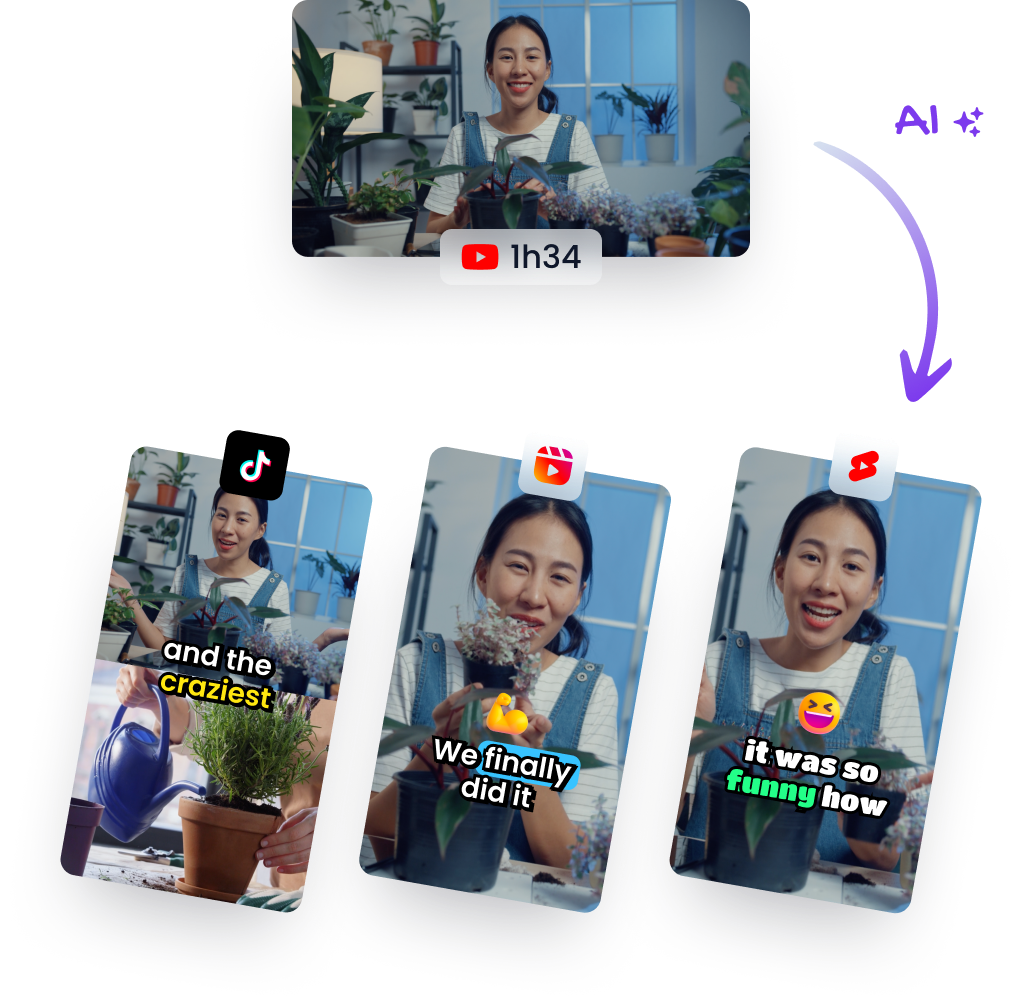
Turn long youtube video to shorts: The smart way
Other
Turning a long YouTube video into a series of Shorts isn't just about chopping it up. It’s a practical strategy for finding those gold-nugget moments, reframing them for a vertical screen, and turning your existing library into powerful discovery tools. Think of them as trailers that pull in a fresh audience and point them right back to your main channel.
Why Turning Long Videos Into Shorts Is a Smart Move
Let's be clear: repurposing your long-form content into Shorts is way more than a time-saving hack. It’s a core strategy for growing your channel, and it works by tapping into two totally different viewer mindsets on the same platform. Your deep-dive videos serve a dedicated audience, while Shorts grab the attention of the massive, fast-scrolling crowd looking for a quick hit of entertainment or info.
This dual-format approach creates a powerful flywheel effect. A viewer might stumble upon your channel through a punchy 30-second Short. If they like what they see, YouTube’s algorithm is way more likely to serve them one of your longer, related videos next. It builds a bridge, turning casual scrollers into genuinely engaged subscribers.
Tapping Into Modern Viewing Habits
The explosion of short-form content isn't a fluke. It's a direct response to how people consume information now. By understanding changing content consumption habits, you can see that viewers' attention is split a dozen different ways. Shorts are built to deliver value instantly, making your content accessible to people who might never commit to a 20-minute video upfront.
Here’s how this strategy pays off for your channel:
- Massive Discoverability: Shorts live on their own "shelf" in the YouTube app, exposing your content to millions of people who might never have found your traditional videos.
- A Funnel to Your Best Stuff: Every Short is basically a free ad. It's a teaser that shows off your personality or expertise and funnels curious viewers back to your core, long-form content.
- Subscriber Growth on Autopilot: Plenty of viewers hit "subscribe" right from the Shorts feed. This creates a steady stream of new audience members for everything you create.
The Surprising Power of Long-Form Content
Here's the interesting part. Even with all the hype around Shorts, long-form video is still the king of deep engagement on YouTube. A recent study dropped a bombshell: despite the short-form craze, the average U.S. YouTube viewer now spends 8% more time watching long-form videos than they did in late 2023.
Get this: videos over 30 minutes long make up an insane 73% of all watch time on the platform. Shorts and every other format combined? Just the remaining 27%. You can check out the full viewership study for more details.
This data tells us something critical: Shorts aren't replacing long-form videos; they're the gateway to them. When you convert your long YouTube video to Shorts, you're creating highly effective ads for your most valuable and engaging content. This symbiotic relationship is the secret to sustainable channel growth.
Finding The Best Moments: AI vs. Your Own Instincts
The first real hurdle in turning a long YouTube video to Shorts is finding those golden nuggets—the most compelling, shareable moments. You've really got two ways to go about this: let an AI tool do the heavy lifting, or trust your own gut and deep knowledge of your content. Both have their place, and knowing when to use each is key.
AI clipping tools like Vidyo.ai or Opus Clip are built for one thing: speed. They analyze your video's transcript, hunting for keywords, questions, and spikes in energy that usually signal a clip worth grabbing. If you're sitting on a huge backlog of videos, this can save you from a mind-numbing amount of manual scrubbing.
But here's the catch with relying only on AI. An algorithm might flag a segment with all the right keywords but completely miss a moment of subtle humor or a powerful, quiet point that your audience would absolutely connect with. That's where your instincts as the creator are irreplaceable.
The Case for Manual Selection
You know your content and your audience better than any piece of software ever will. Going in and picking clips yourself lets you find the moments that truly land—the inside jokes, the emotional breakthroughs, or that one turn of phrase that just screams your brand. This human touch is often what separates a decent clip from a truly great one.
Choosing clips by hand also gives you way more strategic control. For instance, there's a huge monetization gap between Shorts and long-form videos. A Short hitting 100,000 views might only pull in around $5, whereas a long-form video with the same view count could net you $500 or more. Armed with that knowledge, you can manually pick clips that act as perfect little trailers, specifically designed to funnel viewers from a low-earning Short straight to your high-earning long-form video.
This isn't just about chopping up a video; it's a deliberate strategy to grow your channel and get more eyes on your most valuable content.

Repurposing isn't just about filling your content calendar; it's a smart way to fuel audience growth across your entire channel.
AI Clipping vs Manual Selection
Deciding between AI speed and human intuition can be tough. Here's a quick breakdown to help you figure out which approach fits your workflow.
FeatureAI Clipping ToolsManual Selection
Speed & Efficiency
Extremely fast; can process hours of footage in minutes.
Slow and time-consuming, requires watching the entire video.
Scalability
Excellent for creators with large backlogs of content.
Difficult to scale without a dedicated team.
Content Insight
Relies on data like keywords, virality scores, and transcript analysis.
Leverages deep understanding of audience, nuance, and inside jokes.
Strategic Control
Limited; suggests clips based on algorithms, not channel goals.
Total control; can create clips that act as teasers for long-form content.
"Human Touch"
Often misses subtle humor, emotional depth, or brand-specific moments.
Excels at finding clips with genuine emotion and brand personality.
Best For
Quickly generating a large volume of potential clips to review.
Hand-picking a few high-impact clips with specific strategic goals.
Ultimately, neither method is perfect on its own. The real magic happens when you combine the strengths of both.
Striking the Right Balance
So, what’s the best method? For most creators I know, it’s a hybrid approach.
Start with an AI short video generator to do the initial sweep. Let it generate a big list of potential clips, saving you the tedious first pass of sifting through hours of footage.
Use AI as your highly efficient assistant, not your final decision-maker. Let it find the candidates, but use your creator's intuition to make the final cut.
From there, put on your creator hat. Go through the AI's suggestions and toss out anything that doesn't feel right. You might find a clip that's almost perfect but just needs a slightly different start or end point. This blend of machine speed and human creativity gives you the best of both worlds—efficiency without sacrificing quality.
For more deep dives into content strategy and weighing the pros and cons of different creator tools, you can find some great articles over on Tubentum's Blog.
Editing and Reframing for Vertical Video Success
Alright, so you’ve found the golden moments in your long-form video. Now the real work begins. Let's be honest: just cropping a horizontal video and calling it a day is a surefire way to get ignored. The goal is to make your clip feel native to the Shorts feed—a place that's vertical, ridiculously fast-paced, and all about immersion.
This is about more than just changing the aspect ratio. It's about redirecting the viewer's focus. In your original 16:9 video, the action might be spread all over the screen. For a 9:16 Short, you have to force the most important person or object to be front and center, filling the screen and grabbing every last bit of attention.
Mastering the Art of the Reframe
Reframing is your secret weapon when turning a long YouTube video to Shorts. It’s how you reposition your horizontal footage inside that new vertical box to keep the action compelling. Think of it as having a tiny cameraman inside your editor, actively following whatever is most interesting in the scene.
There are a few solid ways to pull this off:
- Dynamic Panning: Instead of a static, boring crop that chops off half a speaker’s face, use smooth pans to follow them as they talk or gesture. It adds a professional touch and a sense of movement.
- Split-Screen Layouts: If your original video has two people talking, a simple crop will only show one of them. A split-screen puts both speakers in their own vertical sections, keeping the back-and-forth feel of the conversation intact.
- Jump Cuts: For tutorials or quick explanations, fast jump cuts are your friend. Cutting from a wide shot to a tight close-up on an object adds energy and emphasizes exactly what you're talking about.
Using these techniques ensures no critical information gets lost off-screen. While plenty of modern tools can automate this, if you're a hands-on editor, a good online video cropper to start with can get the job done. The whole point is to create something that feels intentional, not like a lazy afterthought.
Pacing and the Three-Second Rule
The Shorts algorithm is obsessed with watch duration—it wants to see people watching a huge percentage of your clip. With Shorts generating an average of 70 billion daily views, the fight for eyeballs in the feed is brutal. You literally have seconds to prove your video is worth someone's time.
Your first three seconds have to land a punch. It could be a wild question, a shocking visual, or the start of a story they can't leave unfinished. Ditch the slow intros and get straight to the good stuff.
This means you have to be absolutely ruthless in your editing. Cut every "um," every awkward pause, and every second of dead air. The pacing needs to feel quick and deliberate, dragging the viewer from one point to the next so they don't even have a chance to get bored. Short-form is all about momentum.
Visuals are a huge part of keeping that pace up. Think about sprinkling in things like:
- Animated Captions: Text that pops up word-by-word keeps eyes glued to the screen, which is a lifesaver for people watching with the sound off.
- Progress Bars: That little animated bar crawling across the top or bottom of the screen is a subtle psychological trick to get viewers to stick around until the very end.
- Engaging Emojis or Graphics: A few well-placed visuals can inject personality and highlight key ideas without making the screen feel cluttered.
When you combine smart reframing with snappy editing, you're not just clipping a video anymore. You're building a high-potential Short that was made for the platform and is ready to find a whole new audience.
Mastering On-Screen Text for Muted Viewing

Here's a hard truth: a huge percentage of Shorts are watched with the sound off. This makes your on-screen text strategy less of a nice-to-have and more of an absolute necessity. When you're converting a long YouTube video to Shorts, your text becomes the main storyteller. It’s what makes the difference between a confusing silent clip and one that genuinely stops the scroll.
And I'm not just talking about basic subtitles. Think of your text as another layer of visual engagement. Dynamic, word-by-word captions that pop onto the screen in sync with the speaker are incredible for holding attention. They literally draw the viewer's eyes down the screen, compelling them to keep watching.
Choosing the Right Text Style and Placement
On a small mobile screen, your font, color, and placement choices can make or break readability. You need text that is bold, clear, and has strong contrast against whatever is happening in the background. Stay away from thin, wispy fonts or colors that just blend in.
Here are a few text strategies I’ve seen work exceptionally well:
- Bold Headlines: Slap a big, attention-grabbing headline at the top to instantly communicate the clip's value. A clip from a finance video might have a headline like, "My #1 Budgeting Mistake." Simple and effective.
- Dynamic Captions: These are the engaging, word-by-word subtitles you see all over TikTok and Reels. They keep the viewer's eyes moving and make the content a breeze to follow without any audio.
- Contextual Pop-ups: Use smaller text pop-ups to highlight a key term, add a funny side comment, or give a little extra context that someone would normally only get from listening.
The whole point is to make sure your message lands perfectly, even in total silence. Statistics back this up. While short-form content under 60 seconds gets 150% more shares, that's only if viewers actually understand what's going on. Likewise, the 70% higher completion rate for short videos depends on immediate comprehension—something on-screen text delivers directly. You can discover more insights about these content statistics to see the full picture.
Your on-screen text should do more than just transcribe what's being said. It should amplify the message, add personality, and guide the viewer's attention to the most important parts of your clip.
Using Text as a Call-to-Action
Finally, text is your most powerful tool for turning a casual Shorts viewer into an engaged subscriber. Since you can't count on them hearing you, you have to show them what to do next. Use on-screen text to create a compelling call-to-action (CTA).
This can be a simple question to spark comments or a direct instruction to check out the full video.
A simple text overlay like, "Full breakdown in the linked video!" or "Want to learn more? Check out our channel!" can dramatically boost the click-through rate from your Short to your main content. To really nail this, you can learn more about how to add captions to YouTube Shorts and make every silent view count.
Getting Your Shorts Noticed by the YouTube Algorithm
Turning a great moment from a longer video into a Short is a huge win, but that's only half the battle. Now you have to get it in front of the right people. This means packaging your clip in a way that stops the scroll for viewers and gives the YouTube algorithm all the right signals.
It all starts with a killer title. Forget what you know about long-form video titles. For Shorts, you need something punchy that sparks instant curiosity. Think like a copywriter—phrases like "The #1 Mistake..." or "You Won't Believe This..." are classics for a reason. They create an itch that viewers have to scratch. Just keep it under 60 characters so nothing gets awkwardly cut off on mobile screens.
Hashtags That Actually Work
Next up are hashtags, and they are far from just a decorative touch. You absolutely must include #shorts in either your title or description. This is the clearest signal you can send to YouTube to categorize your video and get it into the Shorts feed where it belongs. It's non-negotiable.
Beyond that, a couple of well-chosen, niche-specific tags are your best friends. If your clip is about baking sourdough, something like #sourdough or #bakingtips is perfect. This helps the algorithm find people who are already watching videos on that topic, which massively boosts your Short's initial performance.
The Shorts algorithm is all about audience reaction. It cares less about the video itself and more about how people interact with it. Your job with optimization is to give your clip the best possible head start by serving it to the most relevant audience right out of the gate.
Tying It All Together
A few final touches can really move the needle on your repurposed content's performance. While you can't set a custom thumbnail for Shorts in the feed, you can choose the frame that shows up on your channel page and in search results. Don't leave it to chance—pick a frame that's dynamic and clear.
But here's the most powerful move you can make when you turn a long YouTube video to Shorts: the pinned comment. This is your bridge back to your main content. It's where you turn fleeting viewers into potential subscribers.
Use your pinned comment to:
- Link directly to the full video: A simple "Watch the full breakdown of this technique here!" with the link is all you need.
- Add extra context: Share a quick tip or piece of information that didn't make it into the 60-second cut.
- Spark a conversation: Ask a question related to the Short to get the comments section buzzing with engagement.
This one simple action completes the content loop, turning your Shorts from standalone clips into a powerful engine for growing your entire channel.
A Few Common Questions We Get
When you're turning long YouTube videos into Shorts, a few practical questions always pop up. Getting these sorted out helps you build a smarter content strategy and avoid some of the common pitfalls.
One of the biggest worries creators have is whether Shorts will hurt their main channel. It's actually the opposite. YouTube's algorithm is smart enough to treat them as two sides of the same coin. Think of Shorts as your channel's hype man—they're a fantastic way to introduce your content to a much wider audience. When someone loves one of your Shorts, YouTube is far more likely to recommend one of your longer videos next.
How Many Shorts Can I Realistically Get From One Video?
There isn't a magic number here, but a great rule of thumb is to aim for 3 to 5 high-quality Shorts from a single long-form video. The key word is quality. Each Short needs to pack a punch and stand on its own.
Instead of just chopping up your video every few minutes, hunt for those golden moments:
- Key takeaways or quick tips that deliver immediate value.
- Emotional peaks, like a surprising reveal or a powerful statement that makes you feel something.
- Funny or super relatable moments that create an instant connection.
By focusing on these standalone gems, you ensure each Short feels complete and has the potential to hook a brand new viewer, rather than coming off like a random, confusing clip.
What’s the Sweet Spot for Short-Form Video Length?
You can make Shorts up to 60 seconds long, but for repurposed content, the sweet spot is often between 15 and 45 seconds. Shorter is often better, and for a couple of important reasons. A shorter clip has a much higher chance of being watched all the way through, which is a massive signal to the algorithm that people are loving it.
High viewer retention and re-watches are two of the strongest positive signals you can send to the YouTube Shorts algorithm. A shorter, punchier clip is more likely to be watched multiple times, boosting its reach.
The goal is to deliver one powerful idea, and fast. You need to hook the viewer in the first three seconds and give them the payoff before their thumb even thinks about swiping away. This approach is your best bet for maximizing engagement and getting your Short in front of more eyeballs.
Ready to turn your best video moments into viral shorts effortlessly? Klap uses AI to find the most engaging clips, reframe them for vertical viewing, and add dynamic captions automatically. Stop spending hours editing and start growing your audience today. Try it for free at https://klap.app.