8 Social Media Hooks for Short-Form Video
Other
Strong social media hooks don't merely attract attention. They establish a clear reason to keep watching before a viewer scrolls away. Multiple 2026 reports estimate that users decide whether to continue watching within roughly 3 seconds, while reported average attention per social post can fall as low as 1.7 to 2.5 seconds on mobile feeds. The latest attention-span summary explains why the opening line, first visual, and initial question matter so much.
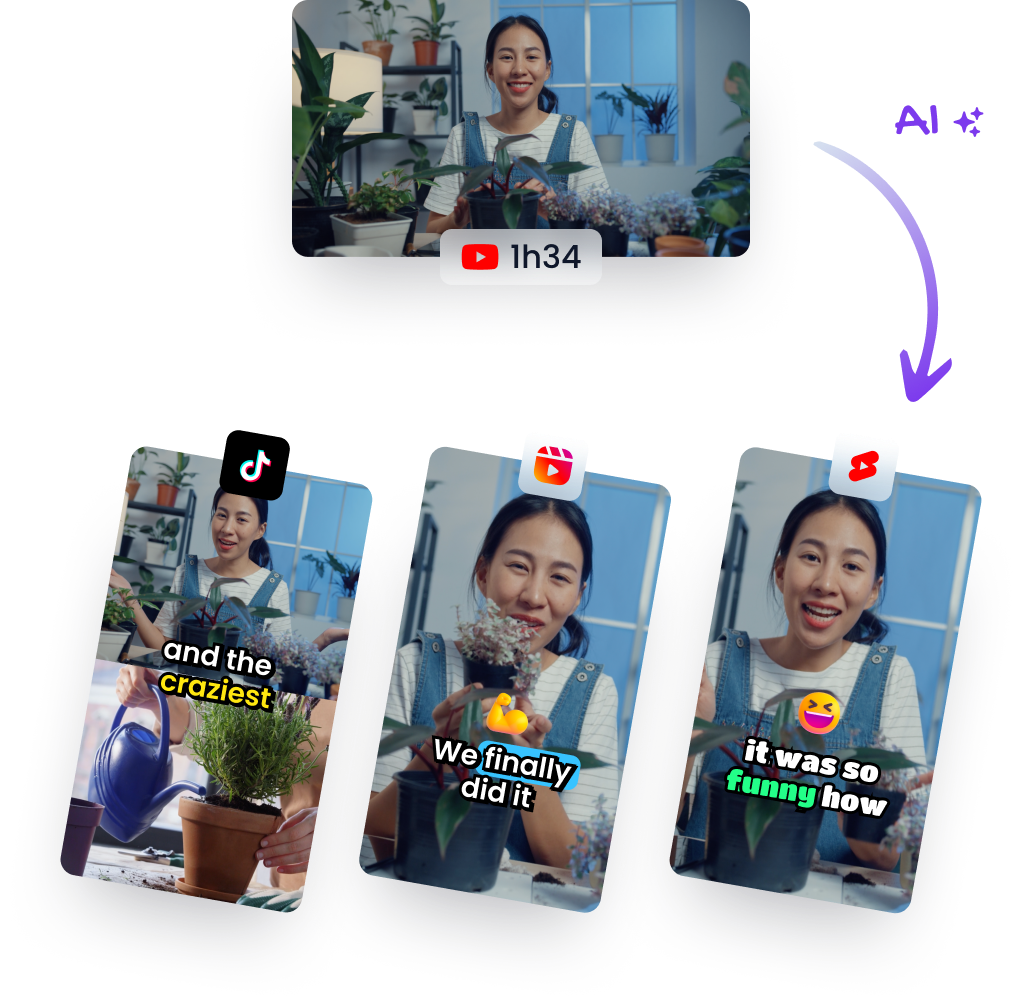
That pressure affects TikTok, Instagram Reels, YouTube Shorts, and the captions that support them. The good news is that creators often don't need to start from a blank page. Podcasts, interviews, webinars, and YouTube videos already contain surprising statements, sharp questions, emotional turns, and useful promises. The work is finding the moment, moving it to the front, and editing it so the viewer understands the context quickly.
Use four tests for every opening: attention, relevance, payoff, and authenticity. Klap can help identify engaging segments in long-form footage, reframe them for vertical viewing, add captions, and prepare clips for review. It's still your job to confirm that the selected moment represents the speaker accurately and delivers what the opening promises.
The central principle: A hook must earn attention quickly and deliver on its promise honestly.
1. The Pattern Interrupt Hook
A pattern interrupt breaks the rhythm of passive scrolling with an unexpected visual, sound, movement, or statement. It works because the viewer encounters something that doesn't resemble the surrounding feed. A sudden camera change, an unusual object, a sharp sound cue, or a counterintuitive sentence can create enough surprise to earn the next few seconds.
Long-form content often hides these moments in the middle. A podcast guest may suddenly reject the assumption behind the discussion. A webinar speaker may change direction after a question. A YouTube educator may reveal a surprising fact while explaining a familiar topic. Search for those abrupt shifts instead of automatically using the original introduction.

Make the interruption understandable
Start with the strongest spoken fragment, then reinforce it with an on-screen caption. If the guest says, “That strategy is exactly why your launch failed,” the first frame might show the statement in large text while the edit cuts directly to the speaker's reaction. Don't bury the surprise beneath a logo animation, host greeting, or explanatory preamble.
Klap's AI can help flag segments containing sudden topic changes or strong statements. Review every suggestion manually, then test different forms of interruption:
- Visual interruption: Begin with movement, a close crop, a prop, or a meaningful reaction.
- Audio interruption: Use a clean sound cue or begin with a sentence that has natural vocal force.
- Verbal interruption: Lead with the unexpected claim, then provide the explanation.
A pattern interrupt fails when it feels manufactured. A random zoom, loud sound, or unrelated meme may stop a viewer briefly but can damage trust if the clip doesn't support it. The payoff should emerge from the original conversation, and the captions should clarify rather than exaggerate the point.
Here's a useful reference for the edit itself:
2. The Question Hook
A question hook turns passive viewing into a mental task. The viewer doesn't just hear a claim. They compare the question with their own experience and wait for the answer. That makes this format especially effective for clips built around advice, diagnosis, interviews, and audience Q&A.
The best questions come from the actual problem the speaker solves. A fitness clip might open with, “Are you making this mistake every time you squat?” A business interview might ask, “What's stopping this company from scaling?” An educational clip could begin, “Why does this common method fail for beginners?” The question should identify a real tension, not create vague suspense.
Find the setup before the answer
When scanning a podcast or webinar, look for moments where a host asks a direct question and the guest answers with substance. You can often remove the surrounding pleasantries while keeping the question, answer, and one supporting example. If the original answer takes too long to arrive, rewrite the opening caption around the exact issue and move the clearest sentence forward.
Klap's caption feature can place the question prominently in the first frame, which matters when viewers watch without relying on audio. Use line breaks to keep the wording readable on a phone, and highlight the problem rather than every word.
The answer needs to arrive quickly. A curiosity gap can hold attention, but excessive delay makes the opening feel like clickbait. For practical guidance on adapting a Reel's opening, caption, and pacing, use this Instagram Reels optimization guide.
Protect the question's meaning
Avoid questions that promise an answer the clip doesn't provide. “How do you double your revenue?” creates a stronger expectation than “What should a small team examine before hiring?” If the source speaker offers a nuanced answer, preserve that nuance in the caption and avoid turning an exploratory discussion into a guaranteed result.
You can also test alternate phrasings while keeping the footage unchanged. One version might focus on the pain point, another on the desired outcome. Compare the opening performance without changing the rest of the clip, so you know whether the question caused the difference.
3. The Contrast or Contradiction Hook
Contrast creates tension by placing two ideas, behaviors, or outcomes next to each other. The viewer sees an unresolved gap and keeps watching to understand why the two sides differ. This format works well for myth-busting, before-and-after explanations, competing strategies, and interviews where a guest challenges conventional advice.
Long-form speakers often signal contrast with phrases such as “many people do this, but,” “the old way versus the new way,” or “what changed was.” They may compare a failed process with a successful one, explain why a popular recommendation doesn't fit a particular audience, or distinguish appearance from reality. Those transitions are strong extraction points because the structure already contains tension and resolution.
Make both sides visible
The edit should let viewers understand the comparison before they process every spoken word. Use split-screen framing, alternating crops, or concise text overlays such as “Common approach” and “Better fit for this situation.” Klap's on-screen text and reframing tools can help turn a horizontal interview into a vertical composition where both ideas remain legible.
A contrast needs a fair comparison. “Working harder versus working smarter” may sound familiar but says little unless the clip defines what each behavior means. A stronger opening identifies the actual difference, such as “The planning method that feels productive, versus the one that reveals missed deadlines.”
Don't manufacture a false choice
Contrasts lose credibility when they imply that one option always works and the other never does. Health, finance, education, and business advice usually depends on context. Let the speaker explain the conditions behind the difference, and use captions to preserve qualifiers such as “for beginners,” “in this situation,” or “when the team is small.”
The resolution must justify the tension. If the clip opens by setting up two approaches but ends with a generic recommendation, viewers feel misled. Select a segment where the speaker explains the mechanism, trade-off, or decision rule that separates the options.
4. The Authority or Credibility Hook
An authority hook gives viewers a reason to trust the speaker before the advice begins. It may refer to relevant experience, training, professional responsibility, or a lesson learned through repeated work. Used well, it answers the viewer's first silent question: “Why should I listen to this person?”
The strongest source moments usually sound natural. A guest explains how their role shaped a recommendation, a coach describes the experience behind a training principle, or a founder connects a mistake to a change in process. Extract that context from the long-form conversation rather than forcing a résumé into the first sentence.
Lead with relevant proof
Credentials only work when they relate to the claim. A technical background can support a software explanation, but it doesn't automatically validate advice about leadership or finance. Put the relevant experience in the caption, then let the clip demonstrate expertise through a clear explanation.
Klap can reinforce an organic credibility statement with text overlays covering a certification, role, or area of experience. Don't add unsupported performance claims or imply that a title guarantees a result. Viewers respond better when the speaker pairs authority with a specific lesson and acknowledges the limits of their experience.
A useful structure is:
- Relevant context: Explain the role or experience that informs the point.
- Concrete insight: State what the speaker learned or changed.
- Practical application: Tell the viewer how to use that lesson.
Avoid credential overload
An opening packed with titles can feel promotional, especially when the audience doesn't yet know the speaker. A slow introduction also performs poorly compared with openings that begin with action or an immediate problem. One 2026 comparison reported 3-second retention of 86% for action-first openings, compared with 42% for slow introductions, while the corresponding average view duration values were 82% and 31%. The hook comparison supports a practical compromise: show relevant credibility while the speaker is already making a useful point.
5. The Trend-Jacking or Timely Reference Hook
A timely reference connects an existing idea to something people currently recognize, such as a trending sound, a popular format, a cultural conversation, or a recent event. It gives an evergreen clip a fresh entry point and can make familiar advice feel relevant to a platform's current viewing habits.
The long-form footage doesn't need to mention the trend. A timeless productivity explanation can use a current “POV” framing. A webinar segment about customer objections can be paired with an appropriate audio format. An interview answer can receive a current text treatment that helps viewers understand its relevance without changing the speaker's words.
Build a reusable trend workflow
Monitor trends on the platforms where you publish, then save formats that fit your audience. Klap can help identify strong sections from existing footage, while the editor lets you reframe the clip, add captions, and adjust the opening. For additional distribution ideas, this guide on getting more views on Shorts offers a relevant publishing reference.
Use trends as packaging, not as a substitute for substance:
- Match the audience: A sound popular with entertainment viewers may weaken a serious educational clip.
- Preserve clarity: Keep the spoken message and captions understandable.
- Check context: Don't attach a serious story to a trend whose meaning conflicts with it.
- Save variations: Keep the original clean edit so you can reuse it when the trend fades.
A trend hook fails when viewers notice the creator is borrowing a format without understanding it. It also has a short shelf life, so don't use it for every version of an important clip. The best approach combines current framing with a message that remains useful after the trend disappears.

6. The Controversy or Hot Take Hook
A hot take challenges a familiar belief and gives viewers a position to evaluate. It can generate comments because people want to agree, disagree, add an exception, or explain their own experience. But controversy only helps when the speaker has a defensible point and the clip supplies enough reasoning to make the debate worthwhile.
Look for moments where a podcast guest rejects a common assumption, a founder explains why a popular tactic failed, or an educator distinguishes a useful principle from an overused slogan. The opening can be direct, such as “Most productivity advice solves the wrong problem,” but the next sentence must explain what the speaker means.
Separate opinion from evidence
Frame the statement as a perspective when the claim is interpretive. Avoid absolute language when the source only supports a narrower conclusion. If the speaker refers to research, experience, or an example, bring that supporting context close to the opening instead of cutting it away for drama.
Klap's editing tools can help place the hot take in the first frame and add captions that expose the reasoning as it unfolds. Don't use text overlays to intensify a claim beyond what the speaker said. A provocative caption that misrepresents the clip may earn a comment but damage the audience relationship.
Before publishing, ask:
- Is the claim specific? Viewers should know what belief is being challenged.
- Is the reasoning present? Remove setup, but keep the explanation.
- Is the tone fair? Disagreement doesn't require ridicule.
- Can the audience act on it? A practical alternative makes debate more valuable.
A hot take also depends on audience trust. New creators may get attention from an aggressive claim but struggle to establish credibility afterward. Use this format when the speaker can explain the position carefully. For broader guidance on why openings spread, see what makes a video go viral.
7. The Personal Story or Vulnerability Hook
A personal story creates relevance through lived experience. The opening might reveal a failure, an uncomfortable mistake, a period of uncertainty, or a decision that changed the speaker's approach. Viewers continue because they want to understand what happened and whether the lesson applies to them.
Long-form interviews are rich sources for this format. Guests often disclose the moment their first business failed, explain a health struggle, or describe a mistake that shaped their career. Don't extract the entire journey. Find the emotional beat, then cut toward the lesson.
Start with the moment that changed the speaker
A strong opening sounds concrete. “I lost a client because I ignored one warning sign” creates a clearer story than “My business journey has been difficult.” The first line should identify the tension, while the next section supplies the consequence or realization.
Captions can emphasize the emotional beat without turning it into melodrama. Use the speaker's words where possible, and keep the visual framing respectful. If the story involves sensitive personal information, confirm that the speaker intended the material for public distribution before repurposing it.
The story should serve the viewer. Follow vulnerability with a practical lesson, decision rule, or changed behavior. A brief admission paired with useful insight builds more trust than an extended confession with no takeaway.
Vulnerability earns attention, but usefulness earns the viewer's continued trust.
Keep the edit intimate
Use a close crop when facial expression carries meaning, but don't over-edit a serious disclosure with constant zooms or distracting effects. Remove pauses that weaken pacing while preserving the emotional rhythm of the story. If the speaker's vulnerability depends on the interviewer's question, retain enough of that question to avoid stripping away context.
This hook can work for creators, coaches, educators, and brands with a real human voice. It doesn't require revealing everything. Select a specific experience that explains the advice, then give viewers a way to apply the lesson without making the content about the creator alone.
8. The Benefit or What You'll Learn Hook
A benefit hook states what the viewer will gain from watching. It gives the clip a clear destination, whether that's a framework, explanation, demonstration, or solution to a defined problem. This format works particularly well for educational content because the audience can judge relevance immediately.
Long-form speakers often reveal these moments near the beginning of a presentation, at the end of an interview answer, or in a section summary. Search for phrases that preview a method, identify a result, or explain what the audience will understand after the discussion. Move that promise to the opening only if the clip delivers it.
Make the promise concrete
“Learn how to improve your workflow” is too broad to guide a viewer. “Use this three-step review before sending a client proposal” gives the audience a recognizable outcome. Specificity helps the right people stop scrolling and makes the payoff easier to evaluate.
Klap's text overlays can reinforce the benefit while the speaker begins explaining it. Use the first caption frame to state the outcome, then show a quick piece of evidence, a process step, or an example. Don't add a result that the original video never supports. The promise should describe the content, not manufacture a guarantee.
Short-form length should match the decision the viewer needs to make. A simple awareness idea may need only a brief clip, while a high-consideration explanation requires more room for context. One 2025 to 2026 dataset reported that 15 to 30 second clips performed best for top-of-funnel awareness, 60 to 90 second clips performed better for mid-funnel familiarity, and 3 to 5 minute clips worked better for high-consideration purchases. The short-form video dataset summary supports matching the promise to the audience's stage rather than forcing every topic into the same runtime.
Deliver the payoff early
A benefit hook fails when the viewer must wait through an introduction before receiving value. Cut greetings, repeated context, and brand slogans unless they directly support the lesson. Keep the first example or action close to the promise, then use captions and pacing to make each step easy to follow.
8-Point Social Media Hooks Comparison
Hook🔄 Implementation Complexity⚡ Resource & Speed📊 Expected OutcomesIdeal Use Cases⭐ Key Advantages
The Pattern Interrupt Hook
Medium, precise timing/editing required
Low–Medium, simple edits, quick to produce
Large short-term lift; ~40–50% higher CTR in first 3s
Attention-grabbing clips, trailers, shocking reveals
Stops scrolling quickly; works across platforms
The Question Hook
Low, identify or pose a clear question
Low, minimal production, fast turnaround
+35–45% completion rates
Educational, Q&A, problem-solving content
Activates curiosity; drives engagement and completion
The Contrast / Contradiction Hook
Medium, needs two distinct elements and context
Medium, split-screen or comparative visuals helpful
Very high engagement; ~50%+ above neutral
Myth‑busting, before/after, transformation content
Creates strong narrative tension and "aha" moments
The Authority / Credibility Hook
Low, extract credential or proof statements
Low, little extra production needed
+25–35% higher trust metrics
Advisory content, sales, course or coaching promos
Builds immediate trust and improves conversions
Trend‑Jacking / Timely Reference Hook
Medium, requires constant monitoring and fast edits
Low–Medium, often simple overlays/audio swaps but time‑sensitive
3–5x higher algorithmic reach when aligned with trends
Viral pushes, repurposing evergreen content for current moments
Algorithmic boost and high shareability when timely
Controversy / Hot Take Hook
Medium, craft defensible, evidence-backed stance
Low, quick to produce but high reputational cost
Very high comment volume; +60–80% engagement
Opinion leaders, debate-starters, provocative topics
Generates discussion and organic reach (high risk/reward)
Personal Story / Vulnerability Hook
Low–Medium, needs genuine, well-framed moment
Low, often available in raw footage, quick edits
2–3x higher emotional engagement and saves
Community building, trust-focused content, long-form excerpts
Deep emotional connection and perceived authenticity
Benefit / "What You'll Learn" Hook
Low, identify explicit value statements
Low, easy overlays/text, fast to create
+40–55% completion rates when benefit is clear
How‑to, tutorials, promotional educational clips
Communicates immediate value; filters engaged viewers
Turn Strong Openings Into a Repeatable Clip System
The right hook depends on the moment already present in the source footage. Use a pattern interrupt when the speaker makes a surprising statement or the scene changes naturally. Choose a question hook when the clip contains a clear question followed by an answer. Use contrast for comparisons, authority for relevant expertise, and timely references when an evergreen idea can connect naturally to a current format.
A hot take suits defensible debate, but it needs reasoning rather than provocation alone. A personal story works when the speaker reveals a specific experience and turns it into a useful lesson. A benefit hook fits educational promises, especially when the clip can demonstrate the promised outcome quickly. These formats aren't interchangeable. The same interview may contain several usable clips, but each clip should have one dominant reason to keep watching.
Short-form video competes heavily on early retention. One industry summary reports that TikTok viewers watching videos under 15 seconds achieved a 76.4% completion rate, compared with 41.8% for videos between 31 and 60 seconds. The short-form attention analysis illustrates why a long-form extraction needs more than a vertical crop. The edit must remove delay, clarify the premise, and protect the payoff.
Review the first three seconds before judging the entire clip. One practical framework defines 3-second retention as the share of viewers who don't swipe during the opening window, with the source recommending review after 24 to 48 hours and describing results below 45% as weak and above 55% as strong enough to consider scaling. This short-form hook measurement guide gives creators a useful iteration point, but thresholds should remain directional because audience, platform, and topic affect interpretation.
Track more than views:
- Early retention: Did the opening stop the swipe?
- Completion: Did the payoff hold attention through the clip?
- Click-through rate: Did the opening move interested viewers toward the next step?
- Comments and shares: Did the idea create a response worth expressing?
- Saves: Did viewers find the clip useful enough to return to?
Test one variable at a time. Keep the footage, caption style, and publishing context stable while changing the opening line, first frame, or hook type. A 2025 Instagram Reels study found that creative hooks outperformed traditional openings across reposts, shares, comments, likes, and completion rate, which supports treating the opening as a measurable creative variable rather than a decorative introduction. The Reels hook study offers evidence for that approach.
A practical workflow is straightforward. Scan podcasts, webinars, interviews, and YouTube uploads for hook-worthy moments. Adapt the spoken opening into a concise caption, then use Klap to generate and reframe a vertical clip with captions. Review the edit for accuracy, pacing, readable text, and a complete payoff. Publish the version that fits the platform, then compare the results against another hook without changing every element at once.
One final technical point matters. A 2026 study found that visually driven openings captured initial attention best, while combined hook strategies produced stronger overall engagement and retention, with watch time showing a positive relationship with engagement. The study of short-form opening modalities supports combining a clear spoken idea with visual movement and readable captions, provided each element reinforces the same message.
Klap helps creators turn podcasts, webinars, YouTube videos, and other long-form footage into vertical short clips with AI-assisted segment selection, reframing, resizing, and captions. Use Klap to find stronger openings, adapt them for TikTok, Instagram Reels, and YouTube Shorts, review the edits, and build a repeatable social media hooks workflow.