How To Get More Views On Shorts: Pro Strategies
Other
You publish a Short from a strong long-form video, expect it to carry some of that value into the feed, and then it flatlines. A few views, no traction, no clear reason why. For creators and marketing teams with a serious content library, that result is frustrating because the raw material is already there.
Low views usually come from a broken system, not bad luck. The clip may start too slowly, the payoff may arrive too late, or the edit may ask mobile viewers for more patience than they are willing to give. Sometimes the underlying problem shows up earlier in the workflow. Teams clip manually, post inconsistently, and end up treating Shorts like side content instead of a repeatable distribution channel.
That gap matters.
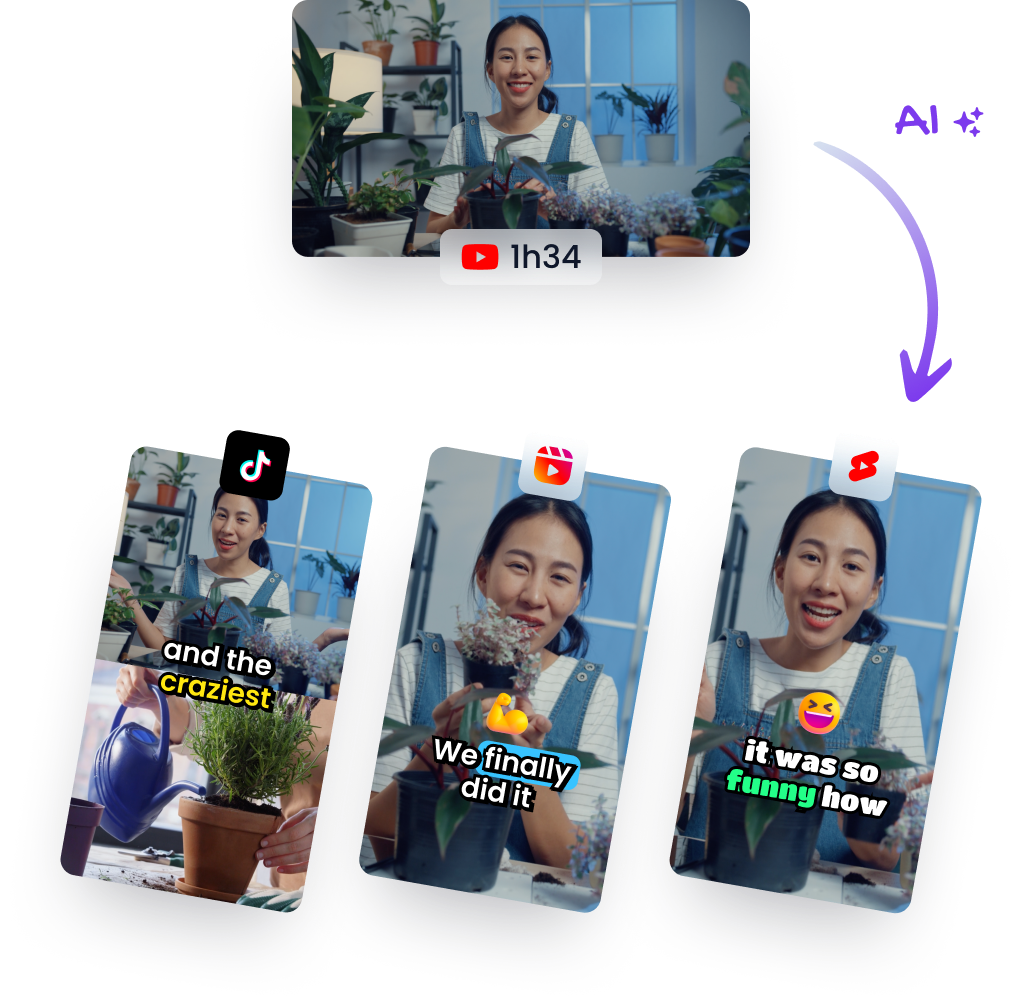
Short-form reach is huge, but established creators do not need another generic promise about going viral. They need a way to turn podcasts, interviews, webinars, tutorials, and talking-head videos into Shorts that are built for feed behavior and produced at a pace that compounds. That means choosing better moments from long-form content, packaging them for retention, and removing the editing bottlenecks that slow publishing down.
Klap helps on the production side by finding clip-worthy segments, reframing for vertical, and generating captions quickly, which cuts the manual work that often keeps repurposing inconsistent. The bigger win is not speed alone. It is building a workflow that gives every strong long-form asset multiple chances to earn attention in short form.
The audience for Shorts already exists, as noted earlier. The practical question is whether your process can turn existing content into clips people will watch, finish, and replay.
Why Your Shorts Are Stuck While Others Go Viral
You post a Short pulled from a strong podcast, webinar, or tutorial. It gets a brief burst of impressions, then stalls. Meanwhile, a simpler clip from another creator keeps climbing. That gap usually comes from format fit, not raw content quality.
Shorts do not reward the same strengths as long-form video. A clip can be useful, polished, and accurate, then still underperform because the setup takes too long, the payoff lands too late, or the opening frame does not tell the viewer why they should stay. In a feed built on instant decisions, clarity beats completeness.
That is why established creators and marketing teams often feel stuck. They already have the expertise. They already have the content library. What they lack is a repurposing system that turns long-form material into short clips built for feed behavior, not a smaller version of the original video.
YouTube’s recent change to Shorts view counting, as noted earlier, also raised the value of clips that earn replays. That matters if your goal is consistent reach from existing content. A strong Short is not just watched once. It often gets replayed because the loop feels clean, the point lands fast, or the viewer wants to catch the phrasing again.
Practical rule: Treat every Short as a chain of attention decisions. The viewer decides whether to stop scrolling, whether to stay for the next beat, and whether the clip is worth a replay, share, or follow.
Creators who keep getting views usually do three things well. They pick moments from long-form content that carry tension or payoff on their own. They edit those moments for mobile attention, not for completeness. They publish enough volume to learn which topics, hooks, and structures hold in their niche.
Workflow starts to matter as much as creative instinct. If your team is manually scrubbing through hour-long recordings, cutting clips one by one, resizing by hand, and adding captions at the end, output slows down and testing disappears. Klap helps remove that bottleneck by identifying clip-worthy moments, reframing for vertical, and speeding up captioning, which makes it easier to turn one strong long-form asset into several Shorts worth testing.
Viral reach is unpredictable. Repeatable growth is not. The channels that break out with Shorts usually have a process that gives good source material multiple chances to win.
The First Three Seconds Are All That Matter
A viewer lands on your Short with no context, no commitment, and a thumb already in motion. If the opening feels slow, unclear, or borrowed from a long-form intro, the clip usually dies before the idea even starts.
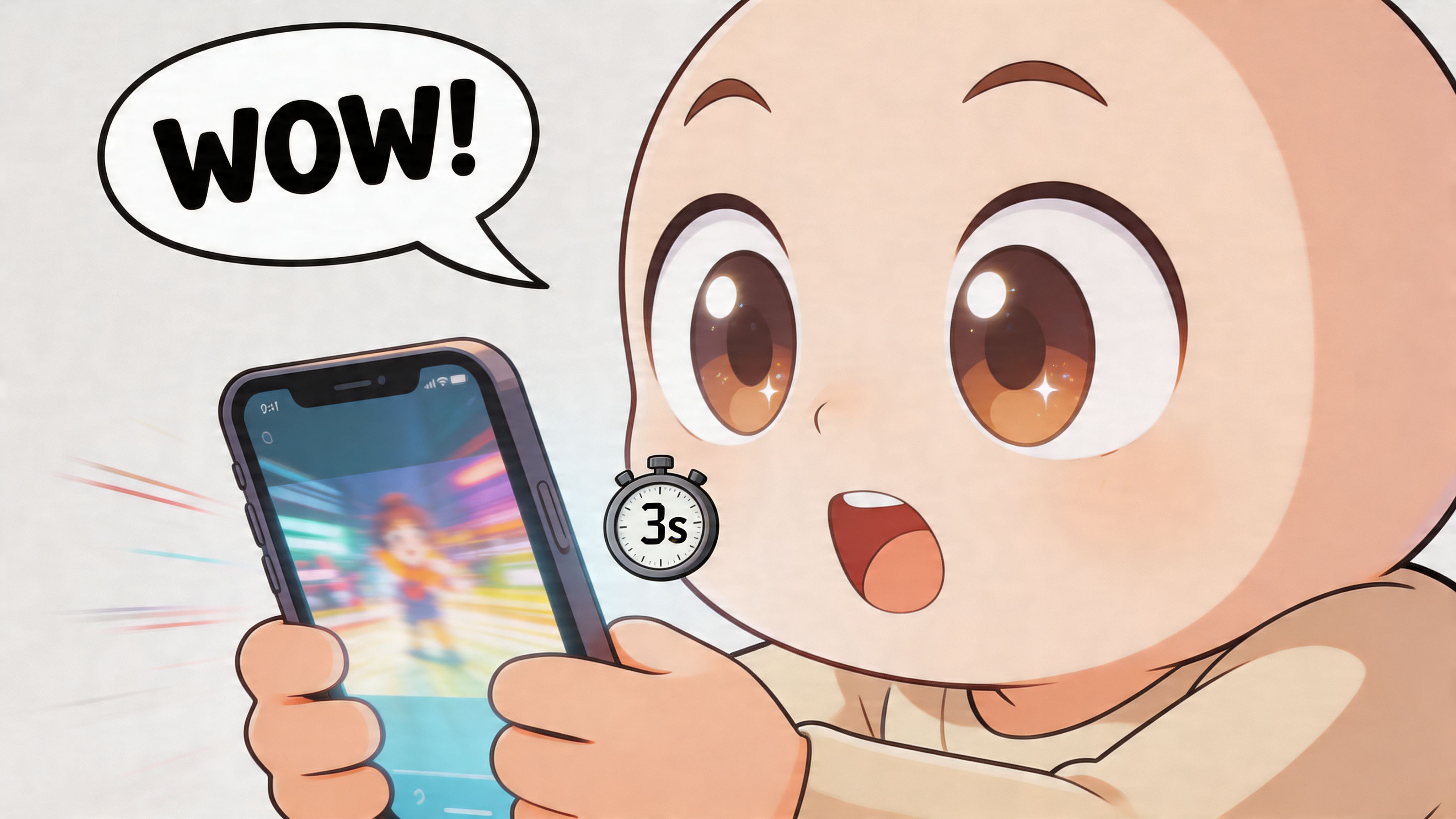
That first beat has one job. Make the viewer understand the value of the clip immediately.
According to Conbersa’s breakdown of YouTube Shorts hooks, stronger openings reduce early swipes, and clips that linger too long on one opening shot tend to lose retention fast. That matches what I see in repurposed content. The clips that stall are rarely missing expertise. They usually open too late.
What strong hooks actually look like
Good Shorts do not ease in. They enter at the moment of tension.
The strongest openings usually fit one of three patterns:
- A sharp claim
“Your Short is losing views before the point even starts.” - A specific question
“Why do Shorts from established creators still stall at low views?” - A clear payoff
“Here’s the cut that made this clip hold attention longer.”
Each one gives the viewer a reason to stay. The topic is clear. The promise is clear. There is movement from problem to answer.
Weak hooks delay all of that.
Weak openingBetter opening
“Hey guys, today I want to talk about…”
“Your Short is losing viewers before they hear your point.”
Slow zoom-in with no context
“This one edit mistake kills retention fast.”
Branded intro screen
“If your Shorts stall, fix this first.”
Established creators get trapped here more than beginners. Long-form habits creep in. A podcast-style setup, a host introduction, or a gentle lead-in can work in a 20-minute video. In Shorts, it burns the only cheap attention you get.
How to find the right opening inside long-form content
If you are repurposing a podcast, webinar, interview, or tutorial, do not search for the nicest excerpt. Search for the sentence that can stand on its own in the feed.
The clips worth testing usually start with one of these:
- A strong opinion that creates contrast
- A mistake the audience wants to avoid
- A result the audience wants
- A surprising line that still makes sense out of context
- A question your audience already asks
Here is the test I use. If the viewer needs the previous 15 to 20 seconds to understand the clip, it is not a Short yet. It is still a long-form excerpt.
That is why repurposing requires editing judgment, not just clipping software. Tools like Klap help speed up the hunt by surfacing likely clip moments from long videos, but you still need to choose the sentence with the sharpest standalone value and cut straight into it.
What to cut from the opening
For many creators, the issue is not a lack of ideas. It is a failure in ruthless trimming.
Remove these from the first seconds:
- Greetings and self-intros, unless your identity is the reason to watch
- Dead air before the first word
- Context that can appear after the hook
- Slow movement with no statement on screen
- Setup lines that only make sense inside the full video
Captions help here because they make the point readable before the viewer fully registers the audio. If you need a faster workflow for that, this guide on adding captions to YouTube Shorts covers the practical setup.
If you want to study a few examples of quick attention-grabbing opens, this breakdown is useful:
A practical hook test
Before publishing, check the opening against four questions:
- Can a new viewer understand the topic instantly?
- Is there a concrete reason to keep watching?
- Does the first frame support the first line?
- Did you remove every word and shot that delays the point?
One weak answer is enough to reconsider the cut.
The first three seconds do not need hype. They need precision. Shorts reward creators who can compress a useful idea into an immediate reason to stay, especially when that idea comes from existing long-form content and has to survive outside its original context.
Engineer Your Shorts for Maximum Retention
A hook gets the view started. Retention decides whether the platform keeps pushing the clip.
Most creators think retention is about making the whole video “interesting.” That’s too vague to be useful. Retention is usually the result of structure. Every few seconds, the clip needs to renew attention with a visual shift, a new piece of information, or a reason to stay for the ending.
Pace the clip like every second has to earn itself
The easiest way to lose retention is to let one shot sit too long after the point is already clear. When the viewer has extracted the information from a frame, that frame starts to feel expensive.

Retention editing usually includes a few simple moves:
- Rapid visual changes so the screen doesn’t feel static
- B-roll or inserts that make abstract points concrete
- On-screen text for emphasis and silent viewing
- Pattern interrupts like a zoom, crop, caption shift, or angle change
- A visible destination so the viewer knows a payoff is coming
If your clip is educational, don’t let the speaker’s face carry the entire video. Alternate between face, captions, screenshots, examples, and highlighted phrases. If your clip is opinion-based, tighten pauses until each sentence lands with almost no slack.
Captions help here because they turn passive listening into active reading. If you’re refining that part of the workflow, this guide on adding captions to YouTube Shorts covers the practical setup.
Build the end before you finish the middle
A lot of Shorts sag because the creator edits from start to finish. Better Shorts are often edited backward from the payoff. You need to know what completion looks like.
If the payoff is “the one mistake hurting retention,” every line before it should either increase curiosity or make the answer feel more valuable. If a sentence doesn’t help the viewer reach that ending, cut it.
Here’s a useful way to think about retention:
Part of the ShortJob
Opening
Stop the swipe
Middle
Escalate or clarify
Ending
Deliver payoff and trigger the next action
That last part matters more than many creators think.
Use the final seconds to create action
Adding a simple CTA in the final 1-2 seconds of a Short can increase subscriber acquisition by 3-4x overnight, according to this YouTube analysis on Shorts growth tactics. That’s not just a conversion trick. It’s a signal that your video was worth finishing.
A weak CTA sounds tacked on. A strong CTA feels like the natural next step.
Examples:
- “Subscribe if you want more edits like this.”
- “Comment ‘part 2’ and I’ll break down the next step.”
- “Follow for more clips on audience growth.”
Don’t place the CTA too early. The viewer hasn’t earned the relationship yet. Put it where completion is already happening.
Design for rewatching
Shorts now reward replay-friendly structure, so your ending shouldn’t feel like a hard stop. It should feel like a turn back into the beginning.
That can be done with:
- a phrase that connects back to the opening
- a visual loop where the final frame resembles the first
- an ending line that makes the viewer hear the opening differently on replay
For example, if the clip begins with “This is why your Shorts die after upload,” the ending can resolve with a line that naturally brings the viewer back to the original claim. Done well, the Short loops without friction.
What doesn’t work
Some retention tactics hurt more than they help.
- Over-editing with random effects distracts from the point.
- Too much text on screen creates reading fatigue.
- Long setup before payoff makes the clip feel slower than it is.
- Generic endings waste the strongest part of the completion moment.
The best Shorts feel efficient. They don’t feel busy for the sake of it. They feel like every edit was made to keep momentum high and understanding easy.
The Smart Way to Scale Repurposing Your Content
Most creators don’t fail at Shorts because they lack ideas. They fail because their production process can’t support consistent output without draining the rest of the content business.
If you run a YouTube channel, podcast, interview show, webinar program, or brand video pipeline, manual repurposing gets expensive fast. You scrub through long recordings, guess which moments might work, resize them by hand, add captions, export versions, and then still end up with clips that may not fit the audience on that channel. That isn’t a growth system. It’s a bottleneck.
Repurposing works when you stop clipping randomly
The biggest mistake with repurposed Shorts is topic drift. A single long-form video might contain multiple subtopics, side comments, and audience angles. That sounds like more opportunities, but it often creates confusion. A major reason repurposed Shorts fail is niche misalignment, especially when creators extract every interesting moment instead of choosing moments aligned to a specific audience subset, as described in Hollyland’s analysis of why Shorts don’t get views.
That means a good clip isn’t always the right clip.
If you publish:
- one Short about creator monetization,
- another about camera gear,
- another about hiring,
- and another about interview psychology,
from the same long podcast episode, you may be feeding mixed signals about who should get your next Short.
A better repurposing workflow
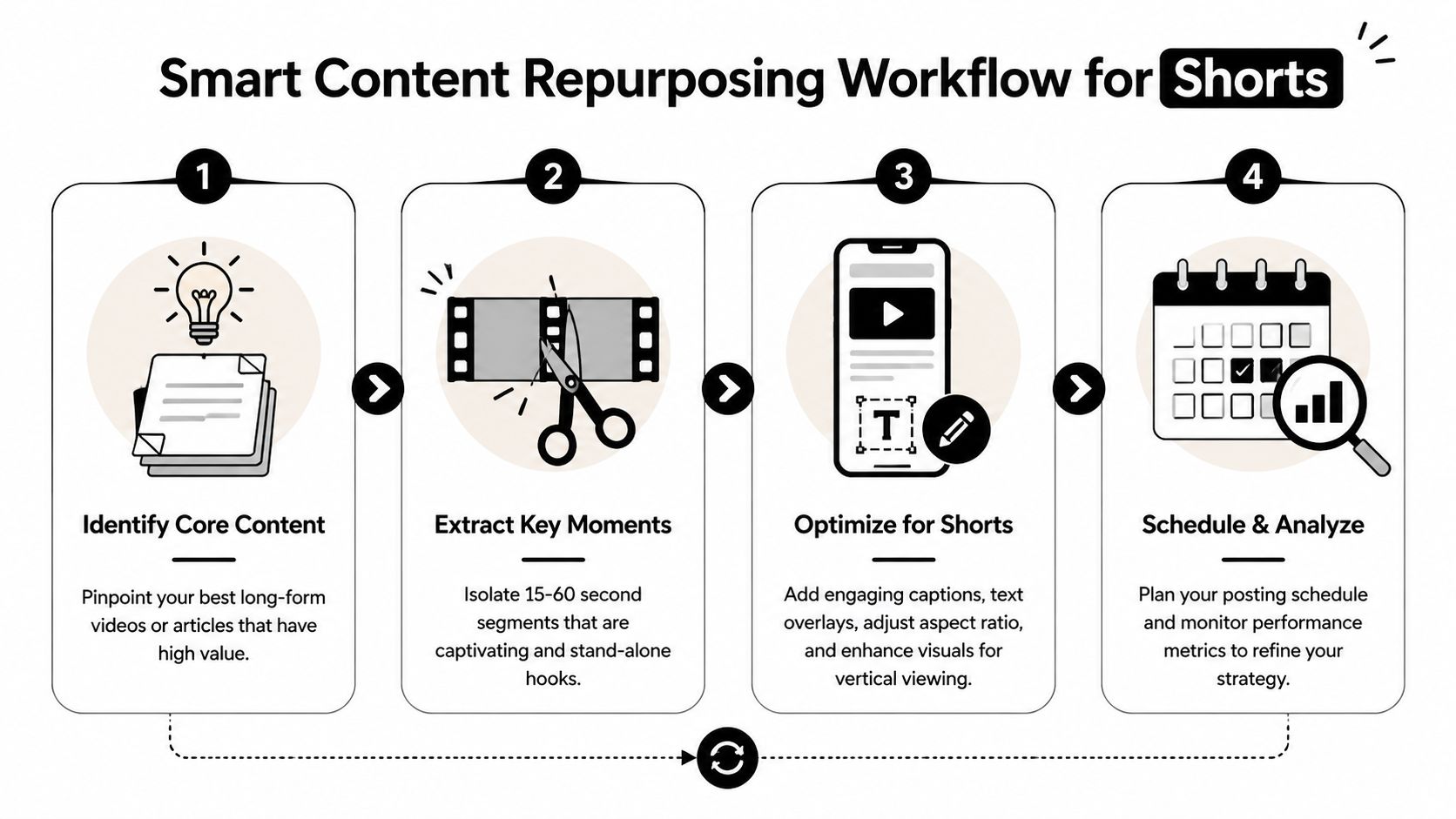
The most sustainable workflow is selective, not exhaustive.
- Start with one long asset that already has clear value
Pick a podcast episode, webinar, tutorial, or interview that contains distinct takeaways. - Group possible clips by audience intent
Don’t think “good moments.” Think “who is this for?” One set might speak to beginners. Another might fit marketers. Another might fit your core subscribers only. - Build mini series instead of isolated clips
If one long video contains several points on the same subtopic, turn those into a sequence rather than posting unrelated fragments. - Only then optimize each clip for Shorts format
Rewrite openings, tighten context, add captions, and make sure the visual framing supports mobile viewing.
That’s also where AI-assisted tools become useful. Not because they replace editorial judgment, but because they remove repetitive production work. A platform like Klap’s workflow for creating YouTube Shorts from existing video shows the core pattern: import a long video, let the system identify promising segments, reframe them for vertical viewing, generate captions, and then review before export. For teams publishing frequently, that cuts down the time spent on mechanical edits and leaves more room for choosing the right angle.
Where AI helps and where it doesn’t
AI is most helpful in three places:
- Finding candidate moments inside long-form footage
- Reframing and resizing for vertical formats
- Generating readable captions quickly
It’s less helpful if you expect it to decide your audience strategy for you. The software can surface compelling moments, but you still need to decide whether those moments belong on that channel, in that series, for that viewer type.
If you’re exploring how creators are thinking about this broader shift, this overview of generative video models is worth reading. It gives useful context on how AI is changing production workflows without removing the need for human judgment.
The fastest workflow still loses if the clips are aimed at the wrong audience slice. Speed matters. Alignment matters more.
The trade-off most teams miss
There’s a real tension between volume and coherence. Publishing more Shorts helps you learn faster, but publishing every available angle from one source video can muddy your positioning.
A cleaner rule is this:
If the channel needsThen repurpose this way
Audience clarity
Keep clips tightly themed
Broader testing
Split clips by distinct series
Brand consistency
Use recurring formats and framing
Team efficiency
Batch from a single long-form asset
That’s the scalable version of how to get more views on shorts. You don’t need to create from scratch every time. You do need a repeatable filter for choosing which parts of your long-form content deserve short-form distribution.
Master Your Metadata and Posting Strategy
A strong Short can still underperform if the packaging is weak and the upload rhythm is chaotic. Shorts are feed-driven, but metadata and posting cadence still shape discoverability, context, and consistency.
Write metadata that helps the platform place the clip
Titles for Shorts don’t need to be clever. They need to be clear. The fastest way to improve titles is to write them around the exact problem, result, or topic shown in the video.
Examples:
- “Why Your YouTube Shorts Get Swiped Away”
- “How to Edit Shorts for Better Retention”
- “3 Hook Styles That Stop the Scroll”
Descriptions should support the title, not repeat it word for word. Use the opening lines to reinforce the topic in plain language. Keep the wording aligned with what’s said on screen. If the clip is repurposed from a larger video, mention the broader context naturally.
Hashtags are useful when they’re relevant and restrained. Use #Shorts if it fits your workflow, then add niche-specific tags tied to the topic. Don’t stuff unrelated tags into the description. That usually makes categorization worse, not better.
If you’re deciding where Shorts fit compared with other platforms, this comparison of TikTok vs YouTube Shorts is helpful for thinking through content packaging and distribution choices.
Batch the work so consistency is realistic
Creators who batch-produce and use a series format can boost views by 4x through binge-watching, according to this YouTube workflow breakdown on batching and Shorts SEO. The same source says inconsistent posting can lead to a 70% view loss after a gap of more than 48 hours.
That matters because many creators don’t have a content problem. They have a cadence problem.
Here’s the practical difference:
- A creator editing one Short at a time usually posts when energy allows.
- A creator batching from one content session can schedule a run of related Shorts and keep the feed active.
Series format also changes how viewers experience your channel. Instead of one disconnected clip, they see an ongoing topic thread. That gives them a reason to watch another Short from you, not just the one that happened to land in the feed.
A simple publishing pipeline
Use a lightweight system that you can keep running.
- Batch ideas from existing videos
Pull several candidate clips from one recording or content cluster. - Group them into a recognizable series
Same promise, similar audience, consistent framing. - Write titles in one session
Keep them direct and topic-led. - Schedule uploads ahead of time
Remove the day-to-day decision fatigue. - Organize related Shorts into playlists
Help viewers continue the session when they visit your channel page.
Workflow note: Good strategy beats heroic effort. If your posting system depends on daily motivation, it will break.
What to stop doing
A few habits hurt distribution:
- posting in random bursts with long gaps
- using vague titles that hide the value
- publishing unrelated Shorts back to back
- treating every clip like a standalone experiment
A better posting strategy doesn’t just increase output. It helps YouTube understand your content, and it helps viewers know what to expect when they see you again.
Use Analytics to Drive Your Shorts Growth
Most Shorts advice is built for new creators chasing their first breakout clip. That leaves established creators with a more complicated problem. You already have subscribers, a known niche, and existing long-form performance data, but your Shorts can still underdeliver.
That gap matters. As noted in this YouTube discussion about Shorts analytics gaps for established creators, creators with existing audiences need a framework for diagnosing underperformance by comparing metrics like watch time and swipe-through behavior, then using that information to choose better segments from their long-form catalog.
Stop using view count as the only diagnosis
Views tell you what happened. They don’t tell you why.
When a Short underperforms, the first useful question is not “why didn’t the algorithm like this?” It’s “where did the viewer lose interest?”
A simple diagnostic framework helps:
If you see thisThe likely issue
High swipe-away behavior
The hook is weak or unclear
Strong start, then fast drop
The middle loses momentum
Good watch behavior, weak follower response
The topic may be useful but not channel-defining
One topic consistently outperforms others
Your audience is signaling a clearer niche preference
This is especially valuable when you’re repurposing from long-form. Different segments from the same podcast or video can perform very differently because they appeal to different slices of your audience.
Use underperformance to choose better source clips
Established creators often make one wrong assumption. They think the best long-form moments will automatically become the best Shorts. That isn’t always true.
A great long-form moment may depend on:
- previous context
- emotional build-up
- audience familiarity
- channel-specific expectations
A strong Short segment usually has different qualities:
- it makes sense alone
- it creates tension fast
- it resolves quickly
- it matches what your current Shorts audience already responds to
That’s why analytics should influence clip selection upstream, not just editing downstream. If your audience consistently watches clips about one subtopic longer than others, use that signal when choosing future cuts from your archive.
A Short that performs badly can still be useful if it tells you which angle your audience doesn’t want from that channel.
The key questions to review after each batch
Don’t review every Short in isolation. Review them in groups.
Ask:
- Which topic clusters held attention best?
- Which openings kept people from swiping?
- Which clips got completion but weak conversion?
- Which repurposed segments felt too dependent on the original long-form context?
- Which themes worked for non-subscribers versus your existing audience?
That last question is important for larger channels. Sometimes a Short performs well with a broad audience but doesn’t deepen the relationship with the audience you want. Other times a narrower clip gets fewer views but attracts the right viewers. Growth decisions get easier when you know the difference.
A practical feedback loop
Use this pattern after every batch:
- Review the opening performance.
- Review where viewers dropped.
- Compare topics, not just individual clips.
- Pull new source material based on what held attention.
- Re-edit weak concepts before abandoning them completely.
That’s how to get more views on shorts without guessing. You don’t need perfect prediction. You need a tighter loop between what you publish, what viewers do, and what you repurpose next.
Your System for Predictable Shorts Growth
Shorts growth gets more predictable when you stop treating every upload like a separate gamble.
The pattern is straightforward. Hook hard. Retain attention. Scale what works. If the first seconds don’t stop the swipe, nothing else matters. If the middle drags, the hook can’t save it. If your repurposing process is messy, you won’t publish enough focused clips to learn what your audience wants.
That’s why the strongest Shorts strategy is operational, not just creative. You need a repeatable way to extract the right moments from long-form content, package them clearly, publish them consistently, and use analytics to tighten the next batch. Established creators have an advantage here because you already have source material, audience history, and enough signal to spot patterns faster than someone starting from zero.
If you’re also thinking about how short-form creative connects to paid distribution and broader platform behavior, these TikTok Reels advertising insights add useful context around what makes short-form content persuasive across channels.
Build the system once. Then improve the inputs. That’s how low-view Shorts become a reliable growth engine instead of a recurring frustration.
If you already have podcasts, interviews, webinars, or YouTube videos sitting in your archive, Klap gives you a practical way to turn them into Shorts without rebuilding the workflow from scratch. You upload or link a long video, the platform identifies clip-worthy moments, reframes them for vertical viewing, adds captions, and lets you review before export. That makes it easier to produce focused batches, test more angles, and spend more time on hooks, retention, and analytics instead of repetitive editing.