Instagram Reels Optimization: The 2026 Playbook
Other
The most popular Instagram Reels advice is now incomplete: post more, use trending audio, and chase virality. That checklist ignores the constraint in 2026, which is limited audience attention. Reels still drive discovery, but recent benchmarks show engagement and completion weakening in several datasets, while carousels can outperform Reels for some engagement goals. Good Instagram Reels optimization therefore starts with the outcome you need, not with the assumption that every idea belongs in a Reel.
Reels became a global Instagram product in August 2020, following tests in Brazil and a rapid rollout in India. From the beginning, Instagram built the format for algorithmic discovery beyond a creator's follower base, with mobile editing, concise storytelling, and vertical viewing. By 2026, independent reporting estimated that Reels represented 38% of total time spent on Instagram, while another report described more than 140 billion Reels plays per day across the platform. (Markhub24's analysis of Reels)
The practical lesson is simple. Optimize Reels for discovery when you need non-follower reach, use carousels when a topic needs depth and saves, and reserve Stories or direct responses for community and conversion work. The algorithm doesn't reward production effort by itself. It responds to what viewers do, especially whether they watch, finish, save, and share.
Why Reels Optimization Changed in 2026
Reels optimization is now a distribution-goal problem, not a format problem. A Reel may attract broad discovery yet produce weak engagement, while a carousel can create stronger interaction among people already familiar with your brand. Socialinsider reported that Reels engagement fell from 0.50% in Q1 2026 to 0.48% in Q2 2026, and another 2026 analysis reported brand-account engagement declining from 2.6% to 2.0% year over year, alongside a completion-rate decline from 38.4% to 29.7%. (Socialinsider's Instagram benchmarks)
Those figures don't make Reels irrelevant. They make lazy format selection expensive. A creator who turns every tutorial, announcement, and customer objection into a Reel may increase output while weakening the average viewing experience. Instagram users are also choosing among TikTok, YouTube Shorts, Feed posts, and carousels, so each clip competes for the same finite retention budget.
Match the format to the job
Use a Reel when the idea benefits from motion, personality, demonstration, or discovery among people who don't follow you. Use a carousel when the audience needs to compare options, save a process, or move through a structured explanation. One 2026 comparison cited 6.90% engagement for carousels versus 3.31% for Reels by reach, showing why a Reels-only content strategy can miss valuable feed behavior. (Socialinsider's benchmark data)
Practical rule: Choose the format that makes the desired action easiest, not the format with the loudest reputation.
Likes and comments still help you understand audience response, but they shouldn't dominate your decisions. Watch time, completion, shares, and saves tell you whether the creative held attention or created enough value to pass along. If your objective is awareness, prioritize qualified reach and retention. If it's conversion, judge the Reel by profile visits and downstream actions. If it's community, a smaller but more responsive audience may be more useful than a broad recommendation spike.
Pre-Production Checklist That Shapes Every Reel
Most distribution problems begin before the camera starts. A poorly framed subject, a delayed hook, or captions hidden beneath the interface can't always be repaired in editing. Treat pre-production as the cheapest place to remove friction.
Start with the frame
Instagram shows Reels full-screen in 9:16, so compose for a vertical screen rather than cropping a horizontal video as an afterthought. Keep faces, demonstrations, and essential text inside the central safe area. Instagram's official creative guidance warns that captions, buttons, and interface controls can cover content near the bottom and right edges, so don't place a headline where the viewer's controls will compete with it.

Frame the speaker with enough headroom for movement, then test the shot on a phone. Vertical faces need even front lighting, clear separation from the background, and a microphone positioned close enough to capture consonants without room echo. A lavalier microphone is useful for a stationary presenter, while a directional microphone suits demonstrations where the subject moves.
Design the opening before filming
Choose one hook type before you record:
- Visual interruption: Begin with the result, a surprising object, or a fast change in the scene.
- Spoken promise: State the specific problem the viewer will solve.
- Text-led entry: Put the central tension on screen immediately, then support it with speech.
Captions need to be readable without sound, but they shouldn't duplicate every pause or filler word. Decide whether the style will use short sentence fragments, highlighted keywords, or clean transcript lines. Before recording, confirm aspect ratio, safe zones, hook type, caption style, lighting, microphone, and audio rights. Instagram's published specifications support formats such as MP4 and MOV, and standard accounts can publish Reels up to 90 seconds. (Instagram's official Reels guidance)
Hooks, Pacing, and Length Backed by Retention Data
The first seconds aren't a branding warm-up. They're the test. A 2026 benchmark found median Reel watch-time retention at 31.7%, while Reels under 15 seconds retained 66.9% of their length and Reels over 60 seconds retained only 15.9%. (Highviz's Instagram Reels report)
That doesn't mean every Reel should be reduced to a few seconds. It means length must earn its place. A product demonstration may need more time than a single tip, but the opening still has to establish the payoff before the viewer decides to swipe.
Build the hook around the payoff
A reliable structure is:
- Show or state the result.
- Introduce the problem or context.
- Deliver the explanation.
- End with a useful consequence, example, or loop.
For a long-form interview, don't open with the host greeting the audience. Start with the strongest claim, then provide the sentence that makes it understandable. For educational content, lead with the mistake, outcome, or contrast the viewer already cares about.
Shorter cuts often perform better because every sentence carries more weight. Another 2026 benchmark reported 5.8% average engagement for 15- to 30-second Reels, compared with 3.2% for Reels longer than 90 seconds. A separate dataset found completion rates of 72% for Reels under 30 seconds, 46% for 30- to 60-second Reels, and 28% for 60- to 90-second Reels. (SQ Magazine's Reels statistics)
Use the guidance on how long Reels should be when deciding whether an idea needs one compact clip or a short series. If the Reel is part of a paid campaign, separate creative testing from media planning, and use a resource such as optimize Instagram ad budget to keep distribution decisions tied to the campaign objective.
Pacing should follow meaning, not an arbitrary editing rhythm. Cut when the visual, claim, or emotional beat changes. A talking-head clip can stay on screen longer if the delivery is compelling, while a tutorial may need frequent reframing to show each action clearly.
Captions, Hashtags, and Covers That Drive Discovery
Metadata cannot rescue a Reel with weak retention, but scattered metadata can hide a strong one. Treat captions, hashtags, alt text, covers, and audio as a single metadata discovery system. Every field should reinforce the same topic, audience, and promise. If the spoken hook says “fix weak podcast clips,” the cover and caption should not point to an unrelated trend.
Make every field support the topic
Put the clearest phrase near the start of the caption. Instagram's caption parser reportedly gives special weight to the first 125 characters, so lead with a direct summary or promise before adding context and a soft call to action. A question-only caption makes viewers infer the value. A clear sentence tells the audience and the platform what the Reel covers.
Use a compact hashtag structure that you can test:
- One broad niche tag: Name the general subject.
- Two medium-competition tags: Narrow the audience to a relevant professional or interest group.
- One experimental tag: Test a specific angle, audience phrase, or emerging topic.
Hashtags support the subject. They do not compensate for a weak opening, unclear explanation, or low completion. For a more focused tag set, use this guide to hashtags for Instagram Reels.
Alt text should describe what appears in the video, including the subject and action. That gives accessibility features and search context useful information without turning the field into a keyword list.

Design the cover for a profile visitor
The opening frame earns attention in the Reels feed. The cover earns a click from the profile grid, so design them for different jobs. Use a vertical 1080x1920 export, keep the subject clear of the right-side interface area, and add short overlay text that reflects the spoken hook. Three words can work when they identify the problem without forcing the type to become unreadably small.
Audio should serve the idea. Trending audio can help when it fits the subject, while original audio is the stronger choice for a distinctive explanation, opinion, or delivery that another creator cannot reproduce by selecting the same sound. For cross-platform formatting references, Instagram Facebook X sizes 2025 provides a practical comparison.
When to Post and How Often to Publish
A universal posting hour is a weak shortcut. Buffer's Instagram timing analysis found that Reels performed best in the evening from 6 p.m. to 11 p.m., especially on Wednesday and Thursday. Adobe's 2026 summary identified noon ET as the most crowded hour and reported that Mondays can produce the highest average views.
Treat those findings as competing hypotheses, not a schedule to copy. Peak windows may produce faster initial exposure because more followers are active, while also putting your Reel beside more competing uploads. Off-peak publishing can mean fewer immediate impressions, yet give a strong clip more relative attention. Test both against audience activity, retention, and your distribution goal.
Choose a publishing objective
Publishing choiceBest fitWhat to watch
Peak audience window
Fast initial distribution
Early reach and shares
Less crowded window
Testing a strong but unproven idea
Completion and watch time
Immediate follow-up
Extending momentum from a winner
Shares, saves, and profile actions
Influencer Marketing Hub's Reels statistics reports that Reels collect about 65% of total views and 61% of interactions during the first 3 days, with day one contributing roughly 30% of lifetime views. Publish when your audience can respond, then support the launch through Stories, comments, and relevant cross-posting. A Reel may win distribution quickly, while a carousel can remain useful for saves and profile browsing. Choose the format according to whether you need reach or reference value.
Cadence should remain sustainable. More uploads create more experiments, but they cannot repair weak hooks or low completion. Metricool reported that Reels generate more than four times the interactions of single-image posts, while average watch time rose to 8.5 seconds year over year. Use that comparison to protect retention quality, rather than filling the calendar with disposable clips. A consistent schedule gives each test enough attention to produce a useful result.
Measuring Performance After the First 72 Hours
Run every Reel through a 14-day measurement loop, but treat the first 72 hours as the critical launch window. The early response tells you whether the clip deserves more attention, a revised package, or a new edit. Don't let likes and comments make the decision by themselves.
Track four primary metrics:
- Average watch time: How long viewers stayed with the clip.
- Watch-through rate: How much of the Reel viewers consumed.
- Saves per reach: Whether the content has future reference value.
- Shares per reach: Whether viewers found it useful or relevant enough to send.
Keep likes and comments as supporting signals. They can reveal resonance, confusion, or conversation quality, but watch behavior and sharing better explain distribution potential.

Use a consistent decision rule
Compare each Reel with your account's own 30-day median watch-through rate, rather than a generic benchmark. If it clears that median within the first 72 hours, consider paid amplification. If it falls below the median but remains above half of the median, revise the cover and caption before testing the same clip again. If it falls below half of the median, retire that edit and reuse the underlying hook in a new cut.
The paid amount and thresholds should reflect your actual operating budget and account history. Don't treat an arbitrary number as a universal rule. Log the decision in a spreadsheet with columns for hook wording, topic, length, cover style, audio type, average watch time, watch-through rate, saves per reach, shares per reach, and the next action.
After 14 days, look for repeated patterns. A save spike may follow a checklist hook, while a share spike may follow a blunt myth-busting opener. Those patterns are more valuable than a single viral result because they give the next batch a creative direction.
A Weekly Workflow for Repurposing Long-Form Video
Long-form video contains more usable moments than many teams extract. The challenge is selection, not just cutting the recording into equal pieces. Build a weekly system that separates harvesting, editing, publishing, and review so every Reel receives a deliberate hook and package.
Sunday and Monday
Use Sunday for a harvest block. Search podcast, webinar, interview, and YouTube transcripts for four to six moments with a clear payoff, strong disagreement, useful explanation, or emotional turn. Mark the exact sentence that can open the clip, then record the source title, timestamp, topic, and intended audience in a shared spreadsheet.
Monday is the editing sprint. Reframe each candidate for 9:16, keep captions inside the safe area, remove the slow introduction, and place the payoff near the opening. Apply one consistent cover template, but change the wording so each cover identifies the clip's specific promise.

Tuesday through Thursday
Stagger publishing across Tuesday and Wednesday using the audience-time tests described earlier. Prepare the caption, focused hashtag cluster, alt text, cover, and audio before scheduling. Avoid releasing several clips in one burst, because each Reel needs enough room to collect meaningful early behavior.
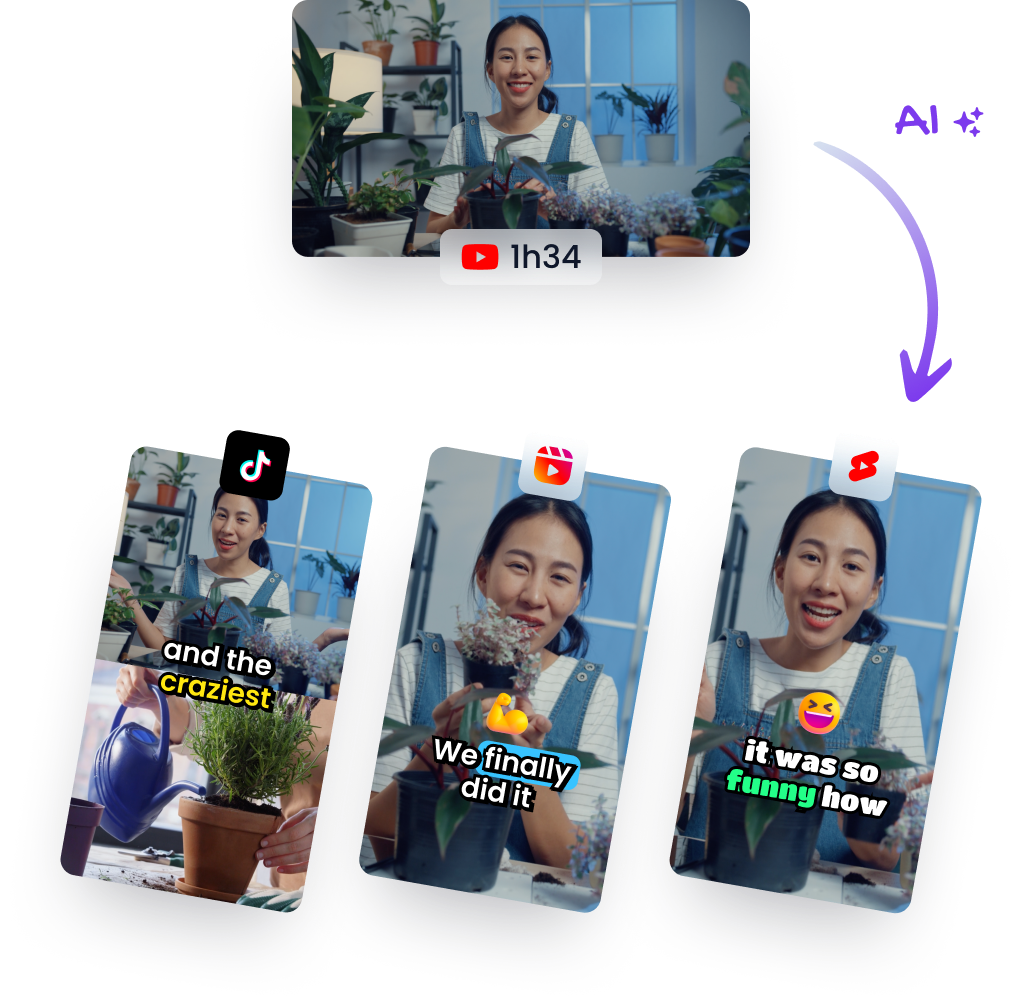
A tool such as Klap can analyze long-form video, identify engaging segments, reframe them for vertical viewing, add captions, and prepare short clips for review and export. Use the long-form content repurposing workflow to keep the source asset, hook, edit, and platform destination organized. For broader search and content planning principles, SemDash's SEO content guide provides useful context for aligning topics and language with audience intent.
Thursday is the repurposing loop. Recut an underperformer into a tighter version, especially if the original idea is valuable but the opening takes too long. Friday is the analytics review. Apply the 72-hour decision rule, record the result, and compare hook phrasing with saves and shares.
Saturday is for scripting the next batch. Write opening lines, identify missing footage, and label each file with a consistent convention such as date, source, topic, hook, and version. The spreadsheet should show what has been harvested, edited, scheduled, published, reviewed, and recycled. That visibility keeps a team from repeatedly solving the same production problem.
The workflow works because it treats volume as a byproduct of a strong system. You aren't publishing every usable sentence. You're selecting moments, compressing them for retention, packaging them for discovery, and using performance data to decide what deserves another edit.
Klap turns long-form videos, podcasts, webinars, and YouTube uploads into captioned, vertically reframed short clips by identifying engaging moments and preparing them for social publishing. Visit Klap to turn your existing video library into a more consistent Instagram Reels workflow without rebuilding every clip from scratch.