A Creator's Guide to Repurposing Content for Social Media
Other
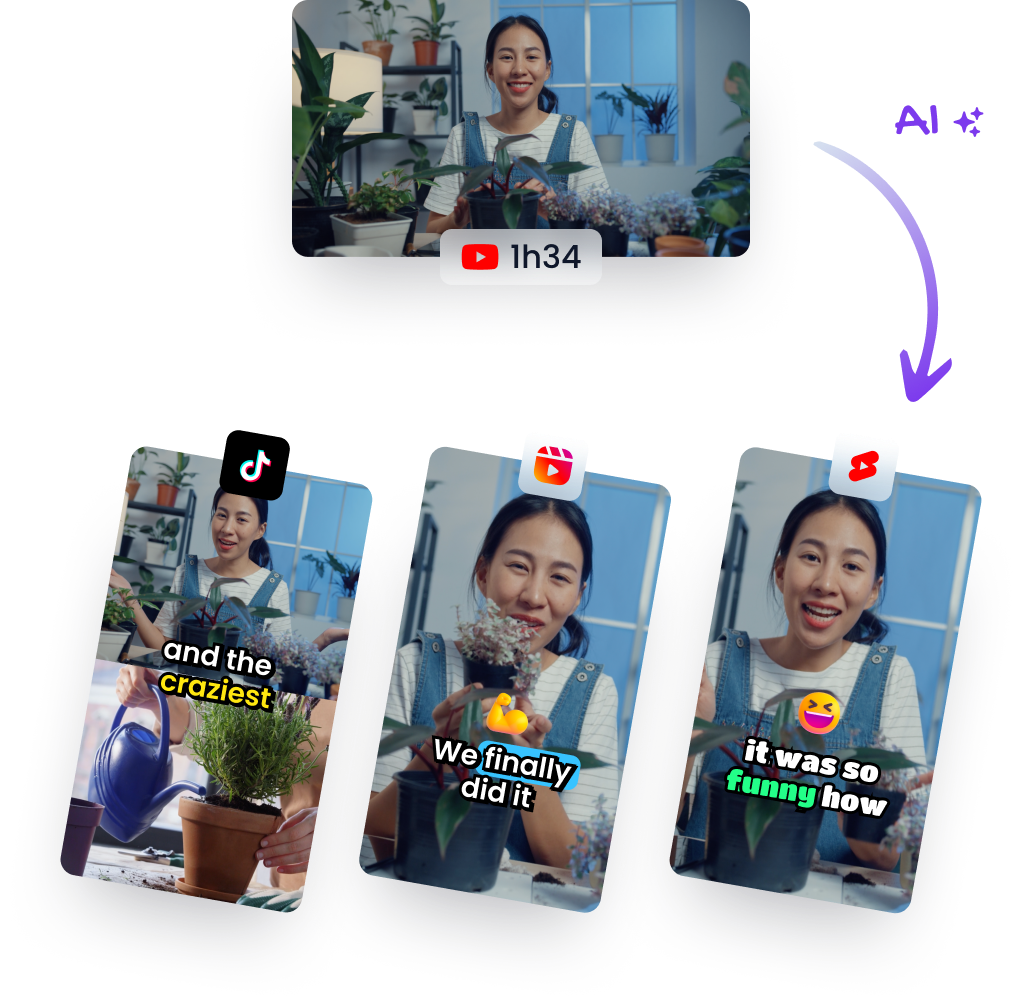
Repurposing simply means taking one killer piece of content and spinning it into multiple new formats for different platforms. The whole strategy is about adapting your existing long-form videos, podcasts, or articles into the kinds of short-form clips, images, and posts that people actually want to watch—all without starting from scratch every single time.
The Secret Weapon of Top Creators
Feeling the pressure to constantly feed the social media beast? You're not alone. The relentless demand for fresh, engaging short-form video on platforms like TikTok and Instagram Reels can burn out even the most dedicated creators.
Picture this: you've just wrapped up an amazing hour-long podcast interview, but now you're staring down the barrel of creating a whole week's worth of new, original content just to stay relevant. This is where a strategic shift in thinking isn't just helpful—it's essential.
Content repurposing isn't a lazy shortcut; it's a core growth strategy that the most successful creators swear by. Think of your existing long-form content—your YouTube videos, webinars, and podcast episodes—as an untapped goldmine. Every single one is packed with dozens of potential viral moments just waiting to be clipped.
From Overload to High-Impact Strategy
The fundamental idea is to work smarter, not harder. Instead of facing a blank slate every day, you can strategically mine your best work for key insights, powerful quotes, and actionable tips. This approach not only saves an incredible amount of time but also ensures your social feeds are consistently filled with high-value content that has already proven its worth.
The numbers don't lie. In a world where video now drives over 82.5% of all web traffic, not having a repurposing strategy is a massive missed opportunity. Data shows a staggering 94% of marketers are already repurposing their content, with B2B brands seeing an 86% increase in website traffic from this exact practice.
Even more compelling? 93% of brands have landed new customers directly through videos on social media. This data makes it clear: repurposing is no longer just an option—it's absolutely essential for growth. Discover more powerful content repurposing statistics and see the impact for yourself.
The AI-Powered Advantage
Until recently, the process of manually scrubbing through a long video, trying to find compelling moments, and then tediously editing them into vertical clips was a huge time suck. But now, modern AI tools like Klap have made this workflow incredibly efficient.
The real shift is moving from a manual editor to a creative strategist. Your role is no longer to find the needle in the haystack but to choose the best needles the AI has already found for you.
With this new workflow, you can turn an intimidating, hours-long task into a streamlined process that takes just a few minutes. This guide will walk you through a step-by-step framework to turn your content library into a high-performing social media machine, moving you from content overload to a confident, high-impact presence.
Building Your Content Repurposing Workflow
Before you start chopping up videos, you need a solid game plan. A real strategy for repurposing content for social media isn’t about random acts of editing; it’s about building a repeatable system that consistently finds the gold in your long-form videos.
Think of this workflow as your roadmap.
First thing's first: take stock of what you already have. Whether it's a massive YouTube channel, a growing podcast library, or a folder of old webinars, this is your source material. But don't just start with your newest video—go for your greatest hits.
Dive into your analytics and find the content that has already proven its worth. Look for videos with high audience retention, big engagement spikes in the comments, or evergreen topics that people still care about months later. These are your prime candidates.
Identifying Your Hook-Worthy Moments
Once you’ve picked a high-potential video, the real treasure hunt begins. You're searching for those "hook-worthy" moments—the powerful little snippets that make someone stop scrolling dead in their tracks. These are the building blocks of any short clip that performs well.
Scrubbing through an hour-long video manually is a complete time-sink. A much smarter way to do this is to scan the video's transcript. Look for spots where you dropped a surprising statistic, shared a powerful (or even controversial) quote, or gave a super actionable tip. These are natural hooks that can easily stand on their own.
Your audience comments are another goldmine. If you see a bunch of people commenting on or asking questions about a specific point you made, that's a massive signal. That exact timestamp is very likely your next viral clip.
The goal isn't just to slice up a long video. It's to strategically pull out dozens of distinct, high-impact ideas that can each anchor their own short video. You're turning a single asset into a content engine.
For example, a single one-hour webinar on digital marketing could be broken down into a whole calendar's worth of content, with each clip hitting a specific question or sub-topic.
- A 30-second clip explaining the "Rule of 7" in marketing.
- A 45-second clip breaking down a common SEO mistake.
- A 60-second tutorial on setting up a specific type of ad campaign.
This simple shift in thinking turns one piece of content into a full content calendar. You can easily map out 10-15 separate short video ideas from just one long recording, keeping your social feeds buzzing with value. If you want to speed this up, a good long to short video converter can automate this initial discovery phase for you.
This infographic breaks down the simple but powerful jump from content overload to sustainable growth, all powered by a smart repurposing workflow.

As the diagram shows, putting a system in place is what breaks the cycle of creator burnout and gets you back to consistent growth.
Let AI Form Your Foundation
Finding those key moments used to be the most grueling part of the whole process. This is where modern AI tools have completely changed the game, becoming the real starting point for any efficient workflow.
Instead of painstaking manual review, you can now just paste a YouTube link into a tool like Klap. The AI immediately gets to work, analyzing the transcript, pinpointing the most engaging topics, and automatically generating a series of short clips ready for you to review.
This technology becomes the foundation of your entire strategy. It handles all the heavy lifting of discovery, letting you shift your focus from tedious grunt work to creative direction. You become the curator, picking the best AI-suggested clips and polishing them to perfectly match your brand's voice. This partnership with AI is the secret to scaling your output without letting the quality slide.
How to Find and Polish Viral Moments
Once you've flagged a long-form video with high potential, the real fun begins. This is where you shift from strategist to creator, transforming a single segment into a short, punchy clip designed to stop the scroll in a vertical, mobile-first world. Your goal is to polish that raw footage until it feels completely native to social media feeds.
Let's be real: the first three seconds are everything. If you don't hook them immediately, they're gone. That's why finding the perfect hook is the single most important part of this whole process. Lucky for you, the best hooks are usually hiding in plain sight within your existing content.

Crafting the Perfect Hook
To find your best hooks, look for moments that either trigger an instant emotional reaction or create a curiosity gap that viewers feel compelled to close.
Here’s what to look for:
- Controversial Statements: Find a clip where you or a guest drops a bold, counterintuitive, or even slightly spicy take. Kicking things off with a hot take forces people to stick around just to hear the justification.
- Relatable Problems: Open with a question or statement that hits a nerve with your audience. A clip starting with, "Are you tired of your content getting zero engagement?" will instantly grab the attention of struggling creators.
- Fascinating Questions: Pose a question that the viewer desperately wants the answer to. Something like, "What's the one metric that actually predicts viral success?" creates an information gap that the rest of your clip promises to fill.
To get really good at this, it helps to understand what makes a YouTube video go viral in the first place. Once you recognize those patterns, you'll start seeing potential viral moments everywhere in your own content.
The Art of the Ruthless Edit
Got your hook? Great. Now it's time to build a tight, fast-paced narrative around it. Viewers on short-form platforms have zero patience for fluff, which means you have to be absolutely ruthless in your editing. Cut anything and everything that doesn't push the story forward.
Start by chopping out all the filler words—the "ums," "uhs," "so," and "likes." Then, get rid of any long, awkward pauses. This technique, called a jump cut, does more than just tighten the pace; it creates a dynamic, energetic vibe that feels right at home on TikTok and Reels. The goal is a seamless stream of value with not a single second wasted.
The best repurposed clips feel like they’re delivering non-stop value. By cutting every unnecessary word and pause, you respect the viewer's time and dramatically increase the chances they'll watch to the end.
This is where video truly shines when it comes to repurposing content for social media. It’s the undisputed king, driving 82.5% of all web traffic and delivering insane results. Consider that 86% of marketers saw more website traffic from repurposed videos, and an incredible 93% of brands landed new customers directly from videos on social media. The numbers don't lie.
AI-Powered Reframing and Captions
Manually reframing a horizontal video for a vertical screen is a massive headache. You spend hours trying to keep the speaker centered as they move around. Thankfully, modern AI tools have made this a problem of the past with Face Detection reframing. The software automatically finds the speaker's face and keeps it perfectly centered in the 9:16 frame, saving you a ton of tedious work.
And captions? They're not optional anymore. With up to 85% of social media videos being watched on silent, dynamic, animated captions are your secret weapon for holding their attention.
- Pick a Readable Font: Go for something bold, clear, and easy to read on a small screen.
- Use Word-by-Word Animation: Animate your captions karaoke-style, so they appear as the words are spoken. This keeps the viewer's eyes glued to the screen.
- Highlight Key Words: Use color or even emojis to make important words pop and add a bit of visual flair.
AI tools like Klap can generate these animated captions for you automatically, but you should always give them a final human touch. Take a few minutes to review the AI-generated clips. You might want to tweak the colors to match your brand, fix a minor transcription error, or adjust the timing. For a deeper dive, check out our guide on how to make Reels with existing video, where we walk through these polishing steps in more detail.
Optimizing Clips for Each Social Platform

One of the biggest mistakes creators make is blasting the same exact clip across all their social channels. That one-size-fits-all approach is a fast track to getting ignored.
Think about it: TikTok, Instagram Reels, and YouTube Shorts are like different countries. They each have their own language, culture, and unspoken rules. What gets you cheers and high-fives on TikTok might earn you confused silence on Instagram.
To get real results, you have to play by their rules. Optimizing each clip for its specific destination is what separates the creators who get lost in the noise from those who actually connect with an audience.
Decoding TikTok: The Creative Playground
TikTok is all about being real, fast, and in-the-know. The algorithm loves content that feels raw and unpolished—like you just filmed it on your phone two seconds ago. In fact, videos that look too professionally produced can sometimes feel out of place and get skipped.
The most powerful tool in your TikTok arsenal? Trending audio. Seriously. Jumping on a popular sound can give your clip a massive boost in visibility. The trick is to find a trend that genuinely fits your message, not to awkwardly shoehorn your content into a meme that makes no sense.
For instance, a financial advisor could take a clip about common investing mistakes and pair it with a trending sound where someone is making a hilariously bad choice. It makes dry, educational content feel fun and relatable to the TikTok crowd.
The secret to TikTok is to join the conversation, not just broadcast a message. Your repurposed clips should feel like they're part of the platform's ever-changing culture, using its sounds and formats to deliver your unique value.
TikTok users are smart; they can spot an outsider a mile away. You want your repurposed clip to feel like it belongs on their "For You" Page. For a deeper dive into the subtle differences, our guide on TikTok vs YouTube Shorts breaks it all down.
Mastering Instagram Reels: The Polished Performer
Instagram Reels might seem like a TikTok twin, but its audience tends to appreciate a slightly more polished, aesthetically pleasing vibe. High-quality visuals and clean audio usually perform better here. It's the perfect place to let your brand's visual style shine.
Reels also rewards you for using its native features. Leaning into tools like interactive stickers (polls, quizzes, Q&As), creative text overlays, and AR filters can do wonders for your engagement. The algorithm often gives a little nudge to content that uses these tools, since it keeps people on the app longer.
Don't sleep on your captions and hashtags, either. You've got more room on Reels to add context, tell a quick story, or ask a question to get the comments flowing. I recommend a mix of broad, niche, and branded hashtags to cast the widest net.
Conquering YouTube Shorts: The Traffic Driver
YouTube Shorts has a secret weapon the other platforms don't: it lives right next door to your long-form content. This is a golden opportunity. You can use your short clips as a direct funnel to your main channel, creating a powerful traffic loop.
The YouTube algorithm is a master at connecting viewers with content based on their watch history. That means your Shorts are far more likely to land in front of an audience that's already into your niche. A great strategy is to learn how to transform 10-minute tutorials into 10-second YouTube Shorts teasers to hook this highly relevant audience.
Calls-to-action (CTAs) are everything on Shorts. End your clips by explicitly telling viewers to check out the full video, linked in the comments or on your channel. This direct funnel is what makes Shorts such an incredible tool for growing a YouTube channel.
To help you keep it all straight, here's a quick cheat sheet for adapting your strategy on the fly.
Short-Form Platform Optimization Cheat Sheet
Each platform has its own playbook for success. Use this table as a quick reference to make sure your clips are primed to perform, no matter where you post them.
FeatureTikTokInstagram ReelsYouTube Shorts
Vibe & Tone
Raw, authentic, trend-driven, and often humorous.
Polished, aesthetic, high-quality, and community-focused.
Informative, direct, and value-driven with a clear CTA.
Video Length
Typically 15-60 seconds, but can be longer. Shorter is often better.
Up to 90 seconds. The sweet spot is usually under 60 seconds.
Up to 60 seconds. Quick, punchy clips perform best.
Key Strategy
Leveraging trending audio and participating in challenges.
Using native features like stickers and high-quality visuals.
Creating a traffic loop back to your long-form YouTube videos.
Captions
Short and punchy. Often used to add context or a hook.
More detailed. Can be used for storytelling and engagement prompts.
Minimal. The title serves as the main text, with CTAs in comments.
Hashtags
Use 3-5 relevant, high-volume, and trending hashtags.
Use 5-15 hashtags, mixing broad, niche, and branded terms.
Use 2-4 highly relevant, searchable keywords as hashtags.
By tailoring each clip, you’re not just mindlessly repurposing content for social media—you’re strategically distributing it for maximum impact. It's a small shift in approach that makes a world of difference.
Your Publishing and Measurement Strategy
You've done the hard part—you've created a library of polished, high-impact clips. But let's be real, the job isn't finished yet. Those brilliant clips don't do you any good sitting in a folder on your computer.
Knowing when, where, and how to post them—and what to measure afterward—is what separates a creative exercise from a powerful growth engine.
A scattered approach to publishing will only get you scattered results. If you want to see real traction, consistency is the name of the game, and the secret to that is content batching.
Instead of editing and posting one clip at a time in a panic, dedicate a single session to generating a whole week's worth of content. This is where a tool like Klap becomes your best friend. You can turn one long video into dozens of ready-to-go clips in just a few minutes, which means you can knock out your entire scheduling block in one go.
This method keeps your content calendar full and, more importantly, frees you from that daily pressure of "what do I post today?" It also sends a crucial signal to social media algorithms that your account is active and reliable, which they love to see.
Test Everything to Find Your Secret Sauce
You can't improve what you don't measure. The best way to figure out what your audience actually wants to see is to run simple A/B tests on your repurposed clips. Don't just post and pray; post with a purpose by isolating one variable at a time to see what moves the needle.
Start by creating two versions of the same core clip but change up the hook. Does a bold, controversial statement get more clicks than a direct question? Post them a few days apart and watch the data. It will tell you exactly what grabs your audience’s attention in those first three seconds.
You can apply this same testing mindset to pretty much everything:
- Captions: Pit a short, punchy caption against a longer, more descriptive one. Which one sparks more comments or shares?
- Thumbnails: On platforms like YouTube Shorts, the cover image can be the difference between a scroll and a click. Test a simple still from the video against one with a big, bold text overlay.
- Calls-to-Action (CTAs): See what works better. Does asking viewers to "check the link in my bio" outperform telling them to "watch the full video on YouTube"?
The goal here isn't just to make one video go viral. It's about building a repeatable playbook of what works for your specific audience, making every piece of content you create from now on that much more effective.
Measure What Actually Matters
It’s way too easy to get mesmerized by big view counts. But vanity metrics like views and likes don't pay the bills and they certainly don't tell the whole story. To truly understand if your repurposing content for social media strategy is working, you need to look at the metrics that signal real engagement and business impact.
Get laser-focused on these key performance indicators (KPIs) to get a clear picture of what's resonating.
MetricWhat It Tells YouWhy It Matters
Audience Retention
The percentage of your video that people actually watch.
A high retention rate tells the algorithm your content is engaging and valuable from start to finish.
Shares and Saves
How many people shared your clip with others or saved it for later.
These are powerful "super-engagement" signals that your content is high-quality and worth showing to more people.
Comments
The volume and quality of the discussions your video sparks.
Meaningful comments show your content is thought-provoking and helping you build a real community.
Profile/Link Clicks
The number of people who clicked to your profile, website, or link-in-bio after watching.
This is the ultimate measure of ROI, proving your shorts are successfully driving traffic and potential leads.
By tracking these specific metrics, you create an incredibly powerful feedback loop. The data from your short-form clips can directly inform your long-form content strategy.
If a 30-second clip about a niche topic gets a ton of shares and saves, that's a massive clue that you should create a full-length YouTube video or podcast episode on it. This data-driven cycle ensures that every piece of content you create—long or short—is far more likely to hit the mark.
Got Questions About Repurposing? I've Got Answers
Jumping into a new content repurposing workflow always sparks a few questions. I hear them all the time. Let's get right into the most common ones so you can build a strategy that actually gets results.
How Do I Know Which Long-Form Videos to Chop Up First?
Simple: start with your proven winners. Don't just grab your latest video. The real gold is buried in your analytics.
Look for videos with the highest audience retention and the most noticeable engagement spikes. Those are your viewers literally telling you, "Hey, this part was awesome!" Interviews, deep-dive tutorials, and Q&A sessions are often packed with these moments, since they naturally break down into standalone ideas.
And don't forget to read the comments. It’s a treasure trove. If you see people quoting the same line or asking for more detail on a specific point, that's your next clip. Guaranteed.
Won't My Audience Get Bored of Seeing the Same Content?
This is a huge myth. The short answer is no, not if you do it right. The context is completely different.
Think about it: the person scrolling TikTok for 15 minutes is in a totally different mindset than your dedicated subscriber who sits down to watch a 30-minute YouTube deep dive. A punchy, 45-second Reel hits differently.
The secret to great repurposing isn't just about cutting up a video. It's about pulling out one powerful idea and dressing it up for a new platform. Fresh captions, a trending sound, a different visual style—it becomes a brand-new piece of content for 99% of the people who see it.
For the vast majority of your social media audience, that short clip will be the first and only time they ever encounter that idea from you. It’s all new to them.
Realistically, How Much Time Will This Take?
This is where the right tool changes the entire game. If you were doing all of this by hand—finding the right moment, editing, reframing, captioning—you could easily burn an hour or more on a single clip. Nobody has time for that. It’s just not sustainable.
With an AI workflow, that time commitment collapses. You can feed it an hour-long video and get 10-15 solid, ready-to-review clips back in about 20 minutes.
This completely shifts your role from a tedious video editor to a creative director. Your job is now to curate the best options the AI gives you, not build them from scratch. You can literally batch a full week's worth of amazing short-form content in less time than it used to take to make one clip manually.
What Metrics Actually Show If This Strategy Is Working?
Forget vanity metrics like raw views and likes. To know if repurposing is actually moving the needle, you need to track the data that signals real engagement and business impact.
Here's what I always focus on:
- Audience Retention Rate: This tells you how long people are actually watching. A high retention rate is a massive signal to the algorithm that your hooks are landing and the content is valuable.
- Shares and Saves: I call these "super-engagement" metrics. When someone shares your clip or saves it for later, they're telling the platform, "This is top-tier content, show it to more people."
- Profile Link Clicks: This is the big one. If your goal is to drive traffic back to your main channel, website, or product, this metric proves your shorts are successfully turning viewers into subscribers or leads.
When you track these specific metrics, you create a powerful feedback loop. The data doesn't just improve your shorts; it starts informing your entire long-form content strategy, making everything you create more impactful.
Ready to stop the content grind and turn your existing videos into an assembly line of potential viral shorts? With Klap, you can swap hours of editing for a few minutes of strategy. Just paste a link, and let our AI find the best moments, add dynamic captions, and hand you clips that are ready to post.
Start turning your videos into viral shorts with Klap today!