How Long Should Reels Be? A 2026 Data-Backed Guide
Other
You've got a strong piece of content. Maybe it's a podcast clip with a sharp insight, a webinar section that explains a problem clearly, or a product demo that sells. Then you sit down to turn it into a Reel and hit the annoying question that slows everything down.
Should this be 10 seconds, 25 seconds, 45 seconds, or 90 seconds?
That's where most creators waste time. They look for a single ideal length, as if Instagram rewards one magic number. It doesn't. Reel length only makes sense when you tie it to the job the video needs to do. A clip built for shares should be cut differently than a clip built to teach, and both should be cut differently than a clip meant to drive clicks.
The better question isn't just how long should reels be. It's: what outcome do you want, and what length gives that outcome the best chance?
The Reel Length Dilemma Why Shorter Isnt Always Better
A lot of creators still treat Reels like they're stuck in the platform's early days. That made sense for a while. Instagram launched Reels in August 2020 with a 15-second limit, then expanded to 30 seconds in January 2021, 60 seconds in mid-2021, and 90 seconds in February 2023, where it has remained stable through 2026 according to Metricool's Reel length history.
That timeline matters because it explains why creators get mixed signals. Instagram clearly gave people more room to tell stories, teach, and sell. At the same time, shorter clips still tend to win attention faster.
Here's the dilemma. If you cut too aggressively, you can strip out the context that makes a clip useful. If you leave too much in, viewers feel the drag before your point lands. Both mistakes hurt performance, just in different ways.
More time changed the format, not the viewer
When Reels started at 15 seconds, the format pushed creators toward punchlines, trends, and fast visual loops. As the cap expanded, creators started using Reels for mini tutorials, product walkthroughs, and talking-head commentary. The content got broader.
The audience didn't suddenly become patient.
People still decide very quickly whether a Reel deserves attention. That's why a longer limit shouldn't be confused with a recommendation. Instagram gave you more space. It didn't remove the need for tight editing.
Shorter clips are easier to finish. Longer clips are easier to regret if the opening is weak.
The practical trade-off
A good Reel usually has to do one of two things early. It either creates instant curiosity, or it pays off almost immediately. The problem is that many repurposed clips try to do neither. They begin like the middle of a YouTube video, with a slow setup that worked in long-form but dies in short-form.
That's why “shorter is better” is only half true. Shorter is better when the idea is simple, emotional, or readily shareable. Longer is better when the extra seconds effectively increase clarity, trust, or action.
If you've ever cut the same clip into a 12-second version and a 45-second version, you've already seen this. One version gets attention. The other gets understanding. Sometimes you need one. Sometimes you need both.
The Algorithms Golden Rule Watch Time vs Completion Rate
Instagram doesn't reward length by itself. It rewards viewer response. In practice, that usually comes down to two signals: completion rate and watch time.
Think of them as a snack and a meal. A snack is easy to finish. A meal takes longer, but if it's good, people stay with it longer and get more value from it.

Completion rate wins the first test
Short Reels have a built-in advantage because they're easier to complete. According to BigMotion's 2025 guide to the best Reel length, Reels under 30 seconds dominate reach, and the first 3 seconds strongly influence whether the algorithm expands distribution.
That matches how people use the app. A short clip asks for very little commitment. If it lands fast, viewers finish it. If it's entertaining, they may even replay it. That makes the content look satisfying to consume, which helps distribution.
Watch time matters when value compounds
Longer Reels can still perform well, but only when each extra second earns its place. A viewer won't reward you for taking longer to make the same point. They will reward you if the longer version delivers a stronger payoff, deeper explanation, or more convincing demonstration.
This is why watch time and completion rate are always in tension. A 10-second Reel can get finished by lots of people. A 60-second Reel can generate more total viewing time, but only if the opening and pacing are strong enough to hold attention.
Practical rule: Don't ask, “Can this clip be 60 seconds?” Ask, “What is the last second that still adds value?”
Creators who want a deeper breakdown on retention signals should read this guide on increasing watch time.
How to choose which metric to optimize
Use this decision filter before you edit:
- Choose completion rate first when the Reel is built for entertainment, trend participation, reactions, or a single punchy point.
- Choose watch time first when the Reel teaches one idea, tells a compact story, or demonstrates something people need to understand before acting.
- Choose both carefully when the Reel has a business goal. The clip has to hold attention long enough to build trust, but not so long that the audience drops before the CTA.
The mistake isn't making a Reel short or long. The mistake is making it the wrong kind of long.
Ideal Reel Lengths for Maximum Engagement in 2026
A creator clips a 12-minute tutorial into a 9-second Reel, posts it, and wonders why it gets views but no leads. Another creator turns the same source material into a 38-second demo and gets fewer plays, but more qualified clicks. Reel length works the same way. The right cut depends on the job.

Analysts at BigMotion found a consistent pattern across high-performing Reels. 7 to 15 seconds tends to work best for entertainment and sharing. 15 to 30 seconds fits educational content. 30 to 60 seconds often performs better for business goals like demos, testimonials, and offer-driven clips.
Best length for virality and reach
Use 7 to 15 seconds when the goal is distribution.
This range lowers commitment. A viewer can size up the premise fast, finish the clip without effort, and often rewatch before deciding whether to scroll. That behavior supports shares and repeat views, which is why short Reels are strong for content that lands in one beat.
Good fits include:
- Reaction-based clips with an immediate payoff
- Fast before-and-after edits
- One-point opinions with a clear stance
- Trend formats where the audience already knows the setup
The trade-off is depth. Short Reels travel well, but they rarely carry enough context to teach a nuanced idea or overcome buying hesitation.
Best length for education and trust
Use 15 to 30 seconds when one useful idea needs a beginning, middle, and end.
This is the strongest middle ground for creators who want attention and clarity. You have enough room to name the problem, show the fix, and give the viewer one reason to remember it. That is especially useful when you are repurposing podcasts, webinars, interviews, or YouTube videos. Instead of squeezing a full explanation into a viral clip, cut one complete lesson.
This range works well for:
- Single-concept tutorials
- FAQ-style explainers
- Expert commentary clips
- Myth-busting content
- Mini case study takeaways
For a broader breakdown of formats and how Reels fit into the platform, bookmark this guide to videos on Instagram.
Best length for sales and conversions
Use 30 to 60 seconds when the Reel has to build belief, not just interest.
A buyer usually needs more context than a casual viewer. They need to see the pain point, understand the offer, and trust the outcome. That takes time. In the same analysis, longer conversion-focused Reels showed stronger click-through performance because they gave the creator space to demonstrate the product, answer the obvious objection, or show proof.
Repurposing matters because a longer source video often already contains the raw material for a strong sales Reel. Pull the section where the result is demonstrated, the customer objection is answered, or the transformation is visible. That usually outperforms chopping a long video into random short highlights.
Optimal Reel Length by Goal 2026 Data
GoalIdeal LengthKey Metric
Virality and entertainment
7 to 15 seconds
Higher share potential
Education and tutorials
15 to 30 seconds
Stronger retention on one clear lesson
Sales and conversions
30 to 60 seconds
Higher click-through potential for demos and offers
Start with the outcome, then choose the length. Creators who do that usually make better edits, especially when they are turning long-form content into Reels with different jobs.
How to Structure Your Reel for Any Length
Length is only part of the job. Structure decides whether people stay.
The most reliable Reels use a simple three-part flow: hook, value, CTA. That applies whether the video lasts 12 seconds or 55 seconds.

Hook in the first three seconds
The opening has one job. It has to make the viewer feel that continuing is the obvious choice.
That can happen in a few different ways:
- State the payoff immediately with a direct claim
- Open on movement or a visual change
- Ask a specific question the right viewer already cares about
- Start with the result before the explanation
Weak hooks usually sound like setup from long-form content. “So today I wanted to talk about…” is a skip. “This is why your Reels die after the first second” is at least a decision point.
Deliver one unit of value
The middle of the Reel should feel proportional to the promise you made.
A 10 to 15 second Reel usually supports one quick reveal, one joke, or one contrast.
A 20 to 30 second Reel can support a simple before-and-after, one tactical lesson, or one mistake-and-fix format.
A 45 to 60 second Reel can support a mini tutorial, short story arc, or testimonial sequence.
Don't confuse more words with more value. In short-form, compression is part of the value.
Editing check: If the middle repeats the hook in different language, cut harder.
This example breaks down pacing and attention in a format that translates well to Reels:
End with a CTA that fits the clip
A CTA doesn't need to sound promotional. It just needs to direct the next step.
Here's what works by length:
- Short Reels: Ask for a simple reaction, share, or follow
- Mid-length Reels: Invite a comment, save, or part-two response
- Longer Reels: Point people toward a link in bio, offer, resource, or next video
The CTA should feel earned. If the Reel is brief and entertaining, asking for a sale feels abrupt. If the Reel explains a problem well, asking for a click can feel natural.
A simple structure example
Here's how the same topic can be structured three ways:
- 12 seconds: “Your Reel intro is too slow.” Then show the bad opening, then the fix.
- 25 seconds: Open with the problem, show one example, explain one correction.
- 50 seconds: Open with the problem, break down why it fails, show the improved version, then give the next step.
Same idea. Different cut. Different job.
Turning Long Videos into Perfectly Timed Reels
Most creators don't have a content shortage. They have an editing bottleneck.
The raw material is already there in YouTube videos, podcasts, interviews, webinars, and product demos. The smart move is to mine that long-form library for short clips that already contain a strong opinion, a useful lesson, or a clear result. That's much faster than trying to invent every Reel from scratch.

Find moments, not segments
A common repurposing mistake is taking a random 30-second chunk from a longer video and calling it a Reel. That usually fails because long-form pacing is different. The best short clips are self-contained moments.
Look for these inside your source footage:
- A contrarian statement that works as a hook on its own
- A single answer to a specific audience question
- A vivid example that makes a broader point concrete
- A product moment where the value becomes visually obvious
If you're pulling from a webinar or interview, don't start where the speaker starts. Start where the viewer gets interested.
Format matters as much as timing
When you repurpose, the clip has to look native to the platform. According to Zeely's Instagram Reel length and format guide, Reels should be exported at 1080x1920px in a 9:16 format for maximum engagement, and letterboxing can reduce engagement by 15 to 30%.
That matters because a repurposed Reel doesn't only compete on ideas. It competes on screen fit, readability, and pace. A strong clip can still underperform if the viewer sees dead space, tiny faces, or captions they have to work to read.
The best repurposed Reel feels like it was made for vertical first, even if it came from a one-hour interview.
A practical repurposing workflow
Use a repeatable system:
- Start with the outcome
Decide if you want reach, education, or conversion before cutting. - Pull multiple versions
One source segment often produces a short punchy cut and a longer teaching cut. - Reframe for vertical viewing
The face, gesture, product, or visual proof needs to stay centered and readable. - Add captions that support the pace
Captions shouldn't just transcribe. They should help the eye track the point. - Trim intros and trailing politeness
Most long-form clips begin too early and end too late.
If you want a walkthrough on turning one long asset into multiple short clips, this article on converting a long YouTube video into shorter content is a useful reference.
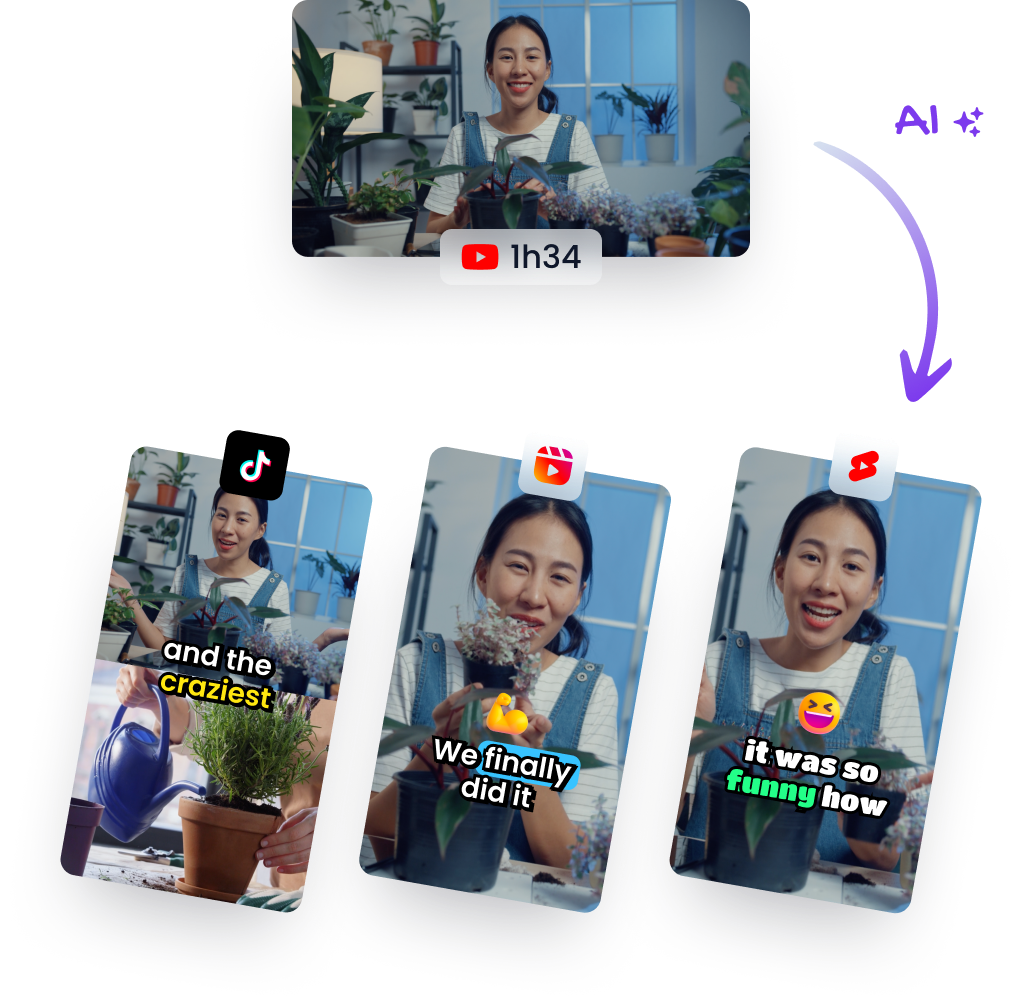
The biggest advantage of AI-assisted repurposing is speed. It can surface hooks, resize for vertical, and prepare multiple versions quickly. That gives you room to test the same idea at different lengths instead of betting everything on one edit.
Answering Your Top Questions About Reel Length
Is 90 seconds too long for a Reel
Not automatically. It's too long when the idea doesn't justify the time.
There's still tension in the platform. Socialinsider's analysis of Reel length notes that shorter Reels under 30 seconds are favored for completion, while longer Reels in the 60 to 90 second range can be rewarded when they maintain over 50% retention, especially when they repurpose valuable long-form content. That means the cap is real, but it isn't a target. Think of it as available space you have to earn.
Does Reel length affect the audio or music choice
Yes, in practice. Shorter Reels usually work best with audio that creates momentum immediately. Longer Reels need audio that supports pacing without fighting the spoken content or the story. If the clip depends on explanation, the music should stay behind the point, not compete with it.
The bigger issue isn't trendiness. It's fit. If a sound pushes you toward a length that weakens the message, the sound is the wrong choice.
Can you post the same exact length across Reels, TikTok, and Shorts
You can, but you probably shouldn't by default.
The clip's core idea can stay the same. The edit often shouldn't. Different platforms reward slightly different pacing, caption styles, and openings. Even when you reuse the same source moment, it's worth making small adjustments to the first seconds, text density, and CTA so the content feels native instead of duplicated.
A smart cross-platform workflow starts with one strong source clip, then adapts the packaging.
If you already have long-form content sitting on YouTube, in podcasts, interviews, webinars, or product demos, you don't need to guess your way into short-form. Klap helps you turn long videos into social-ready clips with AI-selected moments, automatic reframing, captions, and exports built for vertical platforms. If your goal is to turn existing content into Reels that are effectively cut for reach, education, or conversion, it's a fast way to get there.