Turn Your Long YouTube Video Into Viral Short Clips in 2026
Other
Ever feel like you're stuck on a content treadmill, constantly trying to keep up? Here's a secret top creators know: the key to growth isn't always about making more content. It's about making your existing content work smarter.
That single long YouTube video you poured so much effort into? It's a hidden goldmine of content, just waiting to be turned into a powerful engine for audience discovery.
Why Repurposing Your Long YouTube Video Is a Growth Superpower
You’ve already done the heavy lifting—the scripting, filming, and editing of a detailed, value-packed long-form video. Now, it's time to multiply its impact. Repurposing is the strategic move that connects your deep, authority-building content with the fast-paced, wide-reaching world of short-form video.
By pulling out the best moments, you're not just recycling content; you're building a multi-platform marketing strategy from a single piece of work. This approach allows you to show up everywhere—on TikTok, Instagram Reels, and YouTube Shorts—grabbing attention from new audiences wherever they spend their time.

The Power of the Long-Form Engine
While short-form video is essential for getting discovered, your long-form content is still the bedrock of your authority and monetization strategy. The data is clear: audiences are still hungry for in-depth content.
Let's look at the numbers from YouTube. The economics of different video lengths tell a fascinating story about where real value is created and captured.
Long-Form vs. Short-Form Content Economics on YouTube
Content TypeShare of Total UploadsShare of Total Watch TimeShare of Total Revenue
Short-Form (Under 10 min)
57%
34%
29%
Long-Form (10-40 min)
17%
22%
25%
"TV-Length" (40-60 min)
26%
44%
46%
As the table shows, videos in the 40 to 60-minute range command a massively disproportionate share of attention and revenue. Despite making up only 26% of uploads, this "TV-length" content pulls in a staggering 44% of total watch time and 46% of all revenue. You can dig into more of these insights on YouTube's own creator channel.
This highlights the immense value locked inside your existing long videos. Your short clips act as engaging trailers, driving new audiences back to your high-value long-form content where deeper connection and monetization happen.
Repurposing isn't about saving time; it's about multiplying impact. Every short clip you create from a long video acts as a new doorway for viewers to discover your brand and expertise.
Key Benefits of a Repurposing Strategy
Adopting this workflow gives you several powerful advantages that go way beyond just filling your content calendar. It’s about growing faster without burning out.
- Massive Reach Amplification: You expose your core message to entirely new audiences on the platforms they live on. A single viral clip can introduce your brand to millions of people who have never heard of you.
- Rapid Idea Testing: A short clip that unexpectedly goes viral is pure gold. It's a powerful data point telling you exactly what topics your audience is hungry for, giving you clear direction for your next long YouTube video.
- Enhanced Content Efficiency: Instead of starting from scratch for every single post, you’re using your most polished, well-researched work. This maximizes the return on your initial time investment in a big way.
- Consistent Brand Presence: Easily maintain an active presence across all the major platforms. You'll stay top-of-mind for your audience without the constant pressure to film something new every day.
Ultimately, turning your long YouTube video into an arsenal of short clips is just plain smart. It transforms a single asset into a dynamic system that fuels discovery, engagement, and sustainable growth for your channel.
Optimizing Your Source Video Before Using AI
The quality of your short clips is decided long before you ever click “generate.” The secret to getting incredible results from an AI tool isn't just the tool itself; it's the quality of the source material you feed it. A few small adjustments to how you record your long YouTube video can make a world of difference.
Think of it as setting the AI up for success. When you record with repurposing in mind, you’re not just creating a video—you’re intentionally crafting moments that an AI can easily identify and highlight. This means being deliberate about your delivery, creating punchy, quotable statements, and building clear narrative shifts right into your long-form content.
Record With Repurposing in Mind
The most effective creators don't treat repurposing as an afterthought. They build it into their production process from the very beginning. This proactive approach ensures your long-form content is already primed for creating powerful short clips.
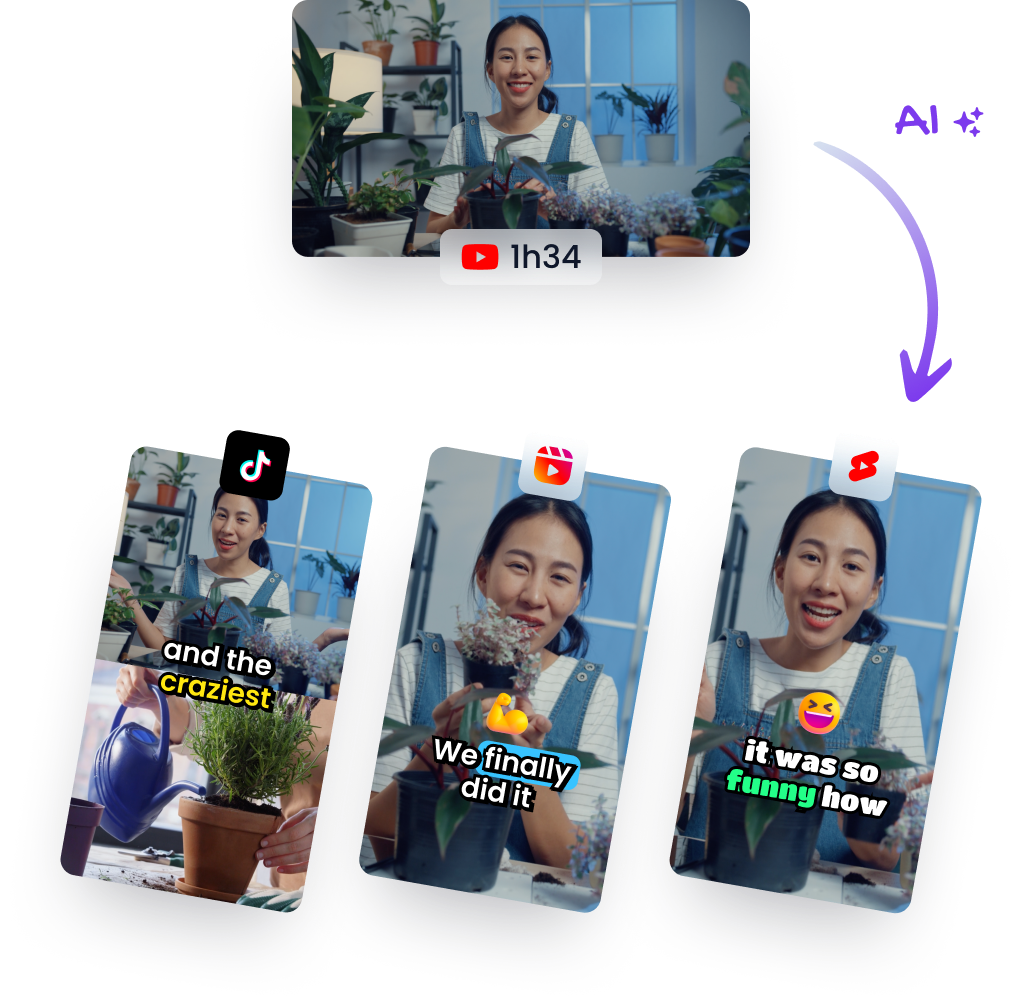
Here's an example of what a well-composed shot for repurposing looks like, keeping the subject centered.

This setup shows the subject is framed centrally, leaving ample room on all sides. This makes it incredibly easy for an AI to crop the video into a vertical 9:16 format for Shorts or Reels without awkwardly cutting off your face or key visual information.
Non-Negotiable Audio and Visual Prep
There are two areas where you absolutely cannot compromise: audio and visuals. Even the most advanced AI struggles with poor-quality inputs, and it will show in the final clips.
- Crystal-Clear Audio is King: Muffled, echoey, or background-noise-filled audio is a dealbreaker. AI transcription tools rely on clean sound to accurately capture what's being said. A simple lapel mic or a quality desk microphone can improve your audio quality by 90% and is one of the best investments a creator can make.
- Frame for the Crop: When you're filming in the standard 16:9 widescreen format, imagine vertical lines dividing your screen into thirds. Try to keep yourself and any important visual aids (like on-screen text or graphics) within that central "safe zone." This prevents awkward crops later on, ensuring your face isn't half-missing when the video is reframed to vertical.
The rule is simple: garbage in, garbage out. A little extra effort during filming to ensure clean audio and smart framing will yield exponentially better short clips. Don't make the AI guess what's important.
When your video is prepped and you’re ready to start editing, you might need a simple tool to make quick adjustments. If you're looking for a straightforward way to trim your video before processing, you can find helpful resources like a free online video trimmer to handle the basics.
By thinking about the final short clip from the moment you hit record, you're not adding more work. You’re simply working smarter, making the entire process of transforming your long YouTube video into viral shorts smoother and more effective.
Letting AI Find the Best Moments From Your Long Video
This is where the real magic happens. All those hours spent scrubbing through long videos, desperately searching for a few golden seconds? Gone. Instead of doing all that heavy lifting yourself, you can now have AI find the best parts for you.
With a tool like Klap, it’s ridiculously simple. You just paste in a YouTube link, and the AI gets to work. It’s not just blindly chopping your video into random chunks. It starts by creating a full, accurate transcript of your entire video, which becomes the map for identifying killer clips.
How Does the AI Actually Know What's Good?
So, how can a machine possibly know what will go "viral"? It's all about pattern recognition. AI models are trained on mountains of successful short-form videos, so they learn what high-engagement content looks and sounds like.
The AI is trained to spot specific cues that correlate with viewers sticking around, such as:
- Shifts in Vocal Energy: It picks up on moments when your voice gets more excited, passionate, or intense—a clear sign you're hitting an important point.
- Intriguing Questions: It flags moments where you ask the audience a direct question, a classic hook that pulls people in.
- "Trigger Word" Usage: The AI listens for phrases that create urgency or curiosity, like “the biggest mistake,” “the secret is,” or “you won’t believe this.”
- Clear Topic Changes: It identifies when you're moving on to a new idea, often finding the perfect, punchy summary statement at the beginning of a new section.
This process results in a curated list of potential clips, each with a score indicating its viral potential. You can see this in action for yourself with an AI short video generator and test it on your own videos.
Think of AI as Your Editing Partner, Not Your Replacement
The point here isn’t to just take whatever the AI gives you and post it blindly. You need to think of the AI as your new, incredibly fast editing assistant. Your job shifts from being a manual editor to being a creative director.
Go through the clips the AI suggests and use your own judgment. Does this clip actually stand on its own? Is the hook strong enough to make someone stop scrolling? You can easily tweak the start and end points of the AI's suggestions, maybe adding a crucial half-second to complete a thought or cutting a weak intro.
The real power of AI is not in replacing your judgment, but in augmenting it. The AI does 90% of the manual work by finding potential moments, leaving you with the final 10% of creative curation.
This collaborative workflow turns what used to be a multi-hour editing nightmare into a quick review session. It’s also a huge help with the ever-changing "ideal" video length. For instance, YouTube's algorithm often shifts; for Shorts, the sweet spot for completion rates is now around 15-30 seconds. The AI is perfect for mining these exact, bite-sized moments from your longer videos.
Editing Your Clips for Maximum Platform Engagement
An AI-generated clip is a fantastic starting point, but it's rarely the finished product. Think of it as a solid first draft. After your AI tool has pulled the best moments from your long-form video, it’s your turn to step in and add the human touch that makes a clip truly great.
This is where you polish the raw material, turning a good segment into a high-performing asset. It all comes down to a few key areas: dynamic captions, perfect framing, and platform-specific tweaks. Let’s get into the actionable details.
Elevate Your Clips with Dynamic Captions
In the sound-off world of social media feeds, your captions aren't just a nice-to-have; they're essential. In fact, research shows 80% of viewers are more likely to finish a video if it has captions. But we're not talking about a boring line of static text at the bottom of the screen.
To really hold attention, you need dynamic, animated captions—what many creators call the "Hormozi style." They’re designed to keep the viewer’s eyes glued to the screen. Here’s how to do it right:
- Use Brand Colors: Style your captions with your brand’s color palette to reinforce your identity in every clip.
- Animate Key Words: Make important words pop by changing their color, increasing their size, or adding a quick animation. This is a simple way to add emphasis where you need it most.
- Add Relevant Emojis: A well-placed emoji can inject personality, add visual context, and make your captions more scannable and fun.
These details transform your captions from a simple transcript into a vital part of the storytelling. If you’re ready to go deeper, our guide on how to add captions to YouTube Shorts breaks down even more advanced techniques.
Your goal with captions is simple: make the video just as engaging and easy to understand with the sound off.
Perfect the Frame with Smart Reframing
When you chop a widescreen 16:9 video into a vertical 9:16 clip, things can get awkward fast. Awkwardly cropped faces and cut-off visuals are dead giveaways of a lazy repurposing job.
Thankfully, modern tools have a solution for this. Many AI editors, including Klap, now come with automatic face-tracking. It's a game-changer. The AI analyzes the clip and automatically keeps the speaker perfectly centered in the vertical frame, even if they move around in the original recording.
This saves you the incredibly tedious manual work of keyframing the video's position, frame by frame. It ensures that you're always the star of the show, no matter how much you moved around in the original video.
Optimize for Each Platform’s Unique Audience
Finally, don't fall into the trap of posting the exact same clip everywhere. Every platform has its own unique rhythm, and audiences have different expectations. A few final tweaks can make a world of difference.
Here's a quick, actionable checklist to run through before you post:
- Instagram Reels: The algorithm rewards immediate interest. Make sure your hook or most important piece of information hits within the first 3 seconds.
- YouTube Shorts: Viewers on Shorts often decide whether to watch based on the first frame. Use a bold, on-screen title or text hook to immediately signal the clip's value.
- TikTok: The pace on TikTok is relentless. Be ruthless in your trimming. Cut every bit of dead air or any moment that doesn’t directly drive the point home.
This final stage of optimization is where your deep understanding of your audience and brand truly shines. It’s what elevates a generic clip into a purpose-built piece of content that actually performs.
Building a Smart Publishing and Distribution Workflow
Great clips are useless if nobody sees them. This is where so many creators miss the mark—they spend all their energy on editing and then just randomly toss their clips out into the world.
To really get results, you need a system. This means moving beyond the last-minute scramble to post and building a real publishing workflow. Use a content calendar and scheduling tools to keep a steady drumbeat of content hitting TikTok, Reels, and Shorts. Think of it as the foundation of a winning social media marketing strategy.
Create a Data-Driven Feedback Loop
Stop guessing what your audience wants and let the data tell you. Your analytics are the most honest feedback you'll ever get. Once you post a handful of clips, give them about a week to breathe, then dive into the numbers.
Pay close attention to these core metrics for every single clip:
- Views: What hooks immediately caught people's attention?
- Watch Time & Completion Rate: Which clips kept viewers glued to their screen until the very end? This is your gold standard for engagement.
- Shares & Saves: These are huge signals that your content provided genuine value—so much so that people wanted to keep it or show it to someone else.
- Comments: What kind of conversations are your clips sparking?
This isn't just about patting yourself on the back for the wins. It's about finding the signals hidden in the noise. One short clip that unexpectedly blows up is your audience telling you exactly what they want more of.
If a short clip on a niche topic gets ten times your average views, that's not a fluke. It's a clear signal from the market that you need to create a dedicated long-form video about it immediately.
This simple feedback loop turns your repurposing efforts from a simple content-stretching tactic into the strategic engine for your entire brand. You use shorts to test ideas, and the winners become the blueprint for your next hit long YouTube video.
Adapt to Platform Algorithm Shifts
The only constant in social media is change. Algorithms shift, trends evolve, and you have to be ready to pivot. Just look at YouTube—between December 2024 and May 2025, the platform’s algorithm suddenly favored shorter content, causing the average length of recommended videos to plummet from 80 minutes to just 40 minutes.
That's a 50% drop. While things have stabilized since, it’s a powerful reminder of how quickly the rules can change. Having a streamlined workflow allows you to adapt on the fly, instead of getting left behind.

Think of your editing process as a repeatable system: add captions, reframe the shot, and optimize for the platform. When you have a smart workflow dialed in, you can respond to these big algorithm shifts without breaking a sweat, ensuring your content stays visible no matter what comes next.
Common Questions About Repurposing Videos
Jumping into video repurposing feels like a whole new way of thinking about content, so it's completely normal to have a few questions. We see the same ones pop up all the time.
Let's clear the air and tackle the biggest uncertainties creators have when turning a long YouTube video into a steady stream of short clips.
How Many Clips Can I Get From One Video?
This is the classic question, and the honest answer is: it depends on how value-packed your original video is. For a solid 30-minute podcast or tutorial, you could easily pull out 10-20 high-quality clips. Some AI tools might even identify more.
But here’s the actionable insight: prioritize quality over quantity.
It’s far better to publish five incredible, high-impact clips that get great engagement than to post 20 mediocre ones that nobody watches. Think of AI suggestions as a starting point. Your job is to be the human curator who selects only the absolute best moments.
Remember, every short clip is a new first impression. Make sure each one is strong enough to stand on its own and accurately reflects the quality of your brand.
Will Repurposing Content Hurt My Channel?
This is a common fear, but the reality is the exact opposite. When done right, repurposing almost always helps your channel grow. It won’t hurt your main YouTube channel or negatively impact the algorithm.
Think of it like this: your short clips on TikTok and Reels are like a fleet of digital billboards scattered across the internet. Each one is a new chance for someone who has never heard of you to discover your work.
These clips are your ticket to reaching new audiences who might never have stumbled upon your long-form videos otherwise. They build brand awareness and drive fresh traffic straight back to your home base—your main channel.
What Is the Ideal Length for a Repurposed Clip?
Sure, platforms are letting videos get longer—Shorts can be up to 60 seconds, and Reels can go even further. But the real sweet spot for grabbing and holding attention is much, much tighter.
For maximum impact on YouTube Shorts, Instagram Reels, and TikTok, you should aim for a length between 15 and 45 seconds.
This range strikes the perfect balance:
- Short enough to hold the fleeting attention spans on fast-paced feeds and encourage re-watches (a huge signal to the algorithm).
- Long enough to deliver a complete, valuable thought or a self-contained story that feels satisfying.
The key is to experiment and see what your specific audience responds to. Post a few different lengths—a 15-second quick tip, a 30-second story, a 45-second mini-dive—and watch your analytics like a hawk. The data will tell you exactly what your audience wants more of.
Ready to stop wasting hours editing and start multiplying your content's impact? Klap uses AI to turn your long videos into viral-ready shorts in minutes. Try it for yourself and see how easy it can be at https://klap.app.