10 Short Form Video Trends to Watch in 2026
Other
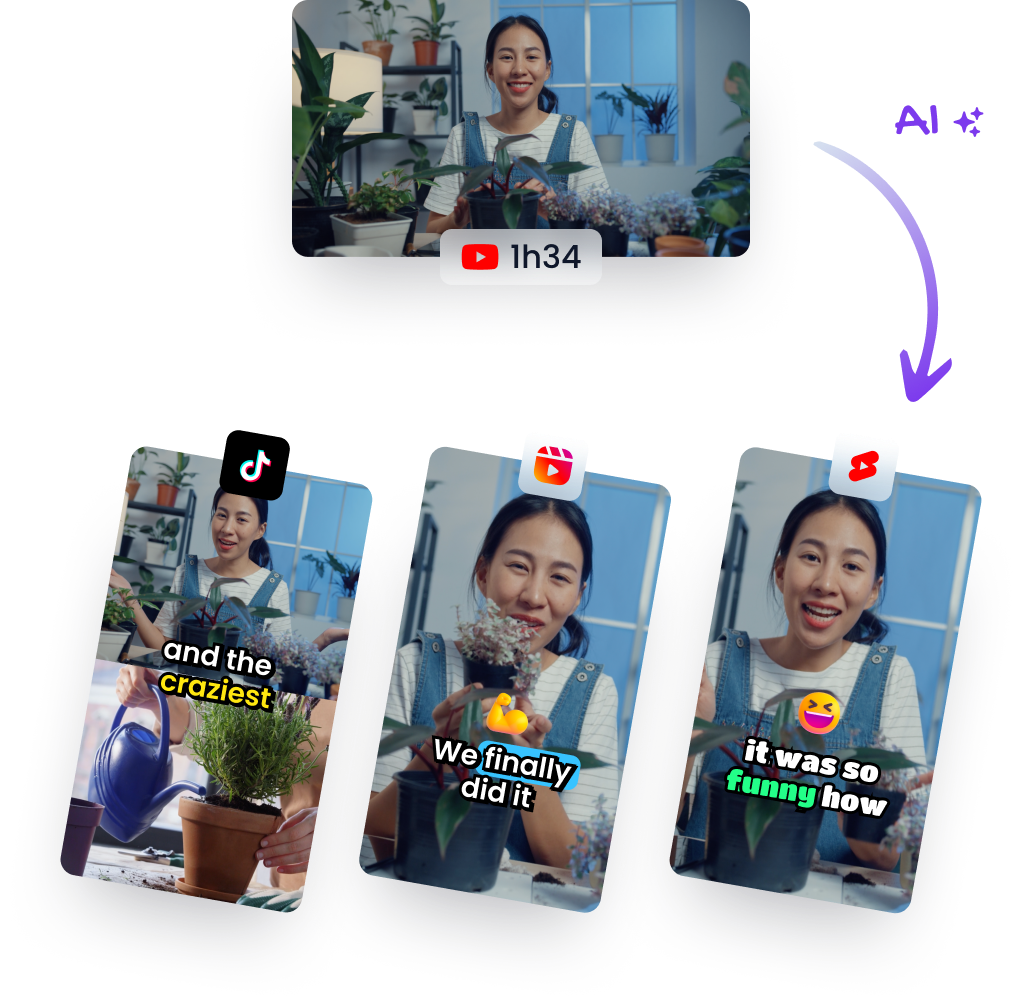
Short-form video now accounts for 58% of all social media time, according to a 2026 analysis of short-form video statistics. That scale changes the strategic question. Creators and marketers aren't deciding whether to experiment with short clips anymore. They're deciding how to compete in crowded mobile feeds without rebuilding every idea from scratch.
The strongest approach isn't chasing every new sound or editing style. It's adapting proven long-form assets into clips with a clear hook, native framing, readable captions, and a platform-specific purpose. That means treating a podcast, webinar, interview, course, or YouTube upload as a source library rather than a finished distribution format.
The ten short form video trends below rank the shifts shaping attention, format, community, platform behavior, education, authenticity, collaboration, and commerce. They also connect each trend to a practical implementation playbook and a repeatable Klap workflow: import a video or YouTube link, generate candidate clips, reframe and caption them, review the edit, then export versions for TikTok, Instagram Reels, and YouTube Shorts. For broader planning context, compare this approach with the SuperX video strategy guide.
1. Hook-First Editing Captures Attention Immediately
The opening moment has become a strategic asset, not a placeholder before the useful part begins. A 2020 study on hook analytics found that visually driven openings capture initial attention, combined hook strategies improve engagement and retention, and watch time relates positively to engagement, as documented in this research on hook analytics and recommendation behavior.
That finding supports a simple editorial rule: lead with the strongest moment, not the chronological beginning. A podcast clip might open with the guest's most disputed opinion. An e-commerce Reel might begin with the product transformation. A creator could use a surprising statement, a pattern interrupt, or a visible result before explaining how it happened.
Practical rule: If the viewer needs several seconds of context before understanding why the clip matters, the edit probably starts too early.
Klap can help surface candidate moments from an existing recording. Import the source video or YouTube link, review the suggested segments, and create multiple opening variations from the same discussion. Then adjust the first spoken line, opening frame, or on-screen text before exporting.
Use a small testing system rather than changing everything at once:
- Lead with a claim: Put the most specific or surprising statement first.
- Pair visual and audio hooks: Use a compelling image while the speaker delivers the central idea.
- Compare opening styles: Test a controversial quote against a result-led opening.
- Study watch behavior: Look for differences in completion and watch time, not only views.
For more examples of opening structures, use this guide to social media hooks. The aim isn't to manufacture suspense. It's to make the clip's value legible before a viewer has a reason to swipe.

2. Vertical Video Becomes the Default Production Canvas
Short-form video is increasingly built for upright screens, but converting horizontal footage isn't as simple as pressing a crop button. A 16:9 interview may place the speaker at one side of the frame. A product demonstration may rely on details that disappear when the editor centers only the presenter.
The practical shift is toward vertical-first thinking, even when the source remains long-form and horizontal. Klap's reframing workflow can identify the main subject, reposition the crop, and create a 9:16 version suited to mobile feeds. You should still review every frame, especially when the clip includes slides, products, multiple speakers, or text embedded in the original video.
Protect the information inside the frame
A useful editorial test is to watch the crop without sound. If the viewer can't tell who is speaking, what object matters, or where the visual proof appears, the framing has removed too much context. Keep captions and calls to action away from platform interface areas, and avoid placing important details at the very bottom of the screen.
Create several exports when the same clip has genuine value across channels:
- 9:16 version: Use for TikTok, Reels, and Shorts.
- 4:5 version: Consider for feed environments where a taller horizontal crop is useful.
- 1:1 version: Reserve for placements that need a square composition.
- Reviewed safe zones: Check captions, logos, product details, and faces after reframing.
A long YouTube library can contain useful clips that never reached the right audience because the original format wasn't mobile-friendly. Klap's workflow is to import the source, generate candidates, reframe each selection, edit the crop, and export platform-ready versions. The vertical video editing guide offers additional framing context.

3. AI Captions Turn Accessibility Into a Creative Layer
Captions change how viewers receive a short video. They support people watching without sound, clarify specialist language, and provide a visual path through the message. In interviews and podcasts, they also identify speakers when voices overlap, names change, or the discussion refers to material outside the frame.
Caption design can strengthen the editorial hierarchy. Highlighting one keyword can reinforce a lesson, while speaker labels reduce confusion in dialogue. Placement matters too. A caption line may direct attention toward a demonstration or product, provided it does not obscure the evidence.
Treat automatic text as an editable draft. Klap can generate captions and provide controls for wording, styling, timing, and emphasis. Review names, technical vocabulary, accents, numbers, and brand terms before publishing. Errors in these areas can alter a claim or undermine an expert's credibility.
A practical review focuses on five checks:
- Check names and specialist terms: Correct transcription errors before export.
- Match the brand system: Keep font, color treatment, and emphasis consistent.
- Preserve the frame: Leave products, slides, faces, and original on-screen text visible.
- Separate speakers: Use names or distinct visual treatments in conversations.
- Test legibility: Watch the export on a small screen and at lower brightness.
The treatment should follow the content. A software educator can emphasize interface labels with color. A podcaster can distinguish Alex from Maya through speaker-aware styling. A customer testimonial can use branded captions without flattening the customer's natural delivery.
For creators, the efficient sequence is to import a long-form recording, generate candidate clips, apply captions, correct the transcript, review the mobile composition, and export. The AI caption generator supports this workflow when one recording needs several social-ready versions.

4. Micro-Storytelling Makes Short Clips Memorable
A short clip earns attention by creating a clear change. The viewer sees a problem, follows a discovery or decision, and receives a payoff. This progression gives an extracted quote enough context to stand alone instead of feeling like a fragment from a longer recording.
Choose the sequence that matches the material:
- Problem, solution, result: A product review starts with the user's difficulty, shows the fix, then demonstrates the outcome.
- Assumption, correction: A cooking clip reveals the failed assumption before showing the technique that resolves it.
- Claim, evidence, implication: An interview opens with a guest's surprising view, explains the experience behind it, and connects that view to the audience.
The strongest candidates often appear at natural story boundaries. While recording, mark moments where the speaker raises a question, changes direction, introduces evidence, or reaches a conclusion. Those boundaries provide more useful editing signals than keyword matches alone.
A long-form source becomes easier to repurpose when each major idea includes its own setup and payoff. A YouTube script, webinar, or interview can support several cuts if its sections carry enough context to work independently.
Four angles for one source
Klap can help identify candidate clips, after which the editor can choose the narrative frame:
- Problem-led cut: Open with the audience's frustration.
- Myth-busting cut: State the common belief, then overturn it.
- Result-led cut: Show the outcome before explaining the process.
- Perspective-led cut: Lead with the guest's unusual interpretation.
The review stage determines whether the story is complete. If an excerpt ends after the setup, extend it until the viewer gets a learning point, emotional resolution, surprise, or laugh. Reframing and captions can clarify presentation, but they cannot supply a missing payoff.
A practical workflow is to import a long-form recording, generate candidate clips, compare their openings and endings, reframe the strongest sequence, and edit captions around the turning point. The goal is compression without losing meaning. Remove pauses and repetition while preserving the causal link between what happened and why it matters.
5. Education Moves Into Learn-in-60-Seconds Content
Short-form video now serves as both a discovery channel and a learning format. Industry analysis reports that 73% of consumers prefer short-form videos when searching for products or services, according to this short-form video market analysis. That preference gives educators, coaches, software companies, and consultants a clear distribution reason to turn expertise into focused lessons.
A useful educational clip answers one question. A language teacher can correct one common mistake. A software creator can demonstrate one feature. A financial educator can define one concept and show the next action. Each example gives the viewer a clear outcome without trying to compress an entire course into one post.
Use a teaching sequence
The most repeatable structure is context, solution, next step. Start with the mistake, question, or situation. Show the correction or method. End with an action the viewer can apply immediately.
Demonstration often communicates faster than a talking head. Pair the explanation with a software screen, exercise form, design comparison, or cooking technique. Captions should emphasize key terms and steps, rather than reproduce every spoken word with equal weight.
A long-form course, webinar, or interview can supply a series of connected lessons. With Klap, import the recording, identify teaching moments, select clips containing a complete explanation, reframe the demonstration, and edit captions around the main instruction. Related clips can become recurring series such as “Common mistakes in…” or “Five ways to…”, giving viewers a clear reason to continue.
Keep each clip centered on one idea. Several unrelated tips force viewers to decide what matters after the video ends. One specific idea, one example, and one next action create a stronger path to a longer lesson, product page, newsletter, or consultation.
The broader market reinforces this role. The short-form video market is estimated at USD 59.09 billion in 2026 and projected to reach USD 640.9 billion by 2035, according to the linked analysis. For brands, that scale supports educational repurposing as a repeatable content system, not a temporary experiment.
6. Authenticity Brings the Unpolished Process Forward
Polished production remains useful for product launches and brand campaigns. Short-form audiences also respond to visible process, uncertainty, mistakes, and candid reactions. These details make a clip feel like access to real work rather than a finished advertisement.
A product creator can show an early failed prototype before revealing the final version. An entrepreneur can explain a decision that failed and what changed afterward. A podcast host can retain a funny side exchange instead of removing every pause. The test is relevance: an imperfect moment should add context or personality, not random noise.
Authenticity works best as an editorial choice, not a performance.
Review existing recordings for moments that reveal how the work happens. Klap can help surface natural reactions, unscripted exchanges, and emotionally specific sections from long-form footage. The editor then decides whether each candidate supports the channel's promise and the clip's central point.
Look for five kinds of material:
- A failed attempt: Show the problem and the adjustment that followed.
- A candid reaction: Preserve the first response to an unexpected result.
- A thinking pause: Keep a moment that communicates honest reflection.
- A correction: Let the speaker revise an assumption when the revision adds credibility.
- A behind-the-scenes detail: Explain how the finished outcome came together.
A blooper or outtake series can create a recurring format. Response videos can address criticism with evidence and context instead of a defensive script. The strongest approach gives viewers access to work already taking place. It does not manufacture mistakes for attention.
Recording practices change as a result. Capture process footage, reactions, and informal exchanges alongside the main interview or presentation. When Klap generates candidate clips, review polished highlights and candid segments together. Choose the version that best matches the audience's expectation for the channel, then caption the specific detail that makes the moment meaningful.

7. UGC and Comment-to-Content Loops Strengthen Community
A useful short-form community signal appears in the audience's own wording. Comments, questions, reviews, duets, and replies reveal objections, vocabulary, and gaps in understanding. They can therefore serve as production briefs, while the published response shows whether audience input changes the editorial agenda.
Start with a visible question or customer contribution. An e-commerce brand can turn a review into a testimonial clip. A fitness creator can answer a question repeated across several posts. A podcaster can respond to listener mail in a standalone short. Each format gives viewers a clear reason to participate again.
The workflow begins with a response library. Store each question in a shared document or tagging system beside its source post, topic, product, and intended answer. Review the collection regularly to separate recurring demand from a single recent comment.
Recurring themes deserve a different treatment from isolated requests. A repeated product objection can become a demonstration. A cluster of beginner questions can shape a longer educational episode. A thoughtful criticism can prompt a response that includes evidence rather than a defensive sales message.
Batch recording keeps production practical. Film several answers in one session, then use Klap to convert each response into an individual short. Check the crop, add captions, and keep the original question on screen so viewers who missed the source post can follow the exchange.
Trust depends on how the material is handled:
- Credit the contributor: Name the commenter or customer when appropriate.
- Request permission where needed: Respect privacy and platform rules.
- Preserve meaning: Do not crop a review until its meaning changes.
- Answer the actual objection: Keep the response useful instead of turning every question into a pitch.
- Track repeated themes: Use recurring questions to plan future long-form content.
Comment-to-content becomes a community loop when viewers can recognize their influence. A real answer encourages another useful question, while the creator adds interpretation, proof, and editorial judgment.
8. Platform-Specific Edits Matter More Than One Universal Cut
TikTok, Instagram Reels, and YouTube Shorts are often grouped together, but their audiences and viewing behaviors aren't identical. A 2025 analysis reported Instagram's highest engagement rate at 8.24%, while YouTube Shorts showed strength in scale and views growth, and Facebook led average views per video in some datasets, as described in this Metricool short-form video report coverage.
The implication isn't that one platform is always best. It is that a clip should carry a job on each platform. TikTok may reward a trend-aware opening. Reels may need a stronger visual identity and music relationship. Shorts may benefit from enough context to sustain watch time and connect with a creator's longer videos.
Adapt the same source three ways
A beauty brand could create a trend-led TikTok, a music-synced Reel, and a more explanatory Short from the same product demonstration. An educator might use a fast question on TikTok, a polished lesson fragment on Reels, and a search-oriented explanation on Shorts.
Klap can support batch production by generating versions with different crops, caption placement, and edit timing. The final work remains editorial. Adjust pacing to the audio, remove platform-specific references, and upload natively rather than treating a downloaded version as universal.
Use a weekly audio and format review, but don't let trending sounds replace relevance. A sound may attract attention while weakening the message if the rhythm, tone, or audience expectation doesn't fit. Test the relationship between hook, audio, pacing, and purpose.
9. Creator Networks Expand Reach Through Participation
Collaboration features turn a short clip into an invitation. A duet, stitch, response, or multi-creator series gives another creator a defined role and gives both audiences a reason to participate.
The most effective collaboration prompts are specific. A trainer can ask an athlete to respond to a workout technique. An interviewer can publish a question and invite a specialist to answer it. A brand can show a product feature and leave room for an influencer's use case or reaction.
Design clips others can use
Extract a clear question from a long-form interview, leave enough visual and verbal context, and add a call to action that explains the desired response. Klap can help create a collaboration-ready version with the question near the opening, clean captions, and a visible prompt.
Create a series rather than relying on one-off appearances. Each episode can add a different perspective, such as creator, practitioner, beginner, or customer. A shared progression gives collaborators a narrative reason to return and gives viewers a reason to follow the sequence.
Good partnership selection is about audience fit, not only follower count. Look for adjacent creators whose expertise complements yours. A design educator might work with a developer. A fitness coach might invite a physiotherapist. An e-commerce brand might pair product education with customer demonstration.
Share the collaborator's finished response with your audience. Reciprocal promotion signals that the relationship is genuine and helps viewers understand the connection between the clips. Track saves, shares, comments, completion, and downstream actions to identify relationships worth developing.
10. Commerce Integration Turns Shorts Into Revenue Assets
Short-form video can support more than awareness. Product demonstrations, reviews, testimonials, tutorials, and comparison clips can connect discovery to a purchase path through shoppable tags, affiliate links, sponsorships, subscriptions, tips, and platform monetization features.
The commercial role depends on the content type. A product demo can support a direct click. An educational clip may build authority for a course or consultation. A podcast highlight may attract sponsors or move listeners toward a longer show. Treating every clip as a sales asset would damage trust, but ignoring conversion entirely leaves useful intent unmeasured.
Match the offer to the viewer's next question
A skincare creator can demonstrate application and attach the relevant product. A coach can explain one method and connect it to a structured program. An affiliate marketer can test a product through a review before investing in a larger promotion. A brand can use customer testimony to answer a specific buying objection.
Klap helps turn existing long-form assets into multiple commerce-ready cuts. Import a product interview, webinar, or review, select moments with clear proof, reframe the speaker or product, add captions, review the call to action, and export versions for the relevant platforms.
Track business outcomes by content type. Compare revenue per view, clicks, affiliate conversions, inquiries, and purchases alongside completion and shares. A clip with fewer views may be more valuable if it reaches people with stronger buying intent.
Before publishing, check that the offer is clear and the disclosure is appropriate. Short-form commerce succeeds when the clip answers a genuine question and makes the next step easy, not when it hides the commercial purpose behind entertainment.
10 Short-Form Video Trends: Side-by-Side Comparison
TechniqueComplexity 🔄Resource Needs ⚡Expected Outcomes 📊Ideal Use Cases 💡Key Advantages ⭐
Hook-First Editing: Capturing Attention in the First 3 Seconds
🔄🔄🔄, Deliberate editing + story reorder
⚡⚡, Editor time, A/B testing
📊 ↑40–60% completion; better algorithmic reach
Short ads, repurposed long-form highlights, attention-driven content
⭐ Drives instant retention; reduces scroll-past
Vertical Video Dominance: Aspect Ratio Optimization
🔄🔄, Reframing & safe-zone planning
⚡⚡⚡, Reframing tools, tracking, multiple exports
📊 ↑25–35% engagement on mobile; broader cross-platform reach
Mobile-first audiences; repurposing horizontal libraries
⭐ Native format fit; preserves visual context with smart tracking
AI-Generated Captions & Auto-Subtitles
🔄🔄, Auto-transcribe + quick review
⚡, Tool-driven; minimal manual effort
📊 ↑40–50% engagement; accessibility & SEO gains
Any muted-view environment; interviews; educational clips
⭐ Scales captions, improves discoverability and accessibility
Micro-Storytelling (15–60s Narrative Arcs)
🔄🔄🔄, Structure planning required
⚡⚡, Script/scene selection, pacing work
📊 ↑65% completion; higher shareability and memorability
Transformations, product reveals, emotional beats
⭐ Strong emotional engagement; repeat-view incentive
Educational 'Learn in 60 Seconds' Format
🔄🔄🔄, Condensing expertise without oversimplifying
⚡⚡, Expert time, demo visuals, captions
📊 Longer content lifespan (5–10x), higher save rates
Tutorials, tip series, professional authority building
⭐ Builds trust and long-term audience growth
Authenticity & BTS (Anti-Polished Trend)
🔄, Low process formality; capture candid moments
⚡, Minimal production; quick edits
📊 2–5x engagement vs polished content; higher trust
Behind-the-scenes, product development, candid reactions
⭐ Genuine connection; faster content turnaround
UGC & Comment-to-Content Conversion
🔄🔄, Curation and moderation workflow
⚡⚡, Community management, permissions
📊 ~5x engagement vs branded content; longer view times
Brands with active communities; FAQ-driven channels
⭐ Lowers content load; increases audience ownership
Platform-Specific & Audio-First Optimization
🔄🔄🔄🔄, Multiple versions + trend timing
⚡⚡⚡, Trend research, multi-edit exports
📊 Native uploads +30–50% reach; trending audio ≈10x reach
Cross-platform campaigns; trend-driven creators
⭐ Maximizes platform-specific reach and discovery
Collaboration & Creator Networks
🔄🔄, Coordination and format design
⚡⚡, Outreach, scheduling, shared assets
📊 ~3x audience reach; duets/stitches ↑50% engagement
Growth-focused creators; series and challenge formats
⭐ Rapid audience expansion via partner audiences
Monetization & Commerce Integration (Shoppable Shorts)
🔄🔄🔄, Setup monetization & compliance
⚡⚡⚡, Product assets, affiliate/program setup
📊 Shoppable vids convert 3–5x; Shorts CPM lower than long-form
E‑commerce, product demos, affiliate marketing
⭐ Direct revenue streams beyond top-of-funnel exposure
Turn These Trends Into a Repeatable Clip System
The ten short form video trends point toward one operating model. Long-form content becomes the source. Short-form clips become targeted entry points, each designed for a specific audience question, platform behavior, or business outcome.
Start with a source that already contains expertise, proof, personality, or audience demand. That might be a podcast interview, YouTube upload, webinar, course lesson, customer conversation, or product demonstration. Before opening an editor, identify the strongest hook and the complete narrative moments. A good candidate has a clear beginning, useful middle, and satisfying payoff.
Then use a repeatable Klap workflow:
- Import the source: Upload the video file or add a YouTube link.
- Generate candidates: Let the system analyze the recording and surface potential clips.
- Select for purpose: Choose segments for discovery, education, community response, collaboration, or commerce.
- Reframe for mobile: Create a 9:16 composition and check faces, products, slides, and other important visual elements.
- Review captions: Correct names, terminology, timing, speaker changes, and emphasis.
- Create platform edits: Adjust hooks, audio, pacing, caption placement, and calls to action for TikTok, Reels, and Shorts.
- Publish natively: Upload each version to its intended platform and preserve the context that makes it feel native.
- Measure outcomes: Compare completion, watch time, saves, shares, comments, clicks, and revenue per view.
This system matters because scale alone can produce noise. YouTube Shorts reached 70 billion daily views in March 2024 and was later reported at more than 200 billion daily views by 2026, according to this YouTube Shorts statistics overview. More distribution creates more opportunity, but it also makes weak positioning easier to overlook.
Don't test every variable in one batch. Change the hook while holding the clip constant. Then test pacing, audio, caption style, framing, or call to action. Keep a record of what changed, because otherwise a successful result won't tell you why it worked.
Short-form performance also needs a memory and intent lens. Videos under 60 seconds generate about 2.5 times more engagement per impression than other content types, while short-form videos under 30 seconds have an average completion rate of 85%, compared with 62% for mid-length and 38% for long-form video, according to this 2026 video marketing benchmark. Those results make short clips powerful discovery tools, but they don't prove that views alone create demand.
Longer content may still carry the nuance needed for click-through, brand recall, trust, and conversion. Use short clips to earn attention, then give interested viewers a clear next step into a longer video, product page, email list, course, community, or consultation. The best system doesn't ask every format to do every job.
Short-form adoption also spans more than one age group. NuVoodoo reported that more than 90% of Gen Z and Millennials watch short-form video on platforms such as YouTube, TikTok, and Facebook, while 58% of Boomers and older respondents watch at least sometimes, as detailed in its short-form audience research. That breadth makes audience assumptions risky. Let platform behavior, topic, and measured intent shape the edit.
Start with one strong long-form source this week. Generate several candidates, choose one variable to test, publish native versions, and review the results against the outcome you want. Klap can be one part of that process, but the strategic advantage comes from matching each clip to a clear job.
Klap helps creators and marketers turn long-form uploads or YouTube videos into short clips with AI-assisted selection, vertical reframing, captions, editing, and export options for social platforms. Visit Klap to convert an existing video library into platform-ready clips and start testing these short form video trends with a repeatable workflow.