Podcast Clips for TikTok: The 2026 Creator Playbook
Other
TikTok has become a real discovery engine for podcasts, and the old model of “publish an episode, hope for subscribers” doesn't explain growth anymore. The practical shift is simple, podcast clips for TikTok are no longer side content, they're the front door.
That change shows up in the clip culture around the platform. One industry summary citing the 2025 Edison Research Infinite Dial says discovery has moved from directory browsing to social clip discovery, with TikTok and YouTube Shorts driving most new-listener attribution, and TikTok's own hashtag analytics for #podcastclips showed 7K posts and 4M overall interest across a 120-day window (Conbersa's breakdown of podcast growth on TikTok). On a platform that reported 1.5 billion monthly active users globally in 2023, that's not a niche behavior, it's distribution at scale (Barrett Media's podcast atlas coverage).
Why Podcast Clips for TikTok Matter in 2026
The old podcast funnel was built around intent. Someone found an episode in RSS, searched in an app, or subscribed after already trusting the host. The current funnel starts much earlier, with a short vertical clip that earns a stranger's attention in seconds and then routes that attention back to the full episode on YouTube, Spotify, or Apple.
That shift changes how production should be judged. A clip is no longer “promotion after the fact.” It's the first editorial product the audience will ever see, and it carries the burden of making the show legible fast. That's why the strongest teams don't ask, “What can we post from this episode?” They ask, “Which moments can stand alone in a feed where no one asked for context?”
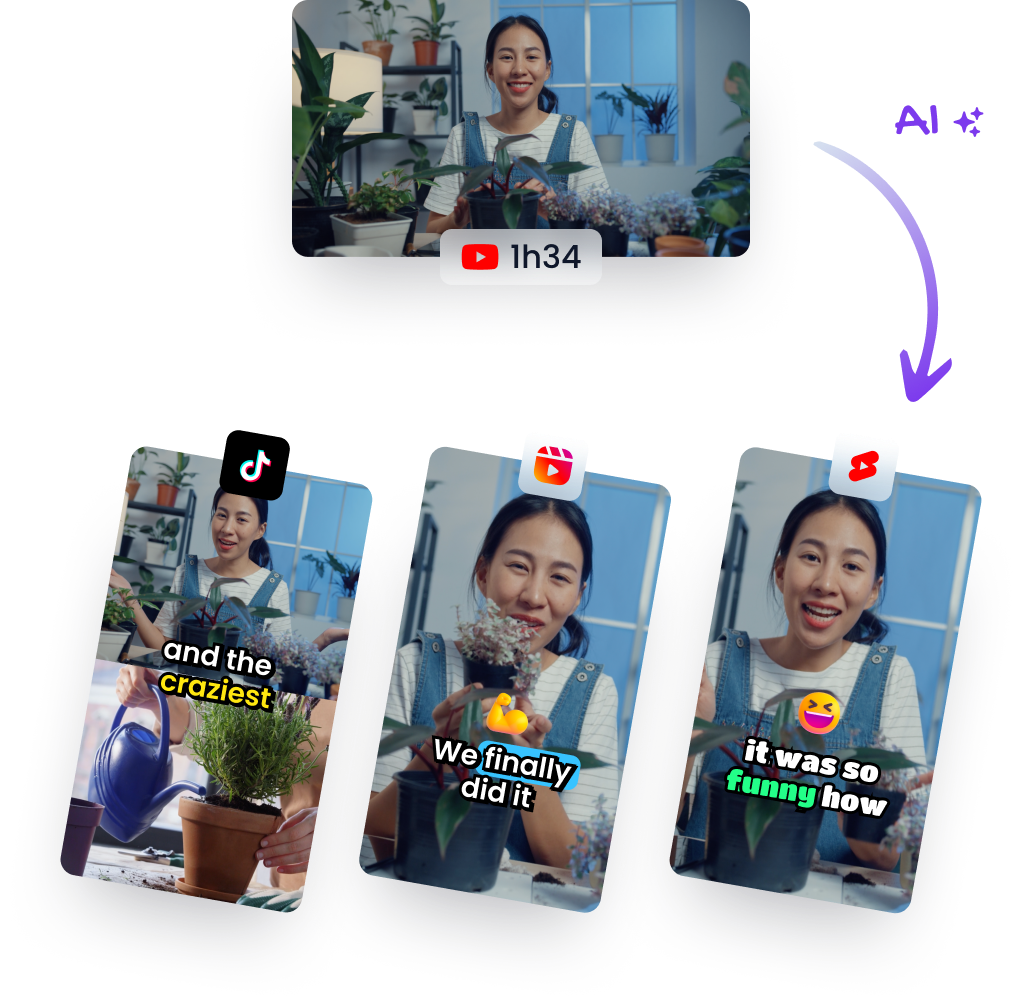
The economics favor this approach, even before you touch strategy. A single hour of podcast footage can often yield 15 to 30 viable clips in practice, while original TikToks from scratch require a separate concept, separate shoot, separate edit, and separate review pass. That's why clipping has become a workflow discipline instead of an afterthought.
Practical rule: treat each episode as a library of moments, not one monolithic asset.
The workflow that's emerged is editorial first, then automated. Humans still need to choose moments based on tension, novelty, and quotability. AI tools such as Klap, Opus Clip, and Riverside can then handle reframing, captioning, and output at scale, which matters because the bottleneck is usually selection, not export.
A useful way to think about it is this, cold reach comes from the clip, trust comes from the episode, and conversion comes from the match between the two. The clip earns the click, the episode earns the follow-through. If those layers don't line up, the traffic doesn't stick.
What Makes a Moment Clip Worthy

Clip-worthiness is editorial judgment, not a software setting. The best moments usually combine a concrete claim or number, emotional stakes, novelty, standalone context, a quotable line, and a clear payoff. You don't need all six every time, but you do need enough of them that a stranger can understand why the moment matters without sitting through the whole episode.
The quickest way to audit an episode is to work from the transcript, not memory. Pull the transcript, highlight every 60-second block, and score each block against those six signals. If a block has only boilerplate advice and no emotional turn, it probably won't travel. If it has a specific claim, a surprising twist, and a line that would look good in a screenshot, it's a real candidate.
The threshold I use
Three signals inside any 90-second window is usually enough to ship. A founder admitting a $2M mistake lands harder than a generic leadership tip because the stakes are clear and the listener can feel the cost. A 14-day protocol beats “try this routine” for the same reason, specificity creates a mental image, and mental images get shared.
You can think about it as a hierarchy. First, does the moment make a promise? Second, does it pay that promise off quickly enough? Third, does it survive if the viewer only hears half of it while scrolling? If the answer is yes to all three, it's probably clip-worthy.
For creators who rely on talking-head footage, a resource like the ClipNova blog on faceless reels can be useful, not because faceless formats replace podcasts, but because they sharpen the same question, what can carry on-screen without extra explanation?
Matching Clip Archetypes to Your Episode
Most weak clipping comes from forcing one format onto the wrong episode. A debate show that gets clipped like a memoir will feel flat. A founder interview clipped like a hot-take machine will usually lose the nuance that made the conversation worth recording in the first place.
Use the episode type as the filter
Clip ArchetypeBest Episode TypeTypical LengthHook Pattern
Story Arc
Founder or operator interview
30 to 80 seconds
Setup, conflict, resolution
Hot Take
Panel show or solo commentary
15 to 45 seconds
Contrarian claim up front
Lesson
Educational podcast
30 to 60 seconds
Step-by-step framework
Expert Takeaway
Health, finance, science, or credentialed guest
20 to 60 seconds
Named method or specific insight
Teaser
Serialized or narrative episode
10 to 20 seconds
Open loop, then cut before payoff
The point of the matrix is restraint. A story episode usually gives you more than one useful arc, but it shouldn't be bent into a pile of angry one-liners just because hot takes are easy to edit. Educational episodes often need the Lesson format because the value is in the sequence, not the confrontation.
The mismatch tax is real. When the clip format fights the episode format, the viewer feels that tension immediately, and the clip reads like a stitched excerpt instead of a thought. That's wasted editing time, wasted attention, and often wasted metadata too.
A strong clip doesn't just extract words, it preserves the reason those words mattered in the room.
The practical volume rule is simple. Each 60-minute episode should yield at least two archetypes, not five versions of the same one. That keeps the feed from sounding repetitive and gives the algorithm more than one angle to test.
For teams that want a structured starting point, the mechanics in Klap's short-form creation guide are useful as a production reference, especially when the goal is to turn one episode into multiple distinct social cuts without flattening every moment into the same template.
Reframing, Captions, and Audio for Vertical

A vertical podcast clip succeeds or fails through editorial choices before technical polish begins. Choose the moment, then decide what the frame, captions, and audio must preserve. The workflow is straightforward: reframe the shot, shape the captions for mobile reading, and clean the sound until the result feels intentional.
Watch the video on YouTube for a visual reference on converting horizontal footage to vertical.
Reframing comes first
AI subject tracking saves time, but it cannot decide which visual information carries the moment. Keep hands visible when a guest explains a process, and leave room for a second speaker when their reaction changes the meaning. A tight crop may keep the face centered while removing the body language that makes the exchange feel live.
The strongest reframes preserve intent rather than following faces. Keep the lean, point, laugh, or pause that gives the sentence its force. Klap's vertical video editing guide can help scale this work across episodes, but automated tracking still needs an editorial check. Speed is useful when producing volume. A manual adjustment is worth the time when the gesture or reaction is part of the payoff.
Captions should support the brain, not overwhelm it
Use two lines as the practical ceiling for most beats, and shorten the treatment when the speaker moves quickly. Word-by-word highlighting helps viewers track the sentence. Dense text blocks make phone viewing harder, especially over changing backgrounds where contrast, placement, and spacing affect readability.
Subtitle design also changes how viewers scan the clip. An eye-tracking study summarized in a hook analytics and subtitle study summary found that two-line subtitles drew more visual attention than one-line subtitles, including longer fixation time and more revisits. The production implication is simple: captions should guide attention without competing with the speaker's face or the edit.
Audio cleanup closes the gap
Podcast audio can sound acceptable in a long episode and exposed in a short clip. Compression makes room tone, overlapping speech, breaths, and uneven pauses more noticeable. Remove distractions, tighten dead space, and keep the speaker's natural rhythm. Over-processing may sound polished in headphones but artificial on a phone speaker.
The sequence matters: frame first, text second, sound last. That order keeps automated tools from polishing a crop or caption treatment that was wrong for the moment. The goal is not identical formatting across every clip. It is a vertical edit that protects the episode's original intent while making the idea easy to follow.
Editing Decisions That Move the Needle
Clip selection is an editorial decision before it becomes an editing task. Choose the moment with a clear tension, a specific insight, or a payoff worth delaying the scroll. A technically clean segment can still fail if the viewer needs too much context before understanding its point.
The opening 3 seconds expose that problem quickly. If a clip begins with background explanation instead of the disagreement, question, or surprising claim, viewers may leave before the premise becomes clear. Cut toward the pressure point, then preserve enough setup for the answer to make sense. The strongest edit creates momentum without turning every sentence into a dramatic interruption.
AI tools such as Klap can speed up that first pass by finding speaker changes, reframing footage, and generating candidate clips. Treat those outputs as editorial options, not finished decisions. Review the transcript, remove generic hot-take framing, and keep the wording that makes the guest or host distinctive. Automation scales judgment when a producer still decides what deserves attention.
Length and pacing by archetype
Independent benchmarking of more than 6 million brand videos found the 15 to 30 second bucket had the highest engagement rate at 6.00%, while 30 to 60 second videos fell to 4.20% (Socialinsider's TikTok length analysis). A separate analysis reported that videos longer than 60 seconds received 43.2% more reach and 63.8% more watch time than shorter clips (Buffer's longer TikTok data). The practical choice depends on the moment. Use a short cut when the idea is immediately legible. Keep more context when the payoff depends on a story, explanation, or emotional turn.
ArchetypeLength (sec)Cuts/minCaption cadence
Story Arc
35 to 60
6 to 10
Full thought, then punch line
Hot Take
15 to 30
8 to 12
Fast highlight on key phrase
Lesson
30 to 45
5 to 8
One step per caption beat
Expert Takeaway
20 to 50
4 to 7
Slow enough for terminology
Teaser
10 to 20
10 to 14
Minimal text, maximum tension
Caption timing can undermine otherwise strong pacing. Fast cuts and rapid highlights are useful only when viewers can still process the words. Match each caption beat to the speaker's meaning, not to every edit point. Leave room around technical terms, names, and the sentence that carries the payoff.
A finished clip should feel easy to follow, with enough movement to sustain attention and enough restraint to preserve the conversation's character.
Exporting and Posting for Maximum Discovery
Exporting protects the editorial choices already made. Use a modern codec such as H.264 or H.265, keep enough bitrate to preserve caption edges, and enable HDR only when the source was recorded in HDR. Compression artifacts show up first in typography and fine facial detail, so inspect captions at full size before publishing.
Native posting gives the most control over the final upload, including the cover frame, sound attribution, and last-minute caption edits. Scheduling suits batch production and teams publishing across time zones, but it can reduce that final review. A practical workflow uses direct uploads for priority clips and scheduled posts for the remainder.
The platform is only half the distribution decision. Clip selection is editorial: a clean export cannot rescue a weak opening or a moment that needs missing context. AI tools such as Klap can speed up rough framing and candidate generation, while the producer still decides whether the clip represents the episode and earns attention without becoming a generic hot take.
Metadata still matters
Write a caption that states the payoff or question viewers are about to receive. Keep hashtags narrow enough to describe the topic, and choose sound based on the clip's purpose rather than adding a trend that competes with the speaker. Correctly distinguish original sound from trending sound attribution, so viewers can tell whether the audio belongs to the episode or comes from TikTok.
Post timing and consistent frequency help establish a recognizable publishing pattern. Pinning a strong clip to a series can also give new visitors a clear starting point. Review the cover, caption, hashtags, attribution, and preview on the upload screen before committing.
Over several weeks, these details make the account easier to read. TikTok receives a consistent signal about the show's subject and format, while viewers encounter clips that feel connected rather than randomly extracted.
Turning Clipping Into a Weekly System
The easiest way to miss on clips is to treat clipping like cleanup. A better system is a weekly editorial cadence, with a fixed selection block, a clear review loop, and a volume goal that does not depend on mood.
Build the same cadence every week
Block clip selection the day after recording, while the episode is still fresh. Pull a batch of candidate moments, review them against the same checklist, and cut the rejects quickly. Keep the checklist simple, hook in the first 2 seconds, one idea per clip, caption accuracy, and on-screen text under 9 words.
The review meeting matters just as much as the first pass. A 20-minute Friday review is enough to log which archetypes got the strongest response, which clips held attention, and which ones drove people back to the show. That is where editorial taste gets corrected by evidence.
Use tools for the rough cut, not the final judgment
AI tools like Klap are useful when they handle first-pass framing and clip detection, because the editor can spend time on selection and polish instead of scrubbing through timelines. For teams that batch content, Klap's batch video processing guide is a good reference for moving from one long episode to many short outputs.
A few practical anchors keep the system honest:
- Session timing: cut clips the day after recording, not three weeks later.
- Volume target: start at 5 clips per episode.
- Format mix: rotate archetypes so the feed does not sound samey.
- Selection source: use repurpose social media content thinking on the episode transcript first, not after the fact.
- Tool role: let AI generate rough outputs, then let a human choose what feels true.
The goal is not more clips. It is more good clips from a repeatable system.
A weekly pipeline does one more useful thing. It keeps clipping from turning into burnout. Once the cadence is stable, the show stops depending on heroic editing sessions and starts behaving like a real media product.