Create Shorts from Podcast: A Guide to Viral Clips
Other
You've got a full podcast episode sitting on a hard drive, a transcript full of promising lines, and no clear answer to the question that matters most: which moments deserve to become shorts? Exporting vertical video is easy. Choosing a segment with enough tension, context, and payoff to stop a stranger is the work.
A reliable create shorts from podcast workflow treats every clip as a standalone piece of content, not a disposable preview. You need an editorial filter, a platform-specific edit, readable captions, and a publishing loop that turns audience behavior into better selections next time.
Why Podcast Clips Are Now Discovery Assets
A listener can encounter one sharp exchange in a feed, understand the point within seconds, and still have no idea which show produced it. That scenario changes the job of a podcast clip. It is no longer only a trailer for an episode. It is an entry point for people who did not search for the podcast and may never open a podcast app unless the clip earns their interest first.
Audience behavior supports that shift. A 2026 Podcast Atlas survey reported that 89% of listeners watch podcast clips at least sometimes, while 72% watch them often or always. It also found that 74% give clips their full attention, and roughly one-third of clip viewers continue to the full episode or become regular listeners. The survey details appear in Barrett Media's coverage of podcast clips as social discovery.
A discovery asset needs a different editorial standard from a promotional excerpt. It must make sense without the guest's biography, the host's introduction, or several minutes of setup. The full episode can provide depth later. The clip has to earn the next few seconds on its own.
Treat the clip as a complete story
A useful podcast short usually has three connected parts:
- A direct opening: Lead with the claim, question, or emotional reaction. Remove the welcome and routine framing.
- A compact development: Include enough reasoning for the viewer to understand why the statement matters.
- A clean payoff: Finish with the consequence, punchline, or practical insight, followed by a restrained call to action.
This structure also creates a better editing decision. A line may sound impressive in the transcript yet fail as a clip if the viewer cannot follow its context. A shorter segment with a clear turn and conclusion is often more valuable than a longer excerpt that preserves every conversational detail.
YouTube led the clip platforms in the survey at 67%, with TikTok close behind at 63%, according to the same survey. That split argues against building every clip around a click to the podcast feed. Publish a piece that works where it appears, then give interested viewers a clear route to the full conversation.
One recording can support several editorial assets for TikTok, Instagram Reels, YouTube Shorts, LinkedIn, and owned channels. A 2026 industry report estimated the global short-form video platform market at about $40.58 billion in 2024, projecting roughly $193.91 billion by 2033 at an 18.94% compound annual growth rate. QuickReel's podcast clipping industry analysis reported those figures.
The practical rule is one episode is not one post. It is source material for several audience-first stories, each selected and adapted for the place where viewers will encounter it.
Choosing the Right Moments to Clip
Clip selection is editorial work, not transcription work. An AI tool can identify topic changes, energetic speech, pauses, and probable highlights, but it can't reliably judge whether a stranger will understand the moment without the preceding conversation.
Start by reviewing the transcript and marking moments that combine three qualities:
- A clear claim: The speaker makes a specific argument, reveals a surprising belief, or challenges a familiar assumption.
- Emotional movement: The voice changes. Someone laughs, hesitates, becomes more forceful, or tells a story with visible stakes.
- An immediate payoff: The viewer understands why the moment matters quickly, rather than waiting through a long setup.
The first three seconds deserve disproportionate attention. Short-form analyses report that when 50% or more of viewers leave before second three, a clip is usually failing its initial distribution test. A healthy opening often holds around 70% to 80% of viewers at the three-second mark, according to ShortsFast's 2026 hook and retention guidance.

Score the moment, not just the sentence
A useful test is: Would I stop scrolling for this at 11 p.m.? If the answer is no, the transcript may still contain a valuable idea, but that particular excerpt isn't ready for distribution.
Look for the middle of the conversation before you inspect the introduction or outro. Intros often spend time on biographies and show context. Outros usually contain calls to action. Mid-episode exchanges more often contain the tension, disagreement, concrete advice, or story detail that makes a short feel native to the feed.
For each candidate, score:
- Hook strength: Does the first line create curiosity without exaggeration?
- Standalone clarity: Can a new viewer follow the thought without fifteen seconds of missing context?
- Payoff quality: Does the ending resolve a question or sharpen an idea?
- Platform value: Is this better suited to awareness, subscribers, professional credibility, or conversation?
If a moment needs too much setup, rewrite the lead rather than preserving the setup. A host can record a short framing sentence, or you can use a clean on-screen question that supplies the missing context. Don't force an entire conversational exchange into a clip because the transcript marks it as a “highlight.”
Practical rule: Choose the shortest complete argument, not the shortest available quote.
The strongest candidates often fall into distinct editorial groups. Emotional stories create identification. Contrarian claims invite comments. Educational moments earn saves. Quotable guest lines support recognition and sharing. Keep those groups separate so the episode doesn't produce a feed full of clips with the same emotional shape.
Editing and Reframing for Vertical Viewing
A wide podcast frame rarely survives a direct crop to 9:16. Two small speakers become tiny faces, empty studio space fills the screen, and the viewer has to work to find the person who's talking. The edit needs to make the conversation feel designed for a phone.
Begin with the active speaker. Crop around the head and chest, keep the eyes near the upper third, and leave enough room for captions without covering the mouth. In a two-person conversation, switch framing when the speaker changes, but don't cut so aggressively that every sentence feels mechanical.

Automatic reframing handles obvious single-speaker shots well. It becomes less dependable during cross-talk, overlapping gestures, and moments where the person listening reacts before the speaker finishes. Review every generated crop manually. A face that slips out of frame for even a short beat makes the clip look unfinished.
Build a clean entry and exit
Trim the first partial sentence. Remove throat clearing, repeated words, and conversational debris when the cut remains natural. At the other end, stop after the payoff rather than leaving a trailing “so, yeah” or an awkward pause.
The edit should move through a clear shape:
- Entry: The viewer arrives directly inside a complete thought.
- Build: The speaker adds the reason, example, or tension.
- Peak: The strongest sentence receives visual emphasis.
- Exit: The clip ends before the conversation wanders into its next subject.
A subtle zoom can support an emotional peak, but it shouldn't replace good selection. Background blur helps when the set distracts from the speaker. Add a lower third when the guest's name or role gives necessary context, not because every clip needs a branded template.
Avoid logo stings in the middle, heavy transitions, and decorative B-roll that competes with the voice. Podcast clips succeed when the audience understands the speaker and the idea immediately. More motion isn't automatically more engaging.
For a detailed look at the production choices behind this format, use this guide to vertical video editing.
The final review should happen with sound and without sound. With sound, check that the cuts preserve meaning and natural rhythm. Without sound, confirm that the captions, facial expression, framing, and opening text still communicate the subject.
Designing Captions That Hold Attention
A strong clip can lose viewers when its captions arrive late, crowd the frame, or emphasize every word. Captions should preserve meaning first, then guide attention. Kompozy's recommendations for YouTube Shorts also supports burned-in captions because they remain visible when viewers hide interface elements.
Choose the treatment from the moment you selected and the platform receiving it. Word-by-word timing adds urgency to a fast exchange, while sentence chunks give reflective answers room to breathe. Speaker labels clarify two-person conversations, especially when the clip begins without a visible camera change.

Compare the caption decisions
Caption choiceStrengthRiskBest use
Word-by-word timing
Creates urgency and follows speech closely
Can feel noisy during thoughtful answers
Fast claims, jokes, arguments
Sentence chunks
Easier to read and less distracting
May weaken emphasis in rapid dialogue
Educational or reflective clips
Speaker labels
Clarifies exchanges and guest identity
Uses valuable screen space
Two-host or interview clips
Highlighted punch word
Directs attention to the key idea
Feels forced if every word is emphasized
One central claim or reveal
Use strong contrast, generous spacing, and a safe position clear of platform controls. White text over a dark treatment and dark text on a light panel are both dependable choices. Check the export on a phone. A font that looks sharp on a desktop preview can become difficult to read at low resolution.
Keep captions away from the speaker's mouth. Place lower thirds where Reels or TikTok interface elements will not cover them. Burned-in text also remains with the video after reposting, unlike platform-generated captions that can disappear during download and re-upload.
For creators comparing automated workflows, a practical starting point is this best AI caption tool resource. Evaluate accuracy, timing controls, styling options, and the effort required to correct names or technical terms before export.
You can also test an AI caption generator when transcription and styling need to happen in one production flow. Proofread every caption. A wrong product name, guest name, or industry term damages trust faster than a plain visual style ever will.
Adapting One Clip for Every Platform
The same source cut shouldn't receive the same final export everywhere. A 45-second answer may need a direct question on TikTok, cleaner typography on Instagram Reels, a descriptive opening line on YouTube Shorts, and a slower introduction for LinkedIn.
Consider a realistic weekly workflow. A business podcast publishes one episode about a founder who rejected rapid expansion. The editor identifies three usable segments: a contrarian claim about growth, an emotional story about losing a major customer, and a practical explanation of how the founder reviews hiring decisions.
The source edits become a small content package. TikTok receives the contrarian segment with a question in the first frame. Reels gets the emotional story with restrained captions and minimal graphics. Shorts receives the practical explanation with a clear opening title and a pointer to the full episode. LinkedIn gets the growth argument with a nameplate, slower pacing, and no flashy transitions.
Same clip, four platforms
PlatformHook conventionCaption styleAudio sourceExport note
TikTok
Lead with a question or sharp disagreement
Dynamic emphasis on key words
Original speech, optional restrained music
Check that text avoids interface areas
Instagram Reels
Open with the cleanest visual and claim
Polished, minimal, highly legible
Original speech usually carries the clip
Keep the frame visually uncluttered
YouTube Shorts
Use a descriptive first line or title card
Search-friendly wording with clear timing
Original speech with clean levels
Shorts can run up to 3 minutes, but Kompozy's length guidance notes that high-retention Shorts often land around 15 to 45 seconds
Give the viewer context before the argument develops
Larger, calmer text with speaker identity
Original audio, without distracting trends
Use a professional nameplate and slower cold open
Short vertical clips can outperform their corresponding long-form videos in attention and distribution. A 2026 study reported that vertical shorts from horizontal videos averaged 4 to 6 times higher views than the matching full-length videos, while citing prior findings that vertical shorts receive 2.5 times more engagement than full-length social videos. The findings are discussed in the Journal of Social Sciences Review study.
Don't upload one master file everywhere and call the job finished. Keep a clean source cut, then make targeted exports with platform-safe captions, opening text, audio levels, and descriptions. The changes don't need to be dramatic. They need to respect how each audience encounters the clip.
Publishing Workflow That Scales
A one-click AI clipping workflow stops being reliable once editorial judgment enters the process. Automatic transcription, highlight detection, captions, and vertical resizing reduce repetitive work, but they cannot decide whether a moment builds awareness, earns subscribers, establishes trust, or forms a complete story.
A scalable pipeline separates discovery from approval. Generate a broad candidate set, review each timestamp with the surrounding exchange, score its standalone clarity and purpose, then approve only the moments that can carry a viewer without missing context. Create platform versions from those approved source cuts.
Use a queue instead of a pile
Give every file a consistent name containing the episode, topic, speaker, and destination platform. Track each clip with Candidate, Selected, Editing, Review, Scheduled, and Published statuses. Keep the transcript, source timestamp, final caption text, and destination links with the asset, so revisions do not depend on memory or scattered messages.
Native uploading and scheduler tools solve different problems. Native uploads provide direct control over platform fields and the final preview. Schedulers help teams maintain a cross-account queue and reduce repetitive publishing. Either way, someone should check the description, thumbnail or opening frame, captions, and platform fit before release.
Batching protects quality when it is paired with spacing. Prepare several episodes ahead when possible, but avoid publishing every clip from one conversation together. Give related clips time to collect feedback, and vary their editorial purpose so the feed does not appear repetitive.
Publishing volume should follow audience behavior and clip quality. TikTok may support a higher cadence, while LinkedIn usually rewards more selective choices. YouTube Shorts can handle frequent releases, but frequency will not repair a weak opening. Track early retention, completed views, replays, saves, shares, meaningful comments, and profile actions. Views indicate reach, not whether the clip created useful demand.
Document the handoffs and approval rules in a workflow standardization guide, especially when several editors share the queue. A directory entry such as this listing for Clipt Cc can help compare tools, but judge them by editorial quality, correction speed, export control, and platform flexibility.
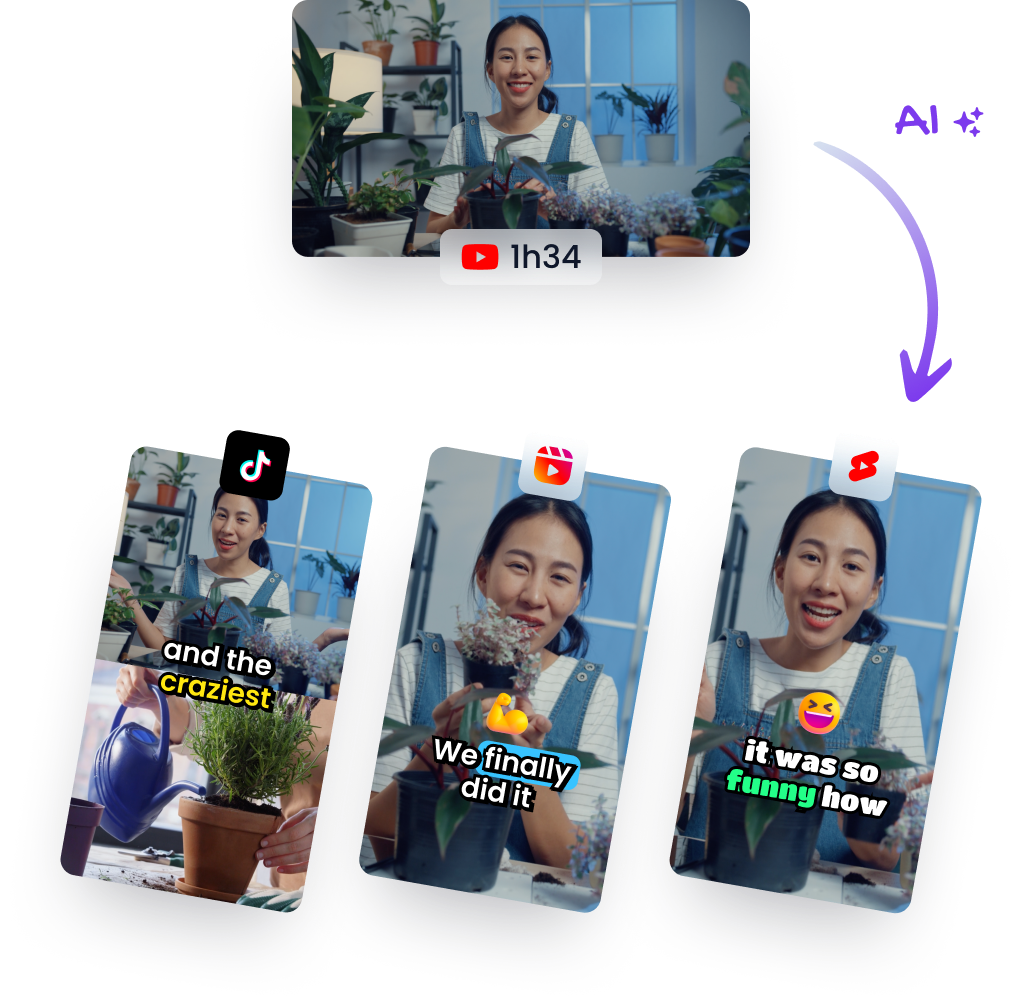
Klap can turn a podcast video or YouTube link into short clips with AI-assisted segment selection, mobile reframing, captions, and social-platform exports. Keep a human approval pass for context, names, claims, and the final hook.
A Repeatable Weekly Clipping Routine
A predictable Monday-to-Friday routine removes decision fatigue without turning the work into a factory. The sequence below keeps analytics, editorial judgment, and platform adaptation connected.

Monday and Tuesday
Day 1, Monday: Publish the full episode, then let the audience response develop for 24 hours before choosing clips. This gives you a first look at natural retention peaks and moments that hold attention without promotional editing.
Day 2, Tuesday: Pull five candidate timestamps from the transcript and episode analytics. Score each for hook, payoff, and standalone clarity, then select three winners with different editorial purposes. One might drive awareness, another might build trust, and the third might encourage full-episode listening.
Wednesday through Friday
Day 3, Wednesday: Reframe the selected clips for vertical viewing, correct the crop, burn in captions, and add only the visual treatment that supports comprehension. Produce the TikTok and Reels versions together when the source edit is the same.
Day 4, Thursday: Adapt the strongest clip for LinkedIn with slower pacing and a clear nameplate. Prepare the YouTube Shorts version with a descriptive first line and a clear path to the full episode.
Day 5, Friday: Review performance and decide whether a clip deserves paid support, a second platform-native edit, a carousel adaptation, or a quote graphic. Update the tracking sheet with the selection reason and the audience signal you want to learn from.
Use this pre-publish checklist:
- Hook: The clip presents its strongest entry within the first three seconds.
- Captions: Text is burned in, proofread, high contrast, and clear of interface zones.
- Context: A new viewer understands the speaker and subject without the full episode.
- CTA: The next action is specific, such as watching the full episode or following the show.
- Upload: Use a native video upload rather than posting only a link.
- Tracking: Record the source timestamp, platform version, publish date, and results.
Three questions creators ask
Why can a clip with low initial views still win? Early reach isn't the only useful signal. A clip may receive limited distribution while earning strong completion, replay, save, or share behavior, giving you a reason to test a new hook or platform adaptation before abandoning the idea.
When should you repost a high performer? Repost only when the new version adds a meaningful change, such as a sharper opening, improved captions, or a different platform context. Repeating the identical render too quickly teaches you little and can make the feed feel repetitive.
How do solo creators avoid burnout? Limit the number of approved clips per episode, batch the mechanical work, and reserve human attention for selection and review. The sustainable advantage isn't producing every possible short. It's consistently publishing the few that have a complete idea.
Klap helps you turn long-form podcast video into social-ready clips by identifying potential moments, reframing footage for vertical viewing, and adding captions that you can review and edit. Visit Klap to test the workflow on an episode, then apply the editorial scoring and platform-specific checks before publishing.