Instagram Reels Length in 2026: Best Practices
Other
Three minutes is the current standard Instagram Reels cap, but the strongest reach still tends to come from clips under 90 seconds, especially in the 45 to 60 second range. Instagram Reels length is a distribution decision, not just an export setting.
You know the moment. You've edited a useful two-minute Reel, added captions, tightened the pauses, and reached the upload screen. Then you wonder whether cutting another minute will destroy the explanation, or whether leaving it intact will make viewers leave before the payoff.
That hesitation is justified. Every extra second adds another opportunity for a viewer to swipe, while a shorter cut can remove the context that makes a tutorial, product demonstration, or story worth watching. The right answer isn't “always make it short” or “use the full limit.” It's to match duration to the job of the video, then optimize the structure for the way Instagram distributes it.
Why Reels Length Matters More Than You Think
A creator often treats duration as a technical checkbox. If the file fits Instagram's limit, the job seems finished. In practice, duration changes the viewer's behavior, and viewer behavior affects whether Instagram continues recommending the Reel beyond the people who already follow the account.
A two-minute Reel has more room for explanation, but it also asks the viewer to make a larger commitment. If the opening is slow, the audience may never reach the useful section. A tight 20-second clip can deliver the same core idea with a cleaner completion signal, more opportunities for replays, and fewer places for attention to leak.
Practical rule: Don't ask whether a Reel is short or long. Ask whether every second earns the next one.
The upload decision is really a distribution decision
Imagine two versions of the same product tutorial. The long version explains the problem, demonstrates the product, answers an objection, and closes with a call to action. The short version opens with the finished result, shows the most important step, and ends immediately after the proof.
The long cut may serve viewers who already care. The short cut has a better chance of making sense to someone who's never seen the creator before. That distinction matters because Instagram recommendations rely on signals such as completion, replays, shares, and saves. A longer video can accumulate more total watch time, but it has to hold attention long enough to earn that advantage.
The Instagram video publishing guide from Klap is useful when you're deciding how to adapt a long-form source into platform-ready clips. The production question is simple: preserve the part that creates curiosity, delivers value, or proves the claim. Remove everything that only explains what the viewer could already infer.
What the extra seconds cost
Longer Reels usually require more editing, more visual changes, more caption timing, and more careful pacing. They also create a larger rewatch penalty. A viewer might happily replay a compact visual gag, but they're less likely to replay a long explanation unless the content is especially useful or emotionally compelling.
That doesn't make long Reels a mistake. It means they need stronger engineering. Put the thesis near the beginning, introduce a new visual or idea before attention fades, and give the viewer a reason to continue. Length earns its place only when the structure supports it.
Current Instagram Reels Length Limits in 2026
Instagram Reels no longer has one universal technical ceiling for every account and creation path. The dependable standard for broad recommendation is 3 minutes, while some accounts may see expanded upload limits that reach 15 to 20 minutes, depending on rollout and account type. Affroom's history of Instagram Reel limits tracks the progression from 15 seconds at launch in August 2020 to 30 seconds in mid-2021, 60 seconds in January 2022, 90 seconds in June 2022, and 3 minutes in January 2025.
The minimum documented Reel length is 3 seconds, according to Zeely's 2026 limits overview. That's a technical minimum, not a recommendation. A three-second clip can work for an instant visual payoff, but it leaves almost no room for setup, context, or a conventional call to action.
Use the shortest reliable publication path
Account TypeMinimum LengthMaximum LengthNotes
Standard in-app creation
3 seconds
3 minutes
The safest ceiling for broad recommendation
Accounts with expanded access
3 seconds
Up to 15 to 20 minutes
Availability varies by rollout and account type
Upload-based workflows
3 seconds
Account-specific
Longer technical limits may appear, but they aren't universal
The important distinction is between what Instagram accepts and what Instagram is likely to distribute broadly. A 2026 analysis summarized by Moonb's explanation of Reel length identifies 3 minutes as the important recommendation cutoff, even when some accounts can upload longer videos. If discovery is the goal, export below that ceiling and avoid building a workflow around an expanded limit you may not reliably have.
Check the file before you publish
Use a vertical 9:16 composition, export as MP4 or MOV, and keep the file within the practical 4 GB ceiling described in the available format guidance. These specifications affect whether the upload processes cleanly, while duration affects whether the finished video fits the account's publication path.
If a draft exceeds the limit visible in your account, trim it before publishing or split it into a connected series. Don't assume that a longer file will automatically publish as a Reel just because another account can upload one. Account rollouts and creation paths differ, so test the actual upload route you intend to use.
The Engagement Sweet Spot Most Creators Miss
The longest available Reel isn't automatically the strongest Reel. A 2026 analysis of 6 million Instagram Reels found that the 45 to 60 second band produced the strongest engagement and median views, while videos longer than 3 minutes saw a marked performance drop and weren't recommended to non-followers in the Reels tab. Socialinsider's analysis of Instagram Reel length provides the clearest reason to treat duration as a distribution variable.
That finding changes the editing question. Instead of asking how much content you can fit into three minutes, ask whether the audience needs three minutes to receive the payoff. For reach, a compact hook, a useful middle, and a fast resolution usually beat padded runtime.

Optimize for completion and replay
Shorter clips have a structural advantage because viewers can finish them more easily and replay them without much commitment. That's why a concise visual joke, transformation, or single tip can outperform a detailed explanation on cold-audience reach.
The tradeoff is depth. A seven-second clip can create attention and recognition, but it can't carry the same argument as a thoughtful tutorial. Use short duration when the idea has an immediate visual payoff. Use more time when the viewer must understand a process, compare options, or see evidence.
If you're measuring whether the audience stayed with the video, Klap's guide to video completion rate offers a useful framework for reading retention rather than judging a Reel by views alone. Watch where viewers leave, then cut or restructure that exact moment.
A longer Reel should prove that it deserves to be longer.
Don't chase the three-minute ceiling without testing a shorter cut first. If the short version delivers the same promise and creates stronger completion, use it for discovery. Reserve the longer version for subjects where added context produces a materially better viewer experience.
Matching Reels Length to Content Type
Different formats create different attention expectations. A trending audio riff needs an immediate visual payoff. A founder update needs enough room for a problem, a decision, and a consequence. Applying the same Instagram Reels length to both is a production shortcut, not a strategy.
Content TypeTarget LengthWhy
Quick hooks and trend riffs
7 to 15 seconds
The idea lands through one visual beat or punchline
Product teasers and outfit reveals
15 to 30 seconds
Enough time to show the result and one supporting detail
Fast tips and single-step tutorials
15 to 30 seconds
The viewer receives one clear action without extra context
Educational explainers and recipes
30 to 60 seconds
The format supports a sequence while keeping momentum
Multi-step tutorials and founder updates
60 to 90 seconds
More room for process, context, and a concise conclusion
Interviews, podcast clips, and webinar recuts
90 seconds to 3 minutes
Context and a complete argument matter more than extreme brevity
Choose duration by attention budget
For a quick hook, start with the outcome. Don't introduce the creator, explain the topic, or add a branded preamble. The audience should understand the visual promise before deciding whether to keep watching.
Product teasers work well when they show the finished result early, then add one reason to care. A demo can take longer if the feature needs proof, but it should still focus on one use case. Multiple features usually belong in separate clips.
Tutorials deserve additional time only when each step changes what the viewer can do. A recipe walkthrough can use a longer runtime because the viewer needs to follow a sequence. A tip that can be explained in one sentence shouldn't become a minute-long monologue.
For creators testing formats rather than guessing, a 30-day Instagram format test can help compare how different content structures behave over a consistent publishing period. Pair that test with a clear duration variable so you know whether performance changed because of length, topic, or presentation.
Long-form source material, such as podcasts and webinars, needs a different edit. Find the sentence that creates tension or states a useful claim, then cut around it. Resources covering different types of video can help you identify which source formats are most suitable for short-form repurposing.
How to Structure Short and Long Reels
Duration changes the script, the edit, and the location of the call to action. A short Reel can't afford setup. A longer Reel can't survive without chapters, visual resets, and a clear argument.
Under 15 seconds
Put the payoff in the first second. Show the transformation, the surprising result, or the final visual before offering any explanation. Then make the viewer want to replay it by connecting the final frame back to the opening.
A loop works especially well for visual transitions, quick demonstrations, and short comedy. Don't add a spoken introduction or a slow title card. If the viewer needs context, place it in concise on-screen text while the action is already happening.

From 15 to 60 seconds
Use a hook-question pattern. Open with the problem or curiosity gap, deliver the useful information in the middle, and close with the answer or result promised at the beginning.
For example, a product Reel might begin with the problem the product solves, show the product handling that problem, then end with the finished result. A tutorial should avoid listing every possible variation. Teach one method clearly, then use the closing moment for the next action.
From 60 seconds upward
At 60 to 90 seconds, add a micro-hook around the 30-second mark. Introduce a new example, reveal, visual change, or question that gives viewers a reason to continue after the opening section.
For videos beyond 90 seconds, front-load the thesis and use visual chapter cues. Place the strongest visual or most persuasive proof around the point where retention needs recovery, then put the CTA at roughly 70% of the video so it lands before the final exits.
Cut every sentence that doesn't move the viewer forward. If a sentence repeats the caption, summarizes what's already visible, or delays the next useful beat, remove it.
Reels Length vs TikTok and YouTube Shorts
Cross-posting the same master video everywhere is efficient, but publishing the same cut without adapting its pacing is lazy. Each platform has its own viewing context, interface, and audience expectation. The source can stay consistent, while the opening, runtime, and payoff should change.
The reliable Instagram benchmark is 3 minutes for broad recommendation, even though some accounts may have higher technical upload ceilings. TikTok and YouTube Shorts have different product rules, but those rules shouldn't tempt you to make every edit longer.
PlatformMax LengthRecommended LengthNotes
Instagram Reels
3 minutes for broad recommendation
7 to 90 seconds for most discovery goals
Longer uploads may be available to some accounts
TikTok
Varies by upload and account access
Short, fast cuts for discovery, longer when context earns it
Use native pacing rather than copying the Reel unchanged
YouTube Shorts
Varies by current platform rules
Front-loaded, concise videos
Deliver the payoff early because retention can fall quickly
Build platform-native cuts
For TikTok, lead with a direct statement, sharper pacing, or a more conversational opening. TikTok viewers often accept a looser, more immediate presentation when the first line creates curiosity.
For Instagram, use a clean visual identity, readable captions, and enough context for the clip to make sense when it appears to someone unfamiliar with the account. Reels can support education, product storytelling, and community-building, but the first beat still has to work for a cold viewer.
For Shorts, place the core answer or visual payoff at the front. Don't make the viewer wait through branding or background before revealing why the clip matters.
The best repurposing workflow starts with a long-form master and creates different edits from the same strong moment. A podcast answer might need a compact statement for one platform, a little more context for another, and a different caption or CTA everywhere. Cross-post the idea, not the exact timeline.
Quick Reference for Posting the Right Length
Use a two-step decision rule before exporting. First, confirm that the video fits the reliable 3-minute Reels cap. Second, decide whether the chosen duration fits the sub-90-second discovery window or earns its extra runtime through genuine context, proof, or narrative.

Under 15 seconds
Use this tier for trends, visual jokes, transformations, and one-beat hooks. The hook belongs in the first second, and the ending should either loop naturally or land with a complete visual payoff.
- Strongest use case: Instant entertainment or visual proof.
- Hook window: First second.
- CTA placement: Use on-screen text or a very brief final prompt, only if it doesn't weaken the loop.
From 15 to 60 seconds
Choose this range for product teasers, quick tips, recipes, explainers, and single-topic tutorials. Open with a question or problem, show the useful step quickly, and answer the opening promise before the midpoint whenever possible.
- Strongest use case: Clear education, product context, and compact storytelling.
- Hook window: Opening seconds.
- CTA placement: After the payoff, with enough time for the viewer to understand the next action.
From 60 to 180 seconds
Use longer runtime for multi-step tutorials, interviews, podcast clips, founder updates, and webinar recuts. State the thesis early, add visual resets, and remove any passage that doesn't advance the argument.
- Strongest use case: Context-heavy teaching and narrative.
- Hook window: Immediate thesis, followed by a new attention cue as the story develops.
- CTA placement: Before the final stretch, after the viewer has received meaningful proof or value.
For a practical production routine that helps busy teams plan, edit, and publish consistently, review these Reels workflow tips for busy founders. The workflow matters because consistent testing gives you more useful evidence than a single guess about the perfect duration.
Before publishing, run this checklist:
- Hook: The first two seconds establish the reason to watch.
- Payoff: The main result arrives before the halfway mark whenever the format allows it.
- Ending: The video loops naturally or closes with a clear conclusion.
- On-screen text: Captions reinforce the value without covering essential visuals.
- Length: The duration matches the content type, not the amount of footage available.
Length is a distribution decision. Publish the cut, inspect the first-hour retention curve, and adjust the duration before changing everything else. If viewers leave at the same sentence across multiple edits, cut or rewrite that sentence first.
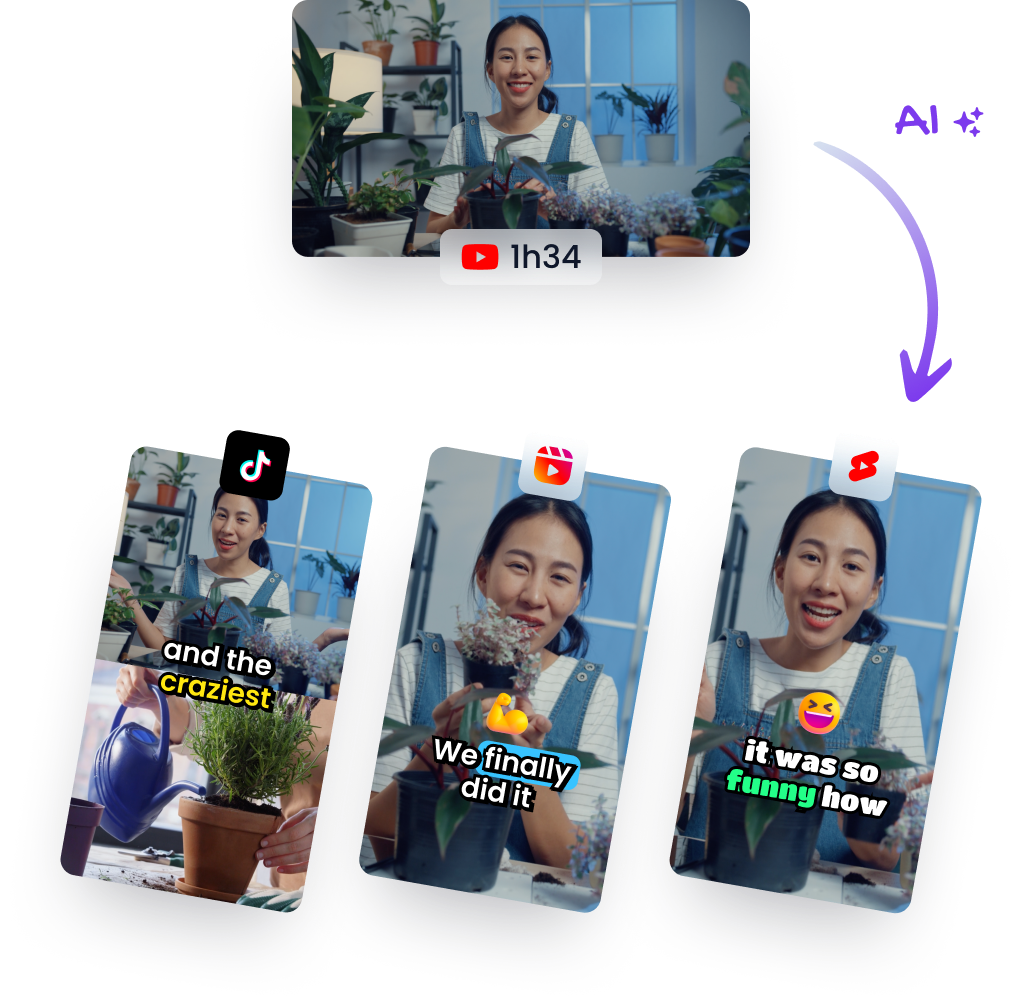
Klap turns long-form videos such as podcasts, webinars, interviews, and YouTube uploads into short vertical clips with AI-selected moments, reframing, captions, and editable timing. Visit Klap to turn your existing footage into Instagram-ready cuts that fit the length and distribution goal you're targeting.