10 Key Types of Video for Max Impact in 2026
Other
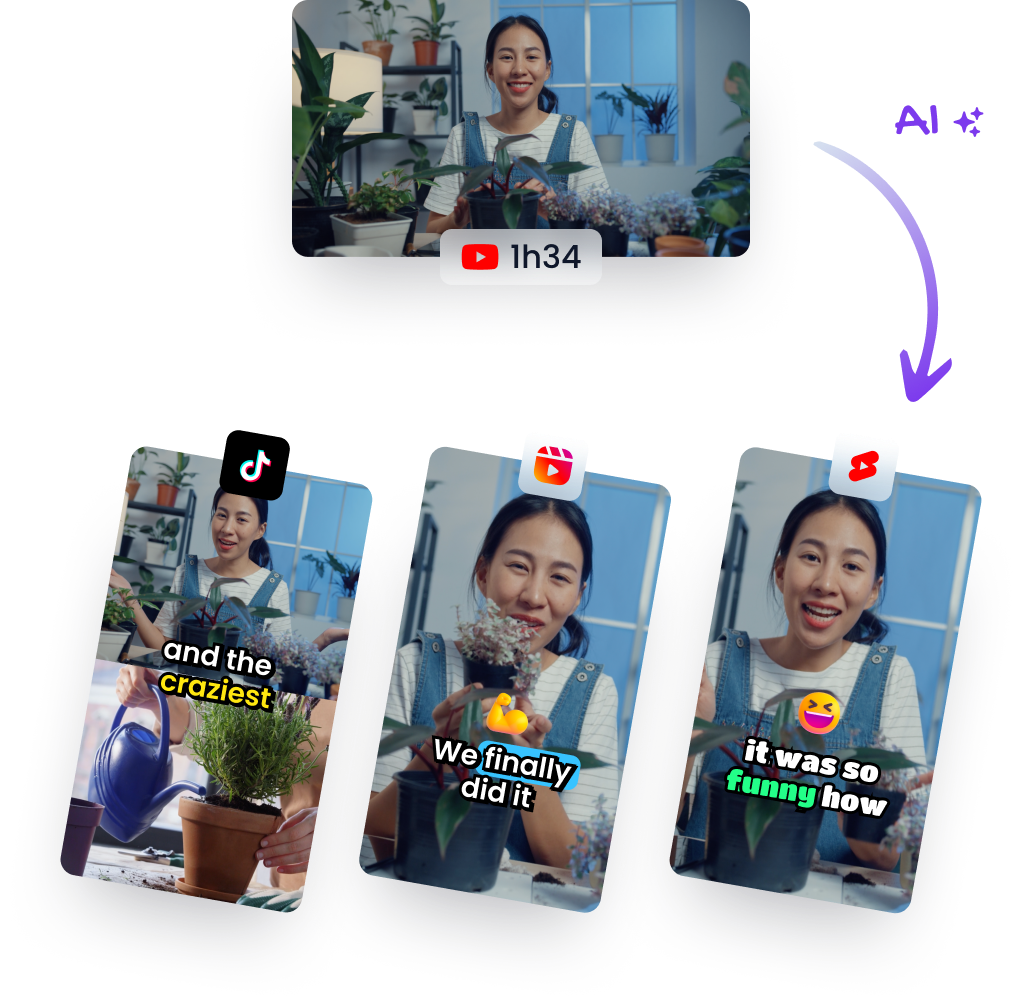
You've probably got more usable video than you think. A podcast episode sits on YouTube. A webinar replay lives in a drive folder. A customer interview performed well once, then disappeared. Meanwhile, your short-form calendar is empty, and every new post feels like starting from zero.
That's usually not a content problem. It's a format problem.
Different types of video do different jobs. Some educate. Some build trust. Some sell. Some exist just to stop the scroll. In practice, strong video strategy in 2026 means knowing how to pull the right moments out of long-form content and reshape them for the platforms where people spend attention. If you want to create stunning AI videos faster, the fastest win often isn't filming something new. It's identifying what already works in your archive and packaging it correctly.
That matters even more now because video demand is split across several formats at once. In 2024, explainer videos were the most widely used format among marketers at 73%, social media videos followed at 69%, and testimonial videos reached 60%, according to Statista's breakdown of video formats used by marketers. The takeaway is simple. Utility beats novelty more often than creators think.
Here are the 10 types of video worth understanding, plus the practical repurposing playbook for turning each one into short clips that can successfully travel.
1. Short-Form Vertical Video
This is the format most creators chase, but it's usually the last step, not the first. Short-form vertical video is the output format for TikTok, Instagram Reels, and YouTube Shorts. If you treat it like a production style instead of a packaging style, you'll burn time making native clips from scratch when your long-form library already has the raw material.
The reason this format matters is attention. A 2025 video marketing summary reported that videos under 1 minute had the highest engagement, with viewers watching at least 16 seconds on average, while a 60-minute video averaged 16 minutes of watch time. The same summary noted that 30% of brands use short-form video in their marketing plans, as shown in Dash's video marketing statistics roundup. Shorter clips don't automatically win, but they make a stronger first impression.
What works when you repurpose for vertical
Pull clips with one idea, one emotional beat, or one clear payoff. Don't try to cram a whole argument into 45 seconds. A vertical short works when a viewer understands the premise almost instantly.
If you're clipping a webinar, look for:
- Strong openings: A surprising statement, bold lesson, or direct question.
- Visual movement: Slide change, hand gesture, product demo, or reaction shot.
- Natural resolution: A clip that ends on a conclusion, not a dangling fragment.
Practical rule: If the first sentence needs setup from two minutes earlier, it's not a short. Keep searching.
Captions matter, framing matters, and dead space matters most. Crop for faces first. Then make sure text stays readable in a mobile-safe area. If you need a workflow tuned for this format, Klap's guide to the best vertical video editor is a useful starting point.
2. Educational/Tutorial Video
Educational content is one of the safest bets for repurposing because it already has structure. Someone asked a question. The video answered it. Your job is to isolate the answer and strip away the ramp-up.
Educational and how-to content already fits existing viewing behavior. Weekly viewing of educational video reached 26% and tutorials/how-to reached 25.8% among internet users in a global breakdown shared by Wix's video marketing statistics article. That doesn't mean every lesson becomes a good short. It means the audience habit already exists.
A simple visual can reinforce the point early in the clip:

How to cut a tutorial into better shorts
The best educational shorts usually come from one of three moments: the mistake, the method, or the result. “Here's what is commonly done wrong” often outperforms a generic tip because it creates tension before the answer.
Keep the clip tightly scoped:
- One lesson: “How to light your face near a window.”
- One fix: “Why your audio sounds distant.”
- One shortcut: “Use this keyboard command instead.”
For silent viewing, readable captions are part of the lesson itself. Klap's article on how to add captions to videos covers the mechanics, but the strategic point is that captions should reinforce the teaching, not just mirror speech.
A strong companion tactic is building future clips from audience feedback. If one tutorial draws repeated questions, that comment section becomes raw material for follow-up content, including creating viral scripts from audience comments.
This kind of pacing is worth studying before you edit your own:
3. Podcast Clip/Audio Highlight Video
Podcast clips work when the spoken idea is strong enough to stand alone. They fail when creators clip a sentence that was interesting only because of the full conversation around it.
This format is especially useful if your show already has guests, opinion, story, or debate. A clean 30 to 60 second excerpt can promote a full episode, build authority on LinkedIn, or become a recurring series on Shorts and Reels.
What to pull from an episode
Don't start with “great moments.” Start with categories of moments. That gives your editing process a filter.
Look for:
- Sharp insight: A guest explains something better than you could in a scripted post.
- Clear disagreement: One host pushes back and creates tension.
- Memorable phrasing: A line people would quote or send to someone else.
- Emotional honesty: The speaker drops the polished answer and says what they actually think.
The visual side doesn't need to be fancy, but it can't feel static. Speaker footage helps. If the original video is weak, waveform-based layouts or simple branded subtitles can still carry the clip.

The safest podcast clip is a complete thought with a point of view. The best one also changes how the viewer sees something.
If podcasting is your main content engine, Klap's guide on how to repurpose podcast content is directly relevant. In practice, this is one of the easiest types of video to scale because one recording session can yield multiple clips with different angles for different platforms.
4. Interview/Conversation Excerpt
Interviews create excellent short clips because they contain built-in dynamics. One person asks. Another reveals. A reaction lands. That back-and-forth gives you pacing that solo talking-head videos often lack.
But not every interview clip should lead with the smartest answer. Often, the better clip starts with the question, especially if the question creates curiosity fast. “What did you get wrong in your first launch?” is stronger than dropping viewers into a polished response with no setup.
Where interview clips usually break
They break on context. You know who the guest is. The audience often doesn't.
Fix that with a few simple moves:
- Name the speaker fast: Add a lower-third or opening text with their role.
- Keep the stakes visible: Explain why the quote matters in the caption or title.
- Show reaction when possible: Split-screen clips often hold attention better because viewers can read both speakers.
A founder interview, customer research call, or conference panel can all produce this kind of content. The common thread is contrast. The best excerpts tend to include surprise, disagreement, or an unusually clear opinion.
If you're clipping a long interview, mark every moment where the other speaker changes expression. Those reaction beats usually signal a stronger short than the quote alone.
5. Behind-the-Scenes/Documentary Style
Behind-the-scenes footage builds trust because it shows process instead of polished claims. Creators often treat it as filler, but it can do serious work when your audience wants proof that you know what you're doing.
This format is strong for agencies, product teams, educators, artists, and solo creators. A camera setup change, whiteboard planning session, client prep, warehouse workflow, or shoot-day mistake can all become usable social content.
What makes it worth watching
The mistake many teams make is filming process without narrative. “We're working” isn't interesting by itself. “We changed this because the first version failed” is.
That shift gives you natural clip hooks:
- Problem to solve: A shipment issue, lighting challenge, missed take, or design snag.
- Decision point: Why you chose one concept, tool, or version over another.
- Before and after: Rough cut versus final cut, sketch versus finished design.
Field note: The more ordinary the process, the more specific your commentary needs to be.
A behind-the-scenes short doesn't need cinematic footage. It needs commentary that helps the viewer understand what they're looking at. If your archive includes production vlogs, internal walkthroughs, or day-in-the-life footage, this is one of the easiest types of video to remix into a steady content stream.
6. Product Review/Unboxing
Review content wins when the creator makes a clear judgment. Unboxings get attention because people like novelty, but attention drops fast if the video never answers the question in the viewer's head: is this product good?
That's why the best clips from a long review are usually not the opening package shot. They're the verdict, the surprise, or the comparison.

Better ways to clip review footage
When you cut long-form product content into shorts, use one of these structures:
- Best feature first: Lead with the one thing that impressed you most.
- Problem-solution clip: Show the pain point, then show the product handling it.
- Pros versus cons: One clip can focus entirely on a drawback if the point is honest and useful.
- Head-to-head test: Comparison footage often outperforms isolated praise.
Real-world examples are easy here. A tech YouTuber can cut one short around battery life impressions, another around setup friction, and another around whether the camera is worth the upgrade. A beauty creator can split a long review into texture, wear test, and shade-match clips.
What doesn't work is vague enthusiasm. “This is amazing” is weak. “This button placement slows me down every time I use it” is useful. Review clips succeed when your opinion is specific enough to help someone decide.
7. Comedy/Entertainment Sketch
Comedy is less forgiving than almost any other format. If the setup is too long, the viewer is gone. If the punchline needs too much context, the clip dies. If the timing is soft, no edit trick saves it.
That said, comedy repurposes well when the original long-form content includes multiple discrete beats. Stand-up sets, podcast banter, stream highlights, and sketch compilations all contain moments that can stand on their own if you cut aggressively.
Edit for rhythm, not completeness
A lot of creators overprotect the full joke. They leave in every line because they remember the room reaction or the context from the shoot. Social viewers don't care. They need the shortest route to the laugh.
A few rules help:
- Trim the runway: Start closer to the punch.
- Use captions as setup: Text can do part of the scene-setting work.
- Keep visual cuts active: Reaction shots and zooms can sharpen timing.
- Kill your favorite extra line: If it slows the beat, remove it.
Comedy clips can come from scripted material or accidents. A creator trying to film a tutorial and failing in a way that feels relatable can outperform a polished sketch if the moment feels real. Among the many types of video on social, comedy remains one of the most shareable when it lands. It's also one of the hardest to salvage if the source material wasn't funny to begin with.
8. Motivational/Inspirational Content
This format attracts a lot of low-quality content because it's easy to imitate. Slow music, generic advice, stock footage, and bold captions can produce something that looks motivational without saying anything memorable.
Good motivational content has friction in it. The speaker admits doubt, names the hard part, or explains a real turning point. Without that, the clip feels like wallpaper.
What to pull from longer content
This type of video often emerges from interviews, founder talks, coaching sessions, fitness updates, or personal stories. The strongest clips usually contain one of these:
- A moment of failure: What went wrong before progress started.
- A specific decision: The habit, rule, or perspective that changed behavior.
- A direct challenge: A line that prompts action instead of passive agreement.
Short-form demand is real here because consumers clearly want more snackable brand video. In 2025, 81% of consumers said they wanted brands to produce more short-form video, while 17.13% of marketers named short-form as their top investment priority for the year, according to SellersCommerce's video marketing statistics roundup. That doesn't validate empty inspiration. It raises the bar for making concise clips that feel honest.
A coach, trainer, or founder can cut one long keynote into several emotional angles. One clip can focus on the setback. Another can focus on the turning point. A third can turn the key line into a direct-to-camera challenge.
9. News/Current Events Commentary
Speed matters here, but speed without precision can wreck credibility. Commentary works when you add context, interpretation, or a useful reaction. It doesn't work when you repeat the headline with a strong opinion and no grounding.
This format is especially effective for analysts, journalists, niche experts, and creators who already have a point of view in a defined area. If you cover markets, sports, creator economy news, policy, or platform changes, short commentary clips can become your fastest growth format.
What to clip and how fast to ship it
A long livestream, space recording, or YouTube discussion can produce several current-events shorts. The best moments usually fall into one of three buckets:
- Immediate take: Your first informed reaction.
- Explainer angle: What happened and why it matters.
- Contrarian angle: What most coverage is missing.
Timeliness changes the editing standard. You can't spend forever polishing these clips. Prioritize clean cuts, readable captions, and a strong first line over heavy post-production.
Publish the insight while people still care. Polish matters less than clarity when the story is moving.
One warning. If the topic is sensitive, leave enough context in the clip that viewers can't easily misread the point. For this category, a technically perfect edit is less valuable than an accurate and fair one.
10. Listicle/Comparison Video
Listicles look simple, but they're one of the most useful formats for repurposing because structure does half the work. Rankings, “best for” breakdowns, and side-by-side comparisons naturally create clipable segments.
If you've recorded a long product roundup, strategy session, educational talk, or review video, you already have multiple short posts hiding inside it. Each item in the list can become its own clip. The full ranking can become a carousel script. The strongest opinion can become a short with a sharper hook.
Why this format keeps working
People like ordered information. It lowers effort. “Top editing mistakes,” “3 microphones worth considering,” or “best video hooks for interviews” gives the audience a clear promise before they commit attention.
This format is also one of the more practical types of video for teams that need repeatability. A marketer can turn one webinar section into a weekly series. A creator can turn one annual review into a month of Shorts.
For mobile, pacing matters more than completeness. Use fast labels, visual cues, and a reason for your ranking. “Number three is better than number two for beginners because setup is easier” works better than just flashing names on screen.
A comparison clip also lets you lead with tension. Start with the controversial pick, the common mistake, or the underdog option. Save the full context for the longer piece, but make the short complete enough that it stands on its own.
Top 10 Video Types Comparison
Content TypeImplementation Complexity 🔄Resource Requirements ⚡Expected Outcomes 📊Ideal Use Cases 💡Key Advantages ⭐
Short-Form Vertical Video
Low, quick cuts & reframing 🔄
Low, mobile footage + captions ⚡
High engagement; viral reach ⭐⭐⭐
Social promos, repurposing clips
Full-screen immersion; favored by algorithms
Educational / Tutorial Video
Moderate, structured pacing & clarity 🔄
Medium, demos, screen capture, clear audio ⚡
Authority building; sustained traffic ⭐⭐
How-tos, course highlights, skill snippets
High value; strong SEO and trust
Podcast Clip / Audio Highlight Video
Low, select soundbites & sync captions 🔄
Low, good audio + simple visuals ⚡
Drives listens to full episodes; discoverability ⭐⭐
Promoting episodes, thought leadership
Low production overhead; repurposes existing content
Interview / Conversation Excerpt
Moderate, identify quotable exchanges 🔄
Medium, transcripts, multi-speaker edits ⚡
Shareable; comment-driving visibility ⭐⭐
Talk shows, webinars, guest highlights
Social proof; sparks discussion
Behind-the-Scenes / Documentary Style
Low–Medium, capture + narrative editing 🔄
Low, raw footage, ambient audio ⚡
Strong authenticity and connection ⭐⭐
Brand culture, process showcases
Relatable, low-cost content with personality
Product Review / Unboxing
Moderate, detailed shots & testing 🔄
Medium, product access, lighting, testing ⚡
Conversion-focused; sustained interest ⭐⭐
E‑commerce promos, affiliate marketing
Drives purchases; builds credibility
Comedy / Entertainment Sketch
High, tight scripting & timing 🔄
Medium, talent, editing, effects ⚡
Massive viral potential; rapid reach ⭐⭐⭐
Audience growth, personality building
Highest shareability and organic distribution
Motivational / Inspirational Content
Low, storytelling + pacing 🔄
Low, footage, music, captions ⚡
Emotional engagement; loyal community ⭐⭐
Coaching, personal branding, transformations
Builds community and drives meaningful engagement
News / Current Events Commentary
High, speed, accuracy & sourcing 🔄
Medium, research, expert input, fast edits ⚡
Quick traffic spikes; timely thought leadership ⭐
Newsrooms, analysts, rapid reactions
High relevance during news cycles
Listicle / Comparison Video
Moderate, structured ranking & graphics 🔄
Medium, research, visuals, voiceover ⚡
High CTR; debate and SEO value ⭐⭐
Product comparisons, "Top X" formats
Clear, easy-to-digest structure that encourages engagement
From Types to Strategy Your Next Move
Knowing the main types of video is useful. Knowing how each one behaves in a repurposing workflow is what transforms output.
Most creators don't have a content shortage. They have an extraction problem. They record one strong podcast, interview, webinar, lesson, or review, publish it once, then move on. Meanwhile, the best moments inside that asset never get isolated, reframed, captioned, or distributed in the formats where short attention lives.
That's the essential shift. You don't need to become a different creator for every platform. You need to identify what each platform wants from the source material you already have. A tutorial becomes a “one-fix” short. A podcast becomes a sharp opinion clip. An interview becomes a tension-driven excerpt. A behind-the-scenes vlog becomes proof of process. A listicle becomes a whole content series.
There are trade-offs. Short-form vertical video gives you reach, but often strips away nuance. Educational clips attract saves and repeat viewing, but only if you cut them tightly enough to feel immediate. Motivational content can travel widely, but it falls flat when it turns generic. News commentary can move fast, but it punishes sloppy context. Product reviews build trust, but only if the opinion is specific and honest.
The strongest workflow is usually simple. Start with one long-form asset that already contains substance. Watch it once with a marker's mindset. Flag bold claims, sharp examples, emotional turns, disagreements, practical steps, and verdicts. Then sort those moments by format instead of by chronology. Ask which clips work as education, which work as commentary, which work as trust-building, and which work as scroll-stoppers.
From there, volume gets easier because the decision-making improves. You stop asking, “What should we post today?” and start asking, “Which format best fits the moment we already captured?” That's a much better question.
If you want help operationalizing that process, Klap is one option built around this exact use case. It's designed to turn long-form video into social-ready clips, with AI-assisted segment selection, reframing, captions, and export for vertical platforms. That doesn't replace editorial judgment. It removes a lot of repetitive editing work so you can spend more time choosing the right moments.
Start small. Pick one long-form video from your archive this week. Pull three moments from it. Make each one a different format. One educational, one opinion-driven, one emotional or trust-building. That single exercise will tell you more about your content engine than another month of posting random clips.
If you've already got podcasts, interviews, webinars, or tutorials sitting unused, Klap can help you turn them into short, social-ready clips without rebuilding your workflow from scratch. Upload a long-form video, review the AI-selected segments, refine the edits, and publish more consistently from content you already made.