How to Get 1000 Followers on TikTok: Proven Strategies
Other
Most advice on how to get 1000 followers on TikTok starts with the wrong question. Posting more won't fix weak retention, a confusing profile, or clips that get views but never convert into follows.
The job is to make each video do three things at once. It has to hold attention, signal a clear niche, and send profile visitors toward the follow button. Once those parts work together, the 1,000-follower milestone stops looking random and starts looking like a system.
Why Most Creators Stall Below 1000 Followers
The plateau usually isn't a volume problem. It's a conversion problem, and the bottleneck sits in one of three places, retention, profile packaging, or topic clarity. TikTok's growth mechanics reward short-form videos that earn attention quickly, and one guidance source says the biggest drop-off happens in the first 5 seconds while another recommends a strong hook plus re-hooks every 3 to 10 seconds to keep people watching (TikTok growth mechanics and retention guidance).
That matters because a video can get impressions and still fail to move an account forward. If viewers don't stay long enough, TikTok has less reason to keep pushing the clip. If they do stay but your profile feels vague, they leave without following.

The three blockers that matter
A creator can post daily and still stall because the content is too broad, the hook doesn't land, or the profile doesn't make the follow decision easy. The most useful way to think about the first 1,000 followers is as a point where discovery, retention, and conversion begin working together in measurable ways (TikTok growth mechanics and conversion guidance).
Practical rule: if views are arriving but follows aren't, stop asking for “more consistency” and inspect the bottleneck.
A 2026 playbook recommends tracking average watch time, completion rate, shares, saves, and comments per view to see whether content is turning viewers into followers, and it notes that if fewer than 10% of profile visitors convert to followers, the profile or packaging needs adjustment (2026 creator playbook). That makes the diagnosis pretty clear. The account isn't “bad,” it's leaking somewhere.
The other common stall point is unfocused topic selection. If a creator posts whatever feels interesting that day, TikTok and viewers both struggle to classify the account. For a practical diagnostic on why views stay low even when posting feels consistent, the pattern overlaps with the same conversion problems outlined in why are my TikTok views so low.
Choosing Your Niche and Packaging Your Profile for Follows
A profile should answer one question immediately. Why should this person follow you instead of just watching one clip and leaving? The fastest accounts to 1,000 usually make that answer obvious through a narrow niche, a clear bio, and content that repeats recognizable themes (first 1,000 followers guidance).
Start with one niche statement
The strongest niche sits at the intersection of what you know and what people already want. Not “fitness,” but “quick strength training for busy beginners.” Not “marketing,” but “short-form video strategy for coaches and small brands.” That level of specificity helps TikTok classify the account and helps viewers know what they'll get if they follow.
A useful profile audit starts with three checks.
- Bio clarity: say who the content is for and what problem it solves.
- Visual cohesion: use a profile photo and pinned clips that all point to the same topic.
- Follow intent: end the bio with a simple reason to follow, not a vague slogan.

Build content pillars that reinforce the promise
Multiple 2026 creator playbooks point to niche consistency as the fastest route to 1,000 followers, not one viral post alone (growth guide on niche and metadata). In practice, that means choosing 3 to 5 content pillars and repeating them until the account becomes legible.
A clean setup might look like this, educational clips, behind-the-scenes process, common mistakes, response videos, and quick wins. A weak setup mixes unrelated ideas with no connective tissue, which makes the profile feel like a random feed rather than a reason to follow.
If someone lands on your profile and can't describe it in one sentence, the bio is too vague or the content pillars are too wide.
For a practical profile template, keep the language simple, use the same topic words in your bio and captions, and pin the clips that best represent the account's promise. The goal isn't branding fluff, it's reducing uncertainty for the visitor who's deciding whether to hit follow.
Hook Formulas and Re-Hook Techniques That Hold Attention
The opening seconds decide whether a viewer keeps watching. One retention guide says the sharpest drop-off happens in the first 5 seconds, and it also recommends re-hooks every 3 to 10 seconds so attention does not drift. The hook is not a throwaway intro, it is the first test of whether the video has a reason to stay on screen.
Hook patterns that work because they create motion
The hooks that hold attention usually do one of four jobs. They interrupt a familiar pattern, create a curiosity gap, make a contrarian claim, or speak directly to a viewer problem. A strong template is, “If you're trying to [goal], stop doing [common mistake]”. Another is, “[common belief] is what people often think, but the specific problem is [specific problem]”.
Clarity beats cleverness. The first line has to point toward a useful payoff, or the swipe wins before the point lands. That matters even more if you are repurposing longer video, because a short clip still has to earn attention fast enough to justify the follow.
Practical rule: the hook should promise a result, a surprise, or a correction. If it does none of those, it is too soft.
Re-hook before attention drops
One opening is rarely enough. Strong TikToks reset attention with visual shifts, open loops, or a sharp question that pulls the viewer forward. In a 30-second video, that usually means changing the frame, the pacing, or the angle before the clip starts to feel flat.
A simple script structure looks like this. Start with the problem, widen the tension, then deliver the payoff in one clean line. If the video runs longer than a few beats, insert a second hook like, “The part you might miss is this” or “At this point the approach shifts”.
Weak hooks usually sound generic, like “Here are some tips for growth.” Strong hooks make the audience feel personally addressed, corrected, or curious enough to keep watching. That difference matters because watch behavior drives distribution, and watch behavior starts with the opening sentence.
A repurposing workflow helps here because you are not forced to invent a new angle from nothing every time. If you are turning long-form material into shorts, tools such as Klap's long-video to short-video workflow make it easier to pull multiple hook variations from the same source. The same logic applies if you want to breathe new life into content, because the task is usually not finding a new topic, it is finding a tighter entry point for the same idea.
Repurposing Long-Form Video Into Multiple Viral TikToks
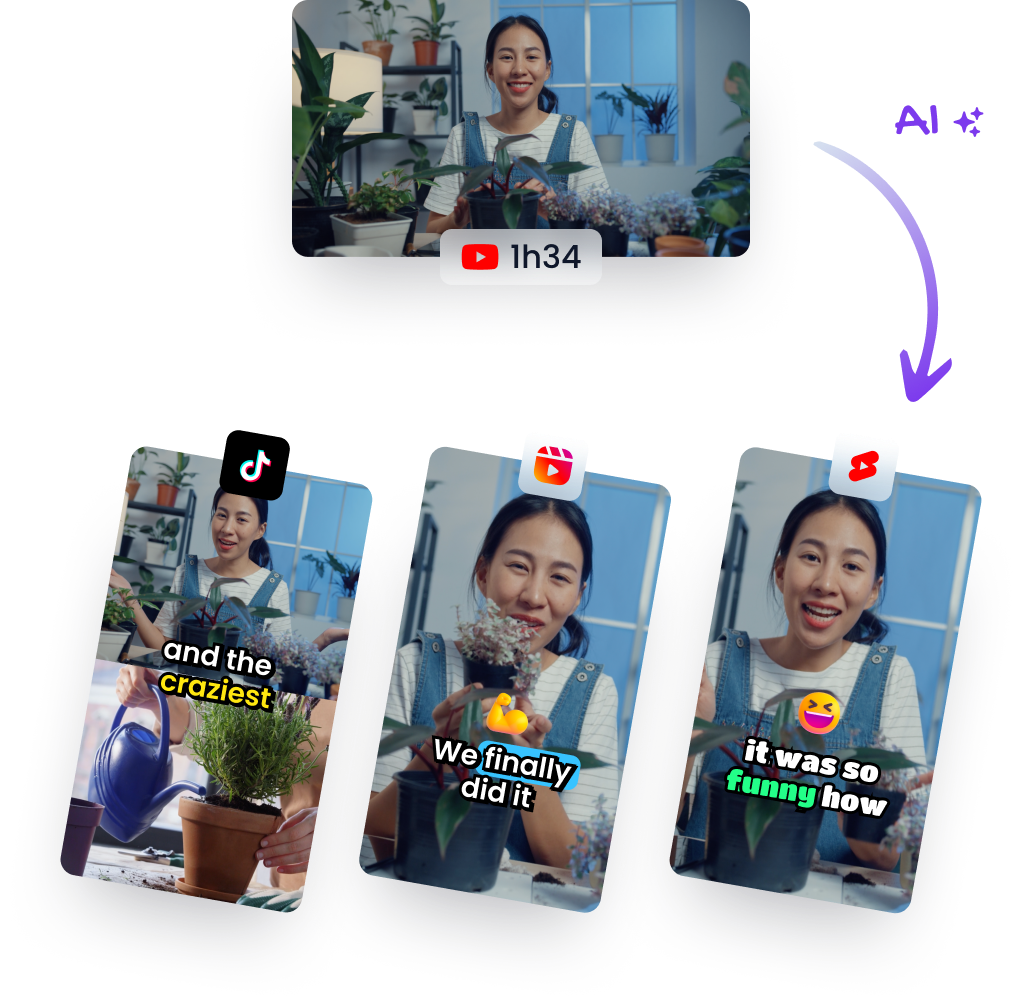
A lot of creators are sitting on usable footage already. Podcasts, webinars, YouTube uploads, interviews, and workshops can each become a batch of short clips if the workflow is built around extraction instead of starting from zero every day. That's the advantage of a repurposing-first system.
Turn one source into multiple short clips
A practical repurposing flow starts with a long-form asset. You upload or link the video, let the tool identify engaging moments, then review the suggested clips before adjusting the start and end points. Klap is one option in this category, and it turns long-form video into short clips with captions and vertical reframing for TikTok-style formats (Klap long-video to short-video workflow).
That kind of workflow pairs well with older content too. If you want a broader editorial angle on breathe new life into content, the logic is the same, the source material already exists, the work is in packaging it for a new distribution channel.
The reason repurposing works is simple. One source idea can surface multiple angles, a surprising quote, a contrarian take, a helpful mini tutorial, or a reaction-style cut. That gives you more tests without forcing you to invent fresh concepts from scratch every day.
Batch production beats ad hoc posting
A usable weekly workflow separates the work into parts, sourcing, clip selection, captioning, and scheduling. A 2026 planning guide recommends turning one idea into multiple TikToks and using a schedule you can keep, which fits a system built for consistency rather than random bursts (2026 repurposing workflow).
The point of repurposing is not to spam more clips. It's to produce enough variation that you can see which hooks, angles, and topic slices move viewers toward follows. If you already create long-form content, this is usually the fastest way to build a testing loop without burning out.
Captions, Hashtags, and Posting Windows That Drive Discovery
TikTok's discovery system now rewards search-friendly packaging as much as entertainment value. One growth guide recommends using 3 to 5 keywords in descriptions, specific niche hashtags, and on-screen text plus captions so the platform can classify the content more accurately (TikTok keyword packaging guidance). Another expert tutorial recommends 3 to 8 hashtags with roughly 75% niche-specific tags and the rest broad tags, while aligning the caption, spoken words, and on-screen text to the same topic (hashtag and metadata tutorial).
Keep all topic signals pointed at the same thing
If the caption says one thing, the voiceover says another, and the hashtags go broad and generic, classification gets weaker. The better move is to repeat the same core theme across all metadata, so TikTok can infer relevance from multiple signals. That's especially important when you're trying to attract search traffic and not just rely on feed luck.
NicheNiche Tags 75%Broad Tags 25%Example Stack
Fitness coaching
#StrengthTraining #HomeWorkout #BeginnerFitness
#Fitness #Workout
#StrengthTraining #HomeWorkout #BeginnerFitness #Fitness #Workout
Book content
#BookTok #ReadingTips #LiteraryAnalysis
#Books #Reading
#BookTok #ReadingTips #LiteraryAnalysis #Books #Reading
Marketing
#ShortFormVideo #TikTokStrategy #ContentRepurposing
#Marketing #SocialMedia
#ShortFormVideo #TikTokStrategy #ContentRepurposing #Marketing #SocialMedia
Post before your audience peaks
One source recommends posting 30 to 60 minutes before follower peak activity windows (growth guide on timing and hashtags). That gives the post a chance to gather early engagement before the most active viewers arrive. It's a small timing edge, but it matters more when the account is still small.
Generic viral tags usually widen the wrong audience. Niche context helps the system know who should see the clip.
For a deeper look at caption structure, the internal guide on caption strategy for TikTok matches this same logic. Write for classification first, reach second, and virality last.
Reading Analytics to Diagnose What Blocks Your Growth
Once an account has 20 to 30 posts live, the analytics start telling the truth. The useful question isn't “Are my views up?” It's “Which bottleneck is stopping follows?” That usually comes down to retention, profile conversion, or topic-market fit.

What each metric is really telling you
A 2026 playbook recommends watching average watch time, completion rate, shares, saves, and comments per view because those signals explain whether content is moving people toward follows (2026 metrics guidance). A separate growth guide says to review which videos brought in the most new followers, not just the most views (TikTok analytics guide).
If watch time is weak, the opening or pacing is probably the issue. If profile visits are high but follows are low, the bio, pinned clips, or overall topic clarity need work. If a content pillar gets views but no meaningful follows, the niche may be interesting but not sticky enough to build an audience around.
Here's a simple weekly review frame.
- Retention check: look for where viewers fall off in the first part of the video.
- Conversion check: compare profile visits against new follows.
- Topic fit check: note which themes bring the right kind of traffic.
Use search demand to find better topics
Recent guidance also points to TikTok's Creator Search Insights and content-gap style discovery features as practical ways to find underserved topics instead of guessing what might trend (topic-gap guidance). That's useful when a creator is posting regularly but the ideas still aren't connecting.
A tight analytics habit beats a bigger posting habit. If the same weakness shows up for several uploads, change one variable at a time and watch the next five posts closely. That's how you find the block instead of decorating it.
Your Weekly Content System for Sustainable Growth
The easiest way to grow without burning out is to stop treating every post like a fresh creative crisis. A simple weekly cycle works better, one day to source or record long-form content, one session to cut clips, one pass for captions and metadata, and one block to schedule the week. The system matters more than the mood.

Keep the workflow narrow and repeatable
A 2026 planning guide recommends turning one idea into multiple TikToks and using a schedule that you can maintain (repurposing workflow). That's the right mindset for low-bandwidth creators too. Record once, test several hooks, and let analytics decide which format deserves more output.
A practical weekly rhythm looks like this.
- Day 1: source or record the long-form material.
- Day 2: extract clips and shape the first drafts.
- Day 3: finalize captions, hashtags, and thumbnails.
- Day 4: schedule, publish, and review the early signals.
For creators who also post on other platforms, it helps to borrow the same repurposing discipline used to grow your X audience in 2026. The core idea is identical, one strong source can feed multiple posts if the packaging is different enough for the platform.
What to track for 30 days
Don't measure success only by follower count in the first week. Track whether your hooks are improving, whether profile visits are turning into follows, and whether one content pillar is starting to outperform the others. Those signals tell you if the system is tightening.
If the workflow feels too manual, Klap can handle the repurposing step by turning long-form video into short clips with captions and vertical reframing. That's useful when the goal is to keep output steady while still testing different angles, not to chase every trend by hand.
If you want a faster way to turn long videos into TikTok-ready clips, Klap can help you repurpose the footage you already have into short, vertical posts with captions. It's built for creators who want to test more hooks and formats without rebuilding every clip from scratch. Visit it if you're ready to turn one source into a repeatable follower-growth system.