YouTube Video to Text: 4 Fast Methods for Creators in 2026
Other
You've already recorded the video, edited it, uploaded it, and written the title. Then a significant bottleneck emerges. You want a blog post from it, a few quote graphics, maybe a LinkedIn post, maybe a newsletter intro, maybe a couple of Shorts. Instead of creating from scratch, you're staring at a video timeline trying to pull words out by hand.
That's why YouTube video to text matters so much. Transcription isn't just an admin task. It's the moment your video becomes usable across search, social, accessibility, and repurposing workflows.
That matters at platform scale. Google reported that YouTube Premium and YouTube Music together surpassed 100 million subscribers in February 2024, and YouTube remains one of the world's largest video platforms, with auto-generated captions and transcripts now a normal part of the ecosystem. Independent transcription tools also reflect broad global demand, with one service saying it supports 80+ languages and claims 85% to 99% accuracy in some use cases, which shows how mainstream multilingual video-to-text has become in practice (Happy Scribe's overview of video to text workflows).
Why Turn a YouTube Video into Text Anyway
You publish one solid YouTube video, then the core content work starts. You need a blog post, newsletter copy, social posts, maybe a few Shorts, and the fastest way to build all of that is to get the spoken ideas into text first.
Video is strong for attention. Text is stronger for reuse.
A transcript turns a finished video into working source material. Instead of scrubbing through the timeline every time you need a quote, a hook, or a clean explanation, you can scan the page, highlight the strongest sections, and start shaping them into new assets. That saves time, but the bigger benefit is strategic. Text gives you a repeatable repurposing workflow, which means one recording can drive search traffic, social distribution, and follow-up content for days or weeks.
The opportunities in text
Once you have the words in front of you, several jobs get easier:
- Search visibility: Spoken ideas can be turned into article sections, FAQs, summaries, and supporting copy that search engines can read.
- Accessibility: Some viewers want captions, some prefer reading, and some need a transcript to follow the content clearly.
- Repurposing: A transcript can become LinkedIn posts, email copy, quote cards, show notes, and scripts for short clips.
- Faster editing decisions: It is much easier to spot a strong opening line, a useful example, or a repeatable soundbite in text than on a timeline.
The trade-off is cleanup. Raw transcripts often include filler words, repeated phrases, and caption errors. Even so, editing text is usually faster than pulling ideas manually from audio or video.
A transcript is often the quickest way to turn one published video into a full batch of follow-up content.
There is also a practical SEO and accessibility angle. Google explains that transcripts and captions make video content easier for users to access and easier to support with relevant page text, which matters if you want your video to do more than collect views on YouTube alone (Google Search Central's video best practices).
Start with the transcript, then build
Creators often skip the extraction step and go straight to rewriting the video as a blog post. That usually creates thinner content because the phrasing, examples, and audience questions from the original video get lost.
Pull the transcript first. Clean it up. Then break it into assets based on intent. One section might become a blog outline. Another might become a LinkedIn post. A sharp 20-second segment might become a Short with on-screen captions. Through these actions, transcription stops being a formatting task and starts becoming a distribution system.
If you want a practical walkthrough for cleaning up raw text, speaker labels, and formatting, this guide to writing a transcript is a useful companion.
The Free and Fast Built-in YouTube Transcript
If you need text quickly and the video already has captions available, YouTube itself is the fastest starting point. For many public videos, you can open the transcript panel and copy the text straight from the watch page.

How to pull it from the video page
The workflow is simple:
- Open the YouTube video in your browser.
- Click the three-dot menu under the video area.
- Choose Show transcript.
- Copy the transcript text from the side panel.
- Paste it into Google Docs, Notion, Word, or your editor of choice.
This method works well when you need to grab a quote, build rough notes, or check what was said without using a separate tool.
Where this method works well
The built-in transcript is useful when you want:
- Immediate access: No sign-up, no upload, no waiting.
- Quick research: Handy for pulling a section from a talk, tutorial, or interview.
- A rough content base: Good enough for summaries, note-taking, or first-draft repurposing.
It's also the easiest way to test whether a video is worth repurposing at all. If the transcript reads clearly, you can move fast. If it's messy, you know upfront that cleanup will take time.
The biggest weakness is reliability. YouTube's automatic transcripts are a great starting point, but their accuracy can range from 60% to 90% depending on accent, background noise, and technical jargon, which is why manual review is almost always necessary (WhisperBot on YouTube transcript accuracy).
Where it breaks down
This option gets frustrating fast in a few situations:
SituationProblem
Interviews
Multiple speakers can blur together
Technical content
Product names, jargon, and acronyms often come out wrong
Noisy recordings
Music beds, room echo, and cross-talk reduce clarity
Publishing use
Raw transcript text usually needs cleanup before it's reader-ready
If your goal is only to capture the gist, this is fine. If your goal is polished content you'll publish, it's usually just step one.
For Creators Download Captions in YouTube Studio
You publish a video, it performs well, and then the actual content work starts. You need a blog draft, quote cards, LinkedIn posts, email copy, and maybe two or three Shorts. If the video is yours, YouTube Studio is usually the smartest place to pull the text from because you are starting with the caption file tied directly to the upload, not a rough copy from the public transcript panel.
That difference matters. A caption file such as SRT gives you timestamps and natural text breaks, which makes it much easier to turn one long video into usable content assets.
How to do it in YouTube Studio
Open YouTube Studio, choose the video, then go to Subtitles. From there, open the caption track available for that upload and download it if YouTube provides the option for that track.
In practice, availability depends on how the captions were created and what format YouTube lets you export. But if the file is there, take it. It saves cleanup time later.
Why this method is better for your own content
For creators, this is less about getting a transcript and more about getting a working source file.
Copying text from the watch page is fine for quick reference. Downloading captions from Studio is better when the goal is repurposing at scale. You can scan timestamps for strong hooks, isolate a clean 20-second clip, pull exact quotes for a blog post, and hand the file off to an editor without rebuilding the structure first.
The trade-off is simple. You only get this workflow on videos you control, and the captions still need review. Auto-generated lines can miss product names, technical terms, or speaker changes. But the file format gives you a better starting point for real content production.
A practical perspective:
- Use the public transcript when you need to read or copy a passage quickly
- Use YouTube Studio downloads when you plan to turn the video into multiple content pieces
- Use outside tools later if you need better speaker labeling, faster cleanup, or editing help
If you also want to improve the on-platform viewing experience, this guide on how to add captions to videos fits naturally into the same workflow.
Practical rule: If the video lives on your channel and content repurposing is the goal, start with the caption file in YouTube Studio. It usually gives you the cleanest base for turning one upload into many assets.
The Manual Method Google Docs Voice Typing
Sometimes free and automatic still isn't good enough. If you need tighter control over wording, names, or technical terms, a manual workflow can make sense, especially for short clips where every line matters.
Google Docs voice typing is the common budget workaround. You play the YouTube video aloud and let Docs listen, transcribe, and type into the document while you supervise.
How the setup works
Open the YouTube video on one side of your screen. Open a Google Doc on the other. In Docs, go to Tools and enable Voice typing. Then press play on the video and let the microphone capture the audio.
This works best with headphones off and clean speaker output. You need to monitor the text in real time and pause often to correct mistakes.
What you gain and what it costs
This method has one real advantage. You stay involved while the text is being created.
That means you can catch:
- Names and brands that auto systems often miss
- Specialized language in tutorials, finance, science, or software content
- Sentence cleanup before errors pile up
- Critical short passages you plan to quote directly
The trade-off is obvious. It takes your attention the entire time. You don't get the “paste a URL and come back later” convenience that automated tools offer.
A simple way to decide:
If your priority is...Use this method when...
Cost
You want a free option
Control
The clip is short and wording matters
Speed
This is not the right choice
Scale
You only need occasional transcripts
When manual is the right call
I'd use this approach for a short testimonial, a product statement, a legal-sensitive quote, or a section full of uncommon terms. I wouldn't use it for a webinar, a podcast episode, or a creator channel trying to repurpose content every week.
It's the perfectionist's workaround. It's not a scalable system.
Using AI Tools for Unbeatable Speed and Accuracy
When transcript quality affects your content output, dedicated AI tools are usually the most practical option. They reduce the grunt work and produce text in a format that's easier to edit, search, subtitle, and repurpose.

The workflow is simple
Most tools follow the same pattern. Paste the YouTube URL, let the system transcribe the audio, then export the result. One industry guide describes this as a 3-step pipeline, and says the process usually takes about 2 to 5 minutes for most videos, with some services supporting over 80 languages and claiming 85% to 99% accuracy (Choppity on getting a YouTube transcript).
That's the appeal. Less handling. Faster turnaround. Better files for real work.
What AI tools do better than YouTube alone
The difference isn't only speed. It's output quality and usability.
Better tools usually help with:
- Speaker labeling: Useful for interviews, podcasts, and panel recordings
- Timestamps: Better for editing clips and building subtitle files
- Language handling: More practical for multilingual channels
- Export options: TXT and SRT are common outputs in these workflows
- Content reuse: Easier to turn transcript segments into social posts, summaries, or scripts
You can also use them as a screening layer. If a transcript comes out clean enough, the video is a strong candidate for blog conversion and short-form clipping. If it doesn't, you know cleanup needs more attention before publishing.
For teams building a larger system around AI-assisted publishing, Samuel Woods on AI content is worth reading because it frames where automation helps and where human editorial judgment still matters.
Where a tool becomes more than a transcript app
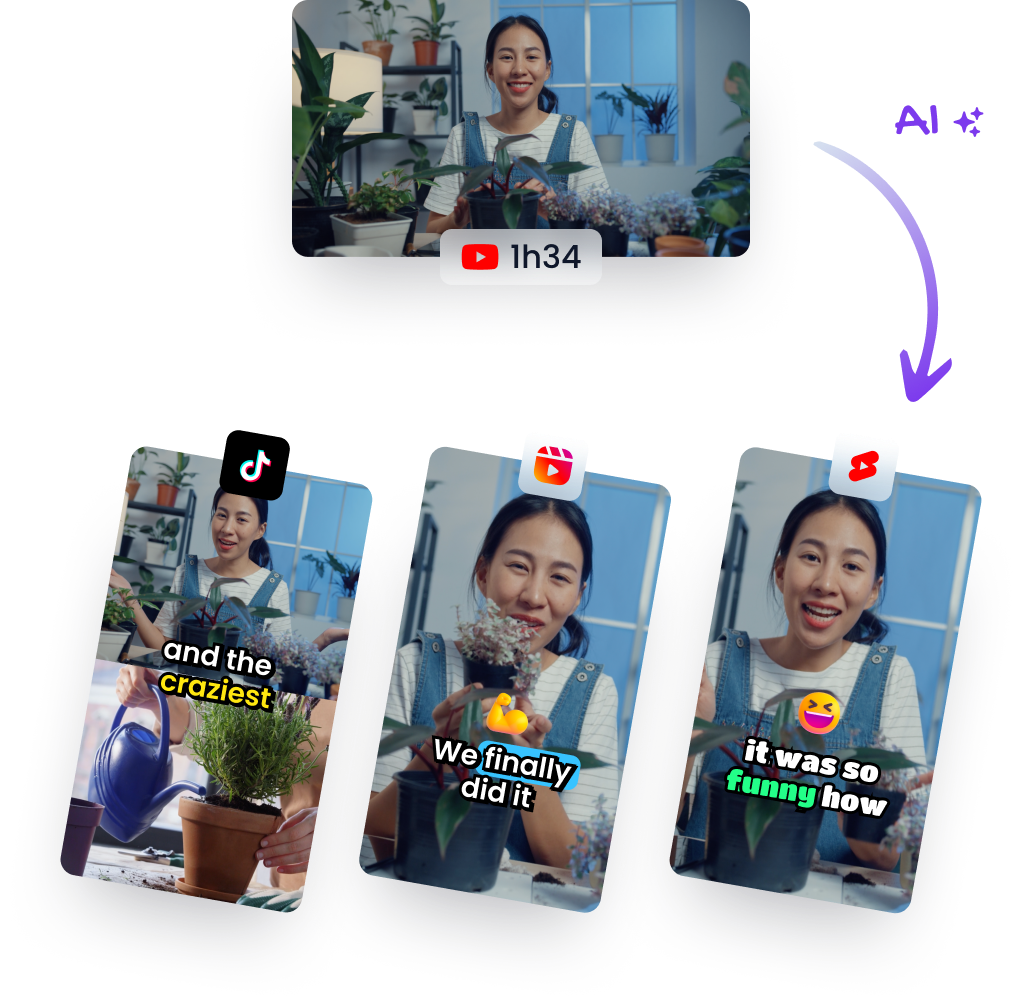
Some products go beyond extraction and move directly into repurposing. Klap's video transcript generator is one example of that broader workflow. It takes a YouTube link, generates transcript-based subtitles, and is designed around finding clip-worthy moments from long videos rather than stopping at raw text export.
That matters for creators because the transcript is rarely the end product. It's the input for everything after.
Here's a quick look at the kind of workflow serious creators want from one interface:
The trade-off to keep in mind
The downside isn't complexity. It's dependency. When you use a dedicated tool, you're trusting its transcript output enough to build content on top of it. That's usually fine for first drafts, internal repurposing, and subtitle generation. It still doesn't remove editorial review.
If you publish the transcript as-is, especially for SEO pages or accessibility-critical content, check names, terms, and context before it goes live.
From Text to Traffic Repurposing Your Transcript
The transcript itself isn't the win. The win is what it lets you ship next.

A lot of creators stop after extraction. They have the text file, maybe save it in a folder, then move on. That leaves most of the value untouched. The transcript becomes useful when you turn it into assets matched to how people discover and consume content.
A practical repurposing checklist
Start with these moves:
- Turn it into a blog post: Pull out the main argument, reorder spoken language into readable sections, and add subheadings that match search intent.
- Extract social snippets: Look for sharp one- or two-sentence ideas that stand alone as posts, carousels, or quote graphics.
- Write email copy: Use the transcript to draft a newsletter intro, lesson recap, or teaser for the full video.
- Build show notes or summaries: Great for interviews, podcasts, webinars, and educational channels.
- Mark short-form moments: Scan for hooks, objections, stories, and punchy examples that can become Shorts, Reels, or TikToks.
Raw transcripts are rarely publish-ready. Cleanup is part of the job, especially when background noise, technical terms, or misheard words affect how the text reads in public-facing content (Karasch on transcript cleanup challenges).
Edit for readability before distribution
Spoken language is not written language. Good video can become messy text if you leave every filler phrase, repetition, and tangent in place.
Before you publish or repurpose, do three cleanup passes:
- Accuracy pass for names, jargon, and obvious transcript errors
- Structure pass for headings, paragraph breaks, and order
- Channel pass for format-specific edits, since a blog post, LinkedIn post, and short clip caption shouldn't sound identical
If you want more ideas on turning one finished asset into many, this roundup of effective content repurposing strategies is a useful reference.
The creators who get the most reach from long-form video usually aren't making more from scratch. They're extracting more from what they already recorded.
Frequently Asked Questions
How do I improve transcript accuracy before I even transcribe?
Start at the recording stage. Use a clear mic, reduce room echo, avoid background music under dialogue, and ask speakers not to talk over each other. Clean source audio gives every method a better chance, whether you use YouTube, Google Docs, or an AI tool.
Can I transcribe private or unlisted YouTube videos?
Sometimes, but it depends on the method. Public watch-page transcripts are mainly useful for videos you can access normally in the browser. If the video is yours, YouTube Studio is usually the safer route. If you use a third-party tool, make sure the video is accessible to the workflow you're using or upload the source file directly if that option exists.
What's the best way to handle multiple speakers?
Use a tool that supports speaker labeling. That makes interviews, podcasts, and panel discussions much easier to edit and repurpose. If your method doesn't separate speakers, plan on manual cleanup. For conversational content, unlabeled transcript text gets confusing quickly.
If your goal isn't just to get text but to turn long videos into more usable content, Klap is built for that next step. You can start with a YouTube link, generate transcript-based subtitles, and turn longer recordings into social-ready clips without rebuilding the workflow by hand.