Video Transcript Generator: A Creator's Guide for 2026
Other
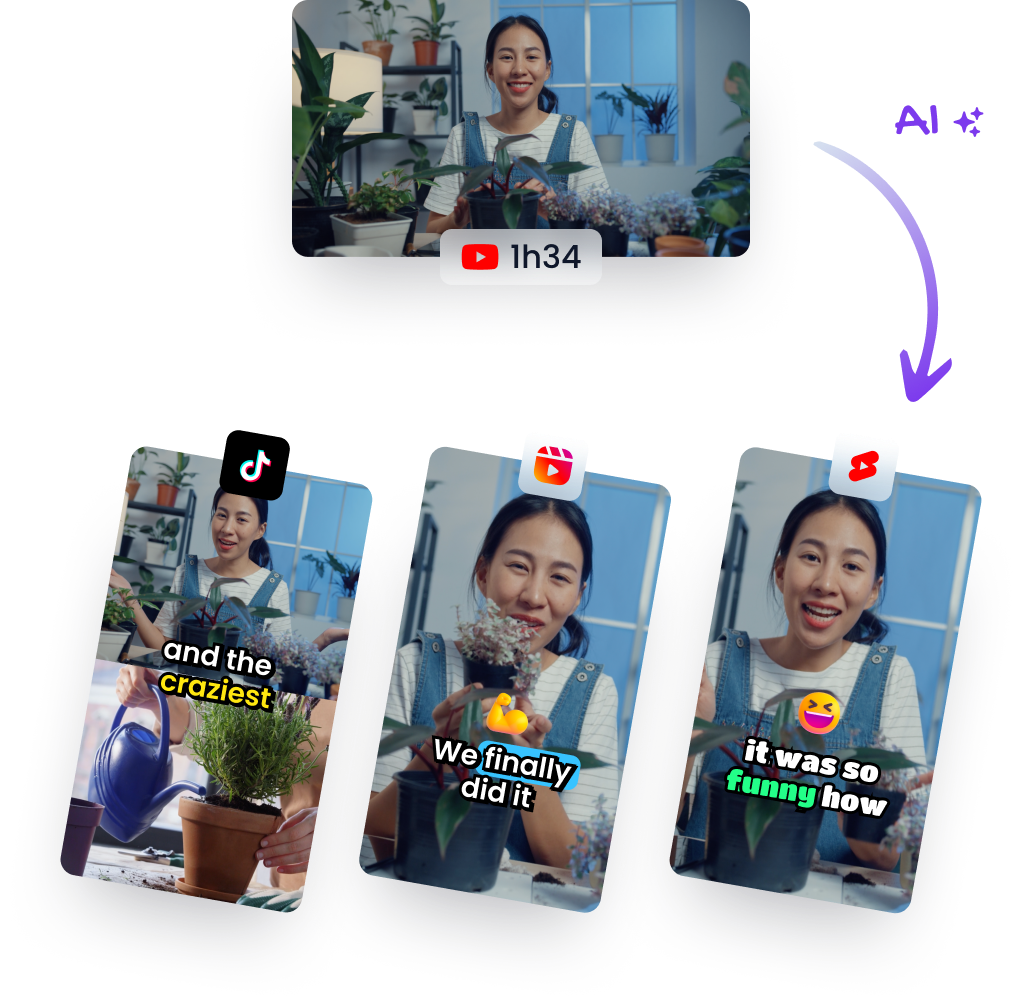
You've probably done this the hard way before. You upload a webinar, podcast, interview, or YouTube video, then spend far too long scrubbing the timeline to find one sharp quote, one clean teaching moment, or one clip-worthy hook. By the time you've paused, rewound, typed notes, and marked timestamps, the content that was supposed to create momentum has turned into admin work.
That's why a video transcript generator matters. Not because text files are exciting on their own, but because the transcript becomes the operating layer for everything that comes next. It gives you searchable language, editable structure, timestamped moments, and a fast way to turn one long recording into captions, clips, summaries, and posts.
The shift is simple. Stop treating transcription as documentation. Start treating it as the engine that powers repurposing.
Why Manual Transcription Is Holding Your Content Back
You finish recording a strong webinar. There are probably five to ten moments worth clipping, two answers that belong in your newsletter, and one quote that could anchor a LinkedIn post. If the only way to find them is rewatching the full recording, the bottleneck starts before editing.
Manual transcription slows content production because it keeps every reuse task tied to the timeline. You are not just typing words. You are hunting for phrasing, checking timestamps, replaying sections, and making judgment calls with no searchable reference. For creators and marketing teams publishing regularly, that turns one video into a backlog.
The Bottleneck Isn't Just Typing
The friction shows up in the same places every time:
- Finding highlights: A useful section is buried in a 45-minute recording, so someone has to scrub through it again to locate the exact start and end.
- Writing captions: Subtitle work becomes a second transcription pass instead of a formatting job.
- Turning long-form into short-form: Clips, posts, and article sections all depend on exact wording, which is hard to pull from memory.
- Handing work to a team: Editors, marketers, and clients can scan text in minutes. They cannot all afford to watch the same raw file.
According to Sonix's video transcription efficiency statistics, AI systems process content at 3–5× real-time speed, so a 1-hour video can be transcribed in about 12–20 minutes instead of 4–6 hours by hand. The same analysis found that 62% of professionals save more than four hours per week, which adds up quickly when transcription sits at the front of every publishing workflow.
That time savings matters because transcripts do more than document what was said. They create structure. Once the spoken words become searchable text, teams can sort by topic, spot strong hooks, mark clean quote boundaries, and hand useful sections straight into editing. That workflow is much closer to how modern AI content systems operate, especially in tools built on synchronized audio, text, and visual signals. See these insights on multimodal AI synchronization.
Practical rule: If your team has to replay the full video every time it needs one clip, one quote, or one caption block, the process will stay slow no matter how good the source content is.
Why the Transcript Matters After It's Generated
A transcript is the working asset that makes repurposing faster.
It gives editors a way to find complete thoughts instead of guessing clip boundaries from waveforms. It gives marketers exact language for posts, summaries, and email copy. It gives social teams a clean starting point for captions. It also gives AI tools something they can work with. A timestamped transcript is what makes video transcription useful for search, clipping, and reuse, rather than just turning speech into a text file.
Searchability also affects distribution. Transcribed videos are easier to index, easier to caption, and easier to repackage across channels. Better accessibility and clearer metadata usually lead to more chances for the content to get found and reused.
If you publish occasionally, manual transcription is annoying. If you publish every week, it blocks scale. Your best material stays trapped inside recordings until someone spends hours digging it out.
How Video Transcript Generators Actually Work
Most transcript tools feel simple on the surface. You upload a file, wait a bit, and get text. Underneath, the process is closer to a digital assembly line where each stage handles a different part of the job.
Here's the visual version of that pipeline:

The three core jobs under the hood
The first layer is automatic speech recognition, usually shortened to ASR. This is the system that listens to the audio and converts speech into text. It's the engine that tries to map sounds to words, sentence by sentence.
The second layer handles speaker segmentation. If two or more people are talking, the software tries to separate who said what. In interviews, podcasts, and webinars, that matters because one unbroken wall of text is hard to edit and even harder to repurpose into clips.
The third layer adds timestamps. These connect words back to exact moments in the video, which is what makes a transcript useful for editing rather than just reading. As noted in this overview of how video transcription works, timestamped text becomes much easier to search, cut, and reuse.
According to Manus on video transcript generator workflows, the core pipeline includes ASR, speaker segmentation, and timestamping. The same source notes that modern tools often support upload formats like MP4, MOV, AVI, WebM, and direct YouTube links, along with multilingual recognition.
Why input support matters more than people think
A lot of transcript quality problems start before the AI even “listens.” If the tool struggles with your source file, long-form workflow gets messy fast. Creators rarely work from one clean format only. You might have a local MP4 one day, a Zoom export the next, and a YouTube URL from an old livestream after that.
That's why broad ingestion support matters. A useful tool should accept the source material the way you already have it.
For teams building automated clip pipelines, this gets even more important. If your system has to coordinate speech, visuals, and timing together, transcript generation becomes part of a larger synchronization problem. This breakdown of insights on multimodal AI synchronization is useful if you want to understand why aligning vision, text, and audio is what makes downstream editing feel reliable instead of brittle.
Here's where the process becomes tangible in practice:
What the tool usually outputs
Once processing is done, most platforms don't just hand you plain text. They usually give you a working transcript package, such as:
- Editable transcript text: For correcting names, jargon, and phrasing.
- Timestamped lines: For captions, scene selection, and clip extraction.
- Speaker labels: Helpful for interviews, podcasts, and team recordings.
- Export formats: Commonly options like SRT or DOCX for reuse across tools.
That's the part many creators miss. A video transcript generator isn't just converting speech to text. It's structuring your video into something your editing and publishing workflow can use.
Key Factors That Determine Transcript Accuracy
A transcript can look usable at first glance and still break your repurposing workflow. One wrong product name can throw off quote pulls. Bad timestamps make clip selection slower. Missed speaker switches turn a clean interview into a messy caption review.
Accuracy matters because the transcript is doing more than creating text. It is the base layer for search, captions, highlights, and transforming video into content.
Clean audio changes everything

The biggest accuracy gains usually happen before upload. Recording quality sets the ceiling.
As noted in Choppity's review of video transcribers, production-grade tools can reach about 95%+ accuracy on clean audio, while some AI services advertise a wider 85 to 99% range depending on conditions. The same comparison also notes support for 100+ languages on some platforms. The takeaway is practical. Good models are widely available, but they still perform best when the source audio is clean and clearly spoken.
That matches real editing workflow. Audio from a close mic in a treated room often needs light cleanup. Audio from a laptop mic across the table can create enough transcript errors to slow captioning, clip selection, and content reuse.
Common failure points are easy to recognize:
- Background noise: HVAC hum, street noise, reverb, and keyboard clicks interfere with word recognition.
- Low vocal clarity: Quiet delivery, mumbling, or shifting away from the mic leads to dropped or distorted phrases.
- Cross-talk: Overlapping speech makes both transcription and speaker labeling less reliable.
- Fast delivery: Dense pacing gives the model less time to separate words and sentences correctly.
Better transcripts start at the microphone, not in the editor.
Speaker traits and content complexity
Speech patterns change the cleanup workload. Accents, pacing, and pronunciation do not automatically cause bad transcripts, but they do increase the chance of near-miss substitutions. That matters if you publish interviews, podcasts, or customer stories where exact wording is part of the value.
Specialized content raises the stakes further. A casual conversation is easier to transcribe than a webinar packed with acronyms, product names, industry jargon, and live Q&A. In those cases, the issue is often vocabulary fit, not a broken tool.
That distinction matters for repurposing. If the engine misses branded terms or technical language, every downstream asset suffers. Clips get mislabeled. Pull quotes need manual fixes. Blog drafts built from the transcript start with avoidable errors.
FactorWhat it affectsTypical symptom
Audio noise
Word recognition
Wrong words, skipped phrases
Multiple speakers
Attribution and segmentation
Mixed speaker labels
Accent variability
Phonetic matching
Near-miss substitutions
Technical jargon
Vocabulary confidence
Brand names and terms spelled wrong
Language coverage affects more than transcription
Teams publishing across regions need more than English support. Language coverage influences caption turnaround, subtitle accuracy, and how easily one recording can feed multiple channels.
Breadth alone is not enough. A platform may support many languages but still perform unevenly across accents, dialects, and industry terminology. The practical test is simple. Check whether the transcript is accurate enough to turn into captions, clips, summaries, and written content without heavy manual repair.
That is the benchmark. A good transcript does not just read well. It gives your editing workflow reliable raw material.
Unlocking Your Content's Potential with Transcripts
A transcript is easiest to value when you follow one piece of content through its second life.
Take a long interview. On publishing day, it looks like one asset: one YouTube upload, one podcast episode, one webinar replay. After transcription, it stops being one thing. It becomes a searchable library of arguments, quotes, stories, objections, examples, and clean clip candidates.

The transcript becomes your roadmap
Start with searchability. A spoken video is hard for a team to scan quickly. A transcript is easy to skim, search, annotate, and mine for usable sections. That's what makes it powerful for SEO and editorial planning. You can pull recurring themes, identify exact phrasing, and turn spoken explanations into indexable page content.
Then there's accessibility. Captions help people follow along when they can't listen with sound, and transcripts make the material easier to understand for people who prefer reading or need text alternatives. This is one of those improvements that helps both audience experience and production efficiency at the same time.
The bigger win is repurposing. Once the language is visible, a creator or editor can spot assets inside the source material:
- A strong opening answer becomes a short-form clip.
- A concise explanation becomes a blog subsection.
- A sharp quote becomes a social post.
- A sequence of related points becomes an email or carousel draft.
One recording can feed several outputs
Here's a practical way this works in a real content workflow.
An hour-long interview gets transcribed. The marketing team searches the transcript for terms tied to audience pain points. They find three sections where the guest says something concrete, not generic. One becomes a vertical clip. Another becomes a paragraph in a blog post. A third becomes captioned social text and a newsletter hook.
Nobody had to watch the entire interview again just to find that material.
Working principle: The transcript isn't a copy of the video. It's the index to everything valuable inside it.
That's also why transcript-led workflows outperform “edit first, document later” approaches. Editing from memory usually favors obvious moments. Editing from a transcript lets you find moments that are strong because of what was said, not just how exciting they sounded live.
For a broader take on transforming video into content, this guide on transforming video into content is a useful companion read because it frames transcription as the bridge between raw footage and reusable content formats.
Better reuse starts with better selection
A lot of short-form content underperforms because the clip was chosen visually, not editorially. Someone grabs a segment that “looks okay,” but the spoken idea isn't self-contained. The clip starts too late, ends too early, or lacks a clear payoff.
A transcript helps fix that. You can identify where the thought begins, where it sharpens, and where it resolves. That's what makes clips feel complete.
It also improves review. Instead of sending teammates rough cuts only, you can share the exact transcript section behind the clip. That makes feedback clearer and faster because everyone is reacting to the wording, not just the timeline.
Best Practices for Improving Transcript Quality
If you want better transcripts, don't wait until the export screen. Most quality gains happen before recording starts, and the rest come from disciplined cleanup right after generation.
Before recording
The easiest wins are simple production habits:
- Use a dedicated microphone: Even a modest external mic usually gives cleaner speech than a laptop mic.
- Control the room: Hard surfaces, echo, and ambient noise create avoidable transcription errors.
- Separate speakers clearly: On interviews and panels, ask guests not to talk over each other.
- Brief people on names and jargon: If your discussion includes brand terms, product names, or acronyms, collect the correct spellings early.
- Keep mic distance consistent: Volume swings often produce inconsistent recognition.
These steps reduce correction work later. They also improve clip quality because clearer audio helps both captions and viewer retention.
After generation
Post-processing is where a decent transcript becomes a usable one. Open the transcript editor and fix the errors that will keep repeating. Names, niche vocabulary, and product terms are usually the first things to clean.
A good editing pass should focus on:
- Correcting proper nouns so your transcript is trustworthy.
- Fixing repeated mishears with find-and-replace where possible.
- Checking speaker labels if more than one person appears.
- Cleaning punctuation so text can double as captions or source material.
- Trimming filler when the transcript will feed blog, summary, or clip workflows.
If you're turning transcripts into polished written assets, the final pass may also involve making spoken language read more naturally. For teams thinking about readability after AI generation, this article on humaniser un texte chat gpt is helpful because it focuses on smoothing robotic wording into more natural prose.
For a practical walkthrough of transcript structure itself, Klap's guide on how to write a transcript is a useful reference.
Common transcript file formats
FormatPrimary UseKey Feature
SRT
Video captions and subtitles
Timestamped subtitle format supported by many platforms
VTT
Web video captions
Similar to SRT, commonly used for web players
TXT
Raw transcript review
Plain text, easy to scan and edit
DOCX
Editorial reuse
Better for comments, formatting, and collaborative editing
What works best depends on the job. If you're publishing captions, use a subtitle format. If you're mining the transcript for blog sections or short-form hooks, plain text or DOCX is usually easier to work with.
Choosing the Right Video Transcript Solution
Choosing a transcript tool gets easier when you stop asking, “Can it make text from audio?” Most tools can. The more useful question is, “What happens after the text exists?”
That's where the serious differences show up. Some platforms generate a transcript and stop there. Others treat the transcript as the first layer of an editing and publishing workflow.

What to evaluate first
Start with the basics that affect daily use:
- Accuracy on your type of content: Clean interviews, noisy podcasts, webinars, and multilingual recordings all stress tools differently.
- Upload flexibility: If your workflow includes local files and links, broad source support matters.
- Editing experience: You need a transcript editor that makes corrections quick, not tedious.
- Language handling: International teams need dependable multilingual support.
- Security and permissions: Important if you're transcribing internal meetings, client recordings, or sensitive material.
Pricing also matters, but pricing alone can be misleading. A cheaper tool that forces extensive manual cleanup often costs more in labor than a higher-priced option with better editing and export flow.
The deciding factor is workflow fit
Creators and teams should get more demanding.
If your only goal is archiving spoken content, a basic transcript utility may be enough. If your goal is content repurposing, you need a solution that does something useful with the transcript after generation. That could mean transcript-based trimming, clip selection, subtitle creation, or direct handoff into publishing workflows.
For example, some tools focus on transcript generation and editing. Others connect transcription to broader caption workflows, which is where a guide like Klap's overview of closed captions software can help clarify what to compare.
And if your team repurposes long-form video into short-form social content, you may want a platform where transcription feeds clip creation directly. Klap is one example of that type of workflow. It lets users upload a file or YouTube link, generate transcript-based editing context, identify engaging sections, and prepare captioned short clips from long-form source material.
Pick the tool that matches the job after transcription, not just the upload screen before it.
The right video transcript generator isn't the one that only returns text. It's the one that reduces manual effort across the entire path from recording to publishable assets.
If your real goal is to turn long videos into usable short-form content, not just generate a transcript, Klap is worth a look. It uses the uploaded video as source material for transcript-driven clip discovery, reframing, captions, and export, which makes it a practical option for creators and marketers who want new content from existing recordings.