What Are Mashups Your Ultimate Guide to Remix Content
Other
Ever heard a DJ seamlessly blend the vocals from a pop song over a classic rock beat? That’s a mashup in its purest form. It’s the art of taking separate, existing pieces of content and combining them into something completely new.
Think of it as a digital collage. You're not starting from a blank canvas; you're reinterpreting and recombining what's already out there to create a fresh experience.
What Are Mashups In Simple Terms
At its heart, a mashup is simply a new creation made from two or more different sources. The final piece gives you a new perspective, a different laugh, or a useful tool that you couldn't get from the original parts alone.
This idea has exploded far beyond the world of music. Mashups are now a core part of modern content creation, powering everything from viral video clips to the apps on your phone. It’s a total shift from creating everything from scratch to building on the work of others in clever, inventive ways.
The Three Main Types of Mashups
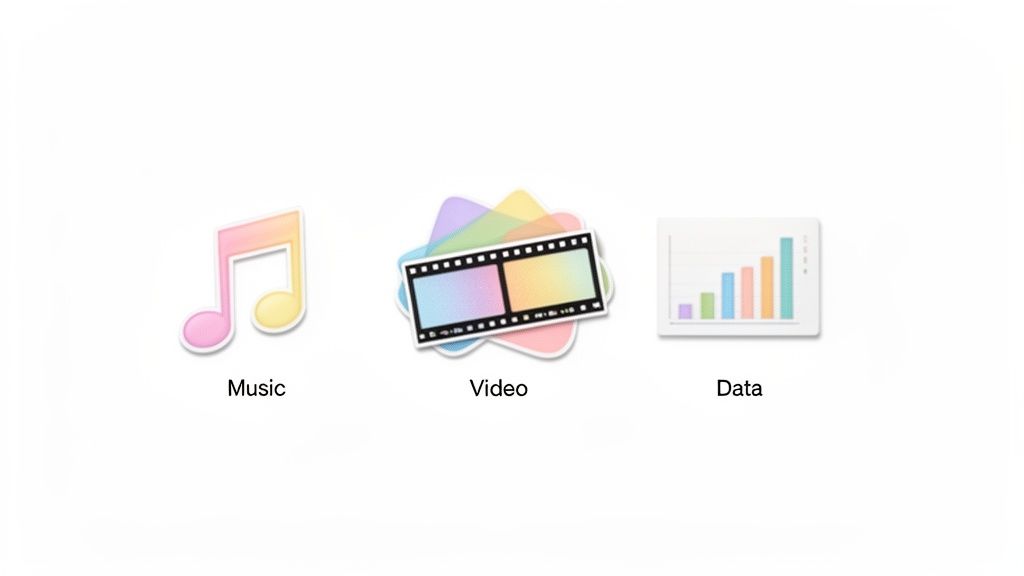
While you can mix and match almost anything, most mashups fit into one of three main buckets. Each one serves a different purpose, whether it's for pure entertainment, sharing information, or providing a useful service.
A mashup transforms passive consumption into active creation. It reinterprets existing media, giving it a second life and a new voice in a different context.
Getting a handle on these categories helps you see just how common—and powerful—mashups have become. They aren't just a fun hobby; they're a huge part of how we communicate online.
Let's quickly compare the three main categories to see how they differ.
The Three Core Types of Mashups at a Glance
Mashup TypeWhat It CombinesCommon Examples
Music
Vocals from one song + instrumentals from another
DJ sets, bootleg remixes, YouTube audio swaps
Video
Clips from different movies, TV shows, or online videos
Parody trailers, supercuts, "react" videos
Data/Web
Information from multiple websites or APIs
Real estate sites with Google Maps, price comparison tools
As you can see, each type takes a different approach to create a unique kind of value.
Here's a closer look at what defines each of these three pillars of the mashup world:
- Music Mashups: This is where it all started for many of us. An artist takes the vocal track of one song and lays it over the instrumental of a completely different one. The magic happens when the two blend together to create a track that feels both familiar and totally original.
- Video Mashups: These are all about storytelling through editing. Creators stitch together clips from various sources—like movies, news reports, or YouTube videos—to build a new narrative. Think of those hilarious movie trailers recut to be a different genre or the viral "supercut" clips that dominate social media.
- Data/Web Mashups: This is the most "functional" type. A data mashup pulls information from multiple online sources and presents it in a single, unified interface. A classic example is a real estate website that overlays property listings from its own database onto an interactive map from a service like Google Maps.
The Evolution of Mashups From Music to Viral Videos
Long before viral videos took over our feeds, mashups were born in the world of sound. The whole idea started as an underground movement, with DJs and music producers who realized they could create something entirely new by blending separate tracks together. This early remix culture was a creative rebellion, and it laid the groundwork for the content we see today.
The tipping point came in 2004 with DJ Danger Mouse's The Grey Album. He famously mixed acapella vocals from Jay-Z's The Black Album with instrumentals from The Beatles' White Album. Legal threats immediately pushed it underground, but it was too late—the album became a phenomenon, racking up over 100,000 downloads in its first week. This one project proved a remix could be just as powerful as an original and launched the idea of the mashup into the mainstream, sparking a wave of new creators and online communities. You can read more about the social trends that shaped this movement.
From Audio Remixes to Visual Gold
That same spirit is alive and well today, but it’s found an even bigger stage: short-form video. The complex audio software and technical skills once needed to create a remix have been replaced by something we all have in our pockets—a smartphone.
This change has been massive. The DNA of today's viral content is pure remix. The tools have just become ridiculously easy to use.
Whether it’s a DJ blending two songs or a TikTok creator adding a trending sound to their video, the core idea is the same. It's all about recontextualizing existing content to create a fresh experience.
This jump from niche audio projects to mainstream video was powered by social platforms that were practically built for remixing.
The Rise of the Remix on Social Media
Platforms like TikTok, Instagram Reels, and YouTube Shorts are basically giant mashup factories. They give creators the two things that made music remixes explode: a massive library of source material (like trending sounds and video formats) and simple tools to combine it all.
This has completely changed the game, turning content creation from a solo act into a huge, ongoing conversation. A creator isn't just posting a video into a void; they're adding their spin to a shared sound or visual, joining a larger trend.
Think of it like this:
- Then: A DJ loops a pop vocal over a classic funk beat.
- Now: A creator acts out a funny skit using dialogue from a hit movie.
- Then: An artist painstakingly samples 300 songs to build a new album.
- Now: A user stitches their reaction onto someone else's video in seconds.
What this all shows is that mashups aren't just a fleeting trend. They represent a fundamental shift in how we create and communicate online, effectively turning every single user into a potential remix artist.
The 3 Main Types of Mashups You’ll See Everywhere
While mashups got their start with music, the idea of blending different things together to create something new has completely taken over the digital world. What started as a niche art form has evolved into three major categories you'll run into every day: music, video, and data.
Getting a handle on each one shows you just how powerful this concept is for entertainment, sharing information, and even building the apps we rely on.
This flowchart maps out the journey, from early audio experiments to the viral videos that now dominate social media.
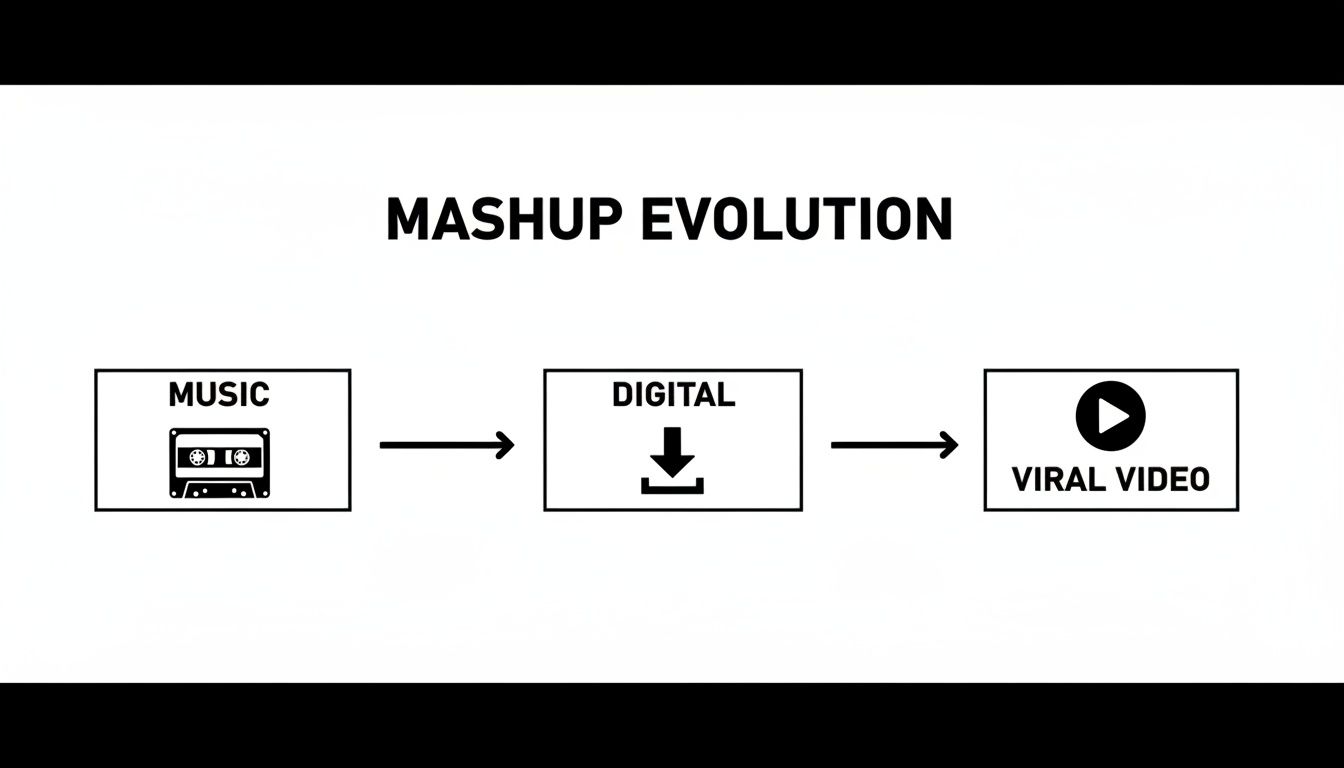
As technology got better and cheaper, the focus naturally shifted from cassette tapes to digital files, and finally to the video clips that define today’s internet culture.
Music Mashups: The Original Sonic Collage
Music mashups are the classic example and the place where it all began. The formula is simple: take the vocals from one song and lay them over the instrumentals of another. The magic happens when the new track feels both totally unexpected and oddly familiar.
Artists like Girl Talk took this to the extreme, building entire albums like All Day by layering hundreds of samples from totally different genres and decades. It’s like a sonic puzzle where the pieces are pulled from every corner of music history, proving that mixing old parts can create something that is truly its own work of art.
Video Mashups: Telling New Stories with Old Clips
Video mashups run with this same idea of re-contextualizing content, but apply it to moving pictures. This can be anything from a fan-made movie trailer that completely changes a film's genre—like turning a slasher flick into a rom-com—to a "supercut" that strings together every time a character says their catchphrase.
A great video mashup doesn’t just rearrange clips; it tells a new story or creates an entirely different feeling. It finds a hidden link between sources that nobody saw before and puts it on display.
This is also the category that fuels most of what you see on social media. By the early 2010s, video mashups were exploding on YouTube. Auto-tuned remixes like the "Bed Intruder Song" took a local news segment and remixed it into a viral music video that racked up over 150 million views. It was a perfect storm showing how mixing media could create a cultural supernova. You can see how this trend continues to shape social media trends and their impact today.
This strategy is now a core part of modern content creation, where repurposing longer videos into short, snappy clips is a go-to method for growing an audience.
Data Mashups: Creating Value with Functional Blends
The third type, the data mashup (or web mashup), is less about being entertaining and all about being useful. These tools combine data from different online sources into a single, easy-to-use interface to offer something brand new. A perfect example you've probably used is a real estate app like Zillow.
Zillow works its magic by mashing two totally separate data sources together to create something way more useful than either one could be on its own:
- Source 1: Its private database of property listings with photos, details, and prices.
- Source 2: Google Maps' public API, which provides all the geographic and street-level data.
By combining these, Zillow lets you browse homes for sale directly on an interactive map. This practical approach shows the mashup concept isn't just for laughs or creative expression; it’s a powerful way to build tools that solve real problems.
How Mashups Fuel Today's Creator Economy
While mashups used to be all about blending different artists' work, today’s creators have flipped the script. They're remixing their own content, and it's turned the mashup from a creative hobby into a core business strategy for growing an audience.
It’s no longer just about mixing songs. It's about strategically slicing and dicing your long-form content.
Imagine you just finished recording an hour-long podcast or a detailed webinar. That single file is packed with value—surprising stats, powerful quotes, funny moments, and genuinely helpful tips. Leaving it as just one long video is like owning a gold mine but only digging in a single spot.
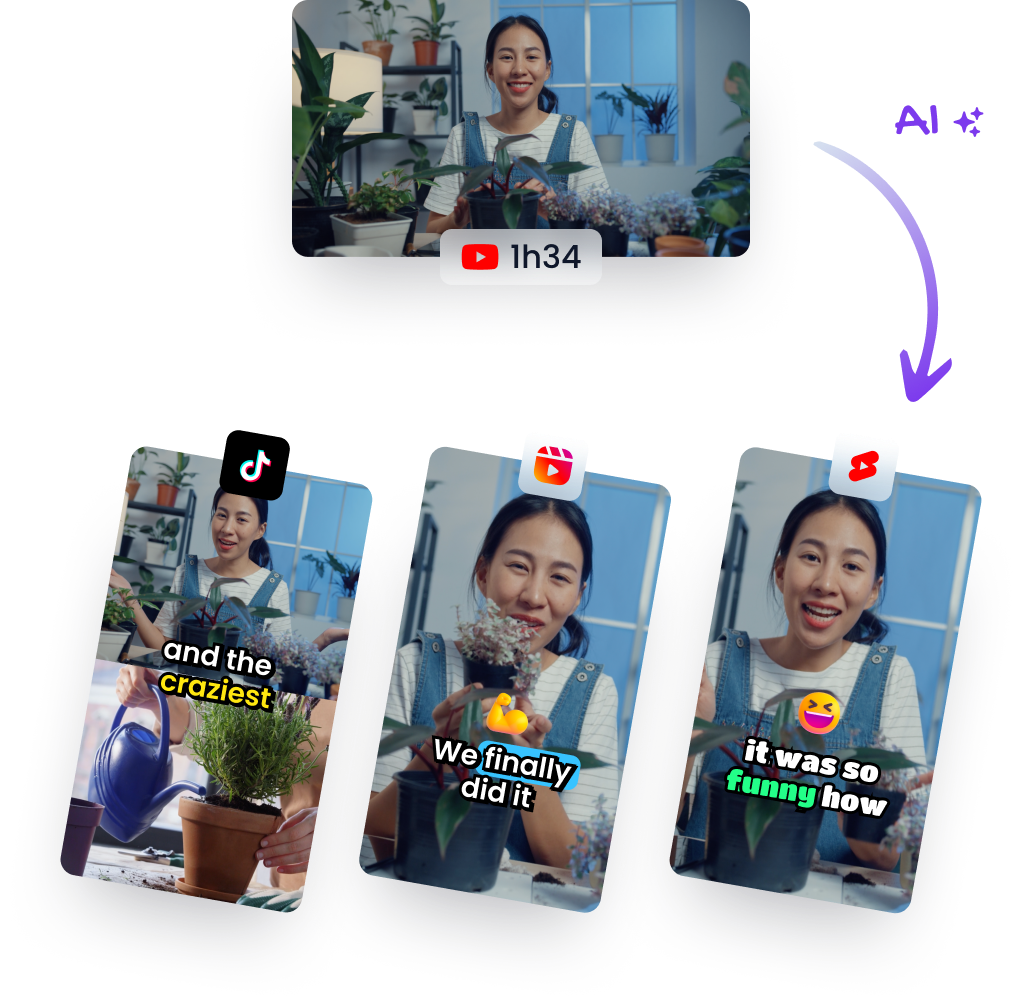
The modern creator’s take on a mashup is to break that long-form asset down into dozens of short, punchy clips for social media. This "remix" approach is what's fueling the entire creator economy.
The Power of Content Repurposing
This strategy isn't just about saving time; it's about multiplying your impact. A single long video can be remixed into a dozen or more short clips, each one perfectly tailored for platforms like TikTok, Instagram Reels, and YouTube Shorts. The data shows this isn't just a nice-to-have—it's a non-negotiable strategy for growth.
Repurposing content this way can boost your reach by over 300% compared to just posting the original video alone. These short clips are designed for discovery, grabbing the attention of new audiences who would never sit through a 60-minute video from a creator they don't know.
Actionable Insight: Think of your long-form content as the main course. The short-form clips are the appetizers, giving people a taste of what you offer and making them want to come back for the full meal.
This method turns your existing content library into a powerful lead-generation machine. Each short clip acts as a mini-advertisement for your brand, driving traffic back to your main channels, products, or services without feeling like a hard sell. You can learn more about how to monetize this strategy in our guides on content monetization.
Automating the Mashup Process with AI
Not long ago, creating these clips was a monumental task. A creator could easily spend a full day finding the best moments, trimming them, adding captions, and reframing for vertical screens—all for just a handful of shorts.
Today, AI tools have completely changed the game.
Modern AI platforms now automate this entire workflow. Here's a quick look at how it works:
- Analyze and Identify: The AI scans your long video, using topic detection and sentiment analysis to pinpoint the most engaging or "viral" moments for you.
- Edit and Reframe: It then intelligently trims these segments into short clips, reframes the video to a vertical 9:16 aspect ratio, and adds dynamic, perfectly-timed captions.
- Generate at Scale: Instead of one editor spending hours, the AI can produce a dozen polished clips in just minutes, ready to schedule across all your social channels.
This automated approach lets you maintain a consistent posting schedule, which is absolutely critical for platforms driven by algorithms. By turning your content library into a steady stream of high-quality clips, you can finally get back to what you do best—creating your next great piece of long-form content, knowing your marketing is running on autopilot.
A Practical Guide to Creating Your Own Video Mashups
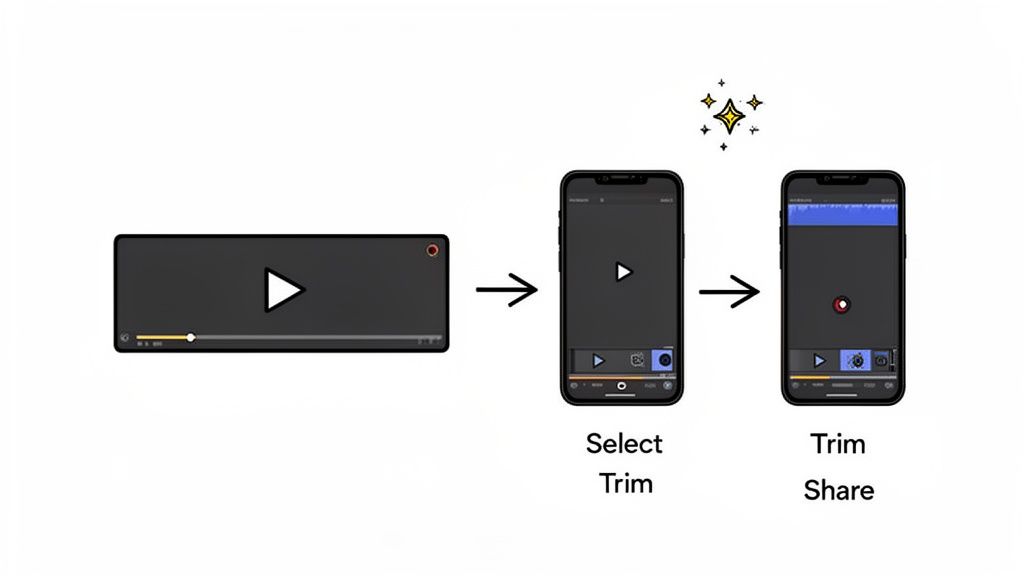
Ready to start slicing up your long-form content into killer mashups? Getting started is way easier than you think. The old approach meant losing hours to manual editing, but the new way uses smart tools to do all the heavy lifting for you in just a few minutes.
Traditionally, this was a massive time-suck. You’d have to sit and re-watch your entire video, manually hunt for interesting moments, and then painstakingly trim every single segment. After all that, you still had to add captions and reframe the video for different platforms. It could take a full day just to get a handful of clips.
Actionable Insight: The biggest shift in creating video mashups isn't just better software; it's the move from manual labor to automated intelligence. This allows creators to focus on strategy and consistency rather than getting stuck in the editing weeds.
Modern AI-powered platforms have completely flipped this on its head. Instead of guessing which parts of your video might go viral, these tools analyze your content to automatically find the most compelling moments. It’s a data-driven process that beats guesswork every time.
The Old Way vs The New Way
Let's put the two methods side-by-side. The difference in effort and output is pretty dramatic.
FeatureThe Old Way (Manual Editing)The New Way (AI-Powered)
Clip Identification
Manually scrubbing through hours of footage.
AI automatically detects viral-worthy moments.
Editing Time
Hours or even a full day for a few clips.
A dozen polished clips generated in minutes.
Captioning
Tedious, manual transcription and timing.
Automatic, perfectly-timed captions added instantly.
Reframing
Manually adjusting shots for 9:16 mobile view.
AI auto-reframes to keep the subject in focus.
Your Blueprint for Creating Viral Clips
With the right tools, you can turn this into a simple, repeatable process. Here’s a quick blueprint for turning your long videos into a steady stream of high-impact mashups.
- Select Your Best Content: Start with a high-value video like a podcast, webinar, or interview. The more engaging moments it has, the better your raw material. For a deep dive on this, check out our guide on how to create YouTube Shorts from an existing video.
- Craft a Compelling Hook: The first 3 seconds are everything. Let your AI tool pinpoint moments that kick off with a surprising question, a bold statement, or a problem your audience relates to. This is what stops the scroll.
- Optimize for Each Platform: The core clip might stay the same, but you should tailor your captions and descriptions for each platform. What kills it on LinkedIn (professional insights) probably needs a different spin for TikTok (entertainment and trends). AI tools make it easy to generate and tweak these variations on the fly.
When you follow this process, you stop seeing your content archive as just a library of old work. Instead, it becomes a goldmine of evergreen assets you can use for future growth.
Navigating The Legal Side of Remixing Content
Let’s be real. When you start blending other people's stuff into your work—like movie clips or hit songs—you're walking into a legal minefield. It's essential to get your head around three big ideas: copyright, fair use, and the public domain.
Think of copyright as an automatic "hands-off" sign on almost every creative work out there. To use it, you generally need permission. Fair use is the exception; it’s a legal argument that allows for limited use in specific cases like commentary, criticism, or parody. Then you have the public domain, which is a treasure trove of works with expired copyrights, free for anyone to use.
Actionable Insight: The line between transformative fair use and copyright infringement is notoriously blurry. Relying on fair use is a gamble because it's a defense you use in court, not a permission slip you get in advance.
The Safest Remixing Strategy
The legal side of mashups can get messy, fast. Copyright holders take this stuff seriously, and if you've ever seen a DMCA takedown notice, you know they don't play around.
That’s why the smartest, safest, and most headache-free strategy is to remix your own content.
When you repurpose your long-form videos—like podcasts, webinars, or interviews—you completely sidestep the copyright nightmare. You own all the source material, giving you 100% legal freedom to chop it up, remix it, and share it anywhere you want. It’s all the creative fun of a mashup with zero risk.
Your Top Mashup Questions, Answered
Okay, so you get the concept of mashups. But how do you actually do it without getting bogged down?
Let's dig into the practical questions that pop up once you're ready to start remixing and repurposing your own content.
So, what kind of long-form videos make the best short clips? Look for the gold in your dynamic conversations and high-value moments. Think interviews, podcasts, educational webinars, or even product demos.
The goal is to find those standalone "nuggets" of wisdom or entertainment that can shine on their own. This is where AI really flexes its muscles, quickly scanning hours of footage to find moments with huge engagement potential, like when a guest drops a surprising statistic.
Which Creation Method Is Right for Me?
The big question: should you edit by hand or let an AI do the heavy lifting? It really boils down to what you value more—total creative control or massive time savings.
Manual creation gives you granular control over every single cut, but it's incredibly time-intensive. Let's be real, most creators don't have that kind of time.
For anyone trying to post consistently, AI tools are a total game-changer. An AI platform can take an hour-long podcast, analyze it, and spit out a dozen polished, ready-to-post clips in minutes—captions and all. This frees you up to think about strategy instead of getting lost in tedious editing tasks.
How to Measure Clip Success Effectively
Views are great, but they don't tell the whole story. To really know if your short-form clips are working, you need to look a little deeper at the KPIs that actually matter.
- Average Watch Time: Are people sticking around for your entire point? On TikTok, a high average watch time can push your video to a wider audience.
- Engagement Rate: This is all about the likes, comments, and shares. High engagement signals to the algorithm that your content is valuable.
- Saves: When someone saves your video, it's the ultimate compliment. It means your content is so valuable they want to come back to it later. A high save rate is a powerful signal of quality.
Actionable Insight: Track these metrics—along with follower growth and clicks on your profile link—to get a much clearer picture of how your clips are helping you hit your larger goals.
When you're repurposing content for mashups, a solid grasp of copyright law is non-negotiable, especially in commercial settings. It helps you steer clear of messy situations like copyright infringement on Amazon. This is exactly why sticking to your own original content is always the safest and most effective path forward.
Ready to turn your long videos into a stream of viral shorts? Klap uses AI to identify the best moments in your content and transforms them into ready-to-post clips in minutes. Try it for yourself at https://klap.app.