Video Transcription Software: A Creator’s Guide to 2026
Other
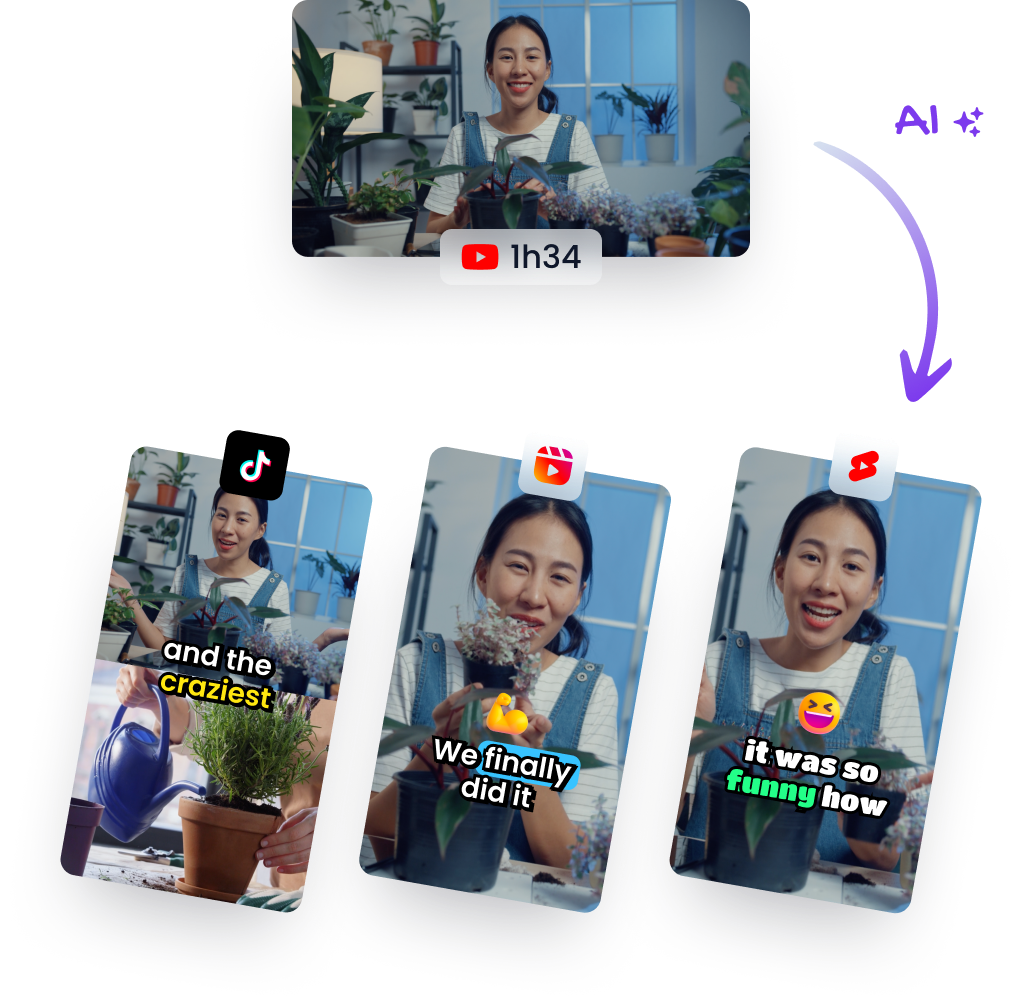
You've got the finished video. The webinar is exported, the podcast is cleaned up, and the YouTube upload is already pulling views. What's still sitting in front of you is the annoying part, turning one long recording into a pile of publishable shorts without spending half the week scrubbing timelines and guessing where the good moments are.
That's where video transcription software earns its keep. The transcript isn't the end product for creators and marketers, it's the map that tells you where the hooks are, where the quote starts, who said what, and which section is worth turning into a clip, a caption, or a blog excerpt. In practice, the best tools aren't just text generators, they're the first filter in a clipping pipeline.
The Creator Problem Most Transcription Tools Ignore
A creator finishes a 45-minute interview, opens the file, and already knows the truth. There are probably ten usable short clips in there, maybe more, but nobody wants to hunt for them by dragging a playhead back and forth across a dense timeline. The recording feels valuable, yet it's still trapped in long-form shape.
The transcript is the bridge many teams are really missing. A readable, timestamped record turns a long file into something you can scan, search, quote, trim, and assign. Without that bridge, repurposing turns into manual archaeology, which is exactly why so many “we should clip this” conversations stall after the first enthusiastic edit.
Why the transcript matters more than the raw timeline
Editors can always scrub through footage, but that's a slow way to find a sharp opening line or a clean reaction beat. A transcript gives you a text surface where the valuable moments are easier to spot, especially when you're working across podcasts, webinars, interviews, and creator-led explainers.
That matters because the primary output teams want isn't a transcript file. It's short-form content that can go live on TikTok, Reels, or Shorts without a full manual review of the master recording.
Practical rule: if a transcript doesn't help you find clip candidates faster, it's not solving the creator's problem, it's just adding another file to the folder.
This is why the accuracy conversation gets overstated so often. A transcript can look “good” in the abstract and still be weak for repurposing if it doesn't surface the turn of phrase, the speaker boundary, or the timestamp that helps an editor ship faster.
How Video Transcription Software Actually Works

The cleanest way to understand the process is to follow what happens to a real video file after upload. The software is not just converting sound into words in one pass. It is preparing the audio, recognizing speech, attaching structure, and then packaging the result so the transcript can feed a clipping workflow instead of sitting in a folder.
The pipeline behind the polished interface
First, the software extracts the audio track from the video file. That step sounds simple, but it matters because the transcription engine listens to sound, not pixels. Good systems then run noise reduction, volume normalization, echo cancellation, and multi-codec handling before recognition starts, because compressed video can damage audio quality enough to make speech harder to parse video-aware preprocessing guidance.
After that comes automatic speech recognition, the part many users mean when they say “the transcription.” The better tools then align the text to timestamps and add speaker diarization, so the transcript shows not just what was said, but when and by whom speaker identification guide. That structure is what makes the output useful for subtitles, searchable archives, hook spotting, and editing work, not just reading.
The final step is export. A working transcript is usually not plain text alone, it is a structured file with timecodes and sometimes subtitle formats like SRT or VTT. That format matters because editors, caption tools, and publishing workflows can use it.

Klap's interface shows why this matters in practice. A transcript that stays tied to timestamps and speaker turns can move straight into clip selection, caption cleanup, and short-form exports without forcing someone to rebuild the same context by hand.
Audio quality matters more than video quality. A crisp camera with rough sound still gives you a rough transcript.
Accuracy Numbers and What They Actually Mean
The most common marketing number in this category is “accuracy,” and the number only makes sense if you know the audio conditions behind it. For clear audio, expert sources commonly report 95 to 99% transcription accuracy in top-tier AI systems, with support for dozens of languages and export into SRT/VTT subtitle formats accuracy and feature overview. That sounds reassuring until you test the same tool on a real interview with overlap and background noise.
What breaks a transcript in real creator workflows
Crosstalk is one of the fastest ways to lower the quality of a transcript, because speaker identification works best when voices are distinct and not talking over each other. Fast speech and mid-sentence language switching can also throw off the model, especially when the user doesn't select the right language up front. The tool may still produce text, but the output is harder to trust for clipping and captioning.
That is why headline accuracy numbers can be misleading. A transcript that looks slightly less polished can still be more useful if it preserves clean timestamps and speaker turns. For creators, that downstream usability matters more than a vanity score in a product page.
What matters in practiceWhy it affects short-form output
Clean timestamps
Makes it faster to find the exact segment worth clipping
Speaker labels
Helps you isolate strong quotes from interviews and podcasts
Correct language selection
Improves results when accents or mixed-language sections are involved
Subtitle export
Speeds up captions and publishing handoff
The broader operational point is simple. If the transcript is going to feed clip selection, then the question is not just whether the words are close enough. It's whether the output helps an editor identify the hook, separate the voices, and move the segment into a publishable format without re-listening to the whole file.
Matching the Tool to the Job
A YouTuber, a marketing team, and a podcaster all want transcripts, but they don't want the same thing from them. The creator turning a 30-minute upload into shorts cares about segment detection and fast subtitle generation. The marketing team wants searchable webinar text for repurposing and SEO. The podcaster wants speaker separation, quotes, and language support for social posts.
Use Case vs Required Transcription FeaturesPrimary Use CaseMust-Have FeaturesNice-to-Have Features
YouTube to Shorts
Long-form uploads turned into vertical clips
Timestamped transcript, clip-friendly editing, subtitle export
Speaker labels, batch processing
Webinar SEO and captions
Marketing content and accessibility
SRT/VTT export, searchable text, reliable timestamps
Multi-language support, summaries
Podcast quote mining
Social posts and highlight extraction
Speaker diarization, good accuracy on overlapping dialogue, editable transcript
Chapter markers, action items
What to prioritize first
For short-form creators, speaker labels matter only if they help you isolate a quote fast enough to turn into a clip. For webinar teams, subtitle export and clean timestamps usually beat fancy extras. For podcasters, language coverage and diarization can matter more than a perfect-looking transcript because the workflow starts with quote selection.
A useful way to evaluate tools is to ask what job they're doing after the transcript appears. If the tool ends at plain text, you're still doing most of the work by hand. If it helps you move from transcript to clip, captions, or post draft, it's solving a bigger part of the workflow.
The transcription market is also no longer a side pocket of software. Business Research Insights projects online audio and video transcription services at USD 0.83 billion in 2026, while one industry roundup estimates the broader global transcription services market at USD 2.12 billion in 2022 rising to USD 4.09 billion by 2030 at a 8.6% CAGR market sizing projection. That growth reflects a shift from “nice-to-have note taking” to infrastructure for content operations.
From Long Video to Ten Shorts in One Workflow
The fastest way to judge transcription software is to watch what happens after upload. A 45-minute podcast goes in, the system scans for strong moments, and the team gets a set of candidate clips instead of a single wall of text. That's the workflow creators need.
In a repurposing setup, the transcript drives clip detection, the timestamps drive captions, and the aspect-ratio conversion handles the move from horizontal source video to vertical output. When this works well, the editor is reviewing candidates, not hunting for them.
A practical workflow you can copy
- Upload the source file or paste the video link.
Direct link ingestion saves a manual download step, which matters when you're handling multiple episodes or webinar recordings. - Let the system generate the transcript and scan for hooks.
The transcript is the raw input, but the useful output is the list of moments that sound like they could hold attention as a short. - Review the suggested clip boundaries.
AI gets the obvious moments right more often than the subtle ones. Tighten the start or end if the first sentence is too slow or the punchline lands late. - Generate captions and vertical framing.
Captions need the transcript, and the vertical crop needs the selected segment. These are connected steps, not separate chores. - Export only the clips worth publishing.
Skip any suggestion that feels flat, repetitive, or too dependent on context from earlier in the conversation.
For workflows like this, tools such as Klap are built around turning a long upload into short social-ready clips, with captions and reframing already folded in. That matters because the transcript stops being an isolated text asset and becomes part of a content assembly line.
Later-stage editing still matters. Captions may need rewrites for punch, and some clip boundaries will need manual tightening. But the big win is that the system surfaces candidates before you spend the afternoon listening for them.
The tool descriptions in this space also show a broader shift toward direct link ingestion, subtitle export, and downstream publishing features workflow trend in video-to-text tooling. That's the signal to watch, because the transcript alone is no longer the bottleneck.
Why the Transcript Alone Is No Longer the Product
If all you want is a text file, transcription is becoming a commodity. The higher-value work is what happens after the text exists, summaries, chapters, speaker labels, action items, clip suggestions, and publishing outputs that reduce the distance between raw video and something the audience will watch.
That's why the most useful tools now bundle more than speech-to-text. They're moving toward editing intelligence, which is a better description of the job creators are hiring them to do. A transcript with timestamps is helpful. A transcript that helps identify publishable short-form moments is much more useful.
The new question buyers should ask
The old question was, “How accurate is the transcript?” The better question is, “How quickly can this transcript turn into a publishable short with captions?” That framing changes the buying decision, because it shifts attention from isolated word accuracy to the full path from upload to output.
For creator workflows, that distinction matters. The transcript is often just the input to clipping, reframing, caption generation, and repurposing. A clean SRT file is useful, but a tool that only stops there still leaves a lot of work on the table.
Bottom line: the transcript is the substrate, not the finish line.
You can see the same shift in product design across the category. Many tools now market summaries and chapters alongside transcript export, which tells you buyers are expecting more than plain text. The ones that only extract speech will keep getting squeezed by platforms that close the loop into actual distribution.
For teams who use transcripts mainly to produce subtitles and social clips, an AI caption generator is often the next step, not the final one. The transcript has to feed something visible, otherwise the workflow still breaks at the handoff.
A Practical Buying Checklist and Integration Tips

The fastest way to evaluate a tool is to sort features into three buckets. If the transcript can't be trusted on real audio, exported cleanly, or moved into your next tool, it's not ready for a working content pipeline.
The checklist I'd use on any shortlist
- Reliable timestamps: You need to jump to a section fast, trim clips, and verify quotes without guessing.
- SRT or VTT export: Captions and subtitles depend on formats your editor or publishing platform can read.
- Accuracy on real audio: Test it on your worst recording, not your cleanest one.
- Speaker diarization: Useful when interviews or podcasts need clean speaker separation.
- API access: Helpful if your team wants to automate transcription across a larger workflow.
- Custom vocabulary: Worth having if your content is full of brand names, technical terms, or niche jargon.
- No preview: That usually means you won't know whether the transcript is usable until after you've committed time.
- No editor: If you can't correct mistakes in the transcript, every error becomes a manual workaround.
- No export options: A transcript that can't leave the platform is a dead end for content operations.
One practical integration move is to route transcripts into the tool that already owns the next step. A video editor needs timestamps. A captioning tool needs subtitle-ready output. A repurposing platform needs the transcript plus enough structure to detect hooks and create clips. If your workflow starts in YouTube, direct link ingestion saves a step and keeps the source file where it already lives.
For teams that need to stitch transcription into more than one system, third-party integrations matter because they reduce copy-paste work between transcription, editing, and publishing. That's a real operational benefit, not a feature checkbox.
If you're evaluating a tool for ministry or nonprofit content, transcribe video to text for your church is a useful reference point because it shows how transcript output can support accessibility, search, and reuse in a very specific workflow.
Putting It All Together
Pick the primary job first. If you need shorts, evaluate the tool on clip quality and captions, not just transcript cleanliness. If you need webinar SEO or podcast notes, test timestamps, speaker labels, and export formats on your messiest real recording before you commit.
Shortlist two or three tools, run the same file through each one, and measure what comes out the other side. The best choice is usually the one that gets you to more publishable output with less manual cleanup, not the one with the prettiest accuracy claim.
Klap turns long-form video into short clips, captions, and vertical formats that fit the repurposing workflow this article is about. If your real goal is getting more publishable shorts from the videos you already have, visit Klap and see how its transcript-driven clip workflow fits into your content process.