A Guide to the Video Production Software Best for 2026
Other
You finished recording. Now you need software that matches the edit in front of you, whether that means cutting a documentary, cleaning up a podcast interview, building a training video, or turning one long recording into short clips for every social channel.
That job-to-tool match is where a lot of “best video production software” roundups fall apart. They treat high-end editors, screen-recording tools, beginner apps, and AI repurposing platforms like they belong in one bucket. They do not. A solo creator publishing YouTube essays needs a different setup from a brand team producing tutorials, and both need something different from a marketer using Klap or Descript to turn webinars into short-form content fast.
The market keeps expanding, but your decision usually comes down to workflow, not hype. You need to know where each tool saves time, where it slows you down, and what kind of editor you will still want to use six months from now. If you want a broader side-by-side view before choosing, this video editing software comparison guide is a useful reference point.
This guide is built around use cases. It matches the right software to the work you do, from cinematic editing and color grading to screen capture, tutorial production, podcast cleanup, and AI-assisted social repurposing. Pick the tool for the job you do most often, and you spend more time publishing and less time fighting your edit bay.
1. Adobe Premiere Pro

You finish a client edit on Friday, get handed a multicam interview on Monday, then spend Tuesday cutting vertical ads from the same footage. Premiere Pro is built for that kind of mixed workload. It is the editor I point to when your jobs change often and you need one tool that can keep up.
Its edge is not simplicity. It is range. Premiere can handle long-form YouTube edits, branded content, interviews, social cutdowns, captioning, review rounds, and projects that need to move back and forth with Photoshop, After Effects, Audition, and Frame.io. If your production process already runs through Adobe apps, Premiere usually fits without much friction.
Where Premiere Pro fits best
Premiere makes sense for editors who need flexibility more than a tightly opinionated workflow. If you work with freelance collaborators, agency partners, or internal marketing teams, Adobe project files and handoffs are common enough that compatibility becomes part of the buying decision.
Key trade-offs include:
- Strong fit for varied production work: You can cut a course, an ad, a podcast interview, and a client revision project in the same editor without changing tools.
- Useful for Adobe-based pipelines: After Effects round-trips, Photoshop assets, audio cleanup, and review workflows are easier to manage when everything lives in the same ecosystem.
- A steeper learning curve for new editors: The interface gives you control, but it also asks you to understand panels, sequences, proxies, exports, and media management early.
Practical rule: Choose Premiere Pro if you need one editor that works across many job types and many collaborators.
That does not make it the right pick for everyone. A solo creator focused only on fast short-form publishing may get to a finished post quicker in a lighter tool. Subscription pricing is another clear drawback if you prefer a one-time purchase.
Still, for creators and teams balancing client work, platform edits, and approval-heavy production, Premiere remains one of the safest choices because it adapts well. If you want broader context before deciding, this video editing software comparison guide is a useful next read, and Adobe's own Premiere Pro product page covers the current feature set.
2. Apple Final Cut Pro

You are cutting a weekly YouTube episode on a MacBook, need a clean export by tonight, and do not want the editor itself slowing you down. That is the job Final Cut Pro handles well. On Apple hardware, it feels fast, responsive, and less cluttered than many traditional editors.
Final Cut Pro makes the strongest case for itself in solo creator and small-team Mac workflows. It is not the editor I recommend for every production setup. It is the one I recommend when speed, local performance, and a lower-friction editing experience matter more than broad collaboration standards.
Best use case
Final Cut Pro fits creators who shoot, cut, and publish mostly on Apple devices. That includes YouTubers, course creators, in-house marketers producing regular video, and freelancers who want polished edits without managing a heavier post-production stack.
Its biggest advantage is editing momentum. The Magnetic Timeline can be divisive, but editors who adapt to it often move quickly through rough cuts, B-roll placement, and versioning. If you publish frequently, that time savings matters more than a longer list of enterprise features.
Where it tends to work best:
- Mac-only production setups: Performance is a real selling point if your footage, storage, and exports all stay inside Apple hardware.
- Fast-turnaround content: It is a strong fit for YouTube videos, product demos, talking-head content, event recaps, and branded pieces with repeatable editing patterns.
- Editors who want to buy once: The one-time purchase still appeals to creators who dislike ongoing software subscriptions.
The trade-offs are clear.
Final Cut Pro is less comfortable in mixed-device teams. If your collaborators use Windows, hand off Adobe project files, or rely on standardized agency workflows, friction shows up fast. Plugin support and third-party ecosystem options are solid, but the broader industry still revolves more heavily around Premiere and Resolve for shared post pipelines.
Choose Final Cut Pro if your main job is editing quickly on a Mac. Skip it if cross-platform collaboration is part of the job every week.
For the right use case, it is one of the easiest pro-level editors to live with day to day. You can review Apple's current tools and workflow features on the Final Cut Pro page.
3. DaVinci Resolve

You finish a cut, then the essential work starts. The skin tones need help, the audio still feels flat, a title needs cleanup, and the final export has to hold up on a large screen. That is the job Resolve is built for.
DaVinci Resolve fits editors who want one post-production environment instead of a chain of separate apps. The edit tools are strong, but the primary value is what happens after the rough cut. You can move from editing to color, audio cleanup, motion graphics, and final delivery without constantly round-tripping between platforms. If your work includes brand films, short documentaries, interviews shot in log, commercial pieces, or any project where finish quality matters, that saves time and reduces handoff errors.
Best use case
Resolve is the right pick when your footage needs shaping, not just assembly.
It stands out for:
- Color-driven workflows: Resolve is still the tool many editors choose when the grade is part of the creative outcome, not an afterthought.
- Serious free version access: New editors can cut, grade, mix, and export real client work before paying for Studio.
- Teams on different operating systems: Mac, Windows, and Linux support makes it easier to standardize across mixed environments.
The trade-offs show up quickly if your main job is fast publishing. Resolve can handle social content, but its depth is better suited to editors who use the color page, Fairlight, or Fusion. If your workflow is mostly clipping podcasts into short vertical assets, a dedicated AI video editing software guide for short-form repurposing will point you toward faster options.
Fusion is the other dividing line. It is powerful, but node-based compositing takes adjustment if you learned motion design in layer-based tools. That learning curve is manageable. It just needs time, and not every creator wants to spend that time.
Choose DaVinci Resolve if finishing quality is part of the job. Skip it if you mainly need to publish quickly and rarely touch color, audio repair, or effects.
For editors who want more control over the final image and sound, Resolve gives you room to grow without forcing an immediate upgrade. You can review the current feature set on Blackmagic's DaVinci Resolve page.
4. Klap

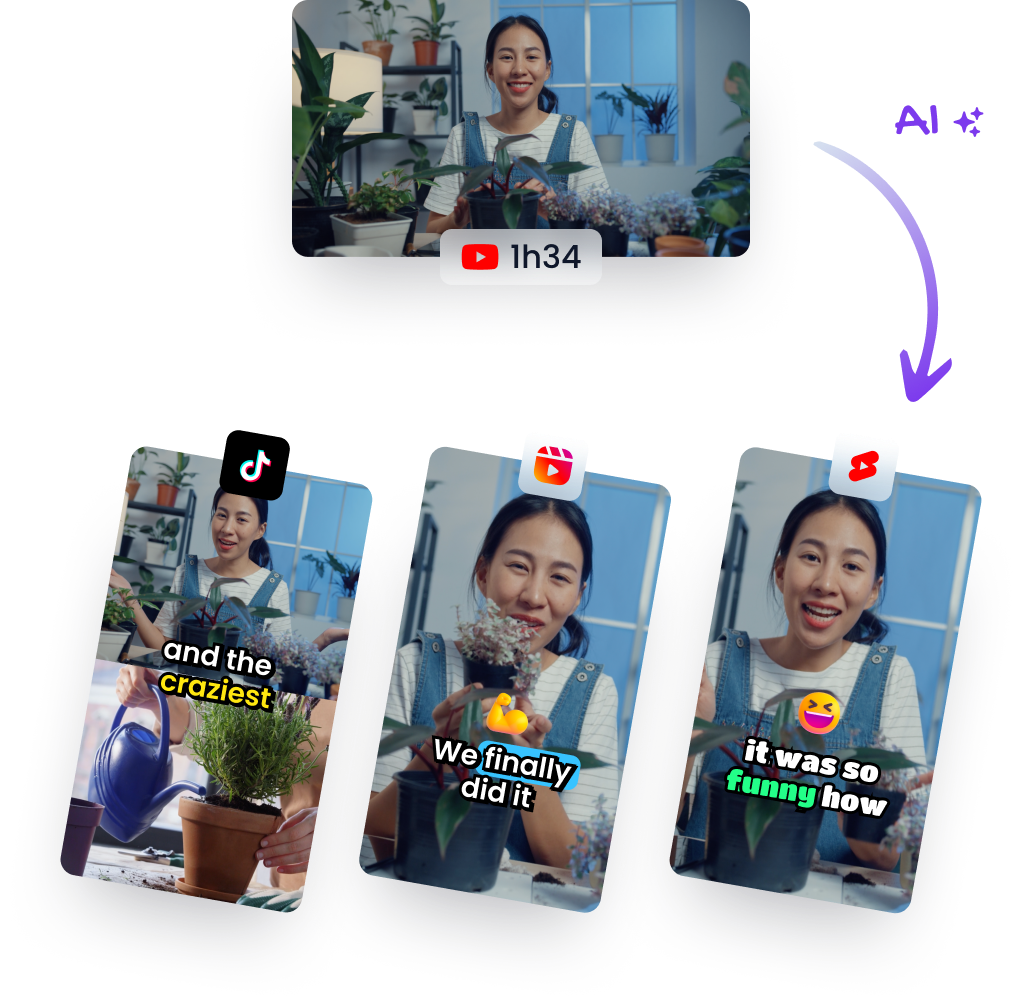
Klap solves a very specific problem, and that's why it belongs on this list. If you already have long-form video and your bottleneck is turning it into shorts, a full NLE is often the wrong tool for the job. You don't need a deeper timeline. You need faster extraction, reframing, captions, and packaging for social.
That use case matters because the market keeps moving toward AI-assisted and cloud-based workflows. In video processing software, cloud-based solutions account for 88% of installations globally as of 2026. That lines up with how creators work now. They need remote access, scalable processing, and quick turnaround on platform-specific video.
The real trade-off
Klap isn't trying to replace Premiere, Final Cut, or Resolve. It complements them. You use your main editor to produce the long-form asset, then use Klap to mine that asset for short-form output.
That's a much more practical workflow for:
- Podcasters: Pull clips from interviews and shows without hand-cutting each segment.
- Marketers: Repurpose webinars, founder interviews, and demos into social-ready content.
- Teams with content libraries: Get more mileage out of videos you've already paid to produce.
The mistake is expecting a repurposing tool to behave like a full editor. It shouldn't. Its job is to remove repetitive clip work.
If your main challenge is consistent short-form output, Klap is one of the more relevant tools in this category. You can also review broader options in this guide to the best AI video editing software, then see the platform itself on the Klap website.
5. Descript

You record a 45-minute interview, need a clean YouTube cut, three short clips, captions, and a review link for a client by tomorrow. Descript is built for that kind of job. It works best when the words drive the edit and speed matters more than fine-grained timeline control.
As noted earlier, the market is adding a lot of users who need video output without training like full-time editors. Descript fits that group well. Founders, educators, podcast teams, marketers, and in-house content leads can cut spoken content by editing text first, then clean up the video around it.
Who should use Descript
Descript is strongest for talk-driven production. You can delete filler words, search the transcript to find the right quote, generate captions, and get to a rough cut quickly. That changes the workflow in a practical way. Instead of scrubbing through a long timeline to find one sentence, you search for it and cut it from the transcript.
It tends to be a good fit for:
- Podcast and interview teams: Faster rough cuts, easier transcript search, and useful audio cleanup tools.
- Webinar and course creators: Good for trimming long recordings into publishable lessons or promo clips.
- Teams with non-editors in the review process: Text-based comments and revisions are easier for stakeholders to handle.
- Social repurposing workflows: Spoken-content clips move faster when the transcript is the starting point. If that is your main use case, this guide to social media video editing workflows is a useful companion read.
The trade-off is straightforward. Descript is not where you want to finish a visually heavy project with detailed motion graphics, layered effects, advanced color work, or precise cinematic pacing. For those jobs, Premiere Pro, Final Cut Pro, or Resolve give you much more control.
I use Descript the same way many production teams should use it. As a fast assembly and revision tool for dialogue-heavy content. Then, if the project needs a higher-end finish, move the cut into a traditional editor. You can review its current tools and workflow on the Descript website.
6. CapCut

CapCut is what I recommend when someone says, “I need to make social videos fast, and I don't want to spend a week learning software.” It's optimized for speed, templates, captions, and trend-aware workflows. That makes it useful even for people who already own a more powerful editor.
Its relevance has grown alongside mobile and cloud editing habits. In the broader market, mobile apps are projected to be the fastest-growing segment, reaching up to 15.8% CAGR through 2033. That doesn't automatically make CapCut the best tool overall, but it does explain why tools built around quick, cross-device publishing keep getting traction.
When CapCut is the right answer
CapCut is strongest when volume matters more than precision. If your team publishes daily social content, trend-driven clips, creator promos, or quick edits for product pushes, the template library and caption workflow can save a lot of time.
What to expect:
- Fast onboarding: Users can quickly get usable output.
- Strong for social-native editing: Vertical formats and quick pacing are the default.
- Good companion tool: You can still use a heavier editor for flagship content.
What to watch:
- Less control for detailed finishing: If you care about exact polish, you may outgrow it.
- Workflow depth is limited: For complex edits, it becomes a staging tool rather than the final destination.
If your publishing cadence is high, convenience beats theoretical power.
For creators focused on short-form content, it's worth pairing CapCut-style speed with a clear strategy for social media video editing. You can see CapCut's latest tools on the CapCut site.
7. TechSmith Camtasia

Camtasia is the specialist pick in this list. It isn't trying to win on cinematic finishing, and that's a good thing. It's built for people making training videos, product walkthroughs, onboarding tutorials, internal enablement content, and course material.
If your production process starts with a screen recording, Camtasia usually makes more sense than opening a heavyweight editor. Cursor effects, webcam overlays, callouts, simple annotations, and structured educational templates are part of the core workflow instead of an afterthought.
Where it earns its place
A lot of software looks good in feature comparisons and then becomes a pain when you need to make practical training content every week. Camtasia avoids that trap by being easy to use for the exact teams who create explainers for a living.
Best fit:
- L&D and training teams: Especially when you need repeatable internal content.
- Product marketing and customer education: Demos and walkthroughs come together quickly.
- Solo educators: It's easier to manage than a full NLE for screen-based teaching.
Less ideal:
- Stylized brand films
- Complex grading
- Heavy compositing or advanced post workflows
If your core job is teaching people through video, simplicity is a strength, not a compromise. Camtasia keeps the production process focused on clarity and delivery. You can evaluate the current feature set on the TechSmith Camtasia page.
8. Wondershare Filmora

Filmora sits in the middle ground between beginner-friendly and capable enough for regular creator work. That middle ground matters because many users don't need the full depth of Premiere or Resolve, but they've already outgrown ultra-simple mobile editors.
The practical appeal is straightforward. You get effects, titles, templates, transitions, and a simpler interface without feeling like you're editing inside a toy. For social content, promos, YouTube uploads, and small business videos, that balance is useful.
Why Filmora works for a lot of creators
Filmora is a good choice when you want faster output with less training time. It's especially sensible for small teams that need a desktop editor but don't want to build their whole workflow around a pro suite.
Reasons to consider it:
- You want desktop editing without heavy complexity
- You value built-in assets and quick visual polish
- You prefer having license options instead of only subscriptions
Where it falls short:
- Complex finishing jobs
- Deep color and audio post
- Large collaborative pipelines
It's a practical editor, not an aspirational one. That's often exactly what small brands and solo creators need. If your question is “what's the video production software best for getting decent-looking content out the door quickly,” Filmora is one of the better answers. You can compare current plans and features on the Wondershare Filmora website.
9. Avid Media Composer

Avid Media Composer is the least casual tool in this lineup. It's built for long-form editing discipline, large media libraries, structured collaboration, and environments where stability matters more than convenience.
This is not what I'd put in front of a creator who wants to publish shorts this afternoon. It is what I'd put in front of a serious editorial team cutting documentary, television, or film projects that need organized bins, predictable media management, and established handoff processes.
The right reason to choose Avid
Avid makes sense when your editorial system needs to scale across people and projects. Its strengths show up over time, not in the first hour.
Use it if you need:
- Reliable long-form project management
- Team-oriented editorial pipelines
- Integration with larger studio and broadcast environments
Skip it if you need:
- Quick social publishing
- Fast onboarding for non-editors
- A lightweight solo-creator workflow
Avid is excellent at serious editorial structure. It's inefficient if your real job is making short-form content fast.
That trade-off is why it remains respected and yet irrelevant for many creator businesses. If you work in broadcast, film, or long-form team environments, it still deserves consideration. You can review it on the Avid Media Composer page.
10. VEGAS Pro

VEGAS Pro remains a solid option for Windows users who want a mature editor without buying into Adobe or switching to Resolve. Its appeal has always been speed. The timeline feels responsive, the toolset is broad, and the bundled options can make sense if you want audio and effects support in one purchase path.
For solo editors on Windows, that combination is still attractive. You can move quickly, handle multicam, use AI-assisted features, and build a workable editing setup without changing platforms.
Best fit for VEGAS Pro
VEGAS is strongest for independent editors who want flexibility without overcomplicating their workflow. It can cover YouTube, promo content, event edits, and general creator work well.
Its practical strengths:
- Windows-native editing experience
- Fast timeline work for solo editors
- Bundle options that can expand your toolkit
Its main constraints:
- No Mac version
- Less standardization in larger collaborative environments
- You may need to double-check bundle contents before buying
It's not the default recommendation because the market conversation is usually dominated by Adobe, Apple, and Blackmagic. But for the right Windows user, it's still a credible pick. You can inspect current versions and bundles on the VEGAS Pro website.
Top 10 Video Production Software Comparison
ProductCore features ✨UX & Quality ★Repurposing fit & Value 💰Target audience 👥
Adobe Premiere Pro
Advanced timeline, multicam, color tools; deep CC & Frame.io integration ✨
Professional, collaborative; steep learning curve ★★★★
Powerful but manual reframing; slow for high-volume repurposing; subscription 💰
Agencies, pro editors, teams 👥
Apple Final Cut Pro
Magnetic Timeline, AI transcript/visual search; Apple ecosystem & Motion ✨
Super-fast on Apple silicon; intuitive; one-time buy option ★★★★
Smart Conform helps verticals but manual clipping; one-time or subscription options 💰
Mac creators, solo pros 👥
DaVinci Resolve
End‑to‑end edit + best‑in‑class color, Fusion VFX, Fairlight audio ✨
Pro-grade tools; cross-platform; steep curve ★★★★
Smart Reframe & transcriptions exist; precise not fast; free/Studio tiers 💰
Filmmakers, colorists, advanced creators 👥
Klap 🏆
Automated clip finding, hook detection, auto-captions & auto-reframe for socials ✨
Extremely fast, low-lift, consistent on-brand outputs ★★★★★ 🏆
Built for high-volume repurposing; massive time-saver; subscription + API 💰
Creators, marketers, podcasters scaling shorts 👥
Descript
Text-first editing, searchable transcripts, Studio Sound, Overdub ✨
Fast for dialogue-driven workflows; collaborative ★★★★
Excellent clip-finding and repurposing; media/AI limits on plans 💰
Podcasters, interviewers, educators 👥
CapCut
One-click templates, auto-captions, AI background removal ✨
Trend-focused, very easy to learn ★★★
Great for styling and trends; lacks automated clip discovery; free/paid tiers 💰
Social creators, trend-driven editors 👥
TechSmith Camtasia
Multitrack screen recorder, templates, callouts, quizzes/SCORM ✨
Gentle learning curve; tutorial-focused UX ★★★
Ideal for tutorials; manual highlight extraction; one-time license 💰
Corporate trainers, educators, support teams 👥
Wondershare Filmora
Ready-made effects, titles, Filmstock assets, AI add-ons ✨
Beginner-friendly, fast results ★★★
Easy styling but manual clip discovery; subscription or perpetual license 💰
Beginner-intermediate creators, marketers 👥
Avid Media Composer
Enterprise project/bin/media management; ScriptSync & PhraseFind ✨
Extremely stable for long-form, steeper learning curve ★★★★
Unsuitable for fast social repurposing; enterprise pricing 💰
TV/film editors, large broadcast teams 👥
VEGAS Pro
GPU-accelerated editing, AI masking & speech-to-text, tiered bundles ✨
Fast and flexible on Windows ★★★
Timeline-first workflow; manual clipping for shorts; tiered pricing 💰
Windows solo creators, enthusiasts 👥
Your Final Cut Making the Right Software Investment
You record a 45-minute interview on Monday, cut a polished YouTube edit on Tuesday, and by Wednesday you still need three vertical clips, captions, and platform-specific exports. The right software choice gets decided in that kind of week, not on a features page.
Choose your editor by primary job. If you spend your time on client edits, branded videos, documentaries, or polished YouTube production, a traditional NLE should stay at the center of your workflow. Premiere Pro fits mixed professional environments well. Final Cut Pro is a smart pick if your work lives on Mac and speed matters. DaVinci Resolve earns its place when color, finishing, and high-end control matter more than editing speed alone.
Specialist tools make more sense for narrower jobs. Descript is faster for transcript-led editing, especially with interviews, explainers, and talking-head content. Camtasia is better suited to training videos and screen-recorded instruction than a full post-production suite. Filmora and CapCut are practical when you need quick turnaround, easy templates, and minimal setup.
The market has split for a reason. One tool rarely handles cinematic editing, tutorial production, and social repurposing equally well. Trying to force that usually creates extra manual work.
I see this mistake often with creators and marketing teams. They pay for a full-featured editor, then use it for repetitive clipping tasks that do not need a full timeline. Pulling highlights from long videos, reframing for vertical, adding captions, and exporting multiple social versions can eat hours every week. The work matters. It just should not stay manual if repurposing is a regular part of your output.
A dedicated repurposing tool can solve that bottleneck without replacing your main editor. Klap fits teams that already publish webinars, podcasts, interviews, courses, or long YouTube videos and need short-form output quickly. If you are also comparing short-form editing options, this guide to picking an editor for social videos helps clarify where lightweight social tools fit versus a full NLE.
The practical investment is a stack, not a winner-take-all choice. Use Premiere Pro, Final Cut Pro, or Resolve for deep editing. Use Descript or Camtasia when the workflow is transcript-led or instructional. Use CapCut, Filmora, or Klap when speed, packaging, and repurposing are the primary job.
If you already have long-form videos and need a faster way to turn them into social-ready clips, Klap is worth a look. It's built for repurposing webinars, podcasts, interviews, and YouTube uploads into short vertical videos with captions, reframing, and quick review before export.