A Creator's Guide to Video Editing Software in 2026
Other
Picking the right video editing software feels like a tug-of-war between creative control and raw speed. On one side, you have traditional editors that give you painstaking, frame-by-frame control for polished, cinematic projects. On the other, a new wave of AI tools is built for one thing: churning out social media content at a blistering pace.
This guide gives you an actionable breakdown to help you decide which tool—or, more likely, which combination of tools—is right for you.
How to Choose Your Ideal Video Editor in 2026
The demand for video content has skyrocketed, and the software market is racing to keep up. In fact, the global video editing software market is projected to hit $3.75 billion by 2026, a surge driven almost entirely by the creator economy and the rise of smart, AI-powered platforms. This boom has created a "paradox of choice" for creators. It’s never been easier to make a video, but it's never been harder to pick the right software.
To simplify your decision, we'll break down the three main categories of tools. Understanding the specific problem each one solves is the first step to building a workflow that saves you time instead of costing you it.
The Three Tiers of Modern Video Editors
The secret is to match the tool to the job. You wouldn't use a sledgehammer to hang a picture frame, right? The same logic applies here. Each of these software categories was built for a specific type of creator with a specific goal.
- Traditional NLEs (Non-Linear Editors): Think of industry workhorses like Adobe Premiere Pro or DaVinci Resolve. They are built for detailed, long-form content and give you complete control over every pixel and audio wave. Actionable insight: This control comes at the cost of a steep learning curve, often requiring over 100 hours to master, and a significant time investment per project.
- Cloud-Based Editors: Platforms like Descript are designed for collaboration and accessibility. They allow entire teams to work on a project simultaneously from a web browser, often using innovative features like text-based video editing. Actionable insight: This is your go-to if you need to manage feedback from multiple stakeholders, as it can reduce revision cycles by up to 40%.
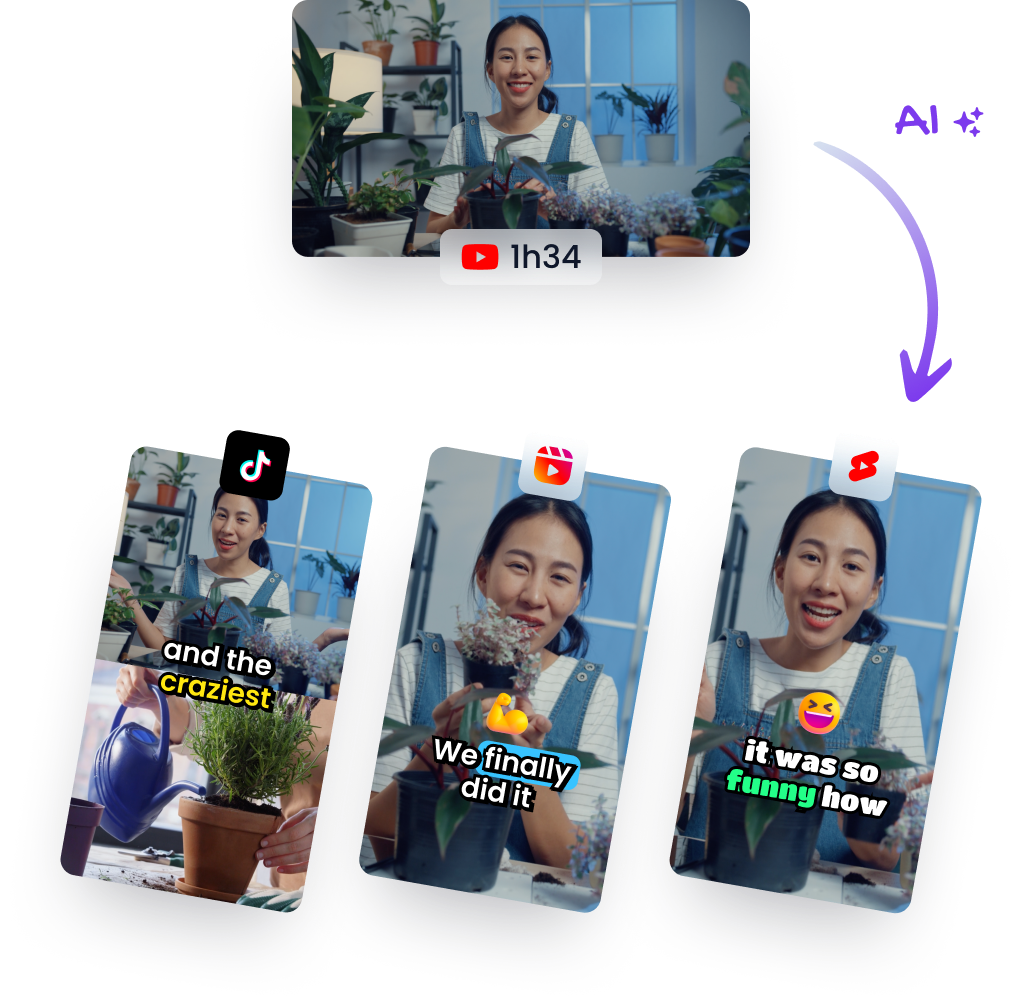
- AI Repurposing Platforms: This is the game-changer. Tools like Klap are engineered for pure efficiency. You feed them one long video, and their AI automatically generates dozens of high-potential short clips for social media. It handles the tedious tasks like reframing, captioning, and finding the best hooks for you. Actionable insight: These platforms can cut down your content repurposing time by over 90%.
Here's an actionable insight: The most successful creators in 2026 don't just pick one tool—they build a "stack." They use a traditional NLE for their flagship YouTube video, then drop the final export into an AI repurposing tool. This multiplies its reach across TikTok, Reels, and Shorts with practically zero extra effort.
For anyone just starting out, the landscape of the best video editing software for beginners has been completely reshaped, with AI tools now offering a powerful yet incredibly easy entry point.
Here's a quick cheat sheet to see how they stack up.
Software CategoryPrimary GoalLearning CurveBest For
Traditional NLE
Creative Control
High
Cinematic YouTube videos, films
Cloud-Based Editor
Collaboration
Medium
Team-based marketing projects
AI Repurposing Platform
Speed & Scale
Low
High-volume social media clips
The Three Tiers of Video Editing Tools: Which One Is for You?
Not all video editors are created equal, and a direct "apples-to-apples" comparison is often misleading. The truth is, different tools solve different problems. To pick the right one, you need to understand the three distinct tiers of software, because each is built for a different kind of creator with a different goal.
So, ask yourself: what is your primary objective? Are you aiming for cinematic perfection with total creative control? Or is your priority to publish a high volume of content to stay relevant on social media? Your answer will point you directly to the right category.
Traditional NLEs: The Artist's Toolkit
This is where the industry giants live. Traditional Non-Linear Editors (NLEs) like Adobe Premiere Pro and DaVinci Resolve are the standard for anything requiring a high-production finish. They give you granular control over every frame, color grade, and audio snippet.
This depth enables true creative mastery, but it's not easy. These are complex systems that demand a serious time investment to learn. Most professional YouTubers use NLEs for their main, long-form videos where polished storytelling is critical. Think of it as a professional artist's studio—it's packed with powerful tools but isn't designed for quick jobs.
The trade-off is clear: NLEs offer maximum control, but you pay for it with a slower, more deliberate workflow. What newer tools automate in minutes can often take an experienced editor hours to complete manually.
Cloud-Based Editors: The Collaboration Hub
Next up are cloud-based editors like Descript. Their biggest advantage is accessibility and teamwork. Instead of being tied to a powerful desktop, your entire team can log in from a web browser and contribute to the same project in real-time.
This is a lifesaver for marketing agencies and corporate teams that need to pass projects back and forth for feedback and approvals. Features like text-based editing also make them much easier to learn, though you do sacrifice some of the deep creative flexibility found in a traditional NLE.
AI Repurposing Platforms: The Efficiency Engine
Finally, we have a completely new breed of tool: AI repurposing platforms. Tools like Klap are not meant for building a video from scratch. Their entire purpose is efficiency, specifically for social media.
You start by feeding them a finished long-form video—like a podcast or a webinar. The AI then gets to work, automatically identifying the most interesting and viral-worthy moments. From there, it generates dozens of short, social-ready clips, already reframed for vertical formats and complete with dynamic captions.
This approach can slash the time spent on repurposing content by over 90%. For creators and marketers who need to post 3-5 times a day to stay relevant, a tool like this is not just a nice-to-have; it's essential for survival.
A Detailed Feature Comparison for Modern Workflows
Let's move beyond generic feature lists and conduct a real-world, side-by-side analysis of how these different tiers of editing tools perform on tasks that matter to modern creators. The goal isn't just to list what they can do, but to give you actionable insights into where each category truly shines.
We’ll dig into core editing functions, see how AI automation is changing the game, test the flexibility of reframing tools, check the quality of auto-captioning, and finally, look at how efficiently you can export and publish your finished content.
Core Editing Capabilities
The foundation of any editor is simple: trimming clips, arranging them on a timeline, and adding effects. But this is exactly where the split between creative depth and raw speed becomes obvious.
Traditional NLEs like Premiere Pro offer unparalleled control. You can stack dozens of video and audio tracks, dial in complex keyframe animations, and apply professional-grade color correction. This is why top-tier YouTubers spend their days in these programs—they need that granular control for a polished, high-production feel. The trade-off? Even a simple text callout can feel like a multi-step project.
Cloud-Based Editors are all about simplifying that process. They provide solid core features in a much more accessible package. Many have unique workflows, like text-based editing where deleting a word in the transcript also cuts the corresponding video. It's significantly faster for basic assembly but falls short for advanced visual effects or intricate edits.
AI Repurposing Platforms approach editing from a completely different angle. Here, "editing" is less about building something from scratch and more about intelligent deconstruction. A tool like Klap, for example, isn't waiting for you to build a video. Instead, its AI analyzes a finished, long-form video and does the cutting for you, automatically isolating the most compelling segments.
AI Automation and Clip Generation
AI isn't a gimmick anymore; it's a vital part of an efficient workflow. And the single biggest time-saver for creators today is automated clip generation, which exposes the massive gap between traditional and modern tools.
An experienced editor might spend 30-60 minutes manually finding, cutting, reframing, and captioning a single short clip from a podcast. An AI tool can generate 10-15 high-quality options from that same podcast in under 15 minutes—that's a workflow improvement of over 90%.
NLEs are slowly adding AI features, but they're mostly for specific tasks like transcription or scene detection. You, the human, are still in the driver's seat. In stark contrast, AI platforms like Klap use AI as the main engine, automatically identifying viral-worthy moments based on topic analysis and engagement cues.
Aspect Ratio Reframing
With vertical video formats accounting for nearly 80% of mobile video consumption, being able to reframe horizontal content is non-negotiable.
- NLEs: This is a painstaking, manual job. You have to create a new sequence, adjust the position of your footage frame-by-frame, and hope the main subject stays in view. You have total control, but it's incredibly time-consuming.
- Cloud Editors: Many now offer an auto-reframe feature that tries to track a subject. It's a huge step up from NLEs, but it can get lost or make some awkward framing choices.
- AI Platforms: This is their bread and butter. Tools like Klap don't just automatically reframe for a 9:16 aspect ratio; they use AI to make sure the speaker or key action is perfectly centered in every single shot. No manual tweaks needed.
This diagram gives you a simple visual breakdown of how these three editing tiers stack up.
You can clearly see the progression from deep, manual control with NLEs, to collaborative creation in the cloud, and finally to automated, high-speed output with AI platforms.
Automated Captions and Subtitles
Subtitles are a must-have for social media video, as studies show over 85% of social videos are watched with the sound off. The quality and customization of automated captions vary wildly from one tool to the next.
NLEs and cloud editors deliver pretty good transcription accuracy, but styling them can be a pain without plugins. AI platforms, on the other hand, are built for social video from the ground up. They provide dynamic, eye-catching caption styles designed to keep viewers hooked. If you want to go deeper, you can learn how to make killer subtitles with a powerful subtitle generator built specifically for this job.
Export and Social Media Integration
The last mile is getting your content out to your audience. Traditional NLEs give you a dizzying array of export settings—total control over codecs, bitrates, and formats. But they almost never have direct integrations with social media platforms.
Cloud editors often let you export directly to places like YouTube. AI repurposing tools take it a step further, sometimes integrating with scheduling software to connect the entire pipeline from creation to publication. Choosing the right support tools is just as important as picking your editor; this data-driven analysis of social media scheduling tools is a great resource for optimizing that part of your workflow.
To bring it all together, here’s a quick-glance matrix showing how each software category stacks up across these key areas.
Feature and Workflow Matrix for 2026 Editing Software
This table breaks down how each type of tool handles the workflows that matter most to modern content creators. It's less about a list of buttons and more about the practical differences you'll feel every day.
Feature/WorkflowTraditional NLEs (e.g., Premiere Pro)Cloud-Based Editors (e.g., Descript)AI Repurposing Platforms (e.g., Klap)
Core Editing
Full manual control, steep learning curve
Simplified timeline, text-based editing
Automated clip selection, minimal manual input
AI Auto-Clipping
Limited to scene detection; manual selection
Not a primary feature
Core function; AI identifies best moments
Reframing
Manual process, time-consuming
Semi-automated with subject tracking
Fully automated, AI-powered speaker tracking
Auto-Captions
Good accuracy, basic styling
Good accuracy, some style options
High accuracy, dynamic social-first styles
Publishing
Manual export, no direct integration
Direct export to some platforms
Streamlined export, some scheduling integrations
As you can see, the "best" tool really depends on your goals. For ultimate creative freedom, NLEs are still king. For speed and collaboration, cloud editors are a great fit. But for pure efficiency in turning long videos into social-ready shorts, AI platforms are in a league of their own.
Which Tool Wins for Your Specific Use Case
Feature lists and specs are one thing, but the real test is how these tools actually perform in the wild. That's where you discover what saves you time and what just becomes another bottleneck in your workflow.
To make this crystal clear, let's walk through three common, real-world scenarios. Each one is built for a different type of creator, showing you exactly where traditional NLEs, cloud-based editors, and AI repurposing platforms truly shine.
Scenario 1: The Creator's Content Multiplication Pipeline
Meet Alex, a full-time YouTuber who drops one deep-dive, 20-minute video every week. This main video is the star of the show, demanding high production value—we're talking detailed B-roll, custom graphics, and precise color grading. For this job, Alex lives inside a traditional NLE like Adobe Premiere Pro. It’s the only tool that gives him the pixel-perfect control he needs.
But Alex knows a single YouTube video isn't enough anymore. To maximize his ROI, that 20-minute pillar video needs to become a dozen short-form clips for TikTok, Instagram Reels, and YouTube Shorts. Doing this by hand would burn an entire day with tedious work: finding hooks, reframing shots, and adding captions.
This is where an AI Repurposing Platform changes the game. After exporting his masterpiece from Premiere Pro, Alex uploads it straight to Klap.
- Step 1: The AI gets to work, analyzing the video to pinpoint over 20 potential viral moments based on topic shifts, insightful questions, and visual cues.
- Step 2: It instantly reframes every clip into a 9:16 vertical format, using speaker detection to keep Alex perfectly centered in every shot.
- Step 3: Dynamic, social-media-ready captions are added in seconds.
In less than 15 minutes, Alex has a full week's worth of short-form content locked and loaded. This hybrid approach is the perfect mix of deep creative control and lightning-fast distribution.
Scenario 2: The Agency's Collaborative Marketing Project
Now, let's look at a marketing agency building a promotional video for a big client. The team is made up of a project manager, a copywriter, two video editors, and the client themselves—all of whom need to leave feedback. Trying to manage this with a traditional NLE would be a total nightmare of passing massive project files around, creating a version-control disaster.
This is the perfect job for a Cloud-Based Editor like Descript. The whole project lives online, and anyone with a browser can jump in. The entire workflow is designed for teamwork.
The editor puts together a first draft. The copywriter then logs in and tweaks the script directly in the transcript, which magically edits the video in real-time. The project manager drops time-stamped comments on specific visuals, and the client can review the latest cut and add approval notes without ever having to download a single piece of software.
By keeping feedback in one place and eliminating the need for file transfers, a cloud-based editor can slash project turnaround times by 30-40% for teams. It trades the intense creative depth of an NLE for unmatched collaboration speed.
Scenario 3: The Podcaster's Repurposing Engine
Finally, say hello to Sarah. She hosts a weekly one-hour interview podcast. Her main content is audio, but she records video to connect with her audience on YouTube. Her biggest headache? All the best insights are buried deep in a long conversation, and she has neither the time nor the editing chops to go hunting for them.
For Sarah, an AI Repurposing Platform isn't just a part of her workflow—it is her workflow. After she uploads her hour-long recording, the tool essentially becomes her personal editor.
The AI's "magic" is its ability to understand conversational context. It isn’t just looking for loud noises or spikes in the audio; it identifies the best questions, the most powerful answers, and the most shareable stories. It then packages these golden nuggets into perfectly formatted social media clips. For podcasters and interviewers, this transforms one long recording into a nonstop engine for audience growth. To give these clips an extra edge, you can also explore some of the best TikTok editing apps to add trending sounds or effects.
These scenarios prove that the "best" software is simply the one that solves your biggest problem. The key to a smart video strategy is matching your main goal—whether it’s creative perfection, seamless teamwork, or pure content velocity—to the right tool for the job.
What About Cost and Learning Curve?
Beyond fancy features, two things really decide which tool you’ll actually use day-to-day: how much it costs and how long it takes to feel like you know what you're doing. Let's dig into the real cost of ownership for these different video editors, what they demand from your computer, and how much time you should expect to sink into learning each one.
These are the "hidden" costs—in both money and time—that can make or break your entire workflow. A "cheaper" tool that takes twice as long to use isn't really a bargain.
The True Cost of Ownership
Software pricing can be deceptive. A low monthly fee might hide usage caps, while a one-time purchase could force you into an expensive hardware upgrade you weren't expecting.
- Traditional NLEs: These usually carry the highest price tag. Adobe Premiere Pro is a subscription, running about $22.99/month for just that app. DaVinci Resolve has an incredibly powerful free version, but its $295 one-time license for the Studio version is essential for unlocking key professional features.
- Cloud-Based Editors: Most of these platforms run on a tiered subscription model, usually somewhere between $15 and $30 per month for each user. For bigger teams, this adds up, but the predictable cost often includes cloud storage and collaboration tools that save a ton of time.
- AI Repurposing Platforms: These tools often use a hybrid model. A base plan might give you a certain number of upload hours each month, with extra fees if you go over. It’s a scalable model that ties your cost directly to how much content you’re producing. You can see how this works by checking out the different pricing tiers for AI video tools.
Actionable Advice for Your Budget
For Solo Creators: Adopt a hybrid approach. Use the free version of DaVinci Resolve for your main long-form videos and grab a starter plan on an AI tool like Klap for all your social clips. This keeps monthly costs under $20 while letting you produce a massive amount of content.
For Agencies and Teams: Cloud-based editors are the clear winner. The per-user cost is easily justified by the massive amount of time you'll save on back-and-forth feedback, file transfers, and version control.
How Much Computer Do You Really Need?
The software you pick has a huge impact on the kind of computer you need to run it. This is a big, often-forgotten cost that comes with video editing.
Traditional NLEs are absolute resource hogs. They lean entirely on your computer's CPU, GPU, and RAM to handle high-resolution video, render effects, and export your final files. If you want to edit 4K video without constant stuttering and crashes, you’re looking at a machine that costs well over $2,000. On older hardware, slow render times can become a serious productivity killer.
On the flip side, cloud and AI platforms are incredibly lightweight. All the demanding work—transcoding, AI analysis, rendering—happens on their powerful cloud servers, not your machine. This means you can create professional-looking videos on a basic laptop. It completely removes the hardware barrier, making them perfect for anyone who doesn't have a beast of an editing rig.
The Learning Curve: How Much Time Will It Take?
Your time is your most valuable asset, and the learning curve is a direct tax on that time. How fast can you go from downloading the software to confidently creating content?
- Traditional NLEs (80-100+ hours to proficiency): These are the most complex by a long shot. Mastering a program like Premiere Pro or DaVinci Resolve is a real commitment. Sure, you can learn basic cuts in a few hours, but getting truly efficient with color grading, audio mixing, and motion graphics can take hundreds of hours of practice.
- Cloud-Based Editors (10-20 hours to proficiency): These tools were built to be intuitive. Their simpler interfaces and features like text-based editing mean you can get comfortable and productive in just a few days.
- AI Repurposing Platforms (1-2 hours to proficiency): This is the easiest category, hands down. Since the AI handles almost all of the complex editing decisions, your main job is to upload your video and review what it spits out. You can master the entire workflow in a single afternoon.
The Right Tool for the Job: Final Recommendations
Deciding on the right video editor isn't about finding the one "best" tool. It's about picking the right tool for the specific job you need to get done right now. This is about building an efficient workflow that actually serves your content strategy.
Don't get suckered into the one-size-fits-all trap. Instead, match the software’s core strength to your biggest bottleneck.
For the Solo YouTuber or Content Creator
Your biggest fight is the constant battle between creating high-quality videos and feeding the content machine. The smartest approach is a hybrid model.
Use a traditional NLE like DaVinci Resolve or Premiere Pro for your big, flagship videos. This is where you get the granular creative control you need for polished, long-form storytelling. Once that hero video is live, drop it into an AI repurposing platform. You'll instantly generate a week's worth of social media clips. This combo delivers both quality and quantity without burning you out.
For the Social Media Manager or Marketing Team
Your world runs on volume, speed, and engagement metrics. Manually chopping up dozens of clips a week just doesn't scale.
For your team, an AI repurposing platform should be your primary weapon. Nothing beats its ability to turn long-form assets—think webinars, interviews, or product demos—into a flood of social-ready shorts. This frees your team to focus on the high-impact stuff like strategy, scheduling, and talking to your community, instead of getting buried in tedious edits.
The key takeaway here is that modern workflows separate creation from distribution. Use an NLE for the foundational creative work, but lean on AI tools to distribute that work at scale. It’s how you maximize reach and stay efficient.
For Podcasters and Interviewers
All the gold in your content is locked away in long conversations. Your hardest job is digging out those golden nuggets and sharing them with the world.
An AI-driven clip finder is a non-negotiable part of your content engine. These platforms basically act as your personal producer, automatically flagging the best questions, most powerful answers, and most shareable soundbites. This lets you effortlessly turn every single episode into a marketing machine, driving new listeners right back to your main show.
Common Questions About Video Editing Tools
Picking the right software can feel like a big decision, but it doesn't have to be. Let's tackle some of the most common questions creators ask when they're trying to figure out which tool fits their workflow best. We'll cut through the noise and get straight to the practical differences.
Getting these answers should give you that final piece of the puzzle, so you can feel good about the software you choose to build your content on.
Can I Get By with Just an AI Repurposing Tool?
For a certain kind of creator, absolutely. If your entire strategy is about chopping up existing long-form content—think podcasts, webinars, or long interviews—into social media gold, a dedicated AI tool like Klap can easily be your main driver. It's built from the ground up to do that one thing incredibly well.
However, if you're building long-form videos from scratch and need sophisticated effects, detailed multi-track editing, or professional color grading, a traditional NLE is non-negotiable. The real power move for most creators is using both: your NLE is for the initial, polished creation, and an AI tool is for getting it out to the world at scale.
What's the Real Difference Between Cloud Editors and AI Tools?
It all comes down to their starting point and main job. A cloud-based editor like Descript is all about creation and teamwork. It's made for teams to build a video from the ground up in a shared online space. You start with a pile of raw footage and piece it together.
On the other hand, an AI repurposing tool like Klap is built for transformation. It doesn't start with raw footage; it starts with a finished video. Its purpose isn't to create something new, but to intelligently break down that finished piece into dozens of high-potential clips, automating the tedious work of finding hooks, reframing, and captioning.
How Much Time Will I Actually Save with an AI Tool?
The time savings are no joke—it's a fundamental change in how you can produce content. Manually creating just one well-edited short clip from a longer video can take a skilled editor anywhere from 30 to 60 minutes. That includes scrubbing to find the right moment, making the cuts, reframing for vertical, adding good-looking captions, and exporting.
An AI repurposing platform can generate 10-15 solid clips from a one-hour video in less than 15 minutes. That's a potential time saving of over 90% on repurposing alone, which frees you up to think about strategy or create more core content.
Are Traditional NLEs Going Extinct?
Not a chance. While the new kids on the block are winning the speed game, traditional NLEs are still the undisputed champs for projects that demand deep creative control. When you're working on something with high production value that needs advanced visual effects, complex audio mixing, or a professional-grade color pass, NLEs are simply irreplaceable.
Think of it like this: AI and cloud tools are solving problems of scale, speed, and collaboration for distribution. Traditional NLEs are still the essential tool for crafting the high-quality mothership content in the first place.
Ready to stop wasting hours on manual edits and start multiplying your content? Klap uses AI to turn your long-form videos into a stream of viral-ready shorts in minutes. Try Klap for free and see how much time you can save.