Master Formatting Video for Instagram in 2024
Other
Ever pour hours into crafting the perfect video, only to upload it to Instagram and watch it turn into a blurry, cropped mess? It’s a painfully common problem. But it's more than just an aesthetic issue—it actively costs you views. Instagram’s algorithm is smart; it rewards content formatted perfectly for its platform, especially immersive, full-screen Reels and Stories.
You don't need to be a video editor to get this right. Nailing a few key technical specs is the secret to making your content look professional and getting the reach it deserves.
Why You Can’t Afford to Ignore Instagram Video Formatting
Getting your video format right isn’t just about looking good; it's about performance. When your video fills the entire screen, you give viewers a more captivating experience. The algorithm sees this positive signal and rewards your content with greater visibility.
On the flip side, a poorly formatted video—like a horizontal clip awkwardly squished into a vertical Story with big black bars—just screams low effort. Viewers know it, and they’ll scroll right past it.
The platform's shift to video is undeniable. In fact, video now accounts for over 60% of the time users spend on Instagram, and Reels are reshared an incredible 3.5 billion times every single day. Since Instagram updated its algorithm to prioritize video, correctly formatted video posts now pull in 21.2% more engagement than static images on average. If you want to dig deeper into these numbers, Cropik.com has a great breakdown of Instagram marketing statistics.
The Real Cost of Bad Formatting
When you upload a video without thinking about the format, you're shooting yourself in the foot. The downsides go way beyond just looking unprofessional.
- Your Reach Gets Crushed: The algorithm is far less likely to push content that doesn't fit its preferred formats. That means fewer impressions and almost zero chance of hitting the Explore page.
- You Create a Bad User Experience: Viewers get frustrated by cropped subjects, text they can’t read, and blurry visuals. They won't stick around to figure it out; they'll just keep scrolling.
- You Waste Your Own Time: All the effort you put into creating amazing content gets completely undermined by a flawed final presentation. It ultimately hurts your brand's perceived quality.
Actionable Insight: Formatting isn't an optional final step. It’s a core part of a successful Instagram video strategy that directly impacts how many people see your work.
In this guide, I'm going to give you a clear, step-by-step blueprint for getting your videos formatted correctly every single time. We'll get into the technical nitty-gritty, share a repeatable workflow, and even show you how AI tools like Klap are making this whole process faster than ever.
Understanding the Core Technical Specs
To get your Instagram videos looking sharp and professional every single time, you need to nail four core technical elements. Think of these as the foundation of your video; if you get them wrong, everything else looks a little off. Getting these specs right from the start is the best way to combat Instagram's aggressive compression, which can otherwise ruin your hard work.
Let's break down exactly what you need to know.
Aspect Ratio and Resolution
First up, let's talk about the shape and clarity of your video. The aspect ratio is simply the shape of the frame, while the resolution is how many pixels are packed into it.
On Instagram, vertical video is king. There's no getting around it. The platform is built for a full-screen, mobile-first experience, which makes the 9:16 aspect ratio (1080x1920 pixels) the undisputed champ for Reels and Stories.
Ever seen a horizontal 16:9 video crammed into a Reel with those giant black bars on the top and bottom? It instantly shrinks the content and screams, "this wasn't made for me." Don't be that person.
Of course, other formats still have their place:
- 4:5 (1080x1350 pixels): This taller vertical format is perfect for in-feed video posts. It takes up more screen real estate than a square post, which is a huge advantage for stopping the scroll.
- 1:1 (1080x1080 pixels): The classic square is still a solid choice, especially for carousel posts or when a video needs to fit perfectly into your grid's aesthetic.
Let's say you filmed a horizontal podcast interview. The last thing you want to do is upload it as-is. You have to reframe it. That means cropping that wide shot into a tight, compelling 9:16 vertical clip that keeps the speakers centered and engaging. If you need a hand with that, our guide on how to easily resize videos for social media can walk you through it step-by-step.
Codecs and Containers
These terms might sound technical, but the idea is actually simple. A container is the file type that bundles your video, audio, and metadata together—like a digital box. The codec is the software that compresses and decompresses the data inside that box.
For Instagram, the magic formula is universal:
- Container: MP4
- Codec: H.264 (also known as AVC)
This combination gives you the best of both worlds: high quality and a manageable file size. It ensures maximum compatibility across devices and seriously cuts down on frustrating upload errors. Sure, other formats might work, but sticking with H.264 in an MP4 container is the most reliable way to make sure your video looks as good on Instagram as it did in your editor.
Actionable Insight: Using the wrong codec causes immediate quality loss. When you upload, Instagram has to re-compress your file. If it starts with an incompatible format, the algorithm will butcher it, and the final result will be noticeably worse.
Frame Rate and Bitrate
Next, let's talk motion and data.
Frame rate, measured in frames per second (fps), dictates how smooth your video looks. While films are often shot in 24fps for a cinematic feel, social media video feels more natural and clean at 30fps. It's the digital standard for a reason—it provides a fluid viewing experience without creating ridiculously large files.
Bitrate is all about how much data is used to encode each second of your video. A higher bitrate equals better quality, but it also means a much larger file. If your bitrate is too high, Instagram's compression will crush your video, leaving you with ugly pixelation and artifacts.
For a standard 1080p video at 30fps, aim for a bitrate between 3 and 6 Mbps (megabits per second). This is the sweet spot that keeps the details sharp while staying small enough to avoid Instagram’s heavy-handed compression.
Audio Formatting
Finally, don't neglect your audio. Bad sound will make people scroll away faster than bad visuals. While Instagram is a bit more forgiving with audio specs, sticking to these best practices will guarantee a crisp, clean listening experience.
- Codec: AAC (Advanced Audio Coding)
- Sample Rate: 44.1 kHz
- Bitrate: 128 kbps
- Channels: Stereo
Dialing in these settings ensures your audio is clear and professional, completing the package for a perfectly formatted Instagram video.
Your Workflow for Engaging Reels and Stories
Sure, nailing the technical specs gets your video on the platform without it looking like a pixelated mess. But the creative side of formatting is what actually gets you views. Your secret weapon is a repeatable workflow—a system for consistently creating Reels and Stories that people can't scroll past. This isn't about chasing trends; it's about building a solid foundation every single time you post.
The obsession with short-form video is real. Over 29% of marketers plan to make formats like Reels their main investment by 2026. And for good reason. Properly formatted 9:16 vertical Reels don't just look better; they reach an average of 9,689 people per post. When 72% of all branded video uploads are now short-form and 57% of viewers are discovering new brands through them, you can't afford to get it wrong. If you want to dive deeper, you can explore more video marketing statistics on SellersCommerce.com.
Start with the Safe Zones
Before you add text or stickers, you have to respect the "safe zones." These are the areas on the screen that stay visible after Instagram overlays its interface—the like, comment, and share buttons, your username, and the caption at the bottom.
It's one of the most common mistakes to see a creator place a brilliant call-to-action right where the "Share" icon will live, making it completely invisible.
Actionable Insight: To avoid this, always keep your most important visual elements centered. Treat the vertical middle of the screen as your prime real estate. This guarantees nothing critical gets cut off, no matter what device someone is watching on.
Make Your Captions Dynamic and Readable
Let's be honest: a huge number of people watch videos on Instagram with the sound off. That makes on-screen captions an absolute must. But just turning on auto-captions isn't enough. Your subtitles need to be designed to grab and hold attention.
Here’s how to make them pop:
- Go for High-Contrast Colors: Nothing is worse than text that blends into the background. Simple white text with a subtle black outline or drop shadow works against almost any video.
- Keep Them Short and Punchy: Don't display a whole sentence at once. Show just a few words at a time. This creates a fast, dynamic rhythm that pulls the viewer's eyes along.
- Choose a Bold, Clean Font: Ditch thin, artsy fonts. They’re impossible to read on a small screen. A strong, sans-serif font like Montserrat Bold or The Bold Font is a much better choice for clarity.
This approach transforms captions from a simple accessibility feature into a creative tool that keeps viewers hooked.
Actionable Insight: Think of dynamic captions as the visual heartbeat of your video. When you time them to the rhythm of your speech, you create a more immersive experience that keeps people locked in.
Hook Them in the First Three Seconds
You have three seconds. That’s your entire window to stop a user from scrolling. Your opening has to be powerful, intriguing, and immediately communicate why they should stick around. A weak hook means your video is dead on arrival, no matter how good the rest of it is.
Try one of these proven hook strategies:
- Ask a Provocative Question: Start with something that sparks curiosity. Think, "Are you making this one marketing mistake?"
- Make a Bold Statement: Lead with a surprising or counterintuitive claim. Something like, "Your morning coffee is ruining your productivity."
- Show the End Result First: If it's a tutorial or a transformation, flash that impressive "after" shot right at the beginning. It makes people want to see how you got there.
Let's put this into a real-world scenario. Say you have a 45-minute webinar on financial planning. Trying to manually scrub through that entire recording to find a few viral-worthy moments is a soul-crushing task. This is where a smart system comes in. Whether editing by hand or using a tool, you can use a long-to-short video converter to automatically pinpoint the punchiest statements or questions that would make perfect hooks. Suddenly, one long webinar becomes a dozen scroll-stopping Reels.
How AI Tools Can Automate Your Formatting
Let's be real: manually formatting every video clip for Instagram is a soul-crushing time sink. Slicing up a podcast, reframing every shot, and transcribing captions can burn an entire day. This is where you reclaim your time. AI-powered tools are no longer a novelty; they're a massive strategic advantage for any creator who needs to post more without burning out.
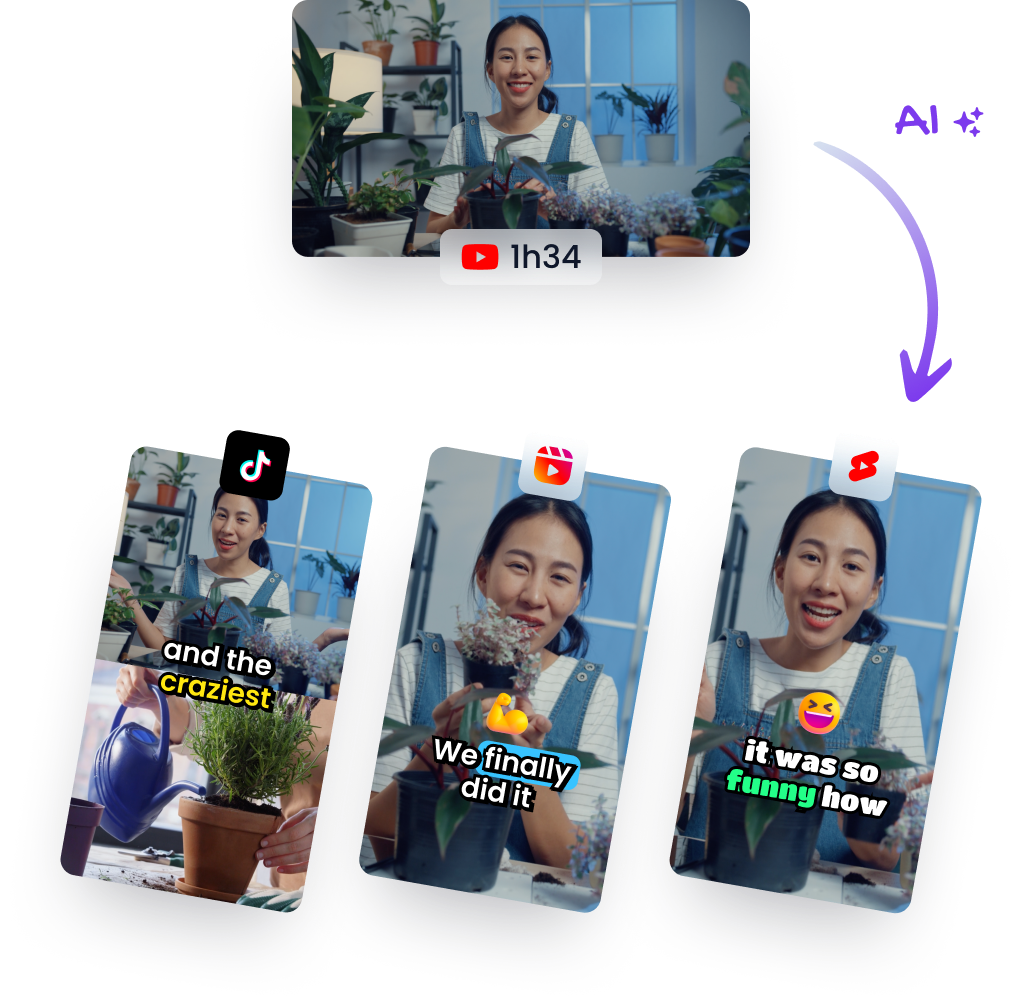
So, how does it actually work? It usually starts with a single piece of long-form content, like a 20-minute YouTube video. You upload it, and the AI goes to work, analyzing the entire video. It’s looking for the gold—the most engaging moments, the best questions, and the hooks most likely to go viral.
From Hours to Minutes
Once the AI finds the best moments, the real magic begins. It doesn't just find the clips; it completely formats them for you.
- Intelligent Reframing: It reframes each clip into a perfect 9:16 vertical aspect ratio. And thanks to face-tracking technology, it keeps the speaker perfectly centered, even if they were moving around in the original horizontal frame.
- Dynamic Captions: Forget typing out subtitles. The AI generates accurate, dynamic on-screen captions automatically, saving you from the tedious task of transcribing and timing everything by hand.
- Ready-to-Post Clips: In just a few minutes, you get a batch of ready-to-post videos, perfectly optimized for Instagram.
This process ensures the key elements for engagement—safe zones, eye-catching captions, and a strong hook—are all taken care of.
By automating these core formatting tasks, you can finally shift your focus from tedious manual editing back to strategy and creating great original content.
The Real-World Impact
Just compare this to the old-school grind. Manually slicing clips in Premiere Pro, painstakingly keyframing positions to keep the subject in frame, and then typing out captions is brutally slow. What used to take hours of meticulous work can now be done in under 30 minutes with just some light review and a few tweaks.
A YouTuber can now get over 10 high-quality Reels from a single 20-minute video. This completely changes the content creation game, turning one asset into a full week's worth of posts.
This efficiency is a lifesaver. For creators who want to produce dynamic visuals with less effort, an AI Fashion Video Generator can also be a huge help in the early stages, simplifying content creation before you even get to formatting.
Whether you're a podcaster, coach, or marketer, tools like an AI reel generator help you repurpose your best content at a scale that was pretty much impossible just a few years ago.
Common Formatting Mistakes to Avoid
Even with amazing content, a few simple formatting mistakes can crush your video's performance. Getting this right is a bigger deal than most people think—a few small tweaks can make a massive difference in your reach and engagement. Let's walk through the most common pitfalls and how to fix them.
The Black Bars of Doom
This one is probably the most obvious and jarring mistake. It happens when you upload a horizontal (16:9) video directly into a vertical-first world like Reels or Stories without reframing it. The result? A tiny video squeezed between two giant black bars. It's an instant signal to viewers that the content wasn't made for them.
The fix: Always reframe your horizontal video for a 9:16 aspect ratio. That means cropping in on the action and ensuring your subject stays front and center. It's a simple change that creates an immersive, full-screen experience that keeps people watching.
The Compression Crush
Ever upload a super sharp video, only to watch it turn into a blurry, pixelated mess on Instagram? That’s the "Compression Crush," and it's usually caused by the wrong export settings. If your file size is too big or your bitrate is too high, Instagram's aggressive compression algorithm will have a field day with your video's quality.
The fix: Export your video in 1080p resolution and stick to a bitrate between 3 and 6 Mbps. This is the sweet spot. It keeps your quality high enough to look great but keeps the file size small enough to avoid Instagram's heavy-handed compression.
The Silent Treatment
Uploading a video without captions is basically throwing views away. Think about it: most people scroll with the sound off. If they can't figure out what's happening in the first few seconds, they're gone.
An analysis of 350,000 accounts found that properly formatted Reels hit an average reach rate of 30.81%—more than double other post types. A huge part of that success comes from using captions to hook silent viewers, which helps drive the 1.23% average engagement rate on Reels. You can check out the full analysis from HeyOrca for more on these stats.
The fix: Add clear, dynamic captions to every single video. Make sure they have good contrast and are big enough to read easily on a phone. This guarantees your message gets across, whether the sound is on or off.
The Hidden CTA
This is a sneaky but costly mistake. You craft the perfect call-to-action (CTA) or place key text on the screen, only to have Instagram's own interface—like the like, comment, and share buttons—cover it right up. Frustrating, right?
The fix: Pay attention to Instagram's safe zones. Keep all your important text, graphics, and CTAs in the middle of the screen where they won't get blocked by the app's UI. A little bit of awareness here ensures your most important information actually gets seen.
Your Instagram Video Questions, Answered
Even when you think you’ve got it all figured out, nagging questions always seem to pop up right as you’re about to hit "Share." Let's clear up some of the most common issues creators run into when formatting their videos for Instagram.
Should I Upload My Video in 4K?
Shooting in 4K is fantastic—it gives you a ton of wiggle room for cropping and editing. But you should never upload a 4K file directly to Instagram. The platform will compress it so aggressively that it often looks worse than if you’d just exported it at the right resolution to begin with.
Actionable Insight: The best move is to downscale your final video to 1080p (that’s 1080 pixels wide) before you upload. This puts you in control of the final quality and stops Instagram’s algorithm from butchering your hard work. A clean 1080p file with the right bitrate is the sweet spot.
Why Does My Video Still Look Blurry After Exporting?
This one is super common. If you’ve nailed the resolution but your video still looks soft or pixelated on the app, the culprit is almost always your bitrate. Set it too low, and there isn't enough data to preserve the details. Set it too high, and you trigger Instagram's ruthless compression.
Pro Tip: For a standard 1080p video at 30fps, aim for a bitrate between 3 and 6 Mbps. This is the ideal range to maintain quality without creating a massive file that Instagram will flatten.
If you’re using a pro editor like Adobe Premiere Pro, find the "Target Bitrate" setting during export and dial it right into that sweet spot. You'll see a massive difference.
Can I Post the Same Video to Reels and Stories?
Technically, you can. Both formats favor the same 9:16 aspect ratio, so the video will fit. But strategically, you should think of them as two different tools. Reels are for discovery—they’re designed to be entertaining and reach people who don’t follow you yet. Stories, on the other hand, are for your existing community.
A smart workflow is to post your best, most polished clips as Reels to maximize your reach. Then, you can share that same Reel to your Stories to make sure your followers see it, maybe adding an interactive sticker like a poll or a quiz to get the conversation started.
How Long Should My Instagram Videos Be?
This completely depends on where you're posting and what you want to achieve. There's no single right answer, but here’s a quick guide:
- Reels: You can go up to 90 seconds, but the data is clear: the highest engagement happens on videos between 7 and 15 seconds. Short and punchy wins here.
- Stories: Each slide is capped at 15 seconds. If you upload a longer video, Instagram will automatically chop it into 15-second segments for you.
- Feed Videos: These can now run up to 60 minutes, but let’s be real—shorter videos (under 60 seconds) almost always perform better in the feed.
The golden rule for any video is to make it only as long as it needs to be to get your point across and keep your audience hooked. Don't add fluff.
Stop wasting hours trying to find the perfect clips. Klap uses AI to instantly analyze your long-form videos, pull out the best moments, and generate dozens of perfectly formatted, ready-to-post short clips with dynamic captions. Turn your videos into viral shorts today at Klap.app.