10 Instagram Reels Trends to Go Viral in 2026
Other
Keeping up with Instagram Reels trends can feel like a second job. You spot a format in the feed, save it, and by the time you're ready to shoot, everyone else has already moved on to the next sound, transition, or meme. The smarter move is to stop treating trends like one-off opportunities and start treating them like reusable systems, especially if you already have long-form video sitting in your library.
That matters more in 2026 than it did a year ago. Reels now account for a huge share of attention on Instagram, and ad inventory has shifted with it, which is a clear signal that short-form discovery is no longer optional for creators and brands CNBC reporting on Instagram ad mix and Reels attention. The format also keeps pulling in non-followers at scale, so if you're trying to grow, you need content that can hook fast, travel well, and be edited quickly enough to catch the wave while it's still moving Reels statistics roundup.
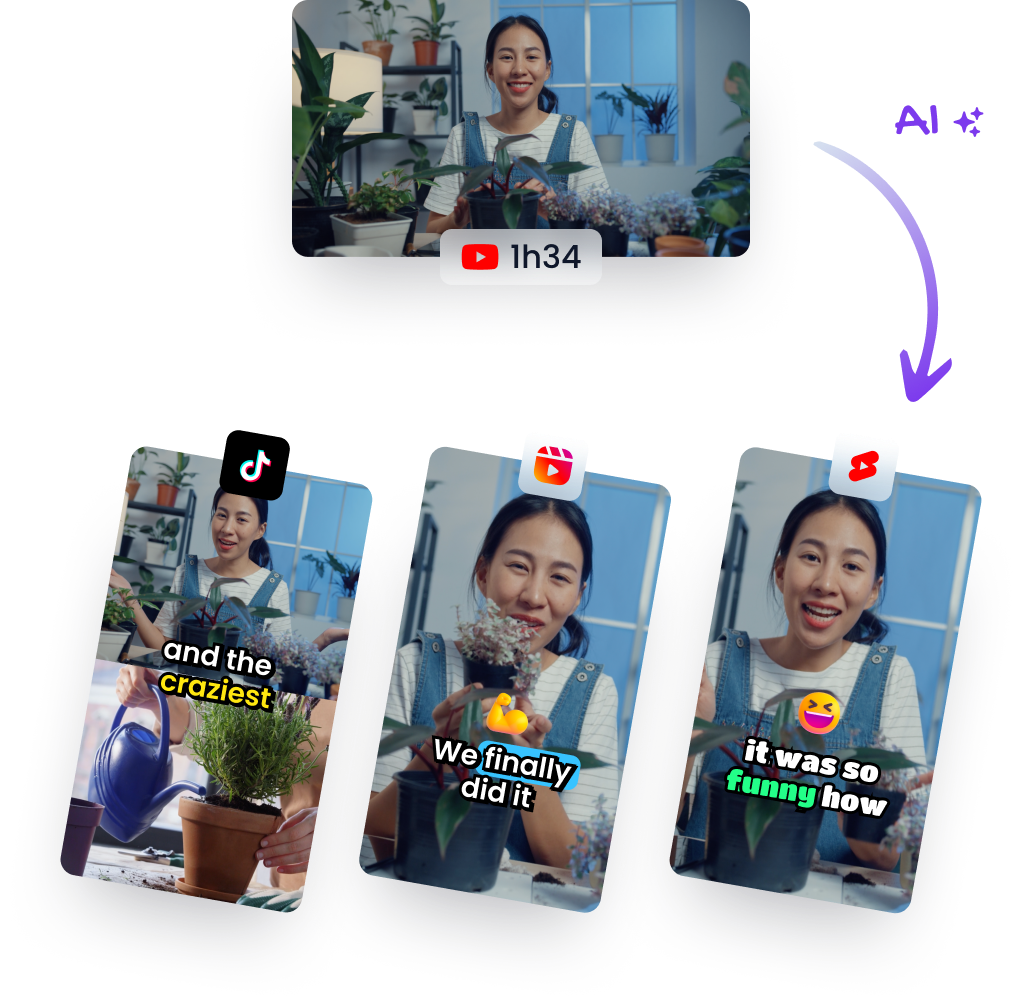
The fastest way to do that is to repurpose what you already have. A good clip generator like Klap can scan podcasts, webinars, and YouTube videos, surface moments worth turning into shorts, and help you package them for Instagram without rebuilding every Reel from scratch. That shifts your job from trend-chasing to trend execution, which is where the leverage is.
Here are the 10 Instagram Reels trends that matter most, and how to use each one without turning your content process into chaos.
1. The Hook-First Formula
The first second decides everything. If the opening frame feels flat, the viewer is gone before the rest of your edit has a chance to matter. That's why the strongest Reels open with a hard visual, a strong claim, or a moment that makes people stop scrolling and ask what happens next.

The best hook-first edits feel immediate. Think of rapid-cut intros, bold contrarian openings, or a transformation shown before the explanation. In practice, the strongest moment in your long-form video should usually go first, not later in the clip, because the goal is to earn the second frame, then the third, then the watch-through.
What works in real edits
Practical rule: Put the payoff before the setup whenever the clip can still make sense.
That means if you're turning a podcast into a Reel, don't start with the guest introducing themselves. Start with the sharpest sentence. If you're cutting a workout video, begin with the before-and-after result, then fill in the how. That's also where a tool like Klap's view-growth guide for Reels can help, because it's built around identifying the segment most likely to hold attention.
Use text overlays to create curiosity, but don't rely on vague bait. “Wait until the end” only works when the content pays it off. Better hooks are specific, visual, and tied to a real tension in the clip.
- Lead with motion: Start on the most dynamic frame from the source footage.
- Lead with contradiction: Open with a statement that challenges what people expect.
- Lead with proof: Show the result first, then show how you got there.
The point isn't to make every Reel loud. The point is to make the opening impossible to ignore. When you already have long-form video, Klap's AI clip generation can help you surface those moments faster, so you're not manually scrubbing through every minute just to find the first two seconds that matter.
2. Educational Quick-Tip Format
Short educational Reels keep winning because they respect attention. A viewer can learn something useful in a few seconds, save it for later, and move on without feeling like they've committed to a long lesson. That's why quick tips work so well for productivity, cooking, career, and tech content.
Metricool's 2026 Instagram study found that Reels generate more than four times the interactions of single-image posts and that average watch time rose to 8.5 seconds Metricool 2026 Instagram study. That doesn't mean every Reel should be a speed-run, but it does reinforce the value of tight teaching. The viewer wants the point fast, and the edit needs to deliver it without padding.
Build the clip like a micro-lesson
If you're repurposing a webinar or tutorial, pull out one concrete answer, one step, or one mistake to avoid. Don't try to teach the whole topic in one Reel. Make the clip feel complete, but narrow enough that someone can watch it once and remember the point.
Use numbered overlays, visible progress markers, and captions that can be read without sound. If the clip contains multiple beats, make each one easy to follow. For example, a developer can split one code explanation into a simple “problem, fix, result” flow, while a coach can turn a long answer into one actionable habit.
Summarizing long video into short social clips works especially well here because you can extract several teachable moments from one source file and build a mini library of educational Reels instead of chasing ideas one by one.
A good quick-tip Reel should feel like something the viewer can use immediately. If it doesn't answer a real question, it's probably too broad.
3. Trending Audio and Sound Design
A Reel can look polished and still miss if the sound choice feels random. Trending audio gives the clip a familiar entry point, but the sound still has to serve the message. The goal is simple, make the Reel easier to keep watching, not just easier to label as current.
Sound and pacing shape how far a clip gets. Reels ads reach a large audience, and shorter clips are more likely to be shown to people who do not follow you Loopex Digital benchmark. That makes the audio decision more than a style choice. A catchy track will not rescue a weak edit, and the wrong sound can make a strong cut feel off.
Choose sound with intent, not habit
Creators often grab a popular track because it is already trending, even when it fights the footage. That usually creates a mismatch viewers notice right away. Use audio that fits the energy of the clip, then let captions do the heavy lifting if someone watches with the sound off.
For repurposed long-form content, treat music like a variable you can test, not a fixed layer. A calm voice-led segment may work better with a light background bed, while a product demo or fast cut can benefit from sharper sound design that keeps momentum up. In Klap, that review stage lets you compare versions without rebuilding the entire edit each time the mood changes.
Adding background music to video clips is useful here because it lets you swap the music layer on the same cut and check how each version changes the pacing.
A good sound workflow usually follows a simple order. Start with the message, then check the edit rhythm, then choose the audio that supports both. Keep the captions readable, because sound should reinforce the clip, not carry it alone. Test two or three versions of the same footage if you can, since the right track often becomes clear only after comparison.
The best Reels do not feel assembled around a song. The sound and the visuals land together, and the clip feels intentional from the first second.
4. Carousel-to-Reel Storytelling
Some of the strongest Instagram Reels trends are really serial storytelling in disguise. Instead of packing every point into one clip, creators are breaking an idea into a sequence and letting the audience come back for the next piece. That works especially well for transformations, case studies, and step-by-step explanations.
The useful shift here is structural. A carousel taught people to swipe for progression. A Reel series does the same thing with motion and repetition, which can make the entire story easier to follow when the topic is too layered for one fast clip. This is especially smart for long-form content, because you can pull 3 to 5 natural breakpoints from a single source and turn them into an interconnected series.
Make the series feel intentional
The mistake most creators make is posting related clips without clear continuity. If part one doesn't set up part two, the series feels accidental. You want a visual system, matching intro cards, consistent framing, and a clear text cue at the end that tells the viewer there's more coming.
Use strong end text like “part 2” or “don't miss part 3,” then space the posts out by a day or two so the audience has time to follow the thread. If you're working from a podcast, interview, or webinar, Klap can help you isolate the best segments and turn them into a sequence without manually clipping every transition.
The strongest series usually have a built-in before, middle, and payoff. That could mean a business breakdown, a product launch story, or a teaching sequence that escalates naturally. The format wins because it turns a single idea into multiple touchpoints, which gives the audience more chances to engage.
For creators who already have a deep archive, this trend is less about making more content and more about packaging better content in smaller, connected pieces.
5. AI-Generated Avatars and Faceless Content
Faceless Reels keep growing because they remove a real production bottleneck, showing up on camera every time. For some creators, that means AI avatars. For others, it means synthetic voiceovers, screen recordings, or animated explainers that still feel personal enough to hold attention. The point is not to hide the human element. The point is to keep output moving without draining time and energy.
This format fits niches where the value sits in the information, the demo, or the structure, not in the face itself. Education, how-tos, commentary, and product walkthroughs are natural fits. If the content depends heavily on personality, faceless execution can still work, but the visuals need to carry more weight and the voice has to sound deliberate. This is particularly useful in fashion, where an ai clothing video generator can showcase products without needing a human model.
Keep the production clean
AI voices can help, but robotic narration flattens the clip fast. The voice has to match your brand tone, and the visuals need enough motion to keep the frame active. If you use an avatar, pair it with tight design choices so the Reel feels polished instead of generic.
Be transparent where it makes sense. Audiences are getting better at spotting AI-generated content, and honesty usually builds more trust than pretending the clip was fully human-shot. For high-volume content, this is a practical system, especially when combined with Klap's captions and reframing workflow, because you can turn one long tutorial into multiple faceless assets with less manual work.
If the topic is procedural, faceless content can outperform more polished personal videos simply because it is easier to produce consistently.
That consistency matters. A faceless workflow lets you post more often, test more formats, and keep the content engine moving even when you do not feel like filming yourself.
6. Micro-Trend Hopping and Format Remixing
Not every trend deserves a week of planning. The better play is often to catch a micro-trend early, remix it fast, and move on before it decays. That's especially true when the format is simple enough to adapt across niches without losing its core mechanic.
A July 2026 trend report described Instagram as splitting into “timely discourse and utility templates,” with repeatable patterns like AI/template tutorials and comment-to-DM recipes outperforming purely aesthetic posts July 2026 trend coverage. That's a useful signal. People are not only reacting to trends, they're reusing structures that can be adapted across different audiences.
Adapt the mechanic, not just the surface
The trend itself may be a transition, a reveal, or a looping pattern, but the reason it works is usually simpler than the visual. Your job is to identify the core mechanic, then ask how that same mechanic can serve your content.
If a dance trend is taking off, an educator can turn the movement into a teaching beat. If a reveal format is popular, a brand can use it for a product launch. If a creator is using a joke structure that lands, a service provider can swap in a client pain point and make it specific to their niche.
A useful habit is building a weekly brief of 3 to 5 micro-trends you could realistically adapt. That keeps your team focused on fast-moving formats without trying to chase everything. Klap helps here because it can quickly extract and reframe long-form footage into something that fits a trend structure instead of forcing you to rebuild from scratch every time.
The skill is speed with taste. If you wait too long, the format feels stale. If you adapt too aggressively, it no longer reads as the trend. The sweet spot is fast enough to feel current, but specific enough to feel like you.
7. Authenticity and Behind-the-Scenes Content
A polished Reel still has a place, but raw BTS content is doing more work than a lot of creators expected. People want the messy process, the setup, the outtakes, and the reality behind the final result. That is not a rejection of quality. It is a preference for proof.
Recent creator reporting points in the same direction, with many people choosing minimally edited talking-head content because it feels more natural and less overproduced Manychat creator trend report. The practical takeaway is simple. If your finished content looks strong, showing how it gets made makes it more believable and more human.
A good BTS Reel does not need a cinematic arc. It needs a useful angle.
Show the studio before the recording starts. Show the packaging line, the tool setup, or the client prep that happens before a call or live session. A podcast host can film the room before hitting record. A maker can show the materials on the bench. A coach can show the unglamorous steps that make the final result possible.
The point is to turn process into trust content.
A recurring BTS slot, even one simple weekly format, can build familiarity and reduce production pressure. If your long-form content already contains setup shots, failed takes, or process footage, Klap can pull those moments into a separate Reel so the raw material does not sit unused. That saves time and gives you a second asset from the same recording session.
- Show the process people never see: The draft, the setup, the redo.
- Keep some polish in the frame: Captions help raw footage feel intentional.
- Use recurring series names: Repetition helps viewers know what to expect.
The strongest BTS clips do not feel like apologies for imperfect content. They feel like access. That access builds trust faster than a perfect highlight reel ever could.
8. Interactive and Comment-Baiting Formats
Comments still matter, and creators plan for them. A Reel built around a direct question, a clear opinion prompt, or a simple choice gives people a reason to stop scrolling and respond. If the prompt feels forced, it reads like engagement bait. If it matches the content, it feels like a conversation.
The practical reason this format keeps showing up is simple. Instagram still rewards engagement, and comments send a stronger signal than passive views alone. Reels that get strong call-to-action comments tend to travel farther, which is why early replies matter so much for distribution. The point is not to chase comments for their own sake, it is to get viewers to interact while the clip is still fresh.
Ask better questions
The best comment-driving Reels do not ask for replies in a vague way. They ask about something the audience already has an opinion on, a choice, a mistake, a preference, or a niche decision that people can answer quickly. That makes the post feel like a real prompt instead of a forced reaction.
If you are working from long-form footage, use Klap's caption editing to turn a talking segment into a participation piece. A direct question overlay can change the purpose of the Reel without requiring a full re-edit, which saves time and keeps the workflow tight. Then answer the first comments quickly, because the reply thread can keep the Reel active longer.
Ask for a reaction to something real. Don't ask people to engage just because you want more engagement.
Pin useful comments, reply to the first few responses, and keep the conversation moving. Different audiences react to different prompts, so test a hot take, a “would you rather” choice, a mistake confession, or a niche-specific opinion. The goal is to make commenting part of the content itself, not an extra step bolted onto the end.
9. Vertical Video Optimization and Aspect Ratio Diversity
A lot of creators still think “vertical” is the whole optimization game. It isn't. The frame itself matters, and different content types can benefit from different aspect ratios, depending on how much text, face, motion, or product detail needs to fit on screen. That's one reason some creators are testing 9:16, 4:5, and other crops on the same material.
There's also a practical reason to care. A 2026 roundup reported that Instagram pushes sub-90-second videos to non-followers, that Reels make up 38.5% of the feed, and that Reels engagement sits at 1.23%, ahead of photos at 0.70% and carousels at 0.99% Vidico Instagram stats roundup. If the platform is rewarding short-form video, then framing becomes part of the performance problem, not just the design problem.
Choose the crop based on the content
Text-heavy clips often read better at 4:5 because the captions and overlays stay legible without feeling cramped. Visual-heavy clips usually belong in 9:16 because the frame gives the movement more room to breathe. Interview clips can work in either format, but they need careful safe margins so nothing important gets cut off on different devices.
Klap's automatic reframing helps here because you can test multiple versions of the same source footage without manually rebuilding the edit. That makes it easier to see which crop keeps the watch time strongest for your content type. If you're not sure which one to use, test the same Reel in Stories first, then publish the version that looks cleanest and most readable.
The point is not to obsess over aspect ratio for its own sake. It's to stop losing performance to avoidable framing mistakes.
10. Niche Community and Hyper-Targeted Content
Broad content can reach people. Niche content makes them feel seen. That difference matters because the Reels that travel inside a community are usually the ones that speak to a specific job, identity, hobby, or pain point instead of trying to satisfy everyone at once.
Generic trend posts often miss that mark. They may use the same audio or format as everyone else, but they never localize the message. The clip looks current, but it feels forgettable. A Reel built for a narrow group can land harder because the audience hears its own language in the first second.
Make the niche obvious fast
The strongest niche Reels do not waste time explaining who they are for. They signal it through language, references, examples, and pain points right away. A SaaS founder speaking to a specific type of buyer will often get more traction than a broad “entrepreneur tips” clip because the viewer feels the content was made for them.
Repurposing long-form content works best when you edit for different niches instead of forcing one generic version. The same podcast can become one clip for teachers, another for fitness professionals, and another for agency owners if the core point is broad enough. That approach turns one recording into multiple audience-specific assets without rebuilding the entire workflow each time.
- Use niche vocabulary: Speak like the audience already speaks.
- Target a real pain point: Skip vague “value” that does not solve anything.
- Build repeatable series: Familiar formats strengthen community identity.
A strong niche Reel is often more shareable inside the right community than a polished broad one. People share what feels specific to their group, not what feels generic to the whole app. For creators working from a long-form library, Klap makes that segmentation easier by helping you extract different angles from the same source content and move faster without starting from scratch each time.
Instagram Reels Trends: 10-Point Comparison
TrendComplexity 🔄Resource Needs ⚡Expected Outcomes 📊Ideal Use Cases 💡Key Advantages ⭐
The Hook-First Formula
Medium–High, fast cuts, A/B testing
Medium, editing tools, creative time
40–60% higher engagement when hooked in first 0.5–1s
Short attention-grabbers, repurposed long-form clips
Dramatically increases watch time and algorithmic prioritization
Educational Quick-Tip Format (15–30s)
Medium, clear scripting & staging
Low–Medium, captions, simple B-roll/graphics
25–30% higher save rates
Micro-tutorials, tips, productivity and how-tos
Positions creator as authority; highly shareable
Trending Audio & Sound Design
Low–Medium, sound selection & timing
Low, access to platform sounds, minor editing
~40–50% reach increase when using trending audio
Reach-focused content, emotional moments, demos
Boosts discoverability and watch-time completion
Carousel-to-Reel Storytelling
High, planning multi-part narrative
Medium–High, consistent branding, scheduling
Up to ~60% higher engagement for well-linked series
Case studies, transformations, serialized tutorials
Increases total profile time and repeated algorithmic exposure
AI-Generated Avatars & Faceless Content
Medium, tool setup, voice/style tuning
Medium, AI subscriptions, voice assets
Variable, comparable performance in some niches
High-volume output, privacy-first creators, explainers
Scales production and reduces ongoing filming overhead
Micro-Trend Hopping & Format Remixing
High, rapid monitoring and iteration
Medium, trend tools, quick editing workflows
35–45% higher reach when adopted within 2–3 days
Trend-forward niches, cross-niche experiments
Early adaptation yields stronger reach with lower competition
Authenticity & Behind-the-Scenes (BTS) Content
Low, loose scripting, minimal editing
Low, phone footage, lightweight editing
20–35% higher engagement and saves
Community-building, creator brands, process reveals
Builds trust and stronger parasocial relationships
Interactive & Comment-Baiting Formats
Low–Medium, craft CTAs and prompts
Low, simple production, moderation time
50–70% more algorithmic distribution via comments
Opinion pieces, community polls, debate-starters
Rapidly increases comments and community insights
Vertical Video Optimization & Aspect Ratio Diversity
Medium, reformatting and A/B testing
Low–Medium, export workflows, templates
10–15% engagement variance depending on ratio
Text-heavy education (4:5), visual demos (9:16)
Improves readability and mobile immersion when optimized
Niche Community & Hyper-Targeted Content
Medium–High, deep audience research
Low–Medium, tailored scripting and targeting
25–40% higher engagement within target niche
Specialized topics, SaaS verticals, niche coaching
Stronger loyalty, less competition, higher conversion intent
Turn Your Video Library into a Trend Engine
The creators who win with Instagram Reels trends in 2026 are not the ones who react the loudest. They're the ones who react the fastest with a system that already exists. Reels are a core attention surface on Instagram now, and the platform's own ad and usage shifts show that short-form discovery has become part of the business model, not a side experiment CNBC.
That changes the workflow. Instead of brainstorming every post from zero, start with the content you already made. Long-form video, especially podcasts, webinars, interviews, and YouTube uploads, often contains the hook, the tip, the story, and the BTS moment already embedded inside it. The job is to find those segments quickly, cut them into the right trend format, and publish while the format still feels current.
That's where a tool like Klap fits naturally. It can scan long videos, surface engaging moments, reframe them for vertical video, add captions, and help you move from raw footage to publishable Reels without spending hours in manual editing. If your content library is sitting untouched, you're already holding the material most creators wish they had.
The best next move is simple. Pick one long video you already trust, extract three clips from it, and test them against one of the trend patterns above. Watch which hook holds, which format gets saves, and which angle your audience responds to. Once you see that pattern, you can build a repeatable trend engine instead of running on creative guesswork.
If you've got a backlog of long-form content, turn it into short Reels instead of starting from scratch every time. Klap can help you find the best moments, reformat them for Instagram, and keep your output moving while trends are still fresh. Try it on one video, then build your next week of Reels from the clips it surfaces.