Automated Posts on Instagram How to Schedule and Publish
Other
You've finished a long podcast episode, webinar, or YouTube video, and the useful clips are sitting in an export folder while Instagram waits for the next manual upload. By the time you find a strong hook, crop it for mobile, add captions, write the caption, and remember the publishing time, the original idea may already feel stale.
Automated posts on Instagram solve the timing problem, not the judgment problem. A dependable system separates content creation, approval, publishing, and engagement, then gives each task the right tool. Instagram's official publishing infrastructure has moved the platform beyond manual-only posting, but it still expects professional accounts, permissions, valid media, controlled timing, and behavior that doesn't resemble a growth bot.
Why Automated Posting Changes Your Instagram Workflow
A creator managing several weekly Reels usually starts with a familiar routine. They edit one clip, publish it immediately, answer a few comments, then repeat the process whenever there's another spare hour. That approach feels flexible, but it makes publishing dependent on memory and availability. A manager can have excellent footage ready and still miss the moment because the team is busy with client work, recording, or campaign approvals.
Instagram's approved publishing model changes the role of the scheduler. Meta's Instagram Graph API uses a two-step flow, first creating a media container through /<IG_ID>/media, then publishing it through /<IG_ID>/media_publish, as described in Meta's official Instagram API overview. Independent technical documentation built around that workflow describes scheduled publishing from 10 minutes in the future up to 75 days ahead (technical background on Instagram API access).

That infrastructure works best for Business and Creator accounts, not ordinary consumer profiles. It also means access tokens, permissions, and sometimes Meta app review become part of the workflow. A tool that asks for a password through an unofficial login form is operating differently from a scheduler that uses approved API access.
What automation handles well
- Publishing: A scheduler can send approved feed posts and Reels at planned times.
- Consistency: Your queue can keep evergreen clips moving while you work on new material.
- Basic reporting: Approved tools can collect publishing and analytics data within their permissions.
- Team coordination: Reviewers can approve captions, cover images, and clips before anything goes live.
Human involvement still matters for the parts that depend on context. Someone should review claims, captions, sensitive subjects, trend relevance, and comments that need a thoughtful response. Automation should remove repetitive clicks, not remove accountability.
Practical rule: Automate the handoff to Instagram, but keep the editorial decision and audience relationship human.
The strongest workflow therefore looks less like “set and forget” and more like a small publishing operation. Content is prepared in batches, checked before scheduling, sent through an approved route, and monitored after publication.
Understanding Your Options for Automating Instagram Publishing
The right method depends on how much control your team needs and how much technical maintenance it can support. Native Meta tools are the simplest starting point. Approved third-party schedulers add collaboration and planning features. A direct API integration makes sense when publishing is part of a larger content system rather than an isolated social task.
Publishing routeBest fitMain advantageMain trade-off
Meta Business Suite
Individual creators and small teams
Native access and straightforward scheduling
Fewer workflow and approval controls
Approved third-party scheduler
Agencies and social teams
Calendar views, collaboration, and cross-channel planning
Dependence on the tool's permissions and integration
Direct Graph API integration
Developers and high-volume content systems
Fine-grained control over queues, states, and retries
Requires engineering, token management, and maintenance
Meta's native tools reduce setup friction because the publishing relationship stays inside the Meta ecosystem. They're useful when your needs are basic, your team is small, and you want to schedule feed content without building a wider production pipeline.
An approved third-party app earns its place when several people touch each post. Review queues, content calendars, client approvals, asset libraries, and reporting can make a meaningful operational difference. Before choosing one, compare its supported formats, account requirements, approval model, and failure notifications. A broader review of best tools for creator automation can help you frame that decision without treating every scheduler as interchangeable.
When an API is the better fit
Direct API publishing gives developers control over media preparation, queue logic, retries, and status tracking. Meta's workflow creates a container first, processes it, and then publishes it, so a custom system can record each stage rather than treating a successful request as proof that the post is already live.
That control comes with responsibility. Your application must handle access tokens, permissions, expired containers, invalid media, duplicate prevention, and platform limits. It's powerful for agencies repurposing a large library of approved video, but excessive for a creator who only needs a visual calendar and a publish button.
The practical choice is simple. Stay native when simplicity matters most, use an approved scheduler when coordination is the bottleneck, and build on the API when publishing must connect directly to your content and customer workflows.
Getting Ready to Automate Without Breaking Rules or Formats
A scheduled post can fail before anyone notices. The account may lose its connection, a token may expire, a media URL may stop working, or the exported file may not match the selected format. Run a pre-flight check before adding assets to a large queue.

Confirm the account and permissions
Use a Business or Creator account connected through an approved Meta pathway. For API publishing, confirm that the application has the instagram_content_publish permission and that its access token remains valid. If your route needs a Facebook Page connection or app review, complete that work before preparing a large queue.
A connected account may still lack access to every publishing format. Check the selected tool's support for feed posts, Reels, Stories, analytics, and moderation. Confirm the publishing route first, then build the production process around its actual limits.
Validate the media before scheduling
For API-based image publishing, technical guidance recommends a publicly accessible media URL, JPEG-only images, and an aspect ratio between 4:5 and 1.91:1 (Instagram scheduling API guidance). Test the URL from outside your own device. A private file, an expiring signed URL, or an unsupported export can interrupt a scheduled run.
For video, review the crop, text-safe area, audio, captions, cover image, and complete playback before upload. Klap's guide to formatting video for Instagram helps turn source footage into a mobile-ready asset instead of relying on a simple vertical export.
Prepare the editorial layer
Technical validation does not guarantee a useful post. Review the opening frame, caption, call to action, hashtags, accessibility text where supported, and cover image. Remove claims that require current verification, and write copy that matches the clip rather than summarizing the original long-form episode.
For campaign content, assign each post a specific action before scheduling. Connect the caption, destination, and offer so the queue supports generating leads from social media instead of producing volume without a clear purpose.
Attach this checklist to every asset:
- Account: The correct professional account is selected.
- Permission: The publishing connection and token are active.
- Asset: The URL is public and the media meets the required format.
- Copy: Caption, cover, hashtags, and call to action are approved.
- Queue: Date, time, timezone, and campaign label are correct.
- Owner: Someone checks the result after publication.
How to Build a Reliable Automated Posting Workflow for Repurposed Video
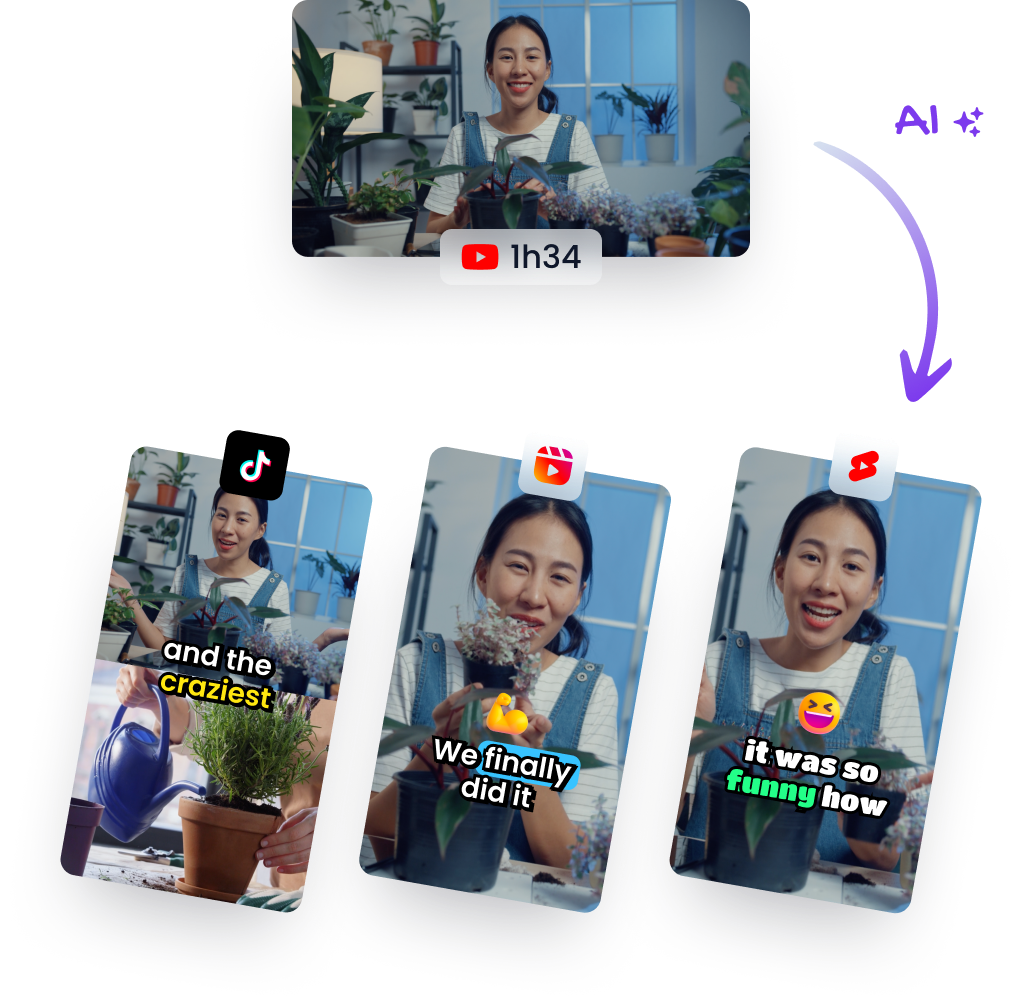
A long-form video can produce a full queue of Instagram content, but only if the publishing pipeline separates selection and editing from timing and delivery. Start with the source, identify usable moments, adapt each clip for vertical viewing, approve the result, then send it to Meta Business Suite, an approved scheduler, or an API workflow. Klap can analyze a YouTube upload, podcast, webinar, or other long-form source, reframe selected segments, and add captions before scheduling.

Start with a source library, not a random upload
Organize source videos by topic, audience, guest, product, and publication status. One podcast episode may contain educational clips, objections, personal stories, and opinion segments. Label those themes before editing so the queue has variety rather than several posts making the same point.
Klap's AI analysis can surface promising moments, but review every suggested start and end point. A complete sentence may still omit necessary context, while a dramatic opening can misrepresent the discussion that follows. Keep clips that make sense to someone who never watched the original episode.
Edit for the feed
Review the opening seconds first. The viewer should understand why the clip deserves continued attention. Reframe the speaker's face, preserve important on-screen details, and correct captions when names, technical terms, or branded language are wrong. Use a cover that states what the clip delivers, not only who appears in it.
Match the Instagram format to the intended action. A short clip with a direct hook can support discovery, while a carousel built from the same idea may work better as a saveable summary. Repurposing the same source does not mean copying the same treatment across formats.
Queue only approved assets
Export finished clips with stable, accessible media delivery. Then load them into Meta Business Suite or an approved scheduler with a specific caption, cover, planned time, and owner. Keep the initial batch small enough for review. One recurring caption, crop, or captioning error can otherwise spread across the entire queue.
Teams also need a documented handoff between clip production, approval, and scheduling. Klap's guidance on workflow standardization can help define those responsibilities and reduce missed checks.
For direct API publishing, create the media container close to the target publishing time. Containers can expire after 24 hours, so creating them too far in advance can leave a scheduled job without usable media. Store container and media IDs, check the publishing state, and confirm the live post before retrying a request.
A successful upload isn't the same as a live post. Treat processing, publishing, and verification as separate events.
A reliable system assigns four responsibilities: AI finds and prepares candidate clips, the editor confirms meaning and quality, the scheduler manages timing, and the human manager checks the live result and responds to the audience. This separation also makes it easier to identify whether a failure came from the source edit, the approved publishing tool, or the delivery layer.
Troubleshooting Failed Schedules and Avoiding Account Risk
A green status in a publishing dashboard does not prove that Instagram has processed or published the media. Read the returned state and separate pending, published, and failed records. Save the media or container ID with each job so the team can inspect the exact request instead of guessing.
Expired media is a frequent failure point. A signed URL may work during testing and stop resolving before the scheduled run. Use a stable public URL, create the container closer to publishing time, and check Instagram plus the stored IDs before retrying. If the post already went live, a second request can create an unwanted duplicate.
Diagnose the operational limit first
Independent summaries report a cap of 100 API-published posts in a rolling 24-hour window, with carousels counted as one post (Meta publishing limit coverage). A separate scheduling guide documents a 25-post limit per 24-hour window (Instagram automation planning guidance). Limits and tool behavior can differ by endpoint, account status, and implementation. Until the current integration confirms its limit, plan against the lower threshold.
Stop retrying when the queue reaches a limit. Mark blocked jobs, retain their intended order, and move them to the next available window. Retries should be idempotent, so repeating a failed request does not create duplicate posts. Store a job key, response status, and resulting media ID for every attempt.
Remove risky behavior from the workflow
Approved publishing tools handle editorial distribution. They do not make bulk liking, following, unfollowing, scraping, browser automation, or mass commenting safe. Keep those actions out of the automated queue because they create behavior patterns unrelated to legitimate publishing.
Safety guidance recommends natural posting activity, spacing automated posts by at least 3 hours, and varying scheduled times by at least 15 minutes (Instagram automation safety guidance). Treat these as operating heuristics, not guarantees. A queue that publishes every item at the same minute with near-identical captions can look mechanical, even when each video came from an approved workflow.
Official scheduling does not automatically reduce performance. One controlled experiment reported scheduled posts with an 8.19% engagement rate and 10,122 reach, compared with 6.44% and 7,189 for native posts (controlled scheduling comparison). The result is not a promise for every account. Check the hook, crop, caption, audience fit, and publishing state before blaming the scheduler.
Teams connecting clip production, approval, Meta tools, and third-party schedulers need one integration log. Record token ownership, approval state, failure alerts, retry rules, and final verification. Guidance on third-party integrations illustrates why those handoffs should be documented rather than split across disconnected notifications.
Best Practices to Keep Automated Posts Performing Long Term
A queue should create breathing room, not turn your feed into a conveyor belt. The strongest long-term systems use automation for dependable distribution and reserve human attention for context, conversation, and creative decisions that change with the audience.
Build a format mix around the job each post needs to do:
- Reels for reach: Lead with a clear hook from a repurposed clip and remove unnecessary setup.
- Carousels for saves and shares: Turn a useful segment into a structured explanation or checklist.
- Series for retention: Give related clips a recognizable title or recurring frame so viewers know there's another installment.
- Manual posts for context: Add timely reactions, behind-the-scenes moments, and responses that require judgment.
Vary publishing times instead of creating an identical daily signature. Leave room for comments and direct messages after a post goes live. One safety guide recommends reserving 20% of activity for human engagement while keeping the remainder automated (automation safety recommendations). The exact balance should follow your team's capacity, but the principle is sound: a scheduled feed shouldn't be the only sign that a real person manages the account.
Review analytics before increasing volume. Look for which hooks attract reach, which explanations earn saves, which clips generate meaningful comments, and which topics produce profile actions. Then adjust the source selection and editing rules, rather than just adding more posts.
Sustainable automation means fewer forgotten opportunities, not maximum output.
This week, choose a small set of long-form videos, create a varied batch of clips, approve every caption and cover, schedule them through an official route, and inspect each published result. Keep the queue organized by topic and status, pause anything that fails validation, and let performance determine what deserves another edit.
Klap turns long-form videos from YouTube uploads, podcasts, and webinars into short, vertical clips with AI-assisted selection, reframing, captions, and editing controls, giving your Instagram queue prepared material to work with. Visit Klap to create repurposed clips and build a more consistent publishing workflow without handing editorial judgment over to a bot.