How to turn on captions on tiktok: Quick, step-by-step guide
Other
Wondering how to turn on captions on TikTok? For viewers, it’s usually as simple as tapping the "CC" or "Captions" button on a video. If the creator has enabled them, you can instantly make the content more accessible, whether you're in a noisy room or just prefer reading along.
The Undeniable Power of TikTok Captions
Let's be real—captions on TikTok aren't just a nice-to-have feature anymore. They're an absolute necessity for anyone serious about growing on the platform. Think about it: a staggering 85% of social media videos are watched on silent. Without captions, your message is getting lost before it even has a chance.
Before we get into the nitty-gritty of turning them on, it's helpful to understand how the TikTok platform works. Knowing the algorithm and user behavior helps you see why a simple action like adding captions can make such a massive difference.

Driving Engagement and Expanding Reach
For creators, choosing to use captions directly impacts your video's visibility and potential to go viral. It’s a small change that delivers some pretty big results.
- Boosts Viewer Retention: Captions grab and hold attention, which is critical in those first few make-or-break seconds of a video. An increase in watch time signals a quality video to the algorithm.
- Improves Comprehension: They help clarify fast-paced dialogue, technical jargon, or muddled audio, making your content much easier to digest.
- Enhances SEO and Discoverability: The text in your captions is searchable. This gives TikTok’s algorithm crucial context about your video, helping it push your content to the right audience.
The data doesn't lie. A study by Verizon Media found that 80% of consumers are more likely to watch an entire video when captions are available. And with TikTok’s user base expected to reach an incredible 1.99 billion monthly active users by 2026, you need every advantage you can get to stand out.
To really see the difference, here’s a quick look at what happens when you turn captions on versus leaving them off.
Caption On vs Caption Off A Quick Comparison
FeatureBenefit for ViewersBenefit for Creators
Accessibility
Makes content available to deaf and hard-of-hearing communities.
Expands your audience reach to be more inclusive.
Silent Viewing
Allows users to watch in sound-off environments (work, public transport).
Retains viewers who can't or prefer not to use audio.
Comprehension
Clarifies speech, accents, and complex topics for better understanding.
Reduces viewer drop-off from confusion and improves message clarity.
Engagement
Keeps viewers focused and following along, increasing watch time.
Boosts watch time and retention, signaling a quality video to the algorithm.
Discoverability
Not a direct benefit.
The text helps TikTok's SEO, pushing your video to more For You Pages.
This table makes it clear: enabling captions is a win-win for everyone involved.
By not using captions, you are actively choosing to exclude a large portion of your potential audience. This includes not only the deaf and hard-of-hearing community but also the millions of users who consume content in sound-off environments every day.
At the end of the day, captions are all about being inclusive and effective. They tear down barriers, letting your content connect with a global audience, no matter their language, hearing ability, or where they're watching. That makes them one of the most powerful—and simplest—tools in any creator's arsenal.
Enabling Captions for a Better Viewing Experience
Ever find yourself in a noisy room or trying to watch a TikTok without sound? Turning on captions can be a lifesaver, and most of the time, it's just a single tap away.
When a video with captions starts playing, keep an eye out for a small rectangular icon, usually marked with a "CC" or simply "Captions." You'll typically find it overlaid on the video near the bottom. Just tap that button, and the text will pop right up.

What to Do If You Don't See the Caption Icon
So what happens if that little "CC" icon is nowhere to be found? It means the creator didn't turn on TikTok's auto-captions or didn't burn them directly into the video file before they uploaded it. When that's the case, there's unfortunately no way for you to force them to appear.
This is a key distinction because it all comes down to the creator's choice. You’ll generally run into two types of captions on the platform:
- Auto-Captions: These are generated by TikTok and can be toggled on or off by the viewer using the "CC" button.
- Embedded Captions: These are "burned" into the video itself by the creator, so they’re always visible and can't be turned off.
Here's an actionable insight: If you love a creator's content but need captions to follow along, just drop a friendly comment. A simple, "Love your videos! Captions would be a huge help!" often encourages creators to make their work more accessible for everyone.
How to Add Auto Captions to Your TikTok Videos
As a creator, turning on captions for your TikToks isn't just a nice-to-have anymore—it's essential. With over 1 billion active users on the platform, it’s one of the easiest ways to make your content more accessible and professional.
The good news is that enabling TikTok's built-in Auto Captions feature is baked right into the upload process.
Once you’ve recorded or uploaded your video and landed on the final editing screen, you’ll see an options panel on the right. If you don't see it, just tap the "down" arrow to expand the menu. Look for an icon labeled "Captions" and give it a tap.

That one tap tells TikTok’s AI to get to work analyzing your audio and transcribing everything that’s said. It only takes a few moments, and then the text will pop up. Always, always take a minute to review them for accuracy before hitting post.
Maximizing Caption Accuracy and Impact
Let's be real: TikTok’s AI is good, but it’s far from perfect. To give it the best shot at generating accurate captions, there are a few things I’ve learned to do that make a huge difference.
- Speak Clearly and Slowly: Don't mumble or rush your words. The cleaner your audio, the better the transcription will be. This is a simple fix that saves a ton of editing time later.
- Reduce Background Noise: Try to film in a quiet space. Things like traffic, loud music, or even an air conditioner can confuse the AI and spit out gibberish.
- Use a Good Microphone: Your phone’s built-in mic gets the job done, but an external microphone can be a game-changer. Even an inexpensive lavalier mic seriously improves audio quality, which directly translates to better captions.
By enabling captions, you're not just adding text; you're adding a layer of professionalism and polish. It signals to viewers that you care about their experience, which builds trust and encourages them to stick around longer.
If you're looking to level up your entire editing workflow, you should check out our guide on the best TikTok editing apps. These can help you create amazing videos before you even get to the captioning part.
Remember, every bit of effort you put into your content’s quality—from clean audio to accurate captions—helps its performance. Captions also give you extra real estate for storytelling, humor, or calls-to-action that drive your video's message home.
Editing Your Captions for Accuracy and Style
Flipping on auto-captions is a good start, but the real magic happens in the edit. This is what separates amateur-hour content from a video that feels truly professional. TikTok's AI is surprisingly good, but let's be honest—it's never going to be perfect.
Once TikTok generates the text, don't just hit post. Tap on the text preview that pops up over your video. This brings you into the caption editor, where you get full control over the words and, just as importantly, their timing.

Correcting Common AI Mistakes
Your first move should always be a quick proofread. The AI often gets tripped up by the same kinds of words, so keep an eye out for these common slip-ups:
- Names and Nouns: It will almost always misspell brand names, people's names, or unique places. For instance, the AI might hear "Klap" and spit out "clap."
- Slang and Jargon: If you use industry-specific terms or casual slang, the AI will likely get it wrong. Fixing these is key to making sure your audience actually understands you.
- Homophones: Words that sound alike but mean different things (think "their," "there," and "they're") are classic AI blunders.
After you've cleaned up the text, the next step is perfecting the timing. You can drag the caption blocks along the timeline in the editor to make sure they sync up perfectly with your speech. This small tweak makes your video feel much more polished and easy to follow.
Accurate captions aren't just about getting the words right; they're about respecting your audience. Taking an extra two minutes to edit shows you value their time and want to give them the clearest experience possible.
Using Captions for Creative Impact
But why stop at accuracy? You can use the editor to add style and turn your captions into a tool for engagement. Think of them as another layer of your storytelling.
For example, try breaking up a long, rambling sentence into a few short, punchy lines. This creates a dynamic rhythm that's much more scannable and can seriously improve how long people stick around to watch. It's a key reason why video content has an average engagement rate of 6.01% on TikTok, far surpassing other platforms.
If you're creating clips regularly, using a dedicated subtitle generator before you even get to TikTok can give you a huge advantage. These tools often have more advanced options for custom fonts, slick animations, and color palettes that make your videos instantly recognizable. By fine-tuning your captions, you turn a simple accessibility feature into a secret weapon for hooking viewers and keeping them glued to the screen.
Why Accurate Captions Are a Game Changer
So you've figured out how to turn on captions. But let's get into the why. Getting your captions right isn't just about ticking an accessibility box—it’s a powerful lever for boosting your content's performance and making your brand look sharp.
First off, it’s about inclusivity. Accurate captions open up your content to the deaf and hard-of-hearing communities, an audience that would otherwise be left out. Plus, when you consider that a significant number of people watch videos with the sound off—on the bus, in a quiet office, or late at night—captions ensure your message hits home no matter what.
Boosting Comprehension and Retention
If you create educational or coaching content, clean captions are non-negotiable. They are proven to improve how well viewers understand and remember what you're teaching. This is a game-changer when you're breaking down complex ideas or walking someone through a tutorial.
When someone can read along as they listen, the information sticks. It’s a simple trick that builds trust and cements your status as an expert who knows how to communicate clearly. You can even take this a step further and translate your video content for a global audience, expanding your reach even more.
Polished captions are a direct reflection of your brand's quality. When a viewer sees clean, accurate text, it signals that you are professional, detail-oriented, and care about their experience.
Driving Hard Metrics with Precision
That attention to detail has a real, measurable impact on your stats. Videos with polished, error-free captions consistently see higher watch times and more shares. When viewers aren't distracted by awkward auto-caption mistakes, they stay engaged for longer. That sends a powerful signal to the TikTok algorithm that your video is worth pushing.
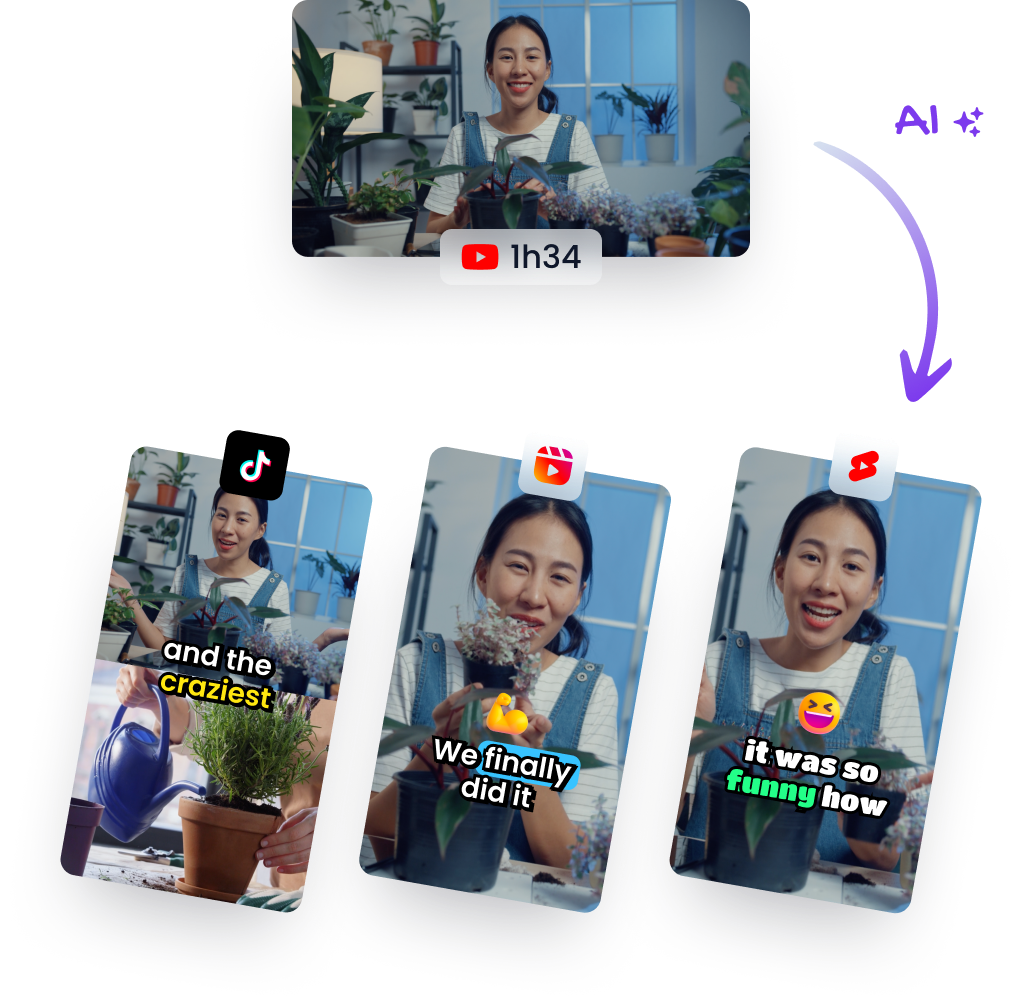
This is especially true for creators repurposing long-form content, like podcasters or YouTubers. Using an external tool before you even upload to TikTok gives you a serious professional advantage. For instance, an AI tool like Klap can take a full-hour webinar, identify the most compelling moments, add perfectly synced subtitles, and reframe the shot for vertical viewing. You get ready-to-post clips in minutes, delivering a far more polished result than the native editor can offer.
Stumped by TikTok Captions? We've Got Answers
Even a feature as simple as captions can throw a wrench in your plans. Whether you're a creator trying to get it right or a viewer wondering where the text is, some questions pop up again and again.
Here are some quick answers to the most common roadblocks people hit with TikTok captions.
Why Can't I See Captions on Some TikToks?
Ever scroll to a video and find the caption option is just... gone? If you can't see the "CC" button, it’s because the creator never turned them on. It's that simple.
The feature only shows up if a creator has either enabled TikTok’s auto-captions during the upload process or burned them directly into their video file beforehand. As a viewer, there’s no secret setting to force them to appear. The best you can do is leave a polite comment asking the creator to consider adding them next time.
Key Takeaway: The power to add captions rests entirely with the creator. If the option isn’t there, it’s because they didn’t enable it.
Can I Change the Language of Captions?
Sometimes, you can. If the creator enabled translations for their auto-captions, you’re in luck. Just tap the caption text, head to the settings, and select 'See translation.' The text will switch to your app's default language.
But this isn't a guaranteed feature. For creators serious about reaching a global audience, relying on TikTok’s built-in translation is a gamble. The smarter move is to use an external tool to add accurate, multi-language subtitles before you even upload the video.
Stop wasting hours editing. With Klap, you can turn your long-form videos into dozens of viral, ready-to-post short clips with perfect captions in just minutes. Try it for free at https://klap.app.