How to Make a Nice Video for YouTube: 2026 Pro Tips
Other
So you want to know how to make a nice video for YouTube? The secret isn’t a better camera; it's a better process. The fastest way to level up your content is by mastering four key phases: planning your content (Pre-Production), filming with intention (Production), editing for impact (Post-Production), and promoting your work with smart repurposing.
Your Blueprint for a Standout YouTube Video
Making a YouTube video that actually gets views in 2026 is about more than just hitting record. It’s about having a solid workflow that turns your ideas into polished content that people want to watch—and that the algorithm wants to show them. When you break the process down into clear stages, you stop guessing and start building a system for consistent quality.
This entire workflow can be boiled down into four core phases: Plan, Film, Edit, and Promote.

This simple chart shows that the real work starts long before you film and continues long after you publish. It's a cycle of creation and growth.
Why a System Matters More Than Gear
The YouTube algorithm has gotten incredibly smart. In 2025, the average views per video shot up from 389.90 to 687.21—a massive 76% increase in just one year. What does that tell us? The recommendation engine is getting better at finding good content and showing it to the right people. If you want to take advantage of that, you need to focus on quality and optimization, not just pumping out videos.
This table breaks down exactly what's involved in each of the four main phases of production.
The Four Phases of Creating a YouTube Video
PhaseKey ActivitiesPrimary Goal
Pre-Production
Ideation, keyword research, scripting, and shot listing.
To create a clear, strategic plan before filming begins.
Production
Setting up lights, camera, and audio; recording all video and B-roll.
To capture all necessary footage with the best possible quality.
Post-Production
Editing video, color grading, sound mixing, creating thumbnails.
To assemble the raw footage into a polished, engaging final video.
SEO & Publishing
Writing titles/descriptions, adding tags, scheduling, and promoting.
To optimize the video for discovery and drive initial viewership.
By mastering these stages, you build a powerful system for creating high-performing content every time. To go even deeper on the strategy behind it all, check out this comprehensive video marketing guide which dives into the core pillars for making your videos stand out.
The biggest mistake creators make is treating video creation as a single step—filming. In reality, filming is just one small part of a larger system. Success comes from dedicating time to each phase equally.
Ultimately, having a repeatable process frees you from constantly reinventing the wheel. It lets you put your creative energy where it really counts: delivering value to your audience. This guide will give you that exact system, step by step.
Pre-Production: Where Great Videos Are Actually Made
The secret to a killer YouTube video isn’t some magic trick you pull off when you hit record. It’s forged long before that, in the planning phase. A great video starts with a solid blueprint, turning a vague idea into a focused plan that makes filming and editing a breeze.
This isn’t about fluffy advice like “find your niche.” It’s about building a concrete strategy before you even think about touching your camera.
Find an Idea with a Unique Angle
The most successful creators don’t just pick a topic; they find an angle no one else is covering. This starts with a little recon on YouTube.
Do a quick search for your initial idea and watch the top three to five videos that pop up. You’re not looking to copy them. You’re looking for a gap.
Ask yourself:
- What points do they all repeat?
- What questions are people asking in the comments?
- Is there a different perspective or a more specific problem you can solve?
For example, instead of another video on "how to bake bread," you might see no one is talking about "how to bake sourdough bread in a humid climate." That’s your entry point. That’s how you carve out a space for your content and become instantly valuable to a real audience.
Once you have your angle, lock in one clear purpose for the video. Is your main goal to educate (teach a specific skill), entertain (tell a great story), or persuade (review a product)? Every single thing in your video should serve that one goal.
A video that tries to do everything accomplishes nothing. Defining a single objective—whether it's to teach one specific skill or evoke one particular emotion—is the first step toward creating content that feels focused and professional.
This clarity is what stops you from rambling and guarantees the viewer gets exactly what they clicked for.
Outline for a Confident Delivery
With a clear concept, it’s time to structure your content. Writing a full, word-for-word script can feel intimidating, and honestly, a bullet-point outline is often way better.
An outline keeps you on track but lets you deliver your lines naturally, like you’re having a conversation. You won’t sound like a robot reading a teleprompter, and you won’t forget your most important points.
Here’s a simple structure you can steal for any educational video:
- The Hook: Kick things off with the viewer's problem or a surprising fact. (e.g., “Struggling to get clear audio? You don’t need a $500 microphone.”)
- The Promise: Tell them exactly what they’re about to learn. (“In the next 10 minutes, I'll show you three free ways to instantly improve your audio.”)
- Main Content: Lay out your key steps or tips. (e.g., Tip 1: Room setup, Tip 2: Mic placement, Tip 3: Free software).
- Conclusion & CTA: Summarize the big takeaway and tell them what to do next. (“Now you have a process for clean audio. If this helped, subscribe for more tips!”)
This simple framework gives you structure and makes you feel more confident on camera. Creators who plan their content—even with a basic outline—come across as more credible and hold viewer attention longer.
This roadmap prevents rambling and ensures your final video is tight, focused, and packed with value. It’s the single most effective thing you can do to make your production smoother and your final product better. This is what separates amateur videos from content that builds a real audience.
Bringing Your Vision to Life During Production

Alright, you've done the planning. Now it's time for the fun part: hitting record. This is where you capture the raw material for your masterpiece, and you don’t need a Hollywood budget to do it.
Honestly, knowing how to make a nice video for YouTube is less about expensive gear and more about mastering a few key techniques. Let's dig into the three things that matter most: visuals, audio, and lighting.
Master Your Camera, Even If It's Your Phone
You absolutely do not need to buy a new camera. The smartphone in your pocket shoots incredible video, but you have to learn to take control of it. Just pointing and shooting won't cut it—a few small tweaks make all the difference.
First things first: always shoot in landscape (horizontal) mode. This gives you the standard 16:9 format that looks best on YouTube. Next, lock your focus and exposure by tapping and holding on your face. This simple trick prevents the camera from "hunting" for focus or randomly changing brightness while you’re talking.
To make your shots look more professional, use the rule of thirds. Picture your screen divided into a 3x3 grid. Instead of planting yourself in the dead center, line up your eyes with the top horizontal line and your body along one of the vertical lines. It's a classic composition trick that instantly makes your framing more dynamic and pleasing to watch.
Prioritize Crystal-Clear Audio
Here’s a hard and fast rule for YouTube: viewers will forgive so-so video, but they will never tolerate bad audio. If people have to strain to hear you or get distracted by echo and background noise, they'll be gone in seconds. Bad audio screams "amateur," no matter how good your video looks.
You don't need a fancy studio mic to sound great. A simple lavalier mic that clips to your shirt can cost as little as $20 and will instantly level up your audio quality by isolating your voice from room noise.
Here are a few more tips to get clean sound:
- Pick a quiet room: Find a space with soft surfaces like carpets, rugs, or curtains. They absorb sound and kill that nasty echo.
- Silence everything: Turn off air conditioners, fans, and any other electronics that buzz or hum in the background.
- Do a quick clap test: Clap your hands loudly. If you hear a sharp, metallic echo, the room is too "live." Bring in some pillows or blankets to deaden the sound.
Focusing on clean audio is the single biggest thing you can do to make your videos feel more professional. For a deeper dive into optimizing your setup, check out our guide on the best tools for an easy-to-use online video maker to help you polish everything in post.
Simple Lighting for a Professional Look
Good lighting is what separates a flat, grainy shot from one that’s crisp and flattering. And just like with audio, you don't need to spend a fortune on pro lights. Your goal is simply to get soft, even light on your face.
Your best and cheapest light source is a big window. Just set yourself up facing it, and let the natural light do the work. Whatever you do, never film with a bright window behind you—it’ll turn you into a dark, faceless silhouette.
The classic three-point lighting setup is famous for a reason, but you can fake it on a budget. Use a window as your main "key light." Grab a white foam board from a craft store to bounce light back onto the shadowy side of your face. Then, place a simple lamp behind you and out of frame to create a subtle "hair light" that helps you pop from the background.
This DIY approach costs almost nothing but makes your video look incredibly polished and intentional.
Be Authentic and Engaging On Camera
At the end of the day, the best gear in the world can't save a boring delivery. Being natural on camera is a skill that takes practice, but your bullet-point outline from the planning stage is your secret weapon here.
Don't read a rigid script. Instead, talk through your points like you’re explaining them to a friend. Smile. Use your hands. Let your real personality shine through. If you trip over your words or have to pause, who cares? You can easily edit that out later.
The real key is to speak with energy and passion. Your enthusiasm is contagious. If you're genuinely excited about your topic, your audience will feel it too. That authentic connection is what turns a casual viewer into a loyal subscriber.
Polishing Your Masterpiece in Post-Production

This is where the real magic happens. Post-production is where you take all that raw footage—the good, the bad, and the slightly awkward—and sculpt it into a tight, compelling story. It’s less about having fancy software and more about making smart choices that keep your audience hooked.
Think of it like putting a puzzle together. You’ve got all the pieces from your shoot; now it’s time to arrange them in the right order to create a clear and powerful final picture for your viewer.
Weaving Your Story With a Clean Edit
The first and most crucial job in post-production is creating the rough cut. This is where you lay out your main talking points (your "A-roll") and mercilessly chop out anything that doesn't move the story forward. That means getting rid of mistakes, long pauses, and any time you ramble off-topic.
Your goal here is ruthless efficiency. If a sentence doesn't add value, cut it. Viewers have short attention spans, and a tight edit shows you respect their time. This is a fundamental step in making a nice video for YouTube because it keeps the pace snappy and the viewer engaged.
Once your main narrative feels solid, it's time to layer in your B-roll. This is any supplemental footage you have, like close-ups of a product, screen recordings, or even stock footage that visually explains what you're talking about. B-roll is a game-changer for a few reasons:
- It hides your cuts: When you slice out a mistake in your A-roll, it can create a jarring "jump cut." Placing a B-roll clip over that transition makes the edit feel seamless.
- It adds context: Showing is always more powerful than just telling.
- It keeps viewers engaged: Cutting to a new shot every 5-10 seconds keeps things visually interesting and stops people from getting bored and clicking away.
Enhancing With Audio and Visuals
With your visual story in place, the next layer is sound. Your top priority is making sure your voice is clear and consistent. This involves audio leveling, which just means making sure there are no sudden loud parts or quiet moments where the viewer has to strain to hear you.
Background music is another powerful tool, but you have to use it carefully. The music should support the video's mood, not fight with your voice for attention. A good rule of thumb is to set your music volume somewhere between -25dB and -35dB compared to your dialogue. This keeps it present but firmly in the background.
Simple text graphics can also add a ton of professionalism and clarity. You don't need wild animations. A clean lower-third to introduce a topic or an on-screen bullet point list can be incredibly effective. And don’t forget captions. An estimated 80% of social videos are watched with the sound off, and captions also make your content accessible. To get this done fast, a high-quality subtitle generator can add them accurately in minutes.
Your audio mix can make or break the entire video. If the background music is too loud, viewers will get frustrated and leave. Always listen to your final mix on different devices—like your phone speakers and headphones—to make sure the balance is right everywhere.
This attention to detail in your sound is what separates amateur videos from professional ones.
Perfecting the Final Look and Feel
Finally, it’s time for the finishing touches. Color correction is the process of giving your video a consistent and appealing look. Most editing software has simple, one-click tools to adjust brightness, contrast, and saturation. You’re not trying to make a Hollywood film; you just want your shots to look clean, vibrant, and consistent from start to finish.
Putting this effort into post-production isn't just a creative exercise; it directly impacts your results. Wyzowl data shows that 87% of businesses now use video as a marketing tool. A polished video isn't just nice to have; it's a powerful business tool.
The very last step before you hit publish is creating your video's "packaging"—the thumbnail and title. These two things work together to grab a viewer's attention and convince them to click. A great thumbnail should be:
- Bright and Clear: Use vibrant colors and a high-resolution image, preferably of your face showing some emotion.
- Simple but Punchy: Include just 2-3 words of bold text that spark curiosity and state the video's topic.
- On-Brand: Keep a consistent style across your thumbnails so your content becomes instantly recognizable in a crowded feed.
Your title should be packed with keywords while promising a clear benefit to the viewer. Nail these elements, and you’ve created a polished, professional video that’s ready to find its audience.
Multiplying Your Reach with Short-Form Content

Hitting 'publish' on your polished video isn't the finish line—it's the starting gun. Making a nice video is only half the battle; the other half is getting people to actually watch it. The smartest creators today don't just create content; they multiply it.
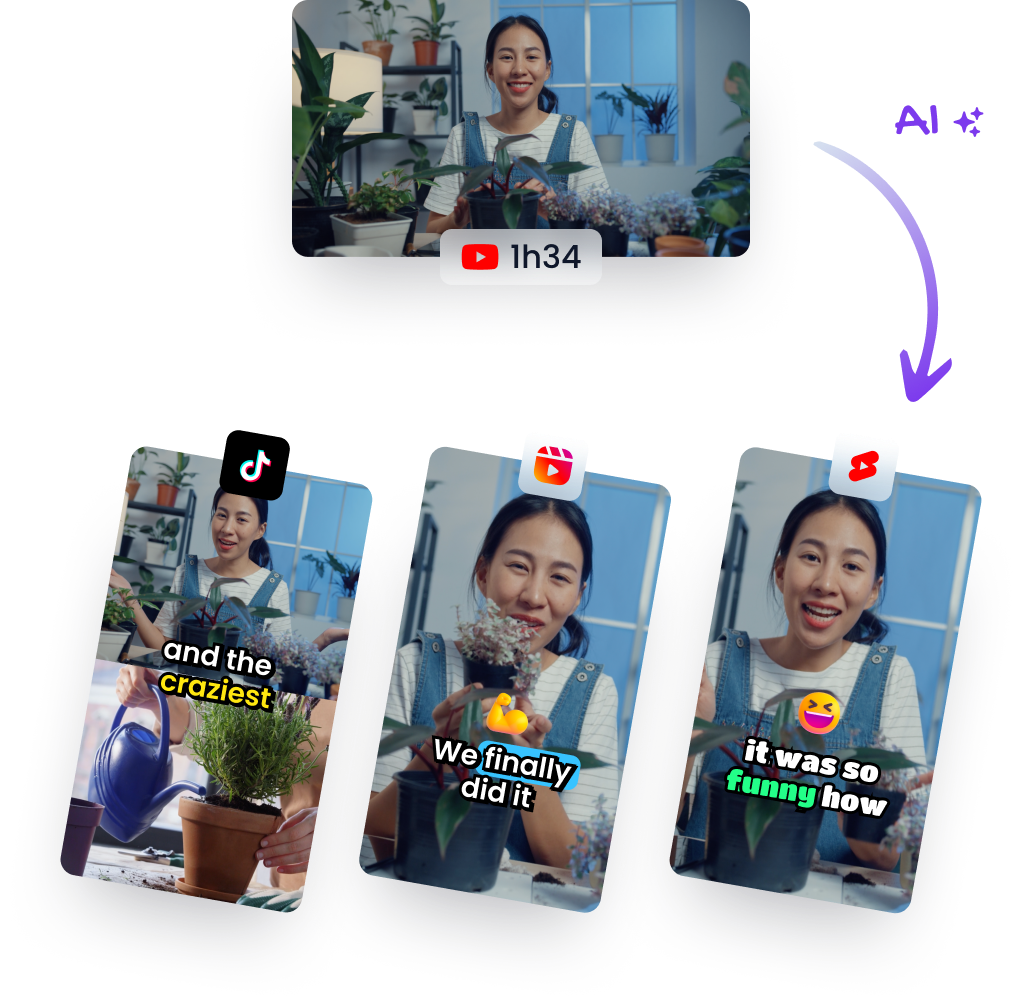
This is where content repurposing comes into play. It’s a powerful strategy that turns your one big video into a dozen or more short-form clips perfect for YouTube Shorts, TikTok, and Instagram Reels. This isn't about creating more work. It’s about making your existing work work harder for you.
The Undeniable Power of Short-Form Video
The way people discover content has completely changed. Attention is fragmented, and mobile-first, bite-sized videos are now the main way new viewers find channels. The numbers don't lie.
Recent data shows a staggering trend: short-form video is now the dominant format. Videos under a minute are projected to make up roughly 75-77% of global YouTube views in 2025. With YouTube Shorts pulling in over 200 billion daily views from more than 2 billion monthly users, ignoring this format is like locking the front door to your business. You can dive deeper into these YouTube stats at Vidpros.com.
This new reality demands a two-part strategy. Your long-form videos are for building deep connections with your core audience. Your short-form clips, however, are your discovery engine—attracting thousands of new eyeballs and funneling them back to your main content.
Identifying Viral Moments in Your Video
The key to great repurposing is to think like a movie trailer editor. Your job is to find the most potent, high-impact "hooks" in your long-form video. You aren't just chopping it up randomly; you're surgically extracting the moments most likely to make someone stop scrolling.
When you review your video, look for these ingredients:
- Strong Opinions: Anything that makes a viewer pause and think, "Wait, what did they just say?" is a perfect hook.
- Quick, Actionable Tips: If you share a tip someone can use immediately, it provides instant value and is highly shareable.
- Surprising Stats: A mind-blowing number or an unexpected fact makes people curious to learn more.
- Emotional Highs: A funny moment, a relatable story, or a passionate rant can create an instant connection.
Think about the main points from your video outline. Can each one be condensed into a compelling 30-60 second clip? Most of the time, the answer is yes. This approach can turn one 10-minute video into five or more entry points for new viewers.
The goal of a short-form clip isn't to tell the whole story. It's to create an "information gap" that makes the viewer curious. A great short answers one small question but raises a bigger one, compelling them to find the full video for the complete answer.
This creates a powerful growth cycle: Shorts attract new viewers, and the full video turns them into loyal subscribers.
Automating Your Workflow with AI
Manually finding, cutting, reframing, and captioning a dozen clips from every single video is a massive undertaking. It's a fast track to burnout and steals time from what you should be doing—creating your next great video. This is where AI-powered tools like Klap become a creator's secret weapon.
Instead of spending hours in an editor, you just give the tool your YouTube video link. The AI then handles all the heavy lifting for you.
- It finds the best hooks: The AI analyzes your video's transcript and visuals to identify the most engaging and potentially viral segments.
- It reframes for mobile: It automatically converts your horizontal video into a vertical 9:16 format, intelligently keeping the main subject in the frame.
- It adds dynamic captions: It generates animated, easy-to-read captions, which are crucial since a high percentage of social video is watched without sound.
This process turns a full day of tedious editing into about 10 minutes of final review. To see just how simple it is, check out this guide on how to create YouTube Shorts from an existing video. By automating the grunt work, you can consistently feed the short-form algorithms without sacrificing your sanity. This is the efficiency that allows top creators to dominate multiple platforms at once.
Common Questions on Making YouTube Videos
Even with the best game plan, you're going to have questions. It’s just part of the process. We get a ton of them from new creators, so I wanted to tackle some of the most common ones right here—from gear essentials to the smartest ways to grow your channel.
What Should a New YouTuber Focus on First?
It's so easy to get fixated on buying a fancy new camera, but your absolute top priority should be audio quality. Hands down.
Viewers are surprisingly tolerant of video that isn't perfect 4K, but they will leave in a heartbeat if they can't hear you clearly. Bad audio filled with hiss, echoes, or background noise signals amateur content and kills trust instantly.
Your first investment shouldn't be a camera. A simple, affordable lavalier microphone that plugs directly into your phone will give you a much bigger bang for your buck than a new lens.
How Long Should My YouTube Videos Be?
There’s no magic number here. The best advice is to make your video "as long as it needs to be, but not a second longer." The goal is to pack in value and cut out all the fluff.
That said, for most educational or talking-head style videos, the sweet spot tends to be between 8 and 15 minutes. This is long enough to dive deep into a topic and rack up watch time for the algorithm, but short enough to keep your audience from getting bored and clicking away.
Take a look at the top videos in your niche. See what length is working for them. But always, always prioritize content density over hitting some arbitrary time stamp.
How Can I Grow My Channel Faster?
The single most effective growth hack today is using short-form content (like YouTube Shorts) as trailers for your main, long-form videos. This turns the Shorts feed into a massive, 24/7 discovery engine for your channel.
Here’s an actionable plan:
- Find Your Hook: Go through your main video and pull out the most compelling 30-60 second moment. This could be a controversial take, a shocking stat, or a game-changing tip.
- Create the Short: Use a tool to quickly snip that clip, reframe it to a vertical format, and burn in some eye-catching captions.
- Link It Back: In the description or pinned comment of your Short, drop a link to the full video with a clear call to action, like "Watch the full breakdown here!"
This strategy creates a powerful growth funnel. The Shorts act as magnets, pulling in a huge new audience. A fraction of those viewers will then click through to your long-form videos, where you can build a real connection, boost your watch time, and convert them into loyal subscribers.
Stop wasting hours chopping up your videos by hand. Klap uses AI to find the best hooks in your content and turns them into viral-ready short clips in minutes. Try it for free and start multiplying your reach.