10 Ways to Boost YouTube Views Free in 2026
Other
You publish a video you spent half a day making. The edit is clean, the topic is solid, and the thumbnail looks good. After 24 hours, views stall, click-through rate is average, and YouTube stops testing it with new viewers. That pattern frustrates small channels because the work is real, but the distribution system is weak.
YouTube rewards momentum. Videos that earn clicks, hold attention, and generate satisfying watch sessions get more chances in search, suggested videos, and the home feed. Channels that grow without paying for views usually build that momentum from multiple entry points, not from a single upload sitting on its own.
That is the shift many creators miss. Free growth comes from a system. Strong packaging helps the first click. Useful content improves retention. Repurposing extends reach across formats. Community signals and cross-platform distribution give each upload more chances to find the right viewer.
I have seen this work best when long-form and short-form support each other instead of competing for time. A tutorial, podcast, breakdown, or commentary video can feed Shorts, social posts, and follow-up content, while those shorter assets send qualified viewers back to the main video. If you need a practical workflow, this guide on making YouTube Shorts from existing videos shows how to turn one upload into several discovery assets.
If you want to boost youtube views free, build around the signals YouTube already measures. Start with content people will click, structure videos to keep them watching, and turn every strong long-form upload into a small distribution engine.
1. Create Short-Form Clips from Long-Form Content
The fastest free growth move for most channels isn't making more videos from scratch. It's cutting your existing videos into Shorts.

This works because one long video can become multiple discovery points. A podcast episode, tutorial, interview, livestream, or commentary upload usually contains several moments that can stand alone: a sharp opinion, a surprising lesson, a mistake to avoid, or a result reveal. Those moments travel well in Shorts, TikTok, and Reels, and they often lead viewers back to the full video.
YouTube Analytics data cited by ViewGrip says clips from long-form content achieve 2 to 5x higher engagement rates on Shorts, and YouTube's 2025 Creator Report says 70% of top-performing Shorts in 2025 came from repurposed footage. That's a strong signal that your back catalog is more valuable than it looks.
What to clip first
Start with videos that already proved they can hold attention. Good candidates include tutorials with a clear takeaway, interviews with strong opinions, and story-driven videos with a clear emotional turn.
A few formats consistently clip well:
- Problem and fix moments: "This is the reason your audio sounds flat."
- Strong reactions: podcast hosts, gaming creators, and reviewers do well here.
- Mini tutorials: one tactic, one outcome, one quick demo.
- Contrarian statements: the kind of line that makes people stop scrolling.
If you want a practical walkthrough, this guide on making YouTube Shorts from existing videos breaks down the workflow clearly.
Practical rule: If the clip doesn't make sense without the full video, it isn't ready yet.
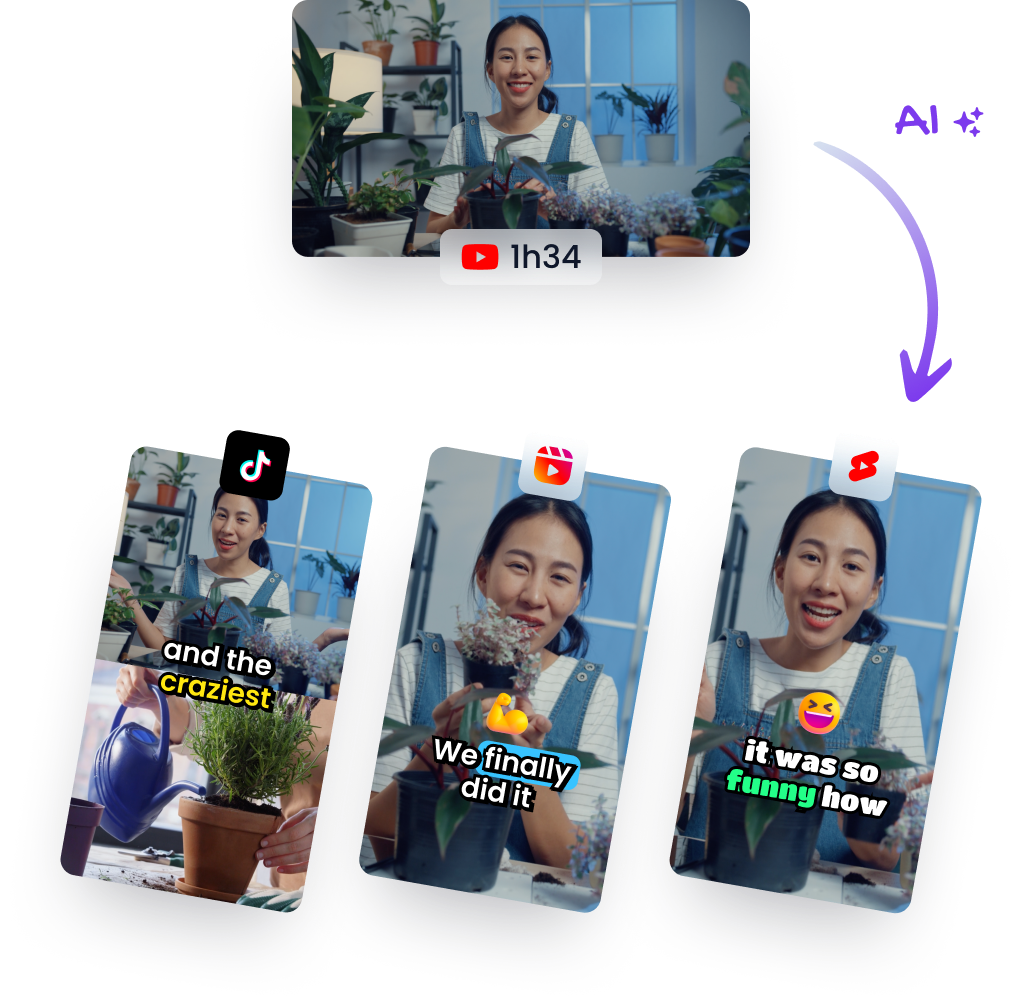
Captions matter too. Many viewers discover short-form video on mute first. Add readable subtitles, open with the payoff fast, and cut dead space hard. Educational creators, podcast networks, and commentary channels all win with this because they already have idea-dense footage to slice.
A visual example helps:
2. Optimize Video Titles, Descriptions, and Tags
A lot of creators ask how to boost youtube views free while ignoring the easiest free lever they control: packaging. If your title and description don't make the topic obvious, YouTube has a harder time matching the video to the right viewers.

Good metadata starts with search language real people use. Tech reviewers put product names front and center. Gaming channels lead with the game title, challenge, or update. Tutorial channels usually win with direct phrasing like "how to," "best settings," or "mistakes to avoid."
The strongest titles do two jobs at once. They tell YouTube what the video is about, and they give a human a reason to click.
Tighten the package
Use YouTube autocomplete, your own comment section, and competitor titles to find phrasing that already exists in the market. Then rewrite old metadata on videos that deserve a second chance.
A practical approach:
- Lead with the core topic: Put the main keyword early so both viewers and YouTube can identify it fast.
- Write for intent: "Beginner guide" attracts a different viewer than "advanced workflow."
- Use descriptions to reinforce context: Mention the exact problem solved, tools used, and key takeaways naturally.
- Tag narrowly: Relevant tags help with context. Irrelevant tags muddy the signal.
Tools like TubeBuddy and vidIQ are useful here because they help surface topic phrasing and related ideas. If you want a broader promotion system beyond metadata, Klap's guide on how to promote a YouTube channel is worth reading alongside this step.
For channels that use descriptions strategically, outbound links can support a viewer's next action too. This guide on adding a link in a YouTube description shows how to do it cleanly without cluttering the page.
3. Leverage Consistent Upload Schedules and Playlists
Consistency isn't about pleasing some mythical algorithm checkbox. It's about building viewer habit.
When a creator uploads on a schedule they can maintain, returning viewers know when to check back. That matters because YouTube pays close attention to what happens early. Channels using daily AI content ideas see 2.5x view velocity in the first 48 hours, according to stats cited by VeeFly. The takeaway isn't "post daily no matter what." It's that sustained publishing momentum helps the first wave arrive faster.
Playlists strengthen that effect. They turn single videos into viewing sessions. A creator who makes tutorials on one topic, product reviews in another lane, and Shorts in a third should organize those into clear pathways so viewers don't have to guess what to watch next.
Make the channel easier to binge
Think like a viewer landing on your channel for the first time. They need immediate cues.
A simple setup works:
- Group by intent: beginner tutorials, advanced breakdowns, reviews, livestream clips.
- Name playlists clearly: avoid clever titles nobody searches for.
- Arrange series in order: especially for education, gaming walkthroughs, and software tutorials.
- Feature your strongest playlist on the homepage: let the best binge path do the work.
Podcast channels do this especially well. One playlist holds full episodes. Another holds clips. Another holds guest-specific appearances. News channels and educational creators can do the same with topic clusters.
A messy channel homepage leaks views. A clear one keeps people watching.
If you're inconsistent now, don't overcorrect with an unrealistic schedule. Weekly done well beats daily that collapses after two weeks.
4. Engage with Comments and Build Community
Creators often chase new viewers while ignoring the people already raising their hands. That's expensive, even when the tactic is technically free.

Comments do more than flatter your ego. They reveal what confused people, what made them laugh, what they want next, and which phrasing is resonating enough to repeat in future titles and hooks. Small channels have an advantage here because they can still answer people individually and make viewers feel seen.
This also helps commercially later. Brands look at audience quality, not just raw reach, and tools that evaluate audience response for sponsorships exist for a reason. A comment section full of real discussion tells a much better story than inflated, empty numbers.
How to get better comments
Most creators make one mistake. They ask for "thoughts?" at the end and leave it there. That's too vague.
Ask specific questions instead:
- Invite comparison: "Would you choose this setup over the cheaper one?"
- Ask for the next test: "Which camera should I compare next?"
- Surface pain points: "What's the hardest part of this workflow for you?"
- Use pinned comments: start a discussion where late viewers can jump in quickly.
MrBeast-sized channels can generate huge engagement through audience momentum, but smaller creators can build stronger loyalty by replying with precision. Educational channels do this well when they answer follow-up questions. Gaming channels do it by debating strategy. Review channels do it by clarifying edge cases and alternatives.
A good comment section often becomes your research department for future videos.
5. Create Shareable, Hook-Driven Content
If the opening doesn't earn attention, the rest of the video doesn't matter.
YouTube's recommendation system rewards early engagement, and weak intros kill it fast. The Tubular Labs study cited earlier found that the first 48 hours shape most of a video's long-term recommendation potential, so your opening needs to justify the click immediately.
Front-load the value
Many creators waste the first 20 seconds on logo stings, soft introductions, or explaining what they're about to explain. Cut that.
Start with one of these instead:
- A visible result: show the before-and-after, final build, or end outcome first.
- A tension point: what went wrong, what failed, or what is commonly misunderstood.
- A fast promise: say exactly what the viewer will get by the end.
- A sharp claim: make a statement strong enough to create curiosity without becoming clickbait.
TED-style educational content often opens with a surprising insight. Fitness creators open with the result. Gaming creators open with the best moment from the run. Commentary channels open with the boldest line from the analysis. Those are all hook-first structures.
If you want a more detailed breakdown of what gives clips momentum, Klap's article on how to go viral is useful. So is this outside perspective on what makes a video go viral, especially if you're trying to make segments shareable beyond YouTube.
The best hooks don't feel like headlines. They feel like unresolved tension.
One more practical shift helps: build your long-form videos with clip moments in mind. Don't wait until publishing day to wonder what can become a Short. Add a few self-contained segments during recording so the repurposing step is easier later.
6. Cross-Promote Content Across Social Platforms
A strong YouTube video can underperform for a simple reason. It never gets distributed beyond your existing audience.

Free view growth gets easier when one idea appears in multiple formats. A 12-minute tutorial can produce a YouTube Short, an Instagram Reel, a TikTok cut, a LinkedIn clip, and an X post built around one sharp takeaway. Each asset reaches a different audience segment, and each one gives people another path back to the main video.
That only works if the post matches the platform.
Creators who repurpose well do not copy and paste the same clip everywhere. They recut the opening, rewrite the caption, and change the call to action based on how people use that app. Short-form discovery and long-form viewing should feed each other. The clip earns attention on another platform, then the full YouTube video captures watch time, subscribers, and session depth.
Adapt the message, not just the format
Use a simple workflow:
- Cut vertical clips for Shorts, Reels, and TikTok: start with the payoff or strongest line in the first second.
- Change the caption for each platform: LinkedIn rewards context, TikTok rewards speed, X rewards a strong opinion or timely angle.
- Schedule around the full upload: post one teaser before publish day, then share the best follow-up moment after the video is live.
- Send viewers to one clear destination: the full video, a playlist, or your channel homepage.
Many creators waste effort at this stage. They post a clip that feels like a trailer, then wonder why nobody clicks through. A better cross-promo clip stands on its own and creates a knowledge gap. The viewer gets one useful idea immediately, then has a clear reason to watch the longer version.
Podcast channels, interview shows, education creators, and gaming channels all benefit from this system, but the trade-off is workload. More distribution gives you more surface area for discovery, but it also adds editing, captioning, and scheduling time. Keep the process tight. Pull two to four clips from each long-form upload, tailor the hook for each platform, and track which source sends the highest watch time back to YouTube.
If a clip feels like an ad, people scroll. If it delivers value first, cross-promotion turns every upload into a small content engine.
7. Collaborate with Other Creators and Channels
Collaboration is one of the oldest YouTube growth tactics because it still works. Not because of networking theater, but because audience overlap is real.
When a creator appears on another channel, joins a stream, reacts to a niche topic, or records a joint challenge, they borrow trust. Viewers who would never discover them through search alone get introduced through someone they already watch. That's hard to replicate with metadata alone.
Pick the right partner
The best collaborations aren't always with the biggest channels. They're with channels that share audience interests, pacing, and standards.
A few formats work well:
- Guest expert appearances: strong for education, finance, software, and business channels.
- Challenge or comparison videos: useful in fitness, gaming, and creator gear niches.
- Debates and reactions: good when both sides add real perspective.
- Clip swaps: each creator turns the best moment into short-form content for their own channels.
Vsauce-style educational appearances, creator interviews, and collab streams all work because the audience gets a genuine reason to care. Beauty creators do this with challenges. Tech creators do it with side-by-side tests. Podcasters do it with guest crossover.
Borrowed trust converts better than random reach.
The key trade-off is quality control. A collaboration can expose you to a bigger audience, but it can also confuse your current audience if the fit is weak. Choose creators your viewers would plausibly watch next.
8. Optimize for YouTube's Search and Recommendation Algorithm
A video can get search traffic on day one and recommendation traffic on day ten. The winners are built for both from the start.
Search gives YouTube clear topic signals. Recommendations test whether viewers want more of that topic from your channel. That is why metadata alone never carries a video very far. The packaging has to earn the click, and the content has to justify it fast enough for viewers to keep watching.
I treat this as a workflow, not a one-time upload task. Start with one clear query or viewer problem for the long-form video. Then build supporting short clips around the strongest moments, objections, or takeaways. Those clips help new viewers discover the idea in feeds, and they also reinforce the main video's topic footprint when people return to watch the full version.
Use retention data to fix the right problem
Open YouTube Studio and look at the first 30 to 60 seconds first.
If viewers leave early, the problem usually sits in one of four places:
- The opening takes too long: the viewer does not get the payoff quickly enough.
- The title and thumbnail attract the wrong click: traffic comes in, but the video is not what the viewer expected.
- The structure is unclear: people cannot tell where the video is going.
- The strongest moment comes too late: the value exists, but it is buried.
Experienced channels use this distinction to separate search optimization from audience satisfaction. A keyword can bring in impressions. It cannot save a weak first minute.
For example, a tutorial titled around one specific task usually performs better than a broad, vague promise because the viewer can confirm within seconds that they are in the right place. The same logic applies to repurposing. If a short clip gets strong retention around one sharp point, promote that point higher in the long-form edit, title, or thumbnail concept on the next upload.
Avoid low-quality traffic sources entirely. Inflated views with weak watch time confuse your analytics, lower the quality of your feedback loop, and make it harder to identify what real viewers respond to. Clean data is more useful than bigger numbers.
The practical goal is simple. Help YouTube classify the video quickly, then give viewers a reason to stay long enough for the system to recommend the next one. That is how free growth compounds. Search introduces the topic, short-form widens discovery, and recommendations scale what already proved it can hold attention.
9. Develop a Recognizable Channel Brand and Aesthetic
A viewer sees your Short in the feed, then later notices one of your long-form videos on the home page. If the packaging looks unrelated, you lose the second click. If it looks connected, you get a compounding effect from the attention you already earned.
A recognizable channel brand helps viewers identify you fast across thumbnails, Shorts, and long-form uploads. That matters because free YouTube growth rarely comes from one format alone. Long-form builds depth and session time. Short-form creates more entry points. Your branding should make those formats feel like parts of the same system.
Strong branding shows up in repeatable choices:
- Thumbnail structure: similar text placement, facial framing, color contrast, or background treatment
- On-screen style: consistent caption design, lower-thirds, fonts, and motion pacing
- Series packaging: recurring names and visual cues for formats viewers can spot instantly
- Opening seconds: a familiar hook style or visual pattern that signals what kind of video this is
Big channels make this obvious. MrBeast uses a clear thumbnail language. TED-Ed is recognizable through its illustration style. Wired builds familiarity through recurring formats and predictable presentation. Smaller creators can apply the same principle without a designer or a large budget.
Keep it simple. Pick two brand colors. Use one thumbnail font. Create two or three thumbnail layouts you can reuse. Give repeat formats a name people remember. If you post Shorts from long-form videos, carry over the same caption style, framing rules, and topic labels so the clip feels connected to the full video.
I usually tell creators to audit their last 12 uploads in grid view. If a returning viewer cannot tell those videos came from the same channel, the branding is too loose. Fixing that improves recall, raises repeat clicks, and makes repurposed content work harder.
Branding is not decoration. It is recognition, and recognition helps every impression go further.
10. Analyze Competitor Content and Audience Trends
A channel can post solid videos for months and still stall because the creator is making decisions in isolation. Competitor research fixes that. It shows which topics already have demand, which angles feel tired, and where viewers are still asking for a better explanation.
I treat this as editorial research, not copying.
Start with five to ten channels in your niche. Include a few near your size, a few one level above you, and one or two category leaders. Then review their last 20 uploads and log the variables that shape performance:
- Topic choice: recurring subjects, timely questions, and updates tied to news or product changes
- Packaging: title structure, thumbnail promise, and how specific the value proposition is
- Format: tutorial, reaction, comparison, case study, story, live stream, or Shorts-first concept
- Video length: where successful videos tend to cluster
- Opening strategy: how fast they get to the point and what they promise in the first 30 seconds
- Audience response: repeated praise, confusion, objections, and follow-up questions in comments
The useful part is the pattern, not the outlier. One viral upload can mislead you. Ten videos on the same subtopic with strong response usually point to real audience demand.
This matters even more if you are using long-form and short-form together. A good competitor review should show which long videos generate obvious clip moments, which Shorts hooks are driving curiosity, and which topics deserve both formats. If a competitor's 12-minute tutorial keeps getting comments asking for a faster explanation, that is a Shorts idea. If a Short gets strong response around one specific problem, that problem may deserve a full long-form breakdown on your channel.
I usually track three separate columns for comment language: exact questions, exact frustrations, and exact outcomes viewers want. Those phrases often become better titles than anything pulled from a generic keyword tool, because they reflect how real viewers describe the problem.
Use the research to make sharper choices:
- Cover proven topics with a clearer promise or a stronger opinion
- Fill gaps where competitors explain the what but not the how
- Turn repeated comment questions into both Shorts and full-length videos
- Avoid formats that get views but produce weak watch time or low subscriber conversion
- Spot rising themes early, before the niche gets saturated
There is a trade-off here. Chasing every trend can raise impressions and weaken channel identity. Ignoring trends can keep your content well made but poorly timed. The better move is selective adaptation. Commit to a few recurring content pillars, then adjust the packaging, examples, and clip strategy based on what the market is responding to right now.
A simple monthly review is enough. Check what top channels tested, what viewers kept asking for, and which ideas can be repurposed across long-form and Shorts without diluting your angle. That process turns competitor analysis into a free growth system instead of a one-time brainstorm.
10 Free YouTube View-Boost Strategies Comparison
StrategyImplementation Complexity 🔄Resource Requirements ⚡Expected Outcomes 📊 (Effectiveness ⭐)Ideal Use Cases 💡Key Advantages ⭐
Create Short-Form Clips from Long-Form Content
Moderate, clip selection, formatting, light edits; automation reduces effort
Low–Moderate, existing footage + editing/automation tools (e.g., Klap)
High reach and referral traffic; more touchpoints ⭐⭐⭐
Channels with long-form libraries, podcasts, tutorials
Scales output cost-effectively; repurposes existing assets
Optimize Video Titles, Descriptions, and Tags
Low, metadata updates and keyword research
Minimal, time and free tools (autocomplete, Trends) ⚡
Improved discoverability and CTR over time; steady growth ⭐⭐⭐
All channels, especially search-driven niches
Free, cumulative SEO benefits; better algorithm recommendations
Leverage Consistent Upload Schedules and Playlists
Moderate, planning and sustained discipline
Low, scheduling tools and organization
Increased watch time, session duration, and subscriber retention ⭐⭐⭐
Series, educational channels, podcasts, vloggers
Builds viewer habits; improves session watch time
Engage with Comments and Build Community
Low–Moderate, regular monitoring and thoughtful replies
Time-intensive as channel scales; moderation tools helpful
Higher engagement metrics and loyalty; richer audience insights ⭐⭐⭐
Small–mid creators, community-focused channels
Direct feedback loop; boosts rankings via engagement
Create Shareable, Hook-Driven Content
Moderate–High, creative planning, A/B testing hooks
Moderate, scripting, editing, testing resources
Increased shares, external traffic, viral potential ⭐⭐⭐
Viral-focused creators, short-form-first strategies
Drives social signals and CTR; natural fit for clips
Cross-Promote Content Across Social Platforms
Moderate, format variations and platform management
Moderate, multi-platform accounts and edits
Expanded reach and cross-platform traffic back to YouTube ⭐⭐⭐
Multi-platform creators, podcasts, brands
Taps diverse audiences; free distribution leverage
Collaborate with Other Creators and Channels
Moderate, outreach, coordination, scheduling
Low–Moderate, time and relationship building
Audience expansion and credibility gains ⭐⭐⭐
Niche peers, guest interviews, joint live streams
Access to new audiences with minimal production cost
Optimize for YouTube's Search and Recommendation Algorithm
High, analytics interpretation and iterative testing 🔄
Moderate, analytic tools and time investment
Better distribution and sustainable growth when aligned with metrics ⭐⭐⭐
Data-driven channels, competitive niches
Data-driven improvements compound; higher recommendation rates
Develop a Recognizable Channel Brand and Aesthetic
Moderate, design, templates, and consistency
Moderate, initial design time or hire; templates thereafter
Improved recognition, shareability, and perceived credibility ⭐⭐⭐
Established creators, brands, long-term channels
Strong recall increases CTR and loyalty
Analyze Competitor Content and Audience Trends
Low–Moderate, ongoing monitoring and note-taking
Low, free tools (Trending, Google Trends) and time
Informed content ideas and staying relevant; faster learning curve ⭐⭐
New creators, fast-moving niches
Identifies proven formats and topics to adapt authentically
Activate Your Free YouTube Growth Engine
A creator publishes a strong 20 minute video, gets a small burst of views, then watches it stall. The usual problem is not effort. It is that the video was treated like a one-time upload instead of the center of a repeatable distribution system.
The practical answer to "boost youtube views free" is to build that system around the assets you already have. Artificial traffic creates bad feedback loops. As noted earlier, channels that rely on inflated view patterns often hurt the same organic distribution they want to improve. A short spike means very little if low retention, weak engagement, and poor viewer satisfaction follow it.
A free growth engine starts with one piece of long-form content and turns it into multiple discovery points. The full video does the teaching, story, or demonstration. Short clips do the outreach. Comments show you which angles are landing. Playlists and end screens keep viewers moving. Titles, descriptions, and packaging help YouTube understand who should see the content.
That is the whole system. Each part supports the next.
Use this weekly workflow:
- Publish one useful long-form video built around a clear problem, result, or opinion.
- Pull three to five short clips from that video, each with one complete takeaway.
- Post those clips as Shorts and adapt them for other platforms.
- Send viewers from the clips to the full video, playlist, or next logical watch.
- Watch retention, click-through rate, comments, and traffic sources.
- Use that feedback to improve the next long video and the next round of clips.
This works because long-form and short-form solve different growth problems. Long-form earns watch time, builds trust, and creates more moments worth clipping. Short-form gets attention faster and reaches viewers who would never search for your channel directly. Together, they create a loop that keeps producing new entry points without requiring constant new ideas from scratch.
I have seen small channels make better progress with one solid video and five smart clips than with five unrelated uploads in the same week. The trade-off is focus. You publish less random content, but each piece does more work.
Start small and make it measurable. Pick one of your last five uploads. Improve the title and thumbnail. Add it to a specific playlist. Reply to every relevant comment. Cut several short clips from the strongest section. Post them over the next week and track which one sends the best viewers back to the main video. Repeat that process until the workflow feels routine.
If you already have long videos, podcasts, webinars, or interviews, Klap is one of the simplest ways to turn them into social-ready short clips fast. It analyzes your video, finds strong moments, reframes them for vertical platforms, adds captions, and gives you clips you can edit and publish without doing all the manual cutting yourself. For creators who want more reach without constantly filming new material, it's a practical way to turn existing uploads into a repeatable growth engine.