How to Make YouTube Shorts from Existing Videos The Easy Way
Other
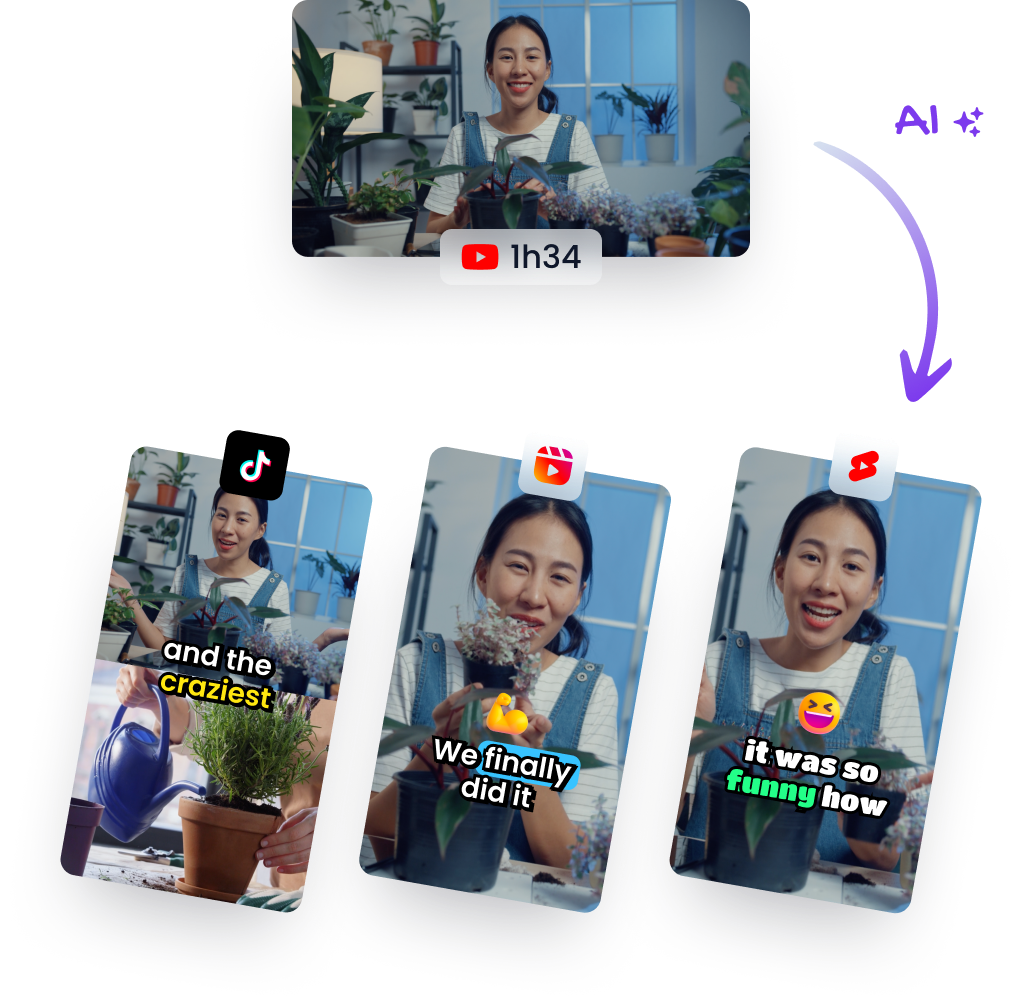
So, you want to turn your existing videos into YouTube Shorts? You’ve got a couple of solid options. The quickest way is using YouTube's built-in "Remix" feature to snip a clip directly from one of your long-form videos. For a more polished approach, dedicated AI tools can automatically find the best moments, reframe the video vertically, and even add captions for you.
Why Repurposing Long Videos Is a Growth Strategy

If you've built up a library of long-form content, you’re sitting on a goldmine. The old "one and done" model—produce a video, publish it, and move on—is completely outdated. Smart creators know the real value comes from squeezing every last drop of reach out of each piece of content.
The shift in how people watch videos is impossible to ignore. Viewers are gravitating toward short, punchy, "snackable" content that gets straight to the point. This is where turning your existing videos into YouTube Shorts becomes less of a tactic and more of a core part of your strategy. It lets you meet your audience where they are without having to reinvent the wheel every single time.
The Power of the Discovery Engine
YouTube Shorts isn't just another tab on the app; it's a ridiculously powerful discovery engine. The algorithm is built to push compelling clips to new audiences at a massive scale, acting as the perfect introduction to your channel and brand.
The proof is in the numbers. YouTube Shorts has absolutely exploded, hitting over 200 billion daily views—a massive jump from 70 billion just the year before. This isn't just a trend; it's a powerhouse for creator growth.
This approach isn't just about saving time, either. It’s about strategic amplification. Think of every Short you create from an existing video as a mini "trailer" that can reignite interest in older content and pull new subscribers into your world.
By repurposing your best moments, you transform your video archive from a static library into an active engine for audience growth, engagement, and discovery.
To really hammer this home, let's look at how repurposing stacks up.
Long-Form vs Short-Form Repurposing Potential
This table breaks down why turning your existing videos into Shorts is such a smart move for growth and engagement.
AttributeLong-Form Video (e.g., 20-min YouTube video)YouTube Shorts (e.g., 60-sec repurposed clip)
Discovery Potential
Relies on search, browse, and suggested videos; slower burn.
High potential for viral reach via the Shorts feed algorithm.
Audience Reach
Primarily reaches existing subscribers and niche searchers.
Reaches a broad, new audience outside your subscriber base.
Production Effort
High initial investment in time, scripting, and editing.
Minimal. Leverages work already done; focus is on clipping.
Viewer Commitment
Requires significant time investment from the viewer.
Low commitment; designed for quick, "snackable" consumption.
Engagement Type
Deeper engagement (comments, watch time) from a loyal audience.
High-velocity engagement (likes, shares, quick comments).
Call-to-Action
Can drive viewers to a product, website, or deeper content.
Acts as a "teaser" to drive viewers to your long-form videos.
As you can see, the two formats work together perfectly. Shorts act as the hook, bringing in new people, while your long-form content gives them a reason to stick around.
Tangible Benefits of Repurposing
The advantages here are clear and measurable. When you start turning longer videos into Shorts, you'll likely see:
- Accelerated Subscriber Growth: Shorts have a unique knack for going viral and reaching people who have never heard of you, converting them into new subscribers much faster than long-form content often can.
- Boosted Channel-Wide Engagement: A popular Short doesn't just get views on its own; it often leads curious viewers to check out the rest of your channel. This creates a positive feedback loop where short-form discovery fuels long-form consumption.
- Maximized Content ROI: You've already put in the time, effort, and money to create your long-form videos. Repurposing them dramatically increases the return on that initial investment.
For a deeper dive into the broader landscape of how effective content repurposing strategies can seriously boost your overall growth, check out this guide. Now, let's get into the nitty-gritty of how to actually do it.
Finding and Preparing Your Best Video Content
Before you can start cranking out Shorts, you need to figure out which clips are actually worth the effort. The best Shorts aren't just random moments; they're the "golden nuggets" your audience has already told you they love. Your first job is to play detective in your own video library and find these hidden gems.
Don't just guess what might go viral. Dive straight into your YouTube Analytics and let the data point you in the right direction. Your numbers tell a story about what truly hooks your viewers, giving you a proven, data-backed foundation for your entire repurposing strategy.
Find Moments Your Audience Already Loves
The single most powerful tool for this is the audience retention graph on each of your long-form videos. You're looking for the visual clues: sharp spikes or sustained plateaus in the graph. These are the exact segments where viewers were most engaged, often re-watching or leaning in to pay closer attention. Bingo. Those are prime candidates for a Short.
Another goldmine? Your comment section. Seriously, scroll through the comments on your most popular videos and look for patterns.
- Are people constantly quoting a specific line you said?
- Do a bunch of comments all point to the same "aha!" moment or powerful tip?
- Is there a particular joke or story that gets a ton of reactions?
These are direct signals from your community saying, "Hey, this part was memorable!" When you find a segment that has both a retention spike and a flurry of positive comments, you've almost certainly struck gold.
The fastest way to create a viral Short is to start with a moment that has already proven it can hold attention and get a strong reaction from your core audience.
Prepare Your Clips for Success
Once you’ve identified a handful of potential clips, the next step is preparation. This isn't about opening your editor just yet—it's about defining the purpose and message of each Short. A truly great Short has a single, powerful focus.
Ask yourself: What is the one key takeaway for this clip? Is it an inspiring quote? A quick tutorial? A surprising statistic? A funny outtake? A common mistake is trying to cram too much into a 60-second video. Each Short should deliver one idea, and deliver it well.
Finally, make sure you have the highest quality source files on hand. While you can technically pull clips directly from YouTube, working with your original 1080p or 4K video files will always give you a cleaner, more professional final product, especially when you start reframing for a vertical format. Having these files ready makes the whole editing process smoother and more effective down the line.
Using AI Tools to Find Viral Moments Automatically
Let's be honest, manually scrubbing through hours of video footage is a soul-crushing task. It’s tedious, it’s time-consuming, and it’s probably the single biggest reason most creators give up on consistently repurposing their content.
This is where AI-powered tools completely change the game. From my own experience, the shift is dramatic. What used to be an entire afternoon hunting for one or two half-decent clips is now a process that spits out a dozen great options in minutes. This is how you actually scale your output without burning out.
How AI Pinpoints Your Best Clips
The tech behind these tools is smarter than you might think. When you feed it a long-form video, it doesn’t just slice it up randomly. It’s doing a deep analysis to find the segments with the highest potential to stop the scroll.
Here’s a quick look at what’s happening behind the scenes:
- It Analyzes the Transcript: First, the AI transcribes the entire video. Then it scans the text for keywords, trending topics, questions, and moments where the energy spikes, all based on language patterns.
- It Recognizes Visual Cues: It’s not just about the words. The system also looks for visual triggers like faces to track who’s speaking, significant scene changes, and even moments with more on-screen action.
- It Gives Each Clip a "Virality Score": By blending the transcript data with the visual analysis, the AI assigns a score to different segments. It's essentially trained to look for the same things a seasoned social media manager would—powerful hooks, concise tips, and impactful statements—but it does it all in seconds.
The AI is basically thinking like a content strategist, finding the exact moments that are most likely to grab attention. You can learn more about how an AI shorts maker streamlines this entire process.
The real win with AI here is efficiency. It takes hours of painful, manual work and turns it into a simple, automated step. This frees you up to focus on the creative side of things instead of getting bogged down in tedious editing.
The Modern Repurposing Workflow
The whole experience is built for speed. My old workflow involved juggling complex editing software and manually timestamping potential clips. Now? I just paste a YouTube link into the tool.
Within a few minutes, the platform serves up a curated list of clips that are ready to go. And these aren't just raw cuts. They often come with AI-generated titles designed to spark curiosity and are already reframed into a vertical 9:16 aspect ratio.
For example, a 45-minute podcast interview might easily yield 10-15 distinct clips, each zeroing in on a single, powerful question or a compelling story. Each clip is already packaged with a title like "The #1 Mistake New Entrepreneurs Make" or "Why I Quit My 9-to-5 Job." Just like that, I’ve turned one long-form video into a full week’s worth of social media content in less time than it takes to finish my morning coffee.
Mastering the Vertical Edit for Mobile Viewers
Alright, you've pinpointed the perfect golden nugget from your long-form video. Now the real fun begins.
Don't make the rookie mistake of just dropping a horizontal, 16:9 clip into a vertical 9:16 frame. It looks lazy, screams "repost," and is a surefire way to get viewers to scroll right past. They know instantly it wasn't made for them.
The art here is to completely rethink your footage for a phone screen. This means reframing the shot to keep the most important part—usually your face—front and center. Modern AI tools are incredible at this, using smart face-tracking to automatically follow you as you move. It creates a polished, dynamic feel that holds attention way better than a static shot with ugly black bars.
This is the simplified workflow most AI tools follow to turn your uploads into shareable gold.

As you can see, the secret sauce is in the analysis. Finding the right moments before you export makes all the difference.
Why Captions Are Completely Non-Negotiable
If you take only one thing away from this guide, let it be this: captions are absolutely essential. A massive number of people watch videos with the sound off, especially in public. Without text on screen, your message is totally lost.
But simply flipping on auto-captions isn't enough. You need to turn them into an engaging part of the visual story.
Think of your captions as a visual guide, reinforcing your key points and keeping the viewer's eyes glued to the screen. Here are a few practical tips I've learned for making them pop:
- Go Big and Bold: Your subtitles have to be readable on a tiny screen, often in bright daylight. Don't be shy—use a large, clear font.
- Use Color and Emojis: Highlight keywords with a splash of color that matches your brand. A well-placed emoji at the end of a sentence can add personality and break up the monotony.
- Keep Them Punchy: Instead of long, blocky sentences, break up your captions into short, dynamic phrases that appear word-by-word or line-by-line as you speak. This "karaoke-style" effect is fantastic for keeping viewers locked in.
Your goal is to create a Short that’s just as compelling with the sound off as it is with the sound on. Dynamic, well-styled captions are what make that possible.
Polishing Your Clip for Maximum Impact
Beyond just reframing and captioning, a few extra touches can take your clip from good to great. Think about adding simple visual aids that support what you're saying.
Mentioning a specific statistic? Have the number pop up on screen for a second. Telling a dramatic story? A slow, subtle zoom-in can add a cinematic feel and emphasize the moment. If you're a brand repurposing a webinar, this is a great chance to add your logo in a corner so it's visible but not distracting.
This focus on creating native-feeling Shorts is paying off big time. For brands, video campaigns that added Shorts to their product feeds saw over 70% higher conversions. It’s the perfect way to turn a long demo into a clip that actually drives sales.
The editing process is your chance to transform a simple excerpt into a polished, attention-grabbing piece of content that feels right at home in the Shorts feed. For a deeper dive, check out our guide on how to properly crop a video for the vertical format.
Optimizing Your Shorts for Maximum Reach

Creating a polished, vertical clip is a huge step, but hitting "publish" is just the beginning. If you really want to succeed when you make YouTube Shorts from existing videos, you need a smart optimization strategy to get your content in front of as many new viewers as possible.
The Shorts algorithm moves fast, and I've seen a few small tweaks make a massive difference in a video's initial reach.
It all starts with your title. Forget the long, keyword-stuffed titles you use for your main videos. For Shorts, your title needs to be short, punchy, and absolutely packed with curiosity. Think of it as a headline designed to make someone stop their endless scroll.
A title like "The one thing I wish I knew earlier" is going to be far more effective than something dry like "A comprehensive guide to financial planning."
Crafting Your Title and Hashtags
You officially have a 100-character limit for your title, but you should aim for much less than that. Why? Because you need it to be fully visible on mobile screens without getting cut off. The whole point is to create an open loop or a powerful hook that makes the viewer need to see the payoff in the video.
Next up are hashtags. You don't need to stuff your description with a dozen of them, but there are a few essentials you can't skip.
- Always include
#shorts: This one is non-negotiable. It’s the main signal you send to YouTube that your video is a Short, which helps the algorithm categorize and push it out correctly. - Add 2-3 relevant topic hashtags: This is where you provide extra context. Include tags directly related to your video's content, like
#publicspeakingor#podcastclips. It helps both the algorithm and potential viewers understand what your clip is about.
The real power of repurposing content for Shorts lies in its ability to act as a powerful funnel, turning passive scrollers into engaged channel subscribers who are eager for your long-form content.
Creating a Funnel Back to Your Channel
One of the biggest wins with this whole strategy is driving new viewers back to your original, longer videos. You can turn every single Short into a lead generator for your main channel by strategically using your description and pinned comment.
In the description, briefly mention that the clip is from a longer video and drop a direct link. But here's an even better move: use the pinned comment feature to make that call-to-action impossible to miss.
A simple comment like, "Loved this tip? Watch the full conversation here!" with a link can seriously boost your click-through rates.
This approach creates a powerful content ecosystem. I've seen creators repurposing long videos into YouTube Shorts experience incredible subscriber growth. Data from Tubular Labs shows that large channels are gaining 29.2 subscribers per 10,000 Shorts views—that's more than double the rate from regular videos—proving just how effective the format is for scaling an audience.
Your reach doesn't have to stop with YouTube, either. Once you've got your Short, consider learning how to post a YouTube video on Instagram to tap into a completely different audience.
And since captions are a huge part of making Shorts accessible and engaging, you might want to check out our guide on how to add captions to YouTube Shorts.
A Few Common Questions About Repurposing Videos
Even with the best tools, jumping into a new format like Shorts can feel a bit uncertain. Let's clear up some of the most common questions I hear from creators who are just starting to turn their long-form videos into Shorts.
Getting these answers straight from the jump will help you move forward with confidence and sidestep a few common mistakes.
How Long Should My YouTube Shorts Actually Be?
YouTube gives you up to 60 seconds, but let's be real—the sweet spot is way shorter. From my own experience and watching countless channels, you should be aiming for that sweet 15 to 30-second window. Your goal isn't to cram in a full story. It's to land one powerful punchline, one killer tip, or a hook so good people have to watch it again.
High audience retention is one of the most powerful signals you can send to the YouTube algorithm. Shorter, tighter clips almost always crush this metric. Before you post, always ask yourself: Can I say this even faster?
Can I Actually Make Money From Repurposed Shorts?
Yes, absolutely. This is a huge opportunity you shouldn't ignore. If you’re already in the YouTube Partner Program (YPP), any Shorts you create from your existing videos are eligible for the Shorts ad revenue sharing model. It's a brilliant way to breathe new life into your back catalog and open up a new income stream.
The only real rule is simple: you have to own all the rights to the video and audio. As long as you’re chopping up your own original content, you are completely in the clear.
Think of Shorts not as some separate, non-monetized side project, but as a way to reactivate your archives and generate fresh revenue from the hard work you've already put in.
Is Posting Shorts Going to Hurt My Main Channel?
This is a stubborn myth that just won't die. The short answer is no, it helps your channel. YouTube's algorithm is smart enough to treat Shorts and long-form videos as two different beasts. They aren't fighting each other for attention in your subscribers' feeds.
Instead, think of Shorts as your channel's hype man. They're the trailers, the teasers, the billboards that introduce your personality and value to a massive new audience that might have never stumbled upon your longer videos otherwise. From there, you can strategically funnel those new viewers over to your deep-dive content.
Do I Really Need to Make a Custom Thumbnail for Every Single Short?
While the option is there, it's far less important than it is for your main videos. The vast majority of people will discover your Shorts by scrolling through the Shorts feed, where videos autoplay instantly. They almost never see a static thumbnail before the content starts rolling.
Because of this, YouTube just grabs a random frame from the video to use as the thumbnail. So, instead of stressing over the perfect static image, pour that creative energy into making the first 1-3 seconds of your actual video impossible to scroll past. Your mission is to stop the thumb, and that's done with motion, not a still picture.
Tired of manually scrubbing through hours of footage just to find one good clip? Klap uses AI to instantly pinpoint the most viral-worthy moments in your videos. It automatically reframes them for vertical viewing and adds dynamic captions in minutes. Turn one long video into a full week's worth of killer shorts, effortlessly. Turn your videos into viral shorts with Klap today!