AI Video Clipping Tool: A Creator's Guide for 2026
Other
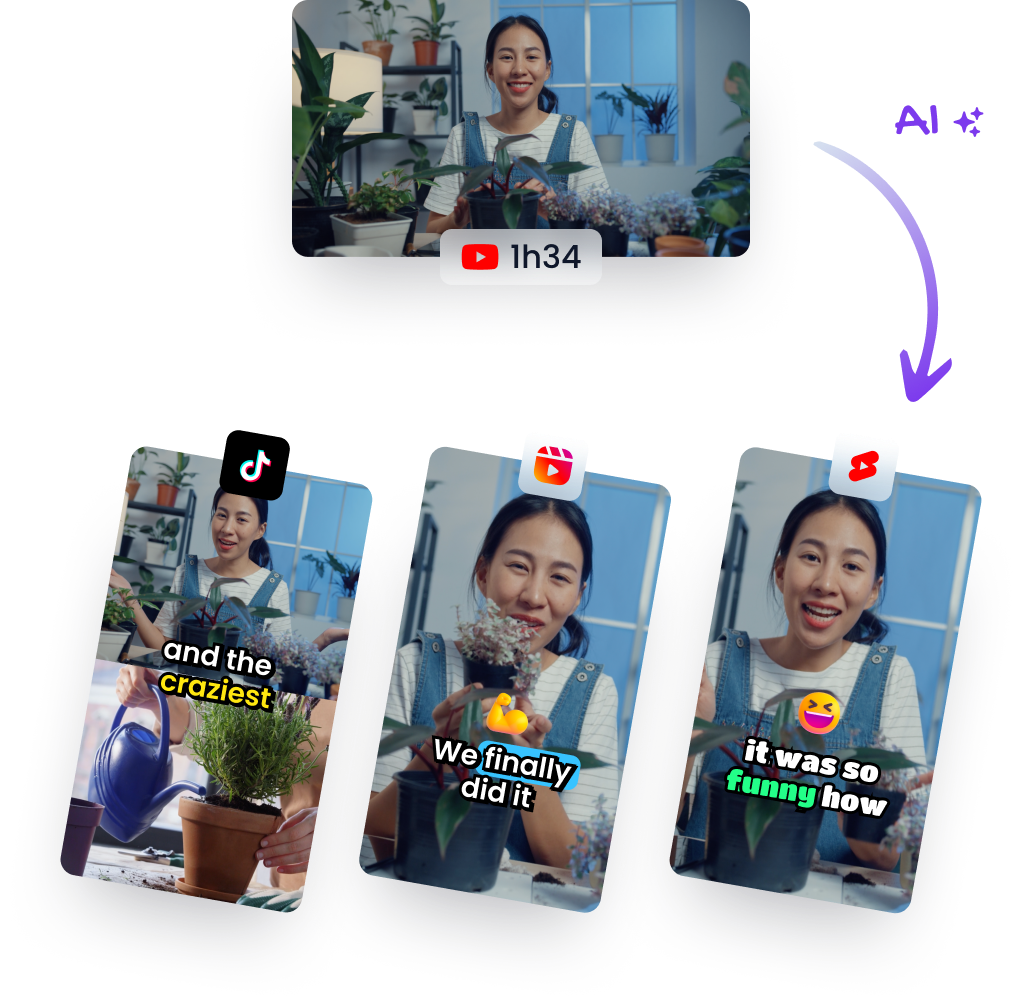
You already know the feeling. You finish a strong podcast episode, webinar, interview, or YouTube video, and for a moment it seems like the hard part is done. Then the primary bottleneck appears. You still need clips for TikTok, Instagram Reels, and YouTube Shorts, and turning one long recording into a week or two of short-form posts can eat more time than making the original video.
That's where the workflow has changed. An AI video clipping tool doesn't just save editing time. It changes how you think about long-form production itself. Instead of publishing one asset and hoping people find it, you can treat every recording as a source file for a full short-form distribution system.
The Content Creator's Dilemma
A lot of creators aren't short on ideas. They're short on post-production time.
A podcaster records a solid hour-long conversation with five or six moments worth sharing. A coach runs a webinar packed with useful answers. A marketer publishes product walkthroughs, customer interviews, and livestreams. The raw material is there. The problem is that manually finding highlights, trimming them cleanly, adding captions, reframing for vertical formats, and exporting platform-ready versions is repetitive work.
Why long-form libraries often go underused
Many teams end up in one of three traps:
- The backlog trap: finished videos pile up because no one has time to repurpose them.
- The bottleneck trap: one editor becomes the gatekeeper for every clip request.
- The inconsistency trap: clips get made only when someone has spare time, so posting cadence breaks down.
That's why so many good long-form assets produce so little short-form reach. The issue usually isn't quality. It's throughput.
Practical rule: If clipping your content depends on a human scrubbing through every minute of footage, your distribution model won't scale.
Manual clipping also creates a hidden strategic problem. When each clip takes effort, creators become overly selective. They publish only one or two excerpts from a long video, even when that video contains many usable moments. That leaves reach on the table.
What creators actually need
Many looking for an AI video clipping tool aren't asking for novelty. They want a reliable system for four jobs:
- Find the moments worth posting
- Convert them into vertical formats
- Add readable captions quickly
- Keep review time short enough to publish consistently
For podcasters, marketers, agencies, and educators, that shift matters. The goal isn't to replace editorial judgment. It's to move the slowest part of the workflow from manual searching and repetitive formatting into an automated first draft that's fast enough to use every week.
That's why this category took off. It solves a production problem, but above all, a distribution problem.
What Is an AI Video Clipping Tool
An AI video clipping tool is software that analyzes a long video and generates shorter social-ready clips from it. In practical terms, it acts like an assistant editor that watches the full recording, identifies moments likely to hold attention, reformats them for short-form platforms, and prepares them for review.

Why this category became essential
This isn't a niche convenience anymore. By 2026, short-form video content is projected to account for over 60% of all time spent on social media globally, with viewers watching an average of 53 minutes of short-form video daily, driving a 300% increase in demand for automated video clipping tools between 2023 and 2025 (industry trend summary on AI clipping demand).
That projection explains why clipping tools matter strategically. Audience attention has shifted to faster formats, but most creators still produce their deepest insights in long-form content. The gap between how content is made and how it gets consumed created the need for automation.
What the tool actually does
A strong tool typically handles several jobs in one pass:
- Content analysis: scans speech, pacing, topic changes, and standout moments.
- Clip extraction: selects short segments that can work independently.
- Reframing: converts horizontal source footage into vertical outputs for mobile feeds.
- Captioning: adds subtitles so clips work even when viewers watch on mute.
- Light editing support: lets you tweak timing, styling, and layout before export.
The tool isn't merely trimming a timeline. Instead, it helps convert one long asset into many distribution assets.
Good clipping software isn't an editing gimmick. It's a repurposing system built for how people consume content now.
The strategic change is simple. Instead of asking, “Should we make shorts from this episode?” the better question becomes, “How many useful shorts can this episode feed?” Once you start thinking that way, long-form production becomes a source engine for short-form growth.
How AI Turns Long Videos into Viral Shorts
The easiest way to understand the process is to think of the software as a fast social editor. It doesn't watch your video like a passive viewer. It processes the full recording, maps what's being said, and looks for moments that can survive outside the original context.
Here's the workflow in a simple visual.

Step one is understanding the raw material
The model first analyzes the video and audio. That usually starts with transcription, speaker awareness, and scene-level parsing. The point isn't just to create subtitles. The point is to build a usable understanding of the content.
The core mechanism involves encoding long-form audio into dense representations, then applying attention layers to identify high-engagement segments based on virality metrics. This semantic scoring directly causes the tool to auto-select 20 to 40 clips per 60-minute video (AI highlight detection overview).
That marks a significant advancement. Earlier workflows depended on a person scrubbing a timeline and guessing where the clip-worthy moments lived. Modern tools pre-score likely highlights before you ever touch the edit.
Step two is finding the hook
Not every useful moment becomes a good short. The clip has to stand on its own.
The tool usually looks for patterns such as:
- Clear statements that start strongly and resolve quickly
- Emotional peaks where the speaker's tone changes
- Contrarian opinions that create curiosity
- Practical payoffs such as advice, examples, or memorable conclusions
That's why dense interviews and topic-rich podcasts often generate better clips than flat monologues. More topic shifts usually mean more moments with natural hook-and-payoff structure.
This process is easier to understand with a live example.
Step three is making the clip watchable on mobile
Finding the right moment isn't enough. The output has to feel native to short-form feeds.
Most tools then:
- Reframe to vertical or square formats
- Track the active speaker so faces stay in view
- Add dynamic captions timed to speech
- Export clips that are ready for platform-specific posting
What works well is letting the AI handle the first pass, then reviewing the shortlist with a human editor mindset. What doesn't work is assuming every selected clip is publish-ready. The software is fast at pattern recognition. You're still responsible for context, tone, and brand fit.
Core Features That Supercharge Your Workflow

Teams get the biggest payoff from these tools when they judge them by how many manual steps they remove. A good AI video clipping tool shortens review time, cuts repetitive formatting work, and gives editors a stronger first draft to react to.
Features that matter most in practice
FeatureWhat it changes
Highlight detection
Removes the slowest editing task, which is searching through long footage for usable moments
Auto reframing
Adapts widescreen video for vertical platforms without manual crop adjustments
Caption generation
Speeds up accessibility work and makes clips easier to follow with sound off
Brand controls
Keeps fonts, colors, and layouts consistent across a high-volume publishing schedule
These are workflow features, not decoration. They matter because each one removes a repeatable task that used to sit between recording and publishing.
The most impactful feature
The feature with the biggest strategic value is virality scoring. It sorts possible clips by signals the model associates with short-form performance, such as strong openings, story tension, clear payoff, or a surprising takeaway.
That does not guarantee a winner. It does improve the order of operations.
Instead of scrubbing through an hour-long recording from the top, the team starts with the moments most likely to earn attention. That changes clipping from a hunting exercise into a review exercise. In practice, that is a much better use of editorial time.
Here's what that shift looks like:
- Review starts with the strongest candidates rather than a blank timeline
- Editors spend more time on positioning such as titles, framing, and context
- Publishing volume increases because the bottleneck moves from searching to selecting
Fast teams still make editorial calls. They just make them later in the process, after the software has handled the first pass.
What works well and what usually disappoints
Some features sound minor until you use them at scale. Active speaker tracking matters because bad crops make otherwise strong clips unusable. Caption styling matters because raw subtitles often look generic and reduce watchability. Brand kits matter when a creator, editor, and social manager all touch the same asset library.
On the other hand, flashy extras rarely fix a weak workflow. Animated effects and novelty templates do very little if the cuts feel late, the clip loses context, or the review interface slows the team down.
A simple test works here. If a feature reduces review time, correction rounds, or export friction, it improves the system. If it only changes surface-level appearance, it belongs lower on the checklist.
Your New Content Workflow in Four Steps
The biggest shift isn't technical. It's procedural. Instead of treating clipping as a separate editing project, you fold it directly into your publishing pipeline.

By 2023, 58% of social media agencies reported using AI clipping tools to scale content output, reducing manual editing costs by 70%. The technology now supports processing videos up to 6 hours long. Those numbers explain why this has become standard workflow infrastructure rather than an experimental add-on.
Step 1 Upload the source content
Start with the long-form asset you already have. That might be a YouTube upload, a webinar recording, an interview, or a podcast video.
Some tools let you upload a file directly. Others also support pasted public links. For example, Klap's AI clip workflow follows the familiar pattern of uploading or linking a long video, generating clips automatically, then letting you review and export.
Step 2 Let the AI generate the first pass
This is the part that replaces the slowest manual labor.
The system scans the footage, detects likely highlights, reframes shots for social formats, and prepares captioned clips for review. Instead of opening a timeline and starting from zero, you begin with a batch of rough candidates.
That changes who does what. The AI handles searching and formatting. You handle selection and editorial fit.
Step 3 Review like a strategist, not a technician
At this stage, many people make the wrong move. They either trust every clip blindly or over-edit each one until the time savings disappear.
A better review pass focuses on a short checklist:
- Check the opening so the hook lands in the first moments.
- Check the ending so the clip resolves cleanly.
- Check the captions for names, jargon, and punctuation errors.
- Check the framing when there are two speakers or screen shares.
Review for message integrity first. Polish comes second.
Step 4 Export and distribute as a content set
Don't think one clip at a time. Think in batches.
A good workflow turns one long recording into a small content package: several clips for awareness, a few for authority, and maybe one or two direct-response excerpts tied to an offer or topic cluster. That approach creates more consistent posting and gives you more angles to test.
The practical win is that clipping stops being a side project. It becomes part of your default post-production routine.
How to Choose the Right AI Clipping Tool
Most tools in this category promise speed. A key question is whether they preserve enough meaning to make speed useful.
Start with clip quality. A tool should identify moments that feel complete, not just provocative. That matters because independent analysis shows that 68% of viewers abandon clips where audio context is lost, yet providers rarely disclose how their context-awareness works. If the software constantly pulls hooks that distort the original point, it creates cleanup work and weakens trust.
The shortlist criteria that matter
Use this checklist when comparing options such as OpusClip, Descript, Kapwing, and AI clip maker options for short-form repurposing:
- Detection quality: Does it find coherent moments, or just flashy fragments?
- Editing control: Can you adjust timing, captions, and layout without friction?
- Format support: Does it fit your actual publishing mix across Shorts, Reels, and TikTok?
- Workflow fit: Can your team move from upload to approval without extra handoffs?
- Source flexibility: Does it work with the way you store and publish long-form content?
What to watch out for
A polished demo can hide the biggest weakness in this category. Context loss.
Some clips look great in the preview and still fail once published because they remove the setup that made the statement meaningful. This happens a lot with nuanced conversations, educational material, and expert interviews.
If a clip sounds sharper than the original speaker intended, review it again before posting.
The right AI video clipping tool should shorten production time without flattening your message. That's the decision standard. Speed matters, but usable output matters more.
If you want a practical way to turn long-form videos into social-ready clips without building a manual editing pipeline around every recording, Klap is built for that workflow. It lets you upload or link long videos, generate short vertical clips with captions and reframing, review the results, and export for platforms like TikTok, Reels, and YouTube Shorts.