AI Video Clipper: Create Engaging Shorts in 2026
Other
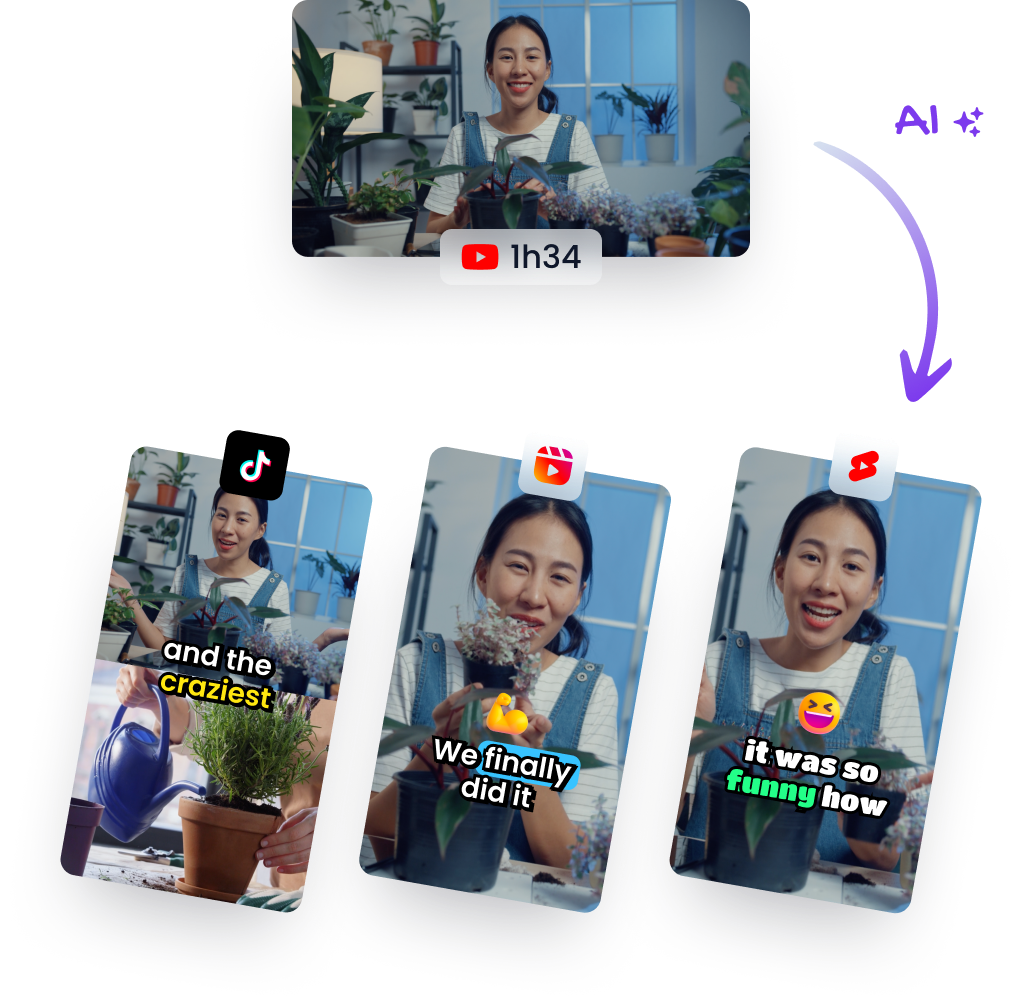
You already know the feeling. You finish a strong podcast episode, webinar, interview, or YouTube video, then leave it sitting in a folder because turning it into Shorts, Reels, and TikToks means another editing session you don't have time for.
That bottleneck is why the AI video clipper has become part of the modern content workflow. It isn't just about speed. It's about getting more reach from assets you've already paid to create, without manually scrubbing timelines, resizing frames, and writing captions for every platform.
The End of Manual Video Repurposing
Manual repurposing breaks down in the same place for almost everyone. The long-form content exists. The ideas are solid. The issue is that social distribution rewards consistency, and consistency is hard when every short clip requires separate editing decisions.
That gap matters because short-form viewing is no longer a side channel. Platforms such as TikTok, Instagram Reels, and YouTube Shorts were already driving over 900 billion video views per month globally by 2023, and short-form accounted for about 40% of mobile video minutes in major markets according to video industry estimates summarized here. If you're sitting on a backlog of interviews, tutorials, webinars, or podcast recordings, the opportunity cost is obvious.
The old workflow is familiar:
- Watch the full video again: You hunt for moments with tension, insight, or a strong opinion.
- Manually cut the segment: Then you adjust the start and end until it doesn't feel abrupt.
- Reframe for vertical: You crop from 16:9 to 9:16 and hope the speaker stays centered.
- Add captions: Then fix names, punctuation, and timing line by line.
- Repeat for every clip: What should have been content multiplication turns into repetitive production work.
Practical rule: If repurposing one long video feels like editing five new assets from scratch, your workflow is the problem, not your output.
An AI video clipper changes that equation. Instead of treating every short as a separate project, it treats your long-form video as a source file full of reusable moments. The software scans for likely hooks, cuts around them, reformats for mobile viewing, and prepares clips that are ready for review instead of starting from zero.
That doesn't mean every generated clip is publish-ready. It means the hard, repetitive labor gets compressed into a review step. For creators and marketers, that's the difference between saying "we should repurpose this" and publishing a steady stream of shorts.
How an AI Video Clipper Actually Works
The easiest way to think about an AI video clipper is as an editing assistant that watches the full video before you do. It doesn't understand your brand the way a human editor does, but it can do the first pass fast: transcribe speech, spot likely highlights, cut clean excerpts, and reformat them for social platforms.

Content understanding comes first
The strongest tools don't just look for loud moments. They analyze the words being said, how they're said, and where the conversation shifts. The core process uses automatic speech recognition and sentiment analysis to find attention spikes, with 70 to 80% precision in identifying high-value moments, then trims near sentence boundaries so clips don't cut off awkwardly, as described in this breakdown of highlight detection in AI clipping tools.
That matters in practice because bad clipping usually fails in predictable ways. It starts half a thought too late. It ends before the payoff lands. Or it isolates a quote that sounded strong in context but weak on its own.
A useful mental model is this:
StageWhat the AI is doingWhy it matters
Speech analysis
Transcribing spoken content
Gives the model searchable meaning, not just audio peaks
Context detection
Finding topic shifts, emotional cues, and notable phrases
Helps isolate moments that feel complete
Boundary trimming
Cutting near sentence endings
Avoids clips that feel chopped or confusing
If you want a closer look at how tools surface strong moments, this guide on finding highlights in video with AI is a practical companion.
Reframing is more than cropping
Once the model finds a moment worth clipping, it still has to convert that moment into a format that works on a phone screen. That's where automatic reframing comes in.
A raw horizontal export usually looks wrong on Shorts or Reels. The speaker is too small. The composition feels empty. If two people are talking, the frame can drift away from whoever is speaking. A capable clipper adjusts the crop for vertical viewing and keeps the visual focus where attention should go.
What works is simple to judge. Open the generated clip on your phone. If the face is easy to read, the visual hierarchy feels deliberate, and the crop doesn't fight the conversation, the reframing did its job.
Captions carry more weight than most teams expect
Many viewers watch social video muted at first. Others use captions because they improve clarity, not just accessibility. So the caption layer isn't a final decoration. It's part of the edit.
Good AI captioning handles the draft quickly. You still need to review proper nouns, technical vocabulary, and punctuation. But starting from an auto-generated subtitle file is very different from typing the entire clip manually.
The best results come from treating AI output as a first cut. Let the machine do the searching and formatting. Keep the final judgment human.
That division of labor is where an AI video clipper earns its place. It doesn't replace editorial taste. It gives editorial taste a much faster starting point.
A Creator Workflow with an AI Video Clipper
A practical workflow starts with content you already have. A webinar recording, podcast interview, Zoom panel, YouTube tutorial, or product demo all fit. Instead of opening a full editing suite and building each short by hand, you run the source video through a clipping tool and review the outputs.

Independent analyses estimated that AI-powered editing functions such as automated clipping and captioning reduced short-form editing time by up to 70% for many production teams in 2025, and about 60% of brands now use at least one form of AI in video workflows, according to this report on AI in video production. That lines up with how teams typically use these tools. They remove repetitive editing labor first, then keep humans on review.
Step one is import, not setup
Most creators don't need a complicated ingest process. Upload the file or paste a YouTube link. Klap is one example of a platform that supports both methods and then scans the video, identifies likely hooks, reframes for vertical formats, adds captions, and prepares social-ready clips.
That matters because friction at the start kills repurposing habits. If importing the source video feels like a project, the workflow won't stick.
The AI creates options, not final answers
After import, the tool generates clip candidates. This is the most important mindset shift. You're not waiting for one perfect edit. You're creating a shortlist.
Review those candidates with a simple filter:
- Keep clips with a clear standalone premise: The viewer should understand the setup fast.
- Drop clips that need too much backstory: A short shouldn't require the previous ten minutes to make sense.
- Trim for momentum: If the first beat drags, shorten it.
- Check the captions manually: Product names, jargon, and speaker names often need cleanup.
A walkthrough helps if you haven't seen the process in action:
For a closer look at the mechanics, this article on an auto clip maker with AI shows the workflow from long-form upload to short-form output.
Review is where quality happens
The time savings are real, but the polish still comes from review. Typically, one person can quickly decide whether a clip needs a stronger opening line, cleaner subtitle breaks, or a different framing choice.
A good AI workflow doesn't remove editing judgment. It moves that judgment to the end, where it's faster and more valuable.
That shift is why these tools fit creators so well. You spend less time hunting and more time selecting, tightening, and publishing.
What to Look for When Choosing Your Tool
Most AI video clipper pages promise the same basics. Upload a long video. Get short clips. Add captions. Export for social. Those features matter, but they don't tell you whether the tool will fit your content.
The better way to evaluate software is to separate must-haves from workflow multipliers.

The essentials
If a tool misses on these, the rest doesn't matter.
- Transcript quality: Weak transcription hurts everything downstream. Bad captions are visible, but bad transcript logic is worse because the AI may choose the wrong moments entirely.
- Vertical reframing: Social clips need to look intentional on mobile. A lazy crop wastes strong source footage.
- Fast manual adjustment: You should be able to nudge in and out points, edit captions, and swap aspect ratios without fighting the interface.
- Usable export options: A short that looks right but exports awkwardly still creates friction for the publishing team.
The game-changers
These features don't just save time. They protect quality.
One is the ability to work well with multi-speaker content. Interviews, roundtables, and podcasts create harder clipping decisions than solo talking-head videos. The software doesn't need to solve every edit perfectly, but it should preserve coherence when the speaker changes or the topic pivots.
Another is brand control. If you publish frequently, you'll want templates for subtitle styling, framing preferences, and visual consistency. That keeps your feed from looking like each short came from a different workflow.
A third, and the one many buyers miss, is context protection. Many tools focus on speed and visual effects while ignoring the reputational risk of excerpting someone too tightly. Research on media literacy shows that truncated clips can be misleading, which makes clip auditing especially important for educators, coaches, and B2B teams.
Don't just ask, "Can this tool find a hook?" Ask, "Can it help me publish a clip that is accurate on its own?"
A practical shortlist should include at least one tool that emphasizes automated clipping and review controls, such as Klap's AI clip maker, alongside other options you want to test.
What usually fails in real use
The wrong tool often looks fine in a demo and frustrating in production.
ProblemWhat it causes
Weak hook detection
Too many bland clip suggestions
Poor subtitle editing
Extra cleanup on every export
Rigid templates
Clips feel generic or off-brand
No context review habit
Risk of misleading excerpts
Choose for the content you already make, not for the flashiest landing page. A podcaster, course creator, and ecommerce team may all need clipping software, but they don't need the exact same strengths.
Best Practices for Viral-Ready Shorts
An AI video clipper can surface usable moments. It can't decide your editorial strategy for you. That's the dividing line between creators who publish lots of shorts and creators who publish shorts that strengthen reach.
The first mistake is assuming the clip itself is the product. In most cases, the clip is an entry point. It should create curiosity, deliver a compact payoff, and point viewers toward the broader content ecosystem around your brand.

Build around the opening seconds
Platform discovery depends heavily on the opening beat. Analyses of TikTok and Instagram Reels indicate that viewer retention in the first 1 to 2 seconds is a key algorithmic signal. That means your clip's opening line, visual framing, and subtitle timing need to earn attention immediately.
In practice, that usually means one of three approaches works best:
- Lead with the claim: Start on the strongest statement, not the preamble.
- Lead with the tension: Use the moment where the speaker introduces a problem, contradiction, or surprising opinion.
- Lead with the payoff: If the explanation is long, open with the conclusion and let the clip unpack it.
What doesn't work is trusting the raw AI-selected beginning without review. The machine may find the right segment but still start half a sentence too early.
Keep the clip honest and complete
Short clips travel far from their original context. A statement that felt nuanced in a forty-minute discussion can feel distorted when isolated.
Use a quick trust check before publishing:
- Would a new viewer understand who is speaking and what they're responding to?
- Does the clip preserve the speaker's actual meaning?
- If this were shared without the full video, would it still be fair?
That review is especially important for educational content, interviews, and brand communication. Reach matters. So does accuracy.
A strong short doesn't just stop the scroll. It survives being watched on its own.
Design clips to support the long-form asset
The smartest short-form strategy doesn't cannibalize the original video. It gives the original more entry points.
A few tactics help:
- Use distinct clips for distinct promises: One short can highlight a bold opinion. Another can isolate a practical tip. A third can tease a deeper explanation in the full video.
- Match captions to the audience's reading speed: Clean, readable subtitles usually beat decorative overload.
- Vary pacing across platforms: The same clip can work differently depending on where you publish and how that audience consumes content.
- Track which narrative shapes travel: Clips built around mistakes, frameworks, and contrarian takes often teach you different lessons about your audience.
Testing matters here. Not every useful clip is a high-performer, and not every high-performer builds the right audience. The goal isn't just views. It's useful reach.
Your Questions About AI Video Clippers Answered
An AI video clipper solves a specific production problem. It turns long-form video into a faster, more scalable short-form workflow. That's valuable because most creators don't lack source material. They lack the time to mine it, shape it, and publish it consistently.
Used well, these tools help you do more with the content library you already have. Used carelessly, they can flood your feed with generic excerpts or clips that lose the original meaning. The difference comes from review discipline, hook selection, and context.
Will an AI video clipper make my content feel generic
It can, if you publish the default output without editing. Generic results usually come from unedited openings, repetitive caption styles, and clips that all follow the same rhythm. The fix is simple. Treat the AI output as a draft, then tighten the first beat, check subtitle formatting, and choose clips that sound like your brand.
How much manual editing is still needed
Usually less than a full manual workflow, but not zero. You should still review timing, caption accuracy, framing, and whether the clip makes sense as a standalone piece. The AI handles the heavy lifting. The final quality still comes from a person making editorial calls.
Can these tools handle interviews or multiple speakers
They can help, but multi-speaker content is harder than solo footage. Speaker changes, interruptions, and context shifts create more opportunities for weak cuts. If your content is interview-heavy, prioritize tools that make trimming and caption correction easy after generation.
Are AI-generated clips enough to grow on Shorts, Reels, or TikTok
Not on their own. Growth comes from pairing automation with selection and testing. You still need strong source material, a clear opening, readable captions, and a publishing strategy that connects short clips back to your broader content.
What's the biggest mistake people make with AI clipping
They optimize for volume alone. Publishing more clips is useful only if those clips are understandable, on-brand, and worth watching to the end.
If you're sitting on a backlog of podcasts, webinars, interviews, or YouTube videos, Klap is a practical way to turn that library into social-ready shorts without rebuilding your editing workflow from scratch. It lets you upload a file or paste a YouTube link, then generate vertical clips with captions and reframing so you can spend more time choosing what to publish than cutting every segment by hand.