How to Edit TikTok Video After Posting
Other
You post a TikTok, refresh a few times, then spot the problem. The hook drags. The caption is off. The on-screen text covers your face. Or the clip is fine, but the wrong moment made it into the first few seconds and the whole thing feels slower than it should.
That’s usually when people search how to edit tiktok video after posting and hope there’s a clean fix inside the app.
There usually isn’t.
TikTok lets you change a few things after publishing, but not the parts creators most often want to fix. If the issue is in the actual video, your real choices are limited. You either live with it, or you pull the post and publish a stronger version. The hard part isn’t understanding the button clicks. It’s understanding the trade-off, then building a workflow that keeps you from repeating the same mistake.
The Reality of TikTok Edits What You Can and Cannot Change
A posted TikTok is much less editable than many creators expect. After publish, TikTok still gives you access to a few post settings, but the video itself is mostly locked.
TikTok’s own Help Center explains that you can manage parts of a post after publishing, such as privacy and interaction settings, but it does not offer full in-place editing of the uploaded video file (TikTok Help Center on post settings and video privacy options). That distinction matters because creators usually want to fix the opening seconds, subtitle timing, pacing, audio choice, or text placement. Those are content problems, not setting changes.
Here’s the practical split. A TikTok post has two layers: post settings and video content. Settings may still be adjustable. Content usually requires a new export.

What TikTok still lets you change
If the issue is operational, you may be able to fix it inside the app.
- Privacy controls can switch a post between public, friends, or private.
- Comment settings can be turned on or off.
- Duet and Stitch permissions can be adjusted.
- Download permissions can be allowed or restricted.
Those controls help with moderation, brand safety, and visibility. They do not repair a weak hook or a bad cut.
What is effectively locked
The actual edit is where creators hit the wall. TikTok does not let you swap footage, tighten pacing, replace baked-in captions, reposition on-screen text, or rebuild transitions after the post is live.
That is why experienced teams treat upload as the final export, not a draft. If the mistake changes what viewers see or hear, plan on re-editing outside the app. If the problem is small, even a quick pass with a video trimmer for tightening the opening seconds is more useful than hoping TikTok will let you patch it later.
TikTok also introduced limited post-publish editing for some metadata, including captions, within a restricted time window, based on creator-facing platform guidance referenced earlier. The useful takeaway is simple. Text-level fixes may be temporary and limited. Video-level fixes still require a new version.
Practical rule: If the fix changes the viewing experience inside the frame or soundtrack, treat reposting as the real edit path.
What works and what does not
A quick check keeps the decision simple:
SituationCan you fix it inside TikTok after posting?Best move
Wrong privacy setting
Yes
Adjust settings directly
Comments got messy
Yes
Change comment permissions
Caption needs cleanup within TikTok’s allowed window
Sometimes
Edit it immediately
Hook is weak
No
Re-edit and re-upload
Audio choice was wrong
No
Rebuild from the original source file
On-screen text placement is bad
No
Export a corrected version
Creators waste time when they expect TikTok to behave like a live document. It behaves like a finished file. The teams that perform best usually accept that early, then build a workflow that catches mistakes before publish and turns missed shots into stronger reposts or repurposed clips.
The Standard Workaround The Save and Repost Method
When a posted TikTok needs a real fix, the same workaround is commonly employed. Users save the video, remove the original post from public view, make changes outside TikTok, and upload again.
That method works. It’s also expensive in ways people underestimate.

How the workaround actually looks
The workflow is straightforward:
- Review the original post carefully
Don’t pull a video just because performance feels slower than you wanted. Repost only when there’s a clear fix to make, such as pacing, framing, captioning, or a post setting that materially affects results. - Make the original private or delete it
If you’re unsure, private is safer. It buys you time while protecting the original file’s public visibility. - Work from the cleanest version you have
If all you have is the downloaded TikTok, you’re already compromising quality. A clean source file is always better. - Re-edit externally
Trim the dead air. Fix subtitle timing. Tighten the opening. If you need a quick cut tool before rebuilding, a simple online video trimmer can help remove the obvious drag. - Upload again as a new post
Rewrite the caption, choose a better cover, and treat it like a fresh asset rather than a patched copy.
Why this method is a last resort
TikTok’s official support guidance and creator resources confirm that once a video is posted, users can’t re-cut the footage or change the audio in place. The practical workaround is to delete or privatize, re-edit externally, and reupload. The same 2025 analysis estimated that 40 to 50% of professional content teams using TikTok rely on at least one external editing or AI repurposing tool because the native options are too restrictive (Async breakdown of TikTok post-edit limits).
That tells you something important. Professionals don’t trust post-publish fixes on TikTok. They optimize before upload because the app doesn’t give them much room after.
The hidden costs of saving and reposting
The workaround has three common problems.
- You lose social proof. Likes, comments, and shares from the original don’t transfer.
- Downloaded videos often carry a TikTok watermark. Reposting a watermarked file makes the content look recycled.
- You may be fixing the wrong thing. A weak post isn’t always suffering from a typo. Sometimes the segment itself was never the right clip.
If the first version underperformed because the moment was wrong, reposting the same moment with tiny edits usually won’t solve the deeper problem.
That’s why experienced managers don’t ask only, “How do I repost this?” They ask, “Should this be the same clip at all?”
A Smarter Workflow Turn Mistakes into New Opportunities
The most useful shift is mental. Stop treating reposting as a repair job. Treat it as a second editorial decision.
If a TikTok misses, you don’t have to rebuild the same post with cleaner punctuation and hope for a different outcome. Often the better move is to go back to the original long-form source and cut a stronger short from it.

Replace the clip, not just the mistake
Say you posted a webinar snippet. The information is solid, but the first line is too soft and the speaker takes too long to land the point. You could save, trim a second off, and repost. That’s the basic move.
A better move is to reopen the webinar and look for a more forceful moment from the same source. Maybe the strongest section is not the part you chose first. Maybe there’s a direct answer, sharper story beat, or stronger reaction shot later in the recording.
That’s the strategic advantage of repurposing from long-form assets. You’re not trapped by the first cut.
What the professional workflow looks like
A cleaner system usually looks like this:
- Return to the source material. Use the original YouTube video, podcast recording, interview, webinar, or livestream.
- Identify a new angle. Don’t just fix a typo. Change the opening idea, shorten the setup, or test a more direct takeaway.
- Build a V2 with intent. The second post should answer a specific editorial question. Better hook? Better clip selection? Better subtitle readability?
- Publish the revised version as a new asset. Don’t frame it as an apology unless the original created a genuine issue.
If the post was more than just weak and created the wrong impression, broader reputation cleanup matters too. In that case, this guide to fix online reputation is useful because it approaches regrettable posts as a communication problem, not just a content problem.
Why AI repurposing changes the equation
In this context, AI clipping tools become more than convenience software. They reduce the cost of making a better second version.
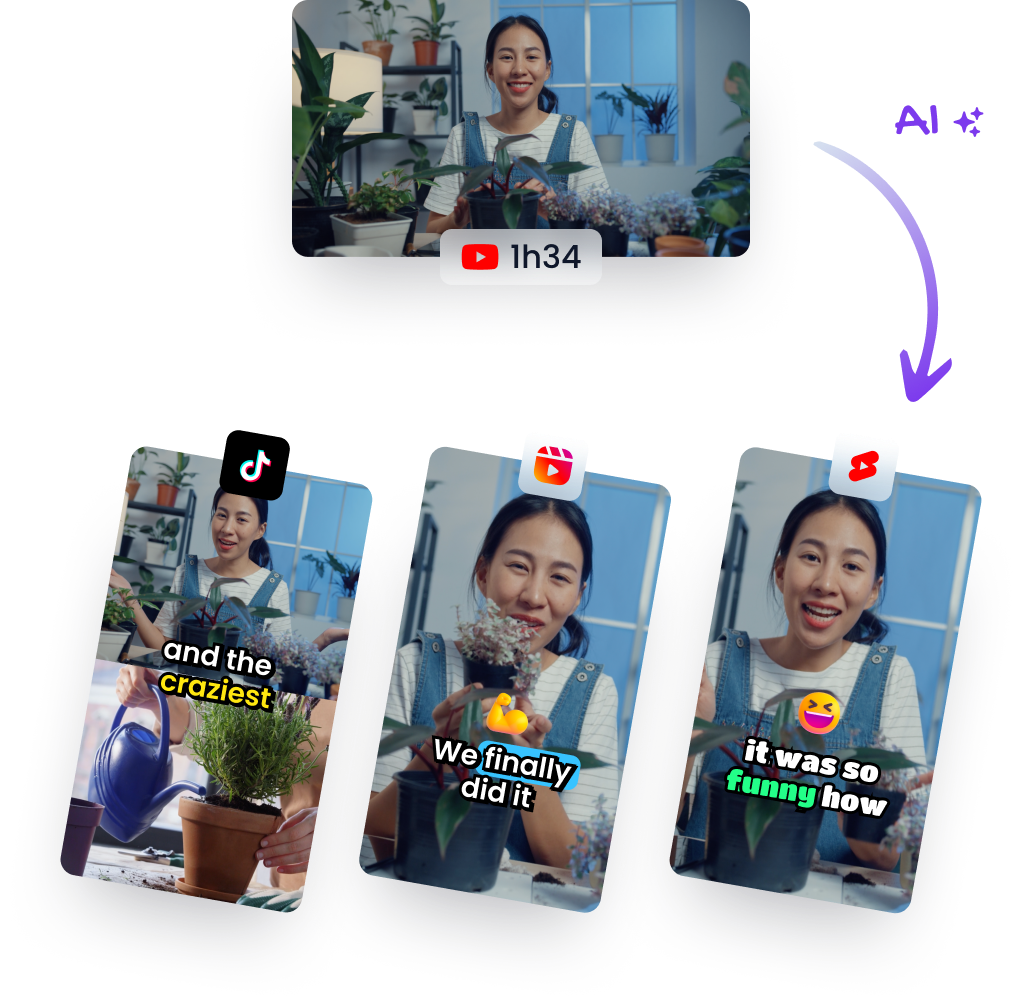
Instead of manually scrubbing through a long recording, you can use an AI workflow that identifies strong moments, reframes for vertical, and prepares a cleaner short with subtitles and mobile-friendly composition. If your first TikTok failed because the selected moment was only average, a repurposing workflow lets you test another moment quickly without rebuilding from scratch.
A lot of creators already have enough raw material. They just don’t have a fast way to turn it into multiple serious tests. If your content engine starts with interviews, tutorials, podcasts, or talking-head videos, this approach is far more efficient than patching one weak upload at a time. This is especially true if you’re learning how to make reels from existing video, because the same source asset can often supply several platform-ready cuts.
The real upgrade isn’t editing after posting. It’s reducing how often you need to.
The creators who handle TikTok well usually don’t cling to a bad first version. They use the miss as feedback, then publish a stronger second cut built from the same core material.
Advanced Re-editing Strategies for Maximum Impact
If you do decide to repost, make the second version meaningfully different. Tiny cosmetic changes rarely justify the reset. Strong reposts usually improve selection, structure, and packaging all at once.

Change the hook first
Most reposts fail because the creator edits the middle and leaves the opening intact. That’s backwards. The first seconds decide whether the audience gives you any more time.
Try one of these hook revisions:
- Lead with the conclusion instead of the setup.
- Start with the sharpest line from the clip, then explain.
- Cut throat-clearing language that makes the clip feel slow.
- Use a more specific caption frame so the viewer knows why the clip matters immediately.
This is one reason many marketers use a hybrid workflow. TikTok’s native pre-publication editor can still help with font styles, colors, and sticker placement, while the main structural edit happens before upload. TikTok’s own support materials support that kind of process, where a repurposing workflow exports the core clip and creators use native tools for final presentation tweaks (TikTok editing and posting guidance).
Use a hybrid edit, not an all-or-nothing one
A practical repost workflow often works best in two passes:
Edit layerBest place to handle it
Clip selection
External editor or AI repurposing workflow
Reframing for vertical
External workflow
Burned captions or subtitle base
External workflow
Font styling tweaks
TikTok pre-publication editor
Stickers and light platform-native elements
TikTok pre-publication editor
That division saves time. It also keeps you from reopening a full edit project just to test a different text color or sticker position.
A few re-edit ideas worth testing
Not every fix needs a complete creative overhaul. These changes often produce a noticeably stronger V2:
- Swap the opening line with a later sentence that has more tension.
- Shorten pauses between clauses so the delivery feels more deliberate.
- Reframe the face correctly for mobile. If the speaker keeps drifting off-center, the clip looks sloppy even when the point is good.
- Improve subtitle readability with better contrast and placement.
- Export clean, then add native finishing touches inside TikTok before publishing.
If you want a broader view of the editing stack creators use before TikTok upload, this roundup of best TikTok editing apps is a helpful reference point. It’s also worth reviewing guidance on how to create social media content that converts because reposting only helps when the content itself is built around a clear audience action or emotional response.
Working rule: Don’t repost because you can. Repost because the second version answers a clear hypothesis about why the first one missed.
That mindset keeps reposting from becoming random busywork.
Troubleshooting Common Reposting Issues
A repost can fix the right problem and still create a few new ones. That usually happens when creators treat reposting like a reset button instead of a controlled second version.
TikTok does not let you reopen a published video and change the edit itself. If the mistake is inside the video, the practical path is still to remove it, rebuild from your source file, and publish again. TikTok’s own help documentation on deleting a video reflects that reality. Once a post is gone, the engagement attached to it stays gone. That makes troubleshooting less about panic and more about execution quality.
The repost gets fewer views than the original
Check the actual fix, not your nerves.
A weaker repost usually means one of three things: the opening still drags, the new version solved a minor issue instead of the actual one, or the repost went live at a time when you could not monitor comments and early audience response.
Before reposting, define the change in plain language. Examples:
- The first two seconds are clearer
- The key sentence now appears on screen
- The speaker is framed correctly for vertical
- The pacing is tighter by cutting dead air
If that sentence sounds vague, the revision probably is too. This is also where a tool like Klap saves time. Instead of patching the same weak cut again, you can quickly generate a stronger version built around a better hook, cleaner captions, and tighter framing.
The original had comments worth keeping
Save the useful parts before you remove anything.
Comments often contain better positioning than the original caption. They show what confused people, what made them respond, and which line they repeated back. Screenshot strong feedback, copy recurring questions into your notes, and use that material to sharpen the repost. I have seen reposts perform better because the second version answered objections that showed up in the first comment thread.
The audio is out of sync or sounds worse after re-upload
That usually points to file handling, not TikTok randomly breaking your post.
Start again from the original exported file if you have it. Avoid downloading the posted TikTok, editing that copy, then uploading it again. Each extra handoff increases the chance of sync drift, compression, and muddy text edges. If you are rebuilding anyway, use the repost as a chance to fix more than the mistake. Clean audio, better subtitle timing, and tighter cuts give the second version a real reason to exist.
The repost process is turning into a time sink
This is the issue creators underestimate.
If you keep fixing videos after posting, the workflow is the problem. Build from editable source files, keep your caption variations in notes, and separate real edit work from TikTok-only finishing touches. Klap fits well here because it shortens the expensive part of the cycle. You can turn one flawed upload into multiple cleaner variants for testing, instead of spending another hour manually rebuilding the same piece and hoping version two is good enough.
A repost should solve a specific production problem or create a clearly stronger asset. If it does neither, leave the post alone and put that time into the next video.
Frequently Asked Questions About Editing TikToks
Can I edit a TikTok draft after saving it
Yes. A draft is still your working file inside TikTok, so you have much more flexibility there than you do after publishing. If you’re the kind of creator who often catches mistakes late, drafts are your safety net.
Does deleting and reposting hurt my account
There isn’t a simple universal rule for that. Reposting occasionally to fix a real issue is normal. Reposting repeatedly without improving the content can create a messy workflow, confuse returning viewers, and waste publishing windows.
Should I delete the original or make it private
If you’re unsure, make it private first. That gives you a backup point while you decide whether the new version is better. Delete only when you’re confident the original shouldn’t stay attached to the account.
What’s the best way to avoid the TikTok watermark on a repost
Start from the original exported file whenever possible. That’s the cleanest option. Downloading your posted TikTok and uploading it again is usually the weakest version of the workflow because you’re working from a recycled asset instead of a master.
Can I just fix the caption and leave the video alone
Sometimes, if you’re still within TikTok’s limited post-publish edit allowance for video details. But if the underlying issue is pacing, framing, hook quality, or audio, a caption tweak won’t solve the problem.
If you’re tired of patching weak uploads, build a better pre-publish workflow with Klap. It helps turn long-form videos into short, social-ready clips with vertical reframing, captions, and cleaner hook selection, so you’re not relying on TikTok’s limited after-post fixes to save the post.