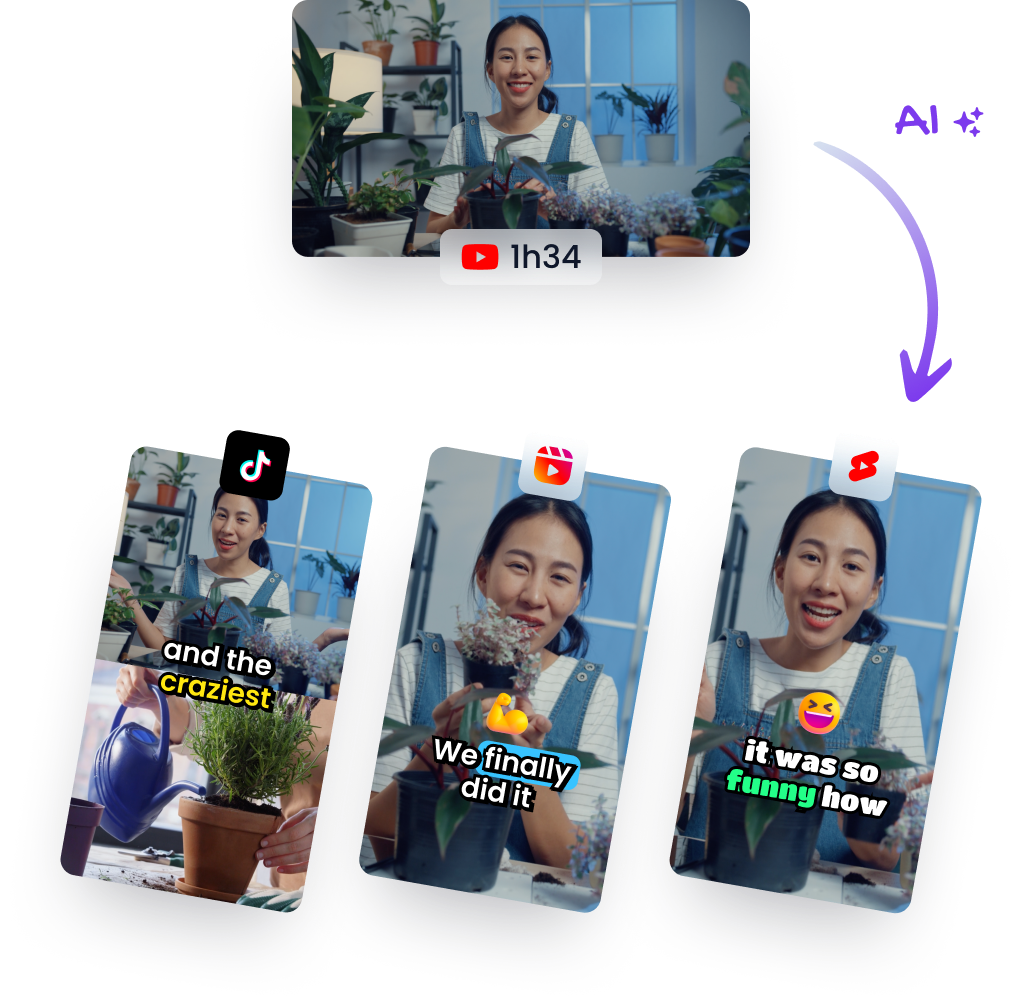
How to Change Aspect Ratio Like a Pro
Other

Knowing how to change aspect ratio is simple enough: dig into your software’s project settings and pick a new dimension, like 16:9 for YouTube or 9:16 for TikTok. The real challenge is making your content actually look good inside that new frame without sacrificing quality or your story.
Why Aspect Ratio Is Your Secret Weapon
Ever wonder why some videos look perfectly polished on Instagram Reels while others are awkwardly cropped with the main subject completely out of frame? The difference, almost always, comes down to aspect ratio.
It’s the proportional relationship between an image's width and its height, and it dictates the entire shape of your content. Getting this right is everything.
When your video’s aspect ratio matches the platform it’s on, you create a seamless, native viewing experience that can lead to higher engagement. Mismatched ratios, on the other hand, lead to ugly black bars, weird cropping, and an overall vibe that your content just doesn't belong there—a signal that can cause users to scroll right past.
The Evolution of the Screen
The screens we stare at have changed a lot over the years. We went from the boxy 4:3 ratio of old-school TVs to the widescreen 16:9 format that became the standard for pretty much everything—HDTVs, computer monitors, and of course, YouTube.
The big shift from 4:3 to 16:9 for computer monitors really kicked into high gear around 2008. By 2012, 1920×1080 (a 16:9 resolution) was the most common resolution for PC gamers, showing just how completely widescreen took over.
But today, the game has changed again. The explosion of smartphones has made vertical formats like 9:16 and 4:5 the dominant forces on social media.
An aspect ratio isn't just a technical setting; it's a creative choice. It shapes how your audience perceives your story, guiding their focus and framing the world you've captured.
Why This Matters for Creators
Understanding this evolution is non-negotiable for modern content creation. A single horizontal video can be the source for a dozen different pieces of content, each one perfectly tailored for a different platform. This is where mastering aspect ratio becomes your secret weapon for growth.
For anyone diving into smart content repurposing strategies, this becomes incredibly important. Instead of just spraying the same 16:9 video everywhere and hoping for the best, you can strategically create:
- A full-length 16:9 version for your YouTube channel.
- An engaging 1:1 square clip for a Facebook feed post.
- A compelling 9:16 short for TikTok and Instagram Reels.
Each version feels intentional and designed for its native environment. That simple change maximizes its potential to grab attention and drive engagement. By thinking about aspect ratio from the very beginning, you make sure your message is delivered effectively, no matter what screen it's on.
Your Cheat Sheet for Common Aspect Ratios
Feeling a little lost in all the numbers? Don't worry. Most of the time, you only need to know a handful of key ratios to cover all your bases.
Here’s a quick-reference table to keep you on track.
Aspect RatioCommon ResolutionPrimary Use Case
16:9
1920 x 1080
YouTube, Widescreen TVs, Presentations
9:16
1080 x 1920
TikTok, Instagram Reels, YouTube Shorts, Stories
1:1
1080 x 1080
Instagram Feed Posts, Facebook Feed, LinkedIn
4:5
1080 x 1350
Instagram Feed Posts (Portrait), Facebook Ads
4:3
1024 x 768
Older TVs, some tablet displays
21:9
2560 x 1080
Cinematic Videos, Ultrawide Monitors
Bookmark this page or screenshot this table. Trust me, it’ll come in handy more often than you think when you’re exporting content and need to double-check the specs.
The AI Workflow for Effortless Reframing
Let's be honest: manually slicing a one-hour podcast into a dozen vertical clips is a tedious, soul-crushing task. This is exactly where AI-powered tools are completely changing the game for creators. Instead of losing hours in an editing timeline, you can now automate the entire reframing process for social media.
This really puts into perspective the journey of aspect ratios, from old-school TVs to the phones we can't put down.
You can see the clear shift from boxy 4:3 screens to widescreen 16:9, and finally to the vertical 9:16 format that dominates mobile today.
How Smart Reframing Actually Works
Tools like Klap use AI to do a lot more than just awkwardly crop your video; they perform what's called smart reframing. It's pretty simple on your end—just upload or paste a link to your long-form video, and the AI gets to work.
The system analyzes the entire video, identifying the most engaging topics, pinpointing who is speaking, and finding visually interesting moments. From there, it automatically generates a series of short clips, all perfectly framed for a vertical feed.
But what makes this so effective is the AI's ability to actually follow the action, almost like a human camera operator.
- Speaker Detection: If two people are having a conversation, the AI keeps the current speaker centered in the frame, automatically switching focus as the dialogue flows back and forth.
- Action Tracking: It makes sure the most important visual element—whether it's a person, a product demo, or something on a whiteboard—remains the focal point.
- Context Preservation: The reframing is done intelligently, so you don't lose the original context or narrative of your clip.
If you're interested in the nuts and bolts, you can read more about AI integration in post-production workflows. It gives you a good sense of how deeply these technologies are impacting creative fields.
The goal isn't just to make a video vertical; it's to make it feel like it was shot vertically from the start. That's the difference between a simple crop and intelligent AI reframing.
The Impact on Your Content Output
The time saved here is massive. What used to be a full day of painstaking manual editing can now be done in just a few minutes. For a solo creator or a small marketing team, this is a huge leg up.
Imagine turning one weekly podcast into 10-15 high-quality clips for TikTok, Reels, and Shorts with barely any effort. This kind of workflow lets you boost your content output by as much as 10x, which can dramatically increase your reach and engagement across platforms. You can see how an AI reel generator automates this whole process.
Ultimately, this approach frees you from the technical headache of resizing and reframing. It lets you get back to focusing on what really matters: creating great core content. The AI handles the distribution-ready versions, making sure your message is seen on every platform, in the format that actually performs.
Mastering Aspect Ratios with Desktop Software
AI tools are incredible for speed, but sometimes you just need total creative control. When every single pixel matters, nothing beats the precision you get from professional desktop editors like Adobe Premiere Pro, DaVinci Resolve, or Final Cut Pro.
These platforms are built for granular adjustments, letting you make deliberate, frame-by-frame choices about how your story gets told in a new aspect ratio.
This isn't just about changing a few settings. It’s about the art of reframing—a skill that can completely transform the feeling of a scene.
Think about a wide 16:9 shot showing a character looking small and isolated in a huge room. By cropping into a tight 9:16 vertical frame, you can turn that same shot into an intimate, personal moment that focuses entirely on their expression. You’ve just changed the story.
The Art of Cropping and Scaling
The second you drop a 16:9 clip into a 9:16 timeline, you’re faced with a choice: scale it down or crop in? There’s no single right answer here. Each approach serves a different creative goal.
- Scaling Down: This shrinks your entire 16:9 frame to fit inside the vertical sequence. You get to keep every detail of the original shot, but it leaves you with those black bars at the top and bottom. While you can fill that space with blurred video or graphics, you lose the immersive, full-screen experience people expect on vertical platforms.
- Cropping In: This is where your creative eye really comes into play. By scaling your footage up to fill the whole 9:16 frame, you’re cutting off the sides of the original wide shot. This isn't just a technical crop; you're actively recomposing the image to put the most important subject or action front and center.
The most powerful reframing never feels like a compromise. It feels intentional. Your goal is to guide the viewer’s eye exactly where you want it, making the new frame look like it was the plan all along.
If you’re looking for a faster way to handle this, our guide on how to crop video for social media offers a more streamlined alternative for quick adjustments.
Using Pan and Scan to Tell a Story
Working manually gives you access to a classic filmmaking technique: the pan and scan. By using keyframes to animate the position of your footage, you can create movement inside a static vertical frame.
Imagine a wide shot with two people talking. Instead of a jarring jump cut between them, you can create a slow, subtle pan from the first speaker to the second. It feels more natural and cinematic, guiding the audience's attention without them even noticing. It turns a boring static shot into something dynamic that keeps people watching.
Perfecting Your Export Settings
All your hard work reframing a shot can be ruined by bad export settings. The final export is your last checkpoint for quality, ensuring your video looks crisp and professional instead of a pixelated mess.
Getting these settings right is crucial for fighting the aggressive compression that social media platforms apply to uploads.
Here’s a quick-reference table for exporting high-quality vertical video:
SettingRecommended ValueWhy It Matters
Format
H.264 (.mp4)
The universal standard for web video. Great balance of quality and file size.
Resolution
1080 x 1920 (Full HD)
The native resolution for most vertical platforms. Sharp, clean, and efficient.
Frame Rate
Match Source (or 24/30/60 fps)
Keeps motion looking smooth and consistent with how it was originally filmed.
Bitrate
VBR, 2 Pass; Target: 10-15 Mbps
A higher bitrate preserves more detail, which is your best defense against compression.
Render Quality
Use Maximum Render Quality
Taps into the best possible processing, which is especially important when scaling or cropping.
Mastering desktop software for aspect ratio changes is about taking full command of your creative vision. It definitely takes more time and skill, but the result is a piece of content that feels polished, intentional, and ready to make a real impact.
How to Change Aspect Ratio on Your Phone
Let's be real—your phone is basically a production studio that fits in your pocket. For creators who need to edit and publish content on the go, mobile apps like CapCut and InShot have made changing aspect ratios incredibly fast and intuitive.
This workflow is perfect for turning a horizontal video you just shot into a polished vertical clip for Instagram Stories or TikTok in just a few minutes.
A Quick Mobile Workflow
The process in most modern video editing apps is refreshingly simple. After you import your video clip, the first thing you'll want to do is hunt down the "Format" or "Canvas" option, which is usually right on the main toolbar.
This is where you'll find a library of preset aspect ratios, conveniently labeled for the platform you're targeting. Just tap 9:16 for TikTok, 4:5 for an Instagram feed post, or 1:1 for that classic square look. The app instantly reformats your entire project to the new dimensions. From there, you can use simple pinch-and-zoom gestures to adjust the framing and make sure your subject is perfectly centered.
The real magic of mobile editing is its speed. You can go from shooting a horizontal clip to posting a perfectly reframed vertical video in under five minutes, all from a single device.
This immediate turnaround is a huge advantage for staying relevant and responsive with your content strategy. The ability to quickly resize videos for different platforms right from your phone is a total game-changer.
Going Beyond Basic Resizing
While preset ratios are a great start, the best mobile apps offer more advanced features to make your reframed content look professional. A common headache for creators is the empty space that appears when you put a 16:9 video into a 9:16 frame.
Instead of settling for those distracting black bars, you can use built-in tools to clean things up:
- Background Blur: Most apps can automatically fill the empty space with a stylish, blurred version of your video clip. This creates a soft, textured background that looks way more intentional than a solid color.
- Keyframing: For more dynamic control, you can add keyframes to animate your video's position. This lets you create a smooth "pan and scan" effect, guiding the viewer's focus across the original wide shot without needing desktop software.
These small touches elevate your content from a simple crop to a thoughtfully composed piece. The evolution of our phone screens explains why these features are so important. Since 2017, the smartphone industry has trended toward taller aspect ratios like 19.5:9 and 20:9 to give us more screen real estate. You can explore more data on how smartphone display trends have shifted over the years. This vertical-first design means viewers expect content that fills every last pixel.
Mobile vs Desktop Editing for Aspect Ratio Changes
So, when should you edit on your phone versus a computer? The honest answer is it depends on what you're trying to accomplish. Each workflow has its own distinct pros and cons, especially when it comes to resizing video.
FeatureMobile Apps (e.g., CapCut)Desktop Software (e.g., Premiere Pro)
Speed
Excellent. Perfect for quick turnarounds and on-the-go edits.
Slower, more methodical workflow for detailed projects.
Control
Good for basic framing, but limited advanced features.
Complete granular control over every visual element.
Convenience
Unbeatable. You can literally edit and publish from anywhere.
Requires a dedicated workstation and setup.
Best For
Social media clips, quick repurposing, daily content.
Cinematic projects, heavy color grading, complex effects.
For the vast majority of social media content, a mobile workflow isn't just sufficient—it's often the smartest choice for staying agile and consistent. If you're pumping out daily TikToks or Stories, your phone is your best friend. But for that hero piece of content that needs pixel-perfect color and effects, the desktop is still king.
Composition Tips for Any Aspect Ratio
Knowing the technical steps to change an aspect ratio is one thing. But making that reframed content look good? That’s where the real skill comes in.
Great composition is what separates an awkward, clumsy crop from a compelling vertical story that feels like it was shot that way from the very beginning.
This is more true than ever with the absolute dominance of vertical video. The rise of the 9:16 aspect ratio has completely flipped how we consume media. In fact, studies show vertical videos on some platforms can boost watch-through rates by up to 90% simply because they fill the entire phone screen. If you're curious, you can dig into the latest trends in screen resolution statistics to see just how mobile-first the world has become.
What does that mean for you? Your composition has to be vertical-first, too.
Rethinking the Rule of Thirds
That classic rule of thirds—placing key subjects along grid lines—still works, but it feels completely different on a tall, narrow canvas.
A subject placed perfectly on a third-line in a wide 16:9 video might look great there. But once you crop that shot to 9:16, they can suddenly look squished against the edge of the frame.
When you're reframing for vertical, you often have to re-center your subject much more than you'd expect. Vertical frames are naturally more focused and portrait-like, so placing your subject in the middle helps them command attention. Think of the vertical frame as a natural spotlight.
When you change aspect ratio, you're not just resizing a video; you're changing the audience's entire relationship with the subject. A wider frame creates distance and context, while a taller frame creates intimacy and focus.
Protect Your Visuals from the UI
This is one of the biggest and most common mistakes I see creators make. They reframe a beautiful shot, only to forget about the platform's user interface. TikTok, Instagram Reels, and YouTube Shorts all slap buttons, captions, and usernames right on top of your video.
All your key visual information—especially faces, on-screen text, and important product shots—needs to live in a "safe zone" right in the center of the frame. Placing anything important at the very top or bottom of a 9:16 video is just asking for it to be covered up by a "Follow" button or a username.
Shoot for the Edit with Safe Framing
Honestly, the best way to guarantee great composition across every aspect ratio is to "shoot for the edit." It’s a simple mindset shift: think about your future crops while you're still filming.
Most modern cameras have built-in framing guides or safe area markers that you can overlay on your monitor. Go into your settings and turn them on.
By enabling 9:16 or 4:5 guides while you shoot in 16:9, you can make sure your main subject always stays within those future crop marks. This one habit will save you countless headaches in post-production and prevent that heartbreaking moment when you realize your best take is completely unusable for social media. It’s a proactive trick that ensures every clip can be perfectly adapted for any platform.
Got Questions About Aspect Ratios? We’ve Got Answers.
Even when you feel like you're getting the hang of resizing, a few tricky questions always seem to pop up. Let's tackle those lingering doubts with some straightforward, practical answers.
What's The Best Aspect Ratio For Social Media?
This is a classic question, but there's no single "best" ratio. It's all about matching the content's shape to where it's going to live. Think of it like this: you wouldn't wear hiking boots to a wedding, right? Same principle.
- For full-screen magic: Go with 9:16 every time. This is the native language of Instagram Reels, TikTok, and YouTube Shorts. It fills up the whole screen on a phone, which is exactly what users expect and want.
- For the main feed: A 4:5 ratio is often your secret weapon on the Instagram and Facebook feeds. It’s taller than a standard 1:1 square post, which means it takes up more precious screen real estate and makes people pause their endless scrolling.
- For traditional video: The classic 16:9 is still the undisputed champ for platforms like YouTube and Vimeo. It’s the standard widescreen format for most computer monitors and TVs, so it feels right at home there.
Getting this right is a simple tweak that makes a huge difference in how your content performs.
Will Changing The Aspect Ratio Kill My Video Quality?
It can, but it absolutely doesn't have to. The real enemy of video quality isn't changing the ratio itself—it's the cropping that often comes with it. When you crop, you're essentially just zooming in.
Everything depends on the quality of your original footage.
Let’s say you shot a beautiful, crisp 4K video (3840 x 2160 pixels) in a 16:9 format. If you decide to crop that down to a vertical 9:16 frame for a YouTube Short, your new resolution will land around 1080 x 1920. That will still look fantastic because you had so many extra pixels to play with.
Now, imagine you try to do the same thing with a standard 1080p video (1920 x 1080). When you crop into a 9:16 frame, you're stretching a much smaller number of pixels to fill the screen. The result? A noticeable drop in quality, leaving your video looking soft or even pixelated.
Pro Tip: Always, always start with the highest resolution footage you can get your hands on. It gives you the freedom to crop and reframe later without destroying the professional quality you worked so hard to achieve.
How Can I Change The Aspect Ratio Without Cropping Anything Out?
Ah, the classic dilemma. You want to go vertical, but you don't want to lose any of your carefully composed wide shot. The solution is to add padding, which creates those black bars you see everywhere. This is often called letterboxing (bars on the top and bottom) or pillarboxing (bars on the sides).
Pretty much any video editor can do this without breaking a sweat. Just drop your 16:9 clip into a 9:16 project timeline, and the software will automatically fill the empty space with black.
But you don't have to stick with black! A lot of creators get creative here, filling the space with a solid brand color, a subtle gradient, or even a blurred, out-of-focus version of the video clip itself. It's a much more polished look.
Just keep in mind the trade-off. While this trick preserves your entire original shot, you give up the immersive, full-screen experience that vertical platforms are designed for. Sometimes, that can make your content feel a little out of place in a fast-moving feed.
Tired of spending hours manually reframing your videos? With Klap, you can turn one long video into dozens of viral-ready shorts in a single click. Our AI does the heavy lifting—finding the best moments, framing them perfectly for social media, and adding dynamic captions. Try Klap for free and see just how easy content repurposing can be.