AI for Cutting Videos: A Practical Guide to Creating Viral Shorts
Other
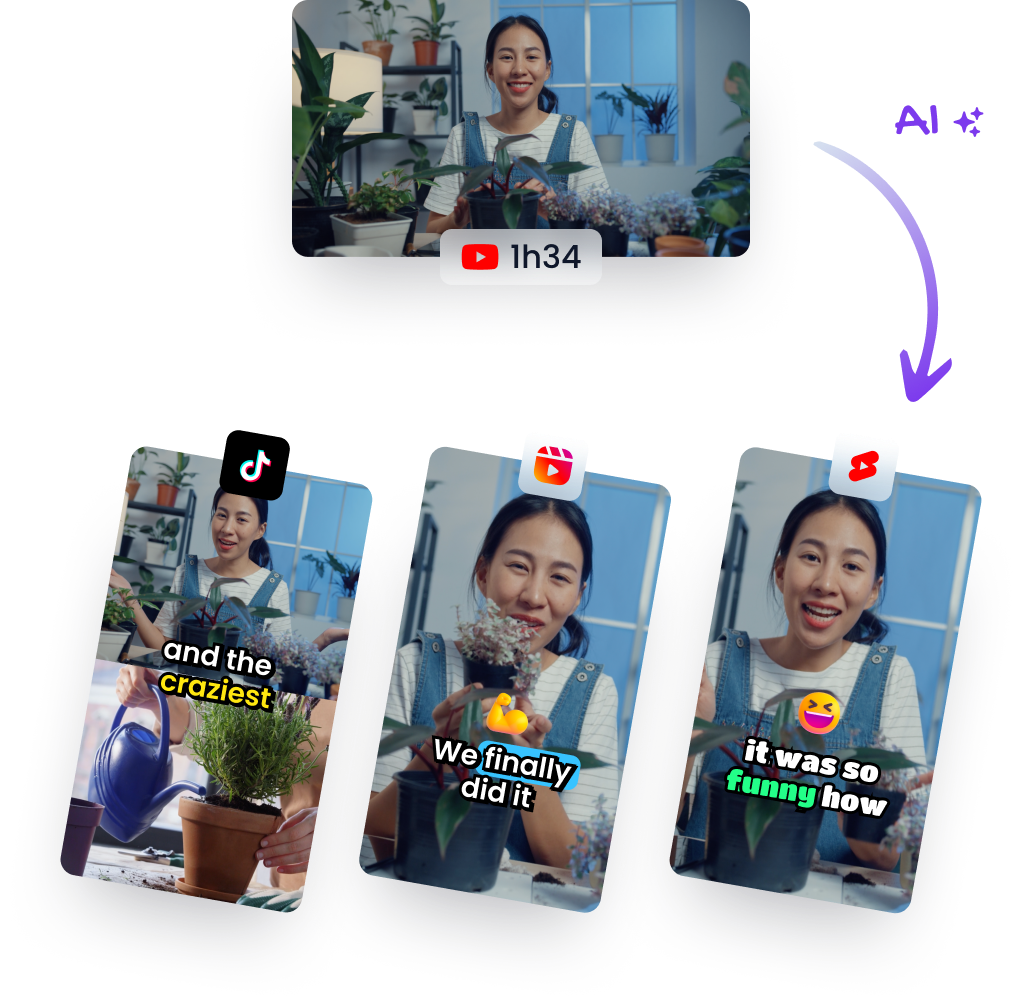
Imagine turning a one-hour podcast into ten viral TikToks before your coffee gets cold. That's the new reality with AI for cutting videos. It’s not just about speeding things up; it’s a powerful strategic advantage that lets you scale your content in ways that were impossible just a few years ago.
Why AI Is a Game-Changer for Video Editing
Not long ago, creating short-form content was a total grind. An editor (or maybe just you) would have to manually scrub through hours of raw footage, hunting for that one perfect soundbite or viral-worthy moment. It was slow, expensive, and the biggest bottleneck preventing creators from posting consistently.
AI-powered tools completely flip that script.
Instead of an editor spending a full day on a single long video, an AI can churn out dozens of suggested clips in minutes. It scans transcripts, pinpoints topical highlights, and even detects emotional peaks that are likely to hook a viewer. This isn't just a time-saver—it’s a fundamental shift in how you should approach your content strategy.
The Soaring Demand for Automated Editing
The numbers don't lie. This shift is fueling explosive growth in the market, which shot up from USD 0.9 billion in 2023 and is on track to hit USD 4.4 billion by 2033. That’s a compound annual growth rate of 17.2%, driven by the non-stop demand for quick, engaging content on platforms like TikTok, Reels, and Shorts.
This tells us AI is no longer a niche tool but a core part of modern video production. For creators and marketers, this unlocks a few key benefits:
- Massive Scalability: You can genuinely produce 10x more content from the same video without hiring a huge team.
- Better Clip Discovery: Let's be honest, AI often finds hidden gems and compelling hooks that a human editor, tired after hours of watching footage, might easily miss.
- A Shift to Strategy: When you automate the grunt work, you get to spend your energy on what actually matters—creative direction, strategy, and talking to your audience.
The real power of an AI short video generator is that it liberates you from the timeline. You stop being a 'video cutter' and become a 'content curator,' making high-level creative decisions while the AI handles the tedious stuff.
Manual vs AI Video Repurposing
To really see the difference, let’s break down the old way versus the new way. The contrast in efficiency and output is stark.
MetricManual Video CuttingAI Video Cutting
Time Investment
4-8 hours per long-form video
10-15 minutes per long-form video
Cost
High (editor's salary or freelance fees)
Low (affordable monthly subscription)
Clip Volume
3-5 clips per video, on average
10-50+ clips per video
Consistency
Difficult to maintain due to time constraints
Effortless, enabling daily posting
Discovery
Relies on editor's intuition and patience
Data-driven, identifies virality potential
The table makes it clear: relying solely on manual editing puts you at a significant disadvantage in a fast-moving content world.
Ultimately, using AI for cutting videos is about working smarter, not harder. It empowers a solo creator to compete with a big production house and helps marketing teams squeeze every last drop of value from their video assets. If you're curious about how AI is being applied in other creative spaces, you can find more answers in this collection of Frequently Asked Questions on AI in creative fields.
Your Workflow for AI-Powered Video Repurposing
Alright, let's move from theory to action. Turning your existing video library into a non-stop content engine is way more straightforward than it sounds. We'll walk through a classic scenario: taking a 45-minute webinar recording and slicing it into ten high-impact clips for social media.
First, you need to get your source video into the system. Most platforms that use AI for cutting videos give you two dead-simple options: upload a raw video file from your computer or just paste in a YouTube link. For our webinar, we'll go with the YouTube link—it saves a ton of time on uploading and processing. As soon as you hit "go," the AI gets to work transcribing the entire video.
That transcript is the bedrock for everything that happens next.
Letting the AI Find the Gold
Once the video is transcribed, the AI doesn't just clock out. It immediately starts analyzing the text to figure out the content’s structure, topics, and even its emotional rhythm. Think of it as a super-fast researcher who’s already highlighted the best parts for you.
Here's what the AI is trained to hunt for to find a high-potential clip:
- Topical Shifts: It pinpoints the exact moments a speaker switches subjects, which make for perfect, self-contained clips.
- Questions and Answers: Q&A sessions are conversational goldmines. The AI knows this and flags them as prime material.
- Emotional Peaks: Using sentiment analysis, it detects moments of excitement, passion, or emphasis in the speaker’s tone. These often make for powerful hooks.
- Keyword Clusters: It finds sections where key terms pop up again and again, indicating a focused, valuable chunk of information.
In just a few minutes, a tool like Klap will serve up a list of suggested clips, each with a catchy title, a quick summary, and a virality score. For our 45-minute webinar, this process might generate 20-30 potential clips. That’s way more than you'd ever find by manually scrubbing through a timeline in the same amount of time.
Actionable Insight: You’re not just getting random snippets. The AI acts as your first-pass editor, curating a list of moments with the highest probability of performing well on social media. Your job is simply to be the final creative director.
This infographic really drives home the difference between the old-school manual slog and a modern AI-powered workflow.

As you can see, AI compresses a multi-hour, multi-step headache into a few automated clicks, freeing you up to focus on the creative side of things.
Selecting Your Winning Clips
Now for the fun part. You have a curated list of potential shorts ready for review. Instead of painstakingly watching the entire webinar again, you can just scan the AI’s suggestions. The generated titles and virality scores give you an immediate sense of what's worth your time. A clip titled "The Biggest Mistake New Marketers Make" with a score of 9.2/10 is obviously a much hotter prospect than "Final Housekeeping Notes" scoring a 4.5/10.
This is where your own expertise comes into play. You click through the top-rated clips, watch the short previews, and hand-pick the ten that best fit your content strategy. If your main goal is building a YouTube Shorts channel, for instance, you'll naturally gravitate toward clips that fit that format and audience. For a deeper look at that, our guide on how to create YouTube shorts from existing video is packed with platform-specific tips.
This whole process—from pasting a link to having a final set of clips—takes a fraction of the time it would manually. You’ve just turned one long video into a week's worth of content in less time than it takes to brew a pot of coffee.
How to Refine and Perfect AI-Generated Clips

Alright, the AI has served up some solid clip suggestions. This is where the real magic happens—where your human touch turns a good clip into a great one.
Think of the AI as a smart assistant that does 90% of the grunt work. It finds the juicy moments for you. But that last 10%? That's your creative instinct, and it's what makes content feel authentic and shareable.
Your first move is almost always fine-tuning the timing. AI is shockingly good at finding the core of a thought, but it can sometimes leave in an awkward breath at the beginning or let a sentence trail off at the end. Shaving off even half a second can make a huge difference in the clip’s energy.
Polishing the Pacing and Captions
Go through each clip and tighten up the start and end points. This small edit has a massive payoff. A clean, snappy entrance hooks viewers instantly, while a crisp ending makes the point land with impact. Timing is everything. Using a dedicated video trimmer lets you get super precise with these tiny, crucial adjustments.
Next up, let's talk captions. AI transcription is incredible these days, but it's not foolproof. It often stumbles over brand names, industry jargon, or unique spellings. More importantly, it can't capture your unique voice.
Actionable Insight: A human touch on captions is non-negotiable. It’s your chance to fix awkward phrasing, add personality, and make sure the text perfectly syncs with the speaker's delivery. This is huge for viewer comprehension and keeping them locked in, with some studies showing captioned videos can increase view time by over 12%.
This is where you can inject your brand’s personality. Do you use certain emojis? Is your tone more witty or straightforward? Swapping out just a few words can completely change the feel of the video and make it sound like you.
Enhancing Visuals and Branding
With the timing and text locked in, it’s time to make the clip look the part. You want to transform a generic-looking clip into a piece of content that is unmistakably yours. Most AI video tools have a whole suite of customization options to help your content stand out in a crowded feed.
Here are the visual tweaks that matter most:
- Caption Animations: Don't just settle for static text. Dynamic styles like word-by-word highlights or pop-up effects are brilliant for holding attention and emphasizing key phrases.
- Brand Kits: This is a must. Upload your logo, brand colors, and specific fonts. Applying them consistently across all your clips builds brand recognition without you even trying.
- Strategic Headlines: Sometimes a clip needs a little more context to make sense on its own. Adding a compelling headline at the top can instantly tell the viewer what the video is about and why they should care.
- B-Roll and Overlays: For those extra-special clips, adding some relevant B-roll footage or simple graphic overlays can break up the monotony of a talking head and make your points more visually interesting.
The demand for tools that do this is absolutely exploding. The market for AI video generators is expected to jump from USD 534.4 million in 2024 to an incredible USD 2,562.9 million by 2032. That’s a massive 19.5% CAGR, all driven by creators who need to automate the time-sucking parts of repurposing so they can focus on these crucial finishing touches.
Optimizing Your Shorts for Maximum Reach
A perfectly edited clip is only half the battle. If no one sees it, all that effort goes to waste. This is where you switch hats from creator to distributor, fine-tuning your AI-generated shorts to grab the biggest possible audience on every platform.
The first thing to nail down is technical quality. A blurry or pixelated video is an instant scroll-past. Always export your clips in the highest resolution you can, which is typically 1080x1920 pixels for crisp vertical video on TikTok, Instagram Reels, and YouTube Shorts. You'll also want to aim for a frame rate of at least 30 FPS (frames per second) to keep the motion feeling smooth and professional.

This is where a good AI for cutting videos really helps. Platforms like Klap handle the technical side for you, preparing clips with optimal settings so they’re ready to go. By automating the nitty-gritty details, these tools free you up to focus on content strategy and actually talking to your audience.
Tailoring Your Strategy for Each Platform
While the video file itself might be identical, your distribution strategy shouldn't be. Every platform has its own vibe and algorithm, and you've got to play their game to win. What crushes it on TikTok might completely flop on YouTube Shorts.
Here’s an actionable game plan for each platform:
- TikTok: This platform is all about immediate engagement and trends. Your first three seconds are everything. Jump on trending audio (you can even layer it at a low volume under your original sound) and use 3-5 relevant, niche hashtags. If you're trying to grow, learning how to promote music on TikTok is a masterclass in virality, and the same principles apply to almost any content.
- Instagram Reels: Reels tends to favor more polished, aesthetically pleasing visuals and content that gets people talking in the comments. Focus on high-quality video, use interactive stickers like polls or quizzes, and write captions that ask questions to encourage a response.
- YouTube Shorts: Think of this platform as a search engine for short videos. Your titles and descriptions are mission-critical. Treat them like mini SEO projects, packing them with keywords your target audience is actually searching for. Shorts that answer a specific question or solve a problem do incredibly well here.
The single biggest mistake I see creators make is the copy-paste-post method. They drop the exact same video with the same caption and hashtags everywhere. Just by customizing your approach for each platform, you can easily double or triple your overall reach. It’s a no-brainer.
Analyzing Performance and Refining Your Approach
Your job isn't over when you hit "publish." Now it's time to dig into the data to see what’s actually connecting with people. Pay close attention to two key metrics: watch time and audience retention. High retention is a direct signal to the algorithm that your content is engaging, which makes it push your video out to more people.
Use these insights to guide what you create next. If a certain topic consistently gets great watch time, tell your AI for cutting videos to hunt for similar moments in your source footage. It’s this data-driven feedback loop that turns a one-off viral hit into a real, sustainable growth strategy. You're not just guessing anymore; you're making informed decisions that get results.
Common Mistakes to Avoid When Using Video AI
AI tools are fantastic assistants, but they're not creative directors. Let's be real—blindly trusting automation without a final human check is one of the fastest ways to churn out awkward, ineffective, or just plain weird content. It's easy to get carried away by the speed, but a few common missteps can completely erase all the time you just saved.
The biggest mistake is skipping the final human review. Every single time. AI can easily misinterpret sarcasm, miss crucial context, or generate captions that are just… wrong. This leads to nonsensical text or poorly timed cuts that absolutely kill the momentum of a great clip.
Another frequent fumble is feeding the AI bad source material. A two-hour, rambling livestream with terrible audio is a nightmare for any repurposing tool. For the AI to work its magic, it needs clear, well-structured content with clean audio to pull from.
Ignoring Platform and Brand Context
One of the most damaging mistakes is completely ignoring the unique culture of each social media platform. A clip that crushes it on YouTube Shorts might feel totally out of place and cringey on TikTok. Each platform has its own unwritten rules, trending audio, and audience expectations.
Simply batch-exporting clips and blasting them everywhere without any tweaks is a recipe for low engagement. You have to adapt your approach to fit the room.
And on that note, it's wild how many creators forget to maintain a consistent brand identity. They fail to apply their brand kits, resulting in a random jumble of clips with different fonts, colors, and styles. It just looks unprofessional and seriously weakens brand recognition over time.
Actionable Insight: Your goal isn't just to make clips; it's to make clips that feel like yours. Consistent branding helps your audience immediately recognize your content in a sea of lookalikes, which is essential for building a loyal following.
Over-Reliance on AI Suggestions
While the suggestions from an AI for cutting videos are a phenomenal starting point, they should never be the final word. The AI identifies potentially engaging moments based on data patterns, but you're the one who understands the nuance and the bigger picture of your content strategy.
Don't be afraid to override the AI's choices or dig for hidden gems it might have missed. Here are a few common pitfalls that come from trusting the automation a little too much:
- Accepting every "viral score" as gospel: A high score is a great signal, but your gut feeling and deep knowledge of your audience are just as important.
- Neglecting the story: Sometimes the AI will pull a technically "good" clip that lacks a clear beginning, middle, and end. This just leaves the viewer confused and ready to scroll.
- Forgetting your goals: The AI has no idea what your specific campaign goals are. You need to hand-select clips that align with your current objectives, whether that's driving sales, building authority, or just growing brand awareness.
By sidestepping these common errors, you shift from being a passive user of AI to an active director. This collaborative approach—where AI does the heavy lifting and you provide the creative oversight—is the real key to consistently producing short-form video that actually performs.
Frequently Asked Questions
Jumping into any new workflow, especially one powered by AI, always brings up a few questions. It’s totally normal. Let's walk through some of the most common ones I hear from creators to clear things up.
One of the first things people ask is how the AI actually knows which parts of a video are interesting. It's not just picking clips at random. The technology combines a few smart approaches, mainly analyzing the video's transcript with natural language processing (NLP). This helps it spot topic changes, important questions, and key phrases.
At the same time, many tools use sentiment analysis to find emotional spikes in the conversation—those moments of excitement, laughter, or serious emphasis that naturally hook a viewer.
How Does AI Handle Multiple Speakers?
This is a big one for anyone creating podcasts or interviews. The good news is that modern AI video tools are surprisingly good at handling multiple speakers. They can actually tell different voices apart and will often label them in the transcript.
This is a massive help because it lets you:
- Isolate a specific person: You can instantly find every clip where your guest is talking.
- Follow the conversation: The AI can identify the back-and-forth dialogue, which is gold for creating dynamic, conversational clips.
- Keep things in context: Because it knows who said what, you don’t have to worry about creating misleading soundbites.
For podcasters, this is a huge win. You can pull the best moments from each person without having to manually scrub through hours of audio just to figure out who’s talking.
What Kind of Time Savings Are Realistic?
It’s easy to be skeptical of big claims like "10x your content," but the time savings are genuinely huge. If you’ve ever done it, you know that manually editing a one-hour video into ten solid short clips can easily take a skilled editor 4-8 hours. No joke.
With an AI-assisted workflow, that entire process gets squeezed down.
Actionable Insight: You can realistically go from a full-length video to a whole batch of ready-to-publish shorts in about 15-30 minutes. The AI does the heavy lifting—finding the clips and making the first cuts—in minutes. All that's left for you is the final creative polish.
For most creators, that's a time saving of over 90%.
This isn't just about getting hours back in your day. It’s about being able to re-invest that time into what really matters: your content strategy, engaging with your community, or filming your next big video. The AI takes over the grunt work, leaving you to be the creative director.
Ready to stop wasting hours on manual editing? With Klap, you can turn your long videos into a month's worth of viral shorts in minutes. Try it for free and see how AI can transform your content workflow. Visit https://klap.app to get started.