How to Transcribe Youtube Video: Creator's Guide 2026
Other
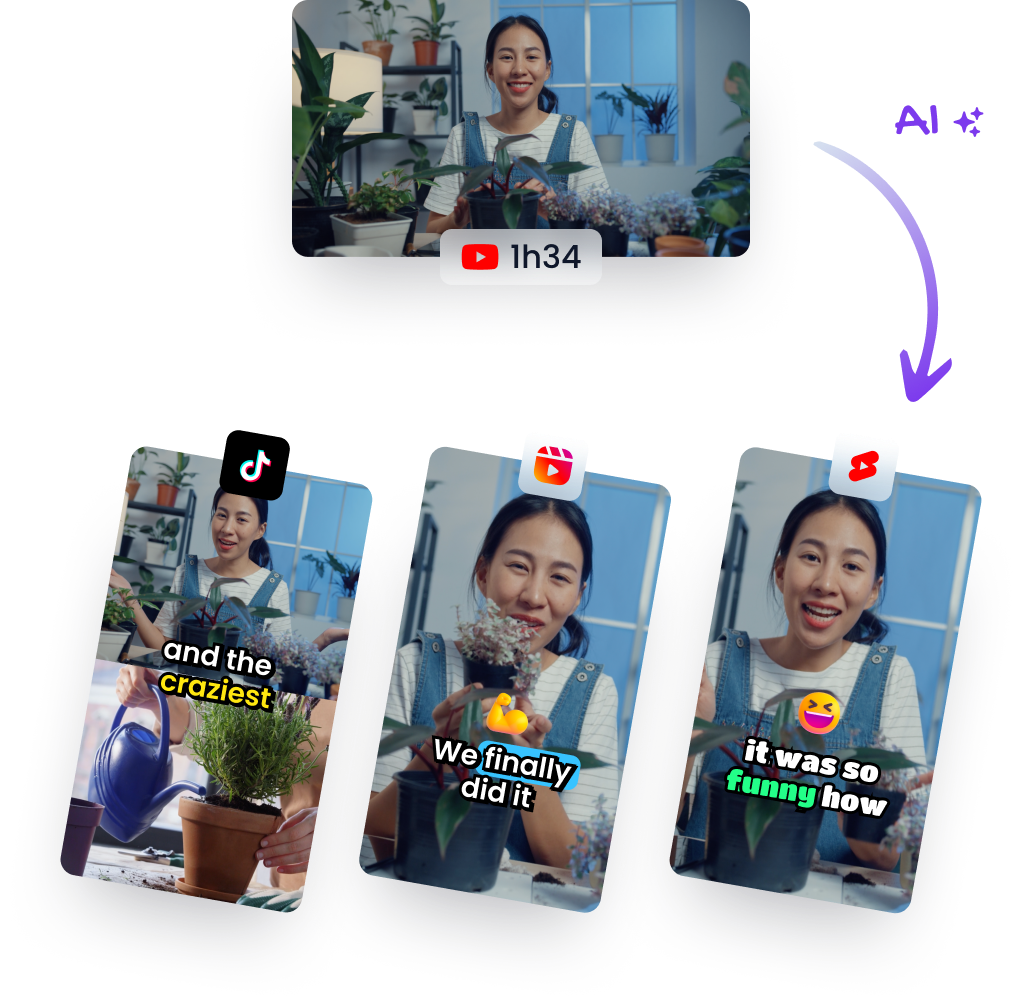
You already have the raw material. It's sitting in your YouTube channel, your webinar archive, your podcast interviews, and your screen recordings.
The hard part usually isn't making more content. It's turning one long video into everything else you need: captions, clips, blog posts, show notes, quote graphics, email copy, and searchable notes. That's where transcription stops being a side task and becomes the first real production step.
Why Transcribing Your YouTube Videos Is a Game Changer
A lot of creators search for a way to transcribe a YouTube video because they want the text. Fair enough. But the text file itself usually isn't the end product.
The transcript is the working draft for everything that comes next. It gives you something you can search, edit, cut, and reshape without scrubbing through the timeline every few seconds. That's what makes it useful.
Existing guides on how to transcribe YouTube videos often stop at extracting the text, but they rarely answer the critical follow-up question: what should I do with it? The market is shifting from raw transcription to downstream reuse, including summarization, captioning, and short-form clip generation, as noted in this practical guide on YouTube transcription workflows.
What a transcript actually unlocks
Once the words are in text form, you can move faster on jobs that usually drag:
- Clip hunting gets easier: You can scan for strong hooks, objections, stories, and punchlines instead of rewatching the full video.
- Blog drafting gets simpler: Spoken explanations often become strong article sections once you clean them up.
- Search improves: A transcript makes it easier to identify recurring topics, phrases, and questions worth targeting.
- Team handoff gets cleaner: Writers, editors, assistants, and social managers can work from the same source text.
For audio-first creators, the same logic applies to discoverability. If you publish interviews or long-form discussions, this guide on SEO for podcast is worth reading because it shows how text assets help spoken content reach search traffic.
A transcript isn't just a record of what was said. It's the editable source file for repurposing.
The shift from extraction to reuse
YouTube has made transcript access easier, and dedicated tools have made transcription faster. The bigger change is workflow. Creators don't just want to copy text out of a video anymore. They want structured output they can put to use.
That's why it helps to think of transcription as content infrastructure. If you need a broader definition of how this fits into video production, video transcription basics lays out the core role transcripts play in accessibility, editing, and reuse.
If you treat transcription as the first editing pass, a long video stops being a single asset. It becomes a source library.
The Quick and Free Method Using YouTube's Own Transcript
If you need something fast and free, start with YouTube itself. For many public videos, YouTube lets you open the transcript directly on the video page, which removes a lot of the friction that used to come with basic extraction.

How to pull the transcript from YouTube
On desktop, the workflow is simple:
- Open the video page: Go to the YouTube video you want to work from.
- Expand the description area: Click the video details section if needed.
- Select Show transcript: YouTube opens a transcript panel beside or below the video.
- Turn timestamps off if available: This gives you cleaner text to copy.
- Copy the transcript into a doc: Paste it into Google Docs, Notion, Word, or your editor of choice.
For quick research, this method is good enough. If I'm trying to pull one quote, find where a topic was mentioned, or skim an interview before editing, this is usually the fastest option.
Where this method works well
YouTube's own transcript is useful when you need speed more than polish.
Use caseGood fitWhy
Quick quote lookup
Yes
You can search and jump to the right moment fast
Rough notes
Yes
No setup required
Subtitle publishing
Usually no
The text often needs cleanup
Blog writing
Sometimes
It works as a draft, not a final source
Technical content
Risky
Terms and names often need correction
The catch with auto-generated transcripts
Many creators lose time. The transcript looks finished because it exists on the page, but that doesn't mean it's ready to publish.
YouTube's auto-generated transcripts have been measured at 61.92% accuracy at best, while human-made transcripts are reported at 99% accuracy, according to Ditto Transcripts' review of YouTube transcription accuracy. That gap shows up most clearly with technical terms, names, accents, numbers, and punctuation.
Practical rule: Use YouTube's transcript for reference and first drafts. Don't trust it blindly for captions, client work, or anything you'll publish as-is.
When to stop using the free option
Move beyond YouTube's native transcript when any of these are true:
- You need export formats: A plain copy-paste draft isn't enough if you need subtitle files.
- You're repurposing professionally: Blog posts, clips, and social assets fall apart when names and wording are off.
- You need cleaner structure: Auto transcripts usually need paragraphing, punctuation, and speaker cleanup.
- You're working at volume: Repeating manual copy-paste across lots of videos gets old fast.
Free is fine for rough extraction. It's not the workflow I'd use when the transcript needs to become a real content asset.
Using AI Tools for Fast and Accurate Transcription
A dedicated transcription tool makes sense when the transcript has work to do after extraction. If the plan is to turn one YouTube video into captions, clips, a blog draft, show notes, or searchable research, copying text out of YouTube becomes the slow part of the process.
These tools are built for production. You paste a YouTube URL or upload a file, get editable text back, and export it in formats that match the next job. That usually means TXT for writing, SRT or VTT for captions, plus timestamps and speaker separation if the recording has multiple voices.

What AI transcription tools actually improve
The biggest gain is workflow control.
With YouTube's built-in transcript, you get text on a page. With a dedicated tool, you usually get a working file you can edit, export, search, and pass into the next stage without extra cleanup steps in between. That matters if you publish often.
A solid transcription tool usually gives you:
- Editable transcript text: Fix wording, punctuation, and labels without starting over elsewhere.
- Export options: TXT for writing, SRT or VTT for captions, and sometimes DOCX or CSV depending on the tool.
- Useful structure: Speaker labels, timestamps, paragraph breaks, and cleaner formatting.
- Flexible input: YouTube links, uploaded video files, or common formats like MP4 and MOV.
Those features sound small until you process videos every week. Then they save real time.
Choosing the right type of tool
The right choice depends on what happens after transcription.
Tool typeBest forLimitation
Simple transcript extractor
Pulling text from a video quickly
Often light on editing, exports, and organization
Subtitle-focused software
Creating timed captions and subtitle files
Less helpful for drafting articles or finding clip moments
Note-taking transcription apps
Research libraries, summaries, and searchable archives
Often awkward for social editing and publishing
Repurposing tools
Turning transcript text into clips, captions, and content assets
Raw output still needs review for names, terms, and phrasing
I usually sort tools by output path, not by marketing claims. If the transcript needs to become captions, I care about subtitle support first. If it needs to become a post or newsletter, I care more about text cleanliness and export quality. If it needs to become short-form content, I want the transcript connected to editing decisions, not sitting in a separate tab.
That same logic applies to knowledge work. Teams that save useful videos for research often want the transcript to become searchable reference material, not just a document in a folder. Slashspace shows one practical version of that in its guide to enhance deep work with YouTube content.
Tools that connect transcript to repurposing
Some products treat transcription as the first layer of editing. That is usually the better fit for creators.
Klap works in that category. You add a YouTube link or upload a file, the platform generates a transcript, and that text feeds into captioning, transcript-based editing, and short clip selection. If you're comparing transcript tools with caption-focused products, this guide to closed captions software for video workflows gives a useful breakdown of where each one fits.
A short demo makes that workflow easier to picture:
My rule for tool selection
I pick the tool based on the next deliverable.
- Need captions for publishing? Choose strong SRT and VTT export.
- Need a blog draft or newsletter source? Choose cleaner plain-text output and easy editing.
- Need clips for Shorts, Reels, or TikTok? Choose a tool that uses the transcript inside the editing workflow.
- Need a research archive? Choose search, timestamps, and organization over visual editing features.
If the transcript cannot move cleanly into the next task, the tool is only solving the first 20 percent of the job.
How to Clean and Perfect Your Automated Transcript
The first draft is rarely the final transcript. That's true whether you pulled text from YouTube or used a dedicated AI tool.
What separates a usable transcript from a frustrating one is cleanup. This is the stage where you turn machine output into publishable material.

Fix the high-risk errors first
Don't start by line-editing every sentence. Start with the mistakes that create downstream problems.
Here's the order that works best:
- Names and brands: People notice these first, and tools often miss them.
- Numbers and dates: Prices, counts, and product versions are easy to mistranscribe.
- Technical vocabulary: Industry terms often break auto-transcripts.
- Punctuation: This changes meaning and readability fast.
- Paragraph breaks: Good structure makes the transcript usable for writing and review.
If you want a strong baseline format to work from, how to write a transcript clearly is a useful reference for layout, readability, and speaker handling.
A simple before and after standard
Raw transcript text often looks like this:
we launched the new workflow in april and john said the main issue was onboarding because nobody understood where to upload the files
After cleanup, it becomes this:
We launched the new workflow in April. John said the main issue was onboarding because nobody understood where to upload the files.
That doesn't just read better. It becomes usable for captions, summaries, and article drafting.
The cleanup checklist I'd use on any transcript
- Correct proper nouns: Fix company names, guest names, product names, and place names first.
- Rebuild punctuation: Add periods, commas, and question marks where speech naturally pauses.
- Label speakers: For interviews or panels, make each voice easy to follow.
- Check timestamps selectively: Keep them if you'll use the text for editing or citation. Remove them for blog drafting.
- Break large blocks: Long text walls make review harder and repurposing slower.
A lot of this can be accelerated with prompts. If you want help turning rough transcript text into readable paragraphs and headings, these AI prompts for formatting transcripts are a practical shortcut.
Format based on the final use
One of the biggest mistakes creators make is cleaning every transcript the same way. The right edit depends on where the text is going.
End useWhat to keepWhat to change
Blog post draft
Core ideas, quotes, examples
Remove filler and rebuild structure
Subtitle file
Timing and spoken wording
Keep lines short and sync-aware
Show notes
Key points and resources
Compress repetition
Clip selection doc
Strong hooks and timestamps
Highlight emotional or punchy moments
What not to over-edit
Don't sanitize the voice out of the transcript if the personality matters. A transcript used for a thought-leadership post or social clips should still sound like the speaker.
Clean it enough that readers can follow it. Don't clean it so hard that it stops sounding human.
Clean transcripts should read naturally, not clinically.
Advanced Transcription Workflows for Creators
Once you're handling more than one video a week, single-file transcription starts to feel small. Greater effectiveness arises from building a repeatable system.
That means treating transcription as part of production, not an afterthought after publishing.

Use a fallback chain instead of one source
One source will fail you eventually. A video might have no official captions. Auto-captions may be weak. Audio quality may be uneven.
A more resilient workflow uses layers. One vendor describes a chain that tries official subtitles first, then YouTube auto-captions, then an ASR engine such as Whisper, then a custom fallback model. That multi-tier design is claimed to reach a 99.9% success rate by stopping at the first successful transcript source, according to this breakdown of layered transcript systems.
That approach makes sense operationally because each layer covers a different failure mode.
Batch work changes everything
If you publish a series, interview show, or weekly podcast, don't transcribe one file at a time unless you have to.
A better system looks like this:
- Batch ingest: Queue several videos together.
- Standardize naming: Use episode number, guest name, or topic in every file name.
- Apply one cleanup pass per batch: Fix recurring terms once across all related transcripts.
- Store outputs by use: One folder for subtitles, one for articles, one for clip notes.
This matters most when you have repeatable themes. If your channel keeps covering the same products, guests, or technical terms, your editing gets faster because the same fixes appear again and again.
Multilingual and multi-output workflows
Transcripts also help when you want to reach viewers in more than one language or format. Even if your final goal is translation, subtitles, or summary pages, the transcript is still the source layer that everything else depends on.
I'd separate that workflow into stages:
- Create the clean source transcript
- Review names, terms, and numbers
- Translate or localize after cleanup
- Export per channel need
- Feed the text into blog, clip, or caption workflows
If you skip the cleanup and translate bad text, you multiply the errors.
Turn transcripts into SEO assets
Many creators leave value on the table. A transcript isn't a blog post by itself, but it's a strong raw draft.
The best use isn't dumping the full text on a page. It's pulling out the search-worthy parts:
- Question-style subtopics: These often become H2s and FAQs.
- Definitions and explanations: Great for educational sections.
- Examples and stories: Useful for making the article sound less generic.
- Strong phrases from the speaker: Good for quotes and emphasis.
A transcript can also help you build topic clusters around recurring themes on your channel. If you keep noticing the same terms, objections, or use cases across videos, that's usually a sign you've got enough source material to build a full text library around them.
Frequently Asked Questions About Transcribing Videos
Is it legal to transcribe someone else's YouTube video
It depends on how you plan to use it.
For personal notes, research, or internal reference, the risk is usually lower than publishing the full transcript on your own site or selling it as a standalone asset. The legal issue starts to matter more when you repost large portions, translate the full video, or distribute someone else's spoken content in a new format.
A simple rule works well here. If you want to publish more than a short excerpt, get permission. If you only need a few lines for commentary, attribution, or analysis, credit the original creator clearly and link to the source video.
What's the difference between TXT and SRT
A TXT file is plain text. Use it for editing, outlining, summarizing, blog drafting, or pulling quotes for newsletters and social posts.
An SRT file includes timestamps and subtitle segments. Use it when the transcript needs to stay tied to the video itself, especially for captions, subtitle uploads, short-form editing, or review inside video software.
If the transcript is part of a repurposing workflow, it often makes sense to keep both. TXT is easier for writers. SRT is better for editors.
How should I format a transcript with multiple speakers
Use consistent speaker labels from the start. If the conversation is an interview, Host and Guest are usually clearer than first names, especially if the transcript will be reused by an editor or writer who was not part of the recording.
A simple format is enough:
- Host: First statement here.
- Guest: Response here.
- Host: Follow-up question here.
For repurposing, readability matters more than courtroom-level precision. If people talk over each other, clean it up enough that the exchange is easy to follow. Keep the exact overlap only if the transcript is being used for legal review, academic work, or detailed production notes.
Should I keep timestamps in the final transcript
Keep timestamps if the transcript will be used for clip selection, subtitle alignment, fact checking, or editor handoff. Remove them if the next step is writing an article, cleaning up show notes, or extracting quotes.
The practical workflow is to save two versions:
- Timestamped version: for editing and clip review
- Clean reading version: for writing and content reuse
That small step saves time later. Editors need timing. Writers usually do not.
What's the fastest way to transcribe a YouTube video
For a public video, YouTube's built-in transcript is usually the quickest free option. You open the transcript panel, copy the text, and start working.
For repeat workflows, AI transcription tools are usually faster overall because they give you cleaner exports, speaker separation, and formats you can move straight into captioning, writing, and clipping. Significant time savings come after the transcript is generated. Less cleanup means faster publishing across every downstream asset.
Can I use the transcript to make short clips
Yes. This is one of the most useful reasons to transcribe a YouTube video.
A transcript makes it easier to spot:
- strong openings
- emotional moments
- clear teaching segments
- objection-and-answer exchanges
- short stories that work on their own
That changes clip selection from guesswork into a scanning job. It also helps with the next step after clipping. Once those moments are identified, the same transcript can feed captions, post copy, video descriptions, and supporting blog sections.
If you're already publishing long-form videos and want those transcripts to turn into social-ready short clips instead of sitting in a document, Klap is built for that workflow. You can start with a YouTube link, work from the transcript, review the generated clips, edit captions, and export short-form content without rebuilding everything by hand.