How to Post a Video on LinkedIn for Maximum Impact
Other
Forget just clicking "upload"—learning how to post a video on LinkedIn is a strategic play. It’s your ticket to building authority, sparking real conversations, and ultimately, generating leads using the platform’s absolute favorite content format. A native video upload is the most effective way to maximize your reach and get people talking.
Why Video Is Your Secret Weapon on LinkedIn
Before we get into the technical steps, let's talk about why video has become so essential for any professional brand. LinkedIn isn't just a digital resume anymore; it’s a dynamic professional network where video content drives connection and engagement. The professionals and brands who understand this are the ones cutting through the noise and seeing tangible results.
When you're building a social media marketing strategy, video is what forges a genuine, human connection that text and images struggle to match. It’s the difference between telling people you're an expert and actually showing them your expertise in action.
The Undeniable Edge of Native Video
The data is clear: LinkedIn’s algorithm gives a massive boost to native videos—files you upload directly to the platform. This isn't just a minor preference; it's a significant advantage you can't afford to ignore.
The numbers don't lie. LinkedIn videos are shared a staggering 20 times more often than any other type of post. On top of that, native videos pull in 5x more engagement than other media like images or simple text posts. For a deeper dive, check out this LinkedIn statistics report.
What does this mean for you in practical terms? When you upload your video directly, LinkedIn rewards you by showing it to a wider audience. This simple action dramatically increases the chances of your content sparking meaningful conversations and driving business goals. It's exactly why dialing in your video content creation process is no longer optional—it's critical for growth.
A Practical Guide to Uploading Your Video
Getting your video live on LinkedIn is straightforward, but a few smart choices during the upload process can be the difference between a video that gets seen and one that gets scrolled past. Whether you're at your desk or posting on the go, the core steps are simple—but the details are what deliver results.
Let’s start with the most common method: uploading from your desktop. Begin by clicking "Start a post" on your home feed. From there, select the "Media" icon and choose your video file. While it’s uploading, use that time wisely. This is your moment to write a compelling description that adds context and hooks your audience. A great actionable tip is to add three to five relevant hashtags to expand its reach beyond your immediate network.
The Big Debate: Native Upload vs. YouTube Link
This is one of the most critical decisions you'll make, and it’s a surprisingly common mistake. Should you upload your video file directly to LinkedIn (a "native" video), or just share a link from YouTube?
While dropping a YouTube link feels easier, it significantly damages your video's potential reach.
The LinkedIn algorithm is designed to favor content that keeps users on its platform. A native video autoplays directly in the feed, instantly grabbing attention. A YouTube link, however, appears as a static thumbnail. It forces people to click, leave LinkedIn, and watch it on another site.
This difference is huge. It's the primary reason native videos consistently get far more impressions, comments, and overall engagement. Think of it this way: LinkedIn wants to host the party, not just hand out flyers for a party happening elsewhere. When you upload natively, you're playing by their rules, and they reward you for it with better visibility.
The goal is to use video to build your authority, which in turn leads to real business outcomes.
As you can see, a solid video strategy isn't just about views; it’s about building the connections and generating the leads that actually grow your business.
To make it crystal clear, here’s a quick breakdown of how the two methods stack up against each other.
LinkedIn Native Video vs. YouTube Link: A Performance Snapshot
FeatureNative LinkedIn VideoShared YouTube Link
Autoplay
Yes, starts playing automatically in the feed (muted).
No, appears as a static thumbnail with a play icon.
User Experience
Seamless; users watch without leaving the feed.
Disruptive; users must click away from LinkedIn.
Algorithm Favor
High. LinkedIn prioritizes on-platform content.
Low. The algorithm penalizes off-platform links.
Engagement
Typically receives significantly higher views and comments.
Lower engagement due to the extra click required.
Analytics
Provides detailed in-app metrics (views, demographics).
Analytics are tracked on YouTube, not LinkedIn.
The takeaway is simple and actionable: if you want your video to perform well on LinkedIn, always choose the native upload option.
Posting from Your Mobile Device
Posting a video from your phone is just as easy and is perfect for capturing authentic, in-the-moment updates. Just tap the "Post" button in the app’s navigation bar and select the video from your camera roll.
The mobile app offers a few handy features that the desktop version doesn't. You can quickly:
- Add text overlays to call out key points directly on the video.
- Use stickers to inject more personality and visual flair.
- Generate captions with a single tap—this is non-negotiable, since research shows up to 85% of social media videos are watched without sound.
Whether you post from your computer or your phone, the mission is the same: make it incredibly easy for your audience to watch and engage. Choosing a native upload is the single most important action you can take to give your video the visibility it deserves.
Optimizing Your Video to Stop the Scroll
Getting your video uploaded is just the starting line. Now comes the real work: making sure people actually stop scrolling long enough to watch it.
The LinkedIn feed moves fast. If your video doesn't immediately capture attention, it will get lost in the noise. This isn't about luck; it's about applying a few key techniques that make your video impossible to ignore.

A strong opening, clear visuals, and a compelling reason to engage are what separate a high-performing video from a flop. The metrics back this up: video posts on LinkedIn generate 5 times more engagement on average than text-only posts, giving you a powerful advantage.
Craft a Magnetic Three-Second Hook
You have approximately three seconds to earn someone's attention. That’s it.
Forget long, branded introductions or a slow buildup. Your opening frame needs to deliver immediate value or intrigue. Start with a provocative question, a surprising statistic, or a bold statement that piques instant curiosity.
For example, instead of a flat opening like, "Today, I'm going to talk about sales techniques," try leading with something like, "Are you making this one critical mistake in your sales process?"
See the difference? This approach immediately frames a problem and promises a valuable solution, making it much harder to scroll past.
Design for the Silent Majority
A massive 85% of your audience will see your video with the sound off. If your message depends entirely on audio, it’s going to fall flat. This is why captions are absolutely essential.
Here's an actionable tip: design your video as a silent film first. The visuals, on-screen text, and your body language should convey the core message. Captions are there to provide clarity and ensure your message is 100% understood, even without sound.
LinkedIn's native captioning tool is a good starting point, but always review it for accuracy before publishing. For more control over timing and style, a dedicated subtitle generator tool can help make your captions more visually engaging.
Write Post Copy That Drives Conversation
Your video is the main event, but the accompanying post copy sets the stage. Don't just summarize what's in the video. Use this space to add context, share a personal insight, or ask your audience a direct question. Your goal is to turn passive viewers into active participants.
Keep your post scannable by using short paragraphs and bullet points. And don't forget the hashtags—aim for three to five relevant ones to help your video reach people beyond your immediate network. A mix of broad tags (like #Marketing) and niche ones (like #B2BLeadGen) is a proven strategy.
Finally, every post needs a purpose. End with a clear call-to-action (CTA). Tell your audience exactly what you want them to do next, whether that’s "Share your top tip in the comments," "Visit the link in my bio," or "Follow me for more insights." A strong CTA turns views into meaningful business actions.
Turn Your Existing Content into LinkedIn Gold
You don't need a massive production budget to execute a powerful video strategy on LinkedIn. In fact, some of your best video assets might already exist. I'm talking about your webinars, podcast episodes, and conference talks—they're an untapped goldmine of content.
Let's walk through how to smartly repurpose those longer recordings into compelling, bite-sized clips perfect for the LinkedIn feed. This approach lets you maintain a consistent stream of high-value video content without starting from scratch every time.

Unlocking Your Content Library
Many brands and creators are sitting on hours of valuable discussion locked away in long-form videos. The trick is to shift your mindset. Instead of constantly asking "what new video can I create?", start by asking "what value can I extract from what I've already made?".
This isn't just about saving time; it’s about ensuring your short clips are packed with proven, valuable insights. Think of it as a content multiplier. For maximum impact, weave these efforts into a broader strategic content marketing plan.
The AI-Powered Repurposing Workflow
This process used to be a major time sink. Manually scrubbing through an hour-long video to find a few shareable clips was tedious. Today, modern tools have made this incredibly efficient.
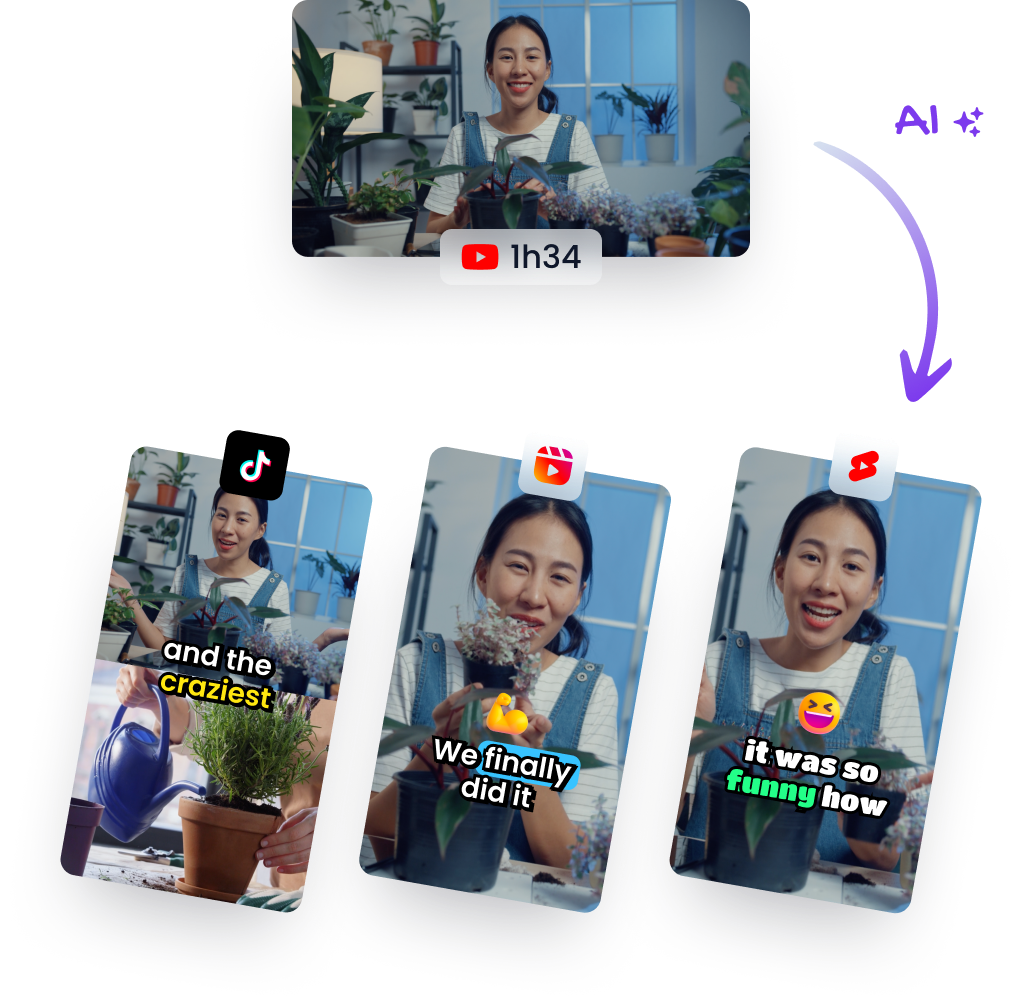
AI-powered platforms can do the heavy lifting for you—identifying the most engaging moments, automatically reframing them for vertical viewing, and adding dynamic captions in minutes. This is how you stay consistent on LinkedIn without burning out.
A simple workflow looks like this:
- Find the Highlights: An AI tool scans your hour-long webinar and identifies several 60-second segments containing key insights or powerful soundbites.
- Reformat and Caption: The tool then crops those clips into a mobile-friendly 9:16 aspect ratio and adds stylish, easy-to-read captions.
- Polish and Post: You simply review the clips, make any minor adjustments, and schedule them for posting.
When you repurpose, you're not just saving time; you're building a cohesive content ecosystem. A single podcast episode can easily become 5-10 engaging LinkedIn clips, with each one driving interest back to the original, long-form piece.
This is how you make your content work harder for you. The same principles apply to other platforms, too. You can learn more about how to create YouTube Shorts from existing video to expand your reach even further.
Troubleshooting Common Video Upload Issues
Even the most carefully prepared video can encounter technical issues. We’ve all been there: you upload your video, only to get stuck on the "processing" screen or hit with an unsupported file format error.
Don't panic. In most cases, these problems are caused by a simple mismatch with LinkedIn’s technical specifications.
The first thing to check is the file format. LinkedIn strongly prefers MP4 files. If your video is a MOV or AVI file, that’s likely the source of the problem. A quick conversion using a free online tool usually solves this instantly. Another common issue is file size—if your video is larger than the 5GB limit, the upload will fail.
Solving Quality and Format Problems
Have you ever uploaded a crisp video only to find it looks blurry in the feed? That's LinkedIn's compression algorithm at work. It reduces file size for faster loading, which can sometimes degrade quality.
The best way to combat this is to start with a high-quality source file. Always export your video at the highest resolution possible, such as 1080p or even 4K. When LinkedIn compresses a sharper source file, the final result looks much better than if you started with a lower-resolution video.
It's also worth noting that most successful videos on the platform are made for mobile. An eye-opening 97% of videos are vertical, and a huge 78% are shot directly on a smartphone. This data shows you don't need a fancy studio, but you do need to adhere to the technical best practices. You can dig deeper into the rise of mobile video marketing on sellerscommerce.com.
Your LinkedIn Video Questions Answered
Alright, let's wrap up by tackling some of the most common questions about posting video on LinkedIn. Getting these details right will save you guesswork and help you publish with confidence.
What Is the Best Length for a LinkedIn Video?
Technically, LinkedIn allows native videos up to 10 minutes long. However, the optimal length for capturing and holding attention in a busy feed is much shorter.
For the best engagement, aim for a video between 30 and 90 seconds. This is the sweet spot for delivering a quick, impactful insight without demanding a significant time commitment from a busy professional.
Of course, there are exceptions. A longer video can work for a deep dive into a complex topic, but only if the first three seconds provide a compelling hook and the value proposition is immediately clear.
Can I Schedule a Video Post on LinkedIn?
Yes, you can, but the method depends on whether you're posting from a personal profile or a Company Page.
LinkedIn offers a native scheduling tool, but it's currently only available for Company Pages. This feature makes it easy to plan your content calendar and maintain a consistent posting schedule.
For personal profiles, native scheduling is not yet available. To schedule videos for your personal account, you'll need to use a third-party social media management tool. Platforms like Buffer, Hootsuite, or Sprout Social all integrate with LinkedIn, allowing you to schedule posts in advance and maintain consistency.
Should I Post Vertical or Horizontal Videos?
Think vertical. Almost always. The vast majority of users scroll LinkedIn on their phones, and a vertical video fills the screen, creating a more immersive and attention-grabbing experience.
An aspect ratio of 4:5 or 9:16 is your best bet for stopping the scroll.
Square video (1:1) is another solid choice. It performs well on both mobile and desktop, ensuring your content looks good regardless of the viewing device. Unless you have a specific, cinematic reason for a widescreen format, stick with vertical or square to maximize your impact.
Ready to stop spending hours chopping up your long-form content? With Klap, you can turn your webinars, podcasts, and keynote speeches into a month's worth of viral-ready short clips in just minutes. Let our AI do the heavy lifting so you can focus on what you do best. Try Klap for free and start repurposing your content today.