How to Make YouTube Shorts: A Quick, Impactful Guide
Other
Making a YouTube Short is way easier than you might think. Just film a vertical video under 60 seconds, sprinkle in some text and music using the YouTube app, slap a catchy title with #shorts on it, and you're good to go.
This simple workflow is your ticket to one of the most powerful growth tools on YouTube right now.
Why YouTube Shorts Are Essential for Growth
If you’re wondering where Shorts fit into your strategy, let's talk about why they're so powerful. Shorts aren't just another content format; they're a growth engine, running on an algorithm built for massive, rapid discovery.
Unlike your long-form videos that rely heavily on search and subscribers, Shorts get pushed onto a dedicated, scroll-heavy "Shorts Shelf." This exposes your content to millions of potential viewers who have never even heard of you, which is a game-changer for new creators. Think of Shorts as your channel's digital handshake—a low-commitment way for people to get a taste of your personality and content style.
The numbers are staggering. Since launching in 2021, daily views have exploded from 30 billion to over 90 billion in 2024. This isn't just a fleeting trend; over 70% of channels that upload monthly are now actively posting Shorts. It’s become a standard practice for anyone serious about growth.
Your Path to Viral Potential
The beauty of Shorts is their accessibility. You don’t need a fancy studio or expensive gear to make something that connects with people. The algorithm prioritizes engagement—likes, comments, shares, and especially watch time—over slick production value. This levels the playing field, letting authentic, creative ideas go viral.
Here's the core principle: a Short that holds a viewer's attention, even for just 30 seconds, sends a powerful signal to YouTube to push it to a wider audience. This creates a feedback loop where engagement fuels reach, and reach fuels more engagement.
This setup makes them a unique beast compared to other short-form platforms. While there are similarities on the surface, knowing the small differences can give you a real edge. For a deeper look, our comparison of TikTok vs YouTube Shorts breaks down where each platform really shines.
Your YouTube Shorts Creation Checklist
Before we dive into the nitty-gritty, here’s the big picture. This checklist is your quick rundown of the entire process, from that first spark of an idea to hitting "publish." We’ll break down each of these steps in more detail.
PhaseKey ActionPro Tip
1. Planning
Brainstorm one core idea & write a hook.
Your hook is 80% of the battle. Keep the message simple and direct.
2. Recording
Film vertically (9:16) and keep it under 60 seconds.
Good lighting and clear audio make a huge difference, even on a phone.
3. Editing
Add text, music, and captions. Keep the pace fast.
Use trending sounds from the Shorts library to boost discoverability.
4. Uploading
Write a short, punchy title and include #shorts.
Add 2-3 relevant hashtags to help the algorithm find your audience.
5. Analyzing
Check your analytics to see what's working.
Focus on audience retention. If it's over 80%, you've got a winner.
Think of this as your roadmap. Master these five phases, and you'll be well on your way to creating Shorts that not only get views but also grow your channel.
How to Plan and Film Shorts That Hook Viewers

Let's be real: a viral Short almost never happens by accident. While you don’t need a fancy studio, you absolutely need a plan. The most critical part of that plan is your hook—those first one to three seconds that make someone stop scrolling dead in their tracks.
Your hook has one job: create an immediate question, state a bold claim, or tap into a relatable problem. It’s the make-or-break moment. For example, instead of a boring start like, "Today I'm going to show you how to cook pasta," try something like, "You've been cooking pasta wrong your whole life." The second one grabs you instantly because it creates a knowledge gap.
Before you even think about hitting record, ask yourself one question: What is the single, compelling idea I can get across in under 60 seconds? Great Shorts are all about focus.
Mastering Smartphone Filming Basics
Good news—you already have a powerful camera in your pocket. Getting your smartphone footage to look clean and professional isn't about expensive gear; it's about nailing the fundamentals of lighting, audio, and framing.
Good lighting can completely transform your video. You don’t need studio lights; just find a window and position yourself facing it. Natural light is your best friend. If you're filming at night, a simple lamp placed slightly off to one side can work wonders to get rid of harsh shadows.
Your goal is soft, even light on your face. Never film with a bright window or light source directly behind you, unless you want to look like a mysterious silhouette.
Clear audio is just as crucial. People will forgive grainy video, but they won’t stick around for terrible sound. Find the quietest room you can, and get your phone as close as possible to pick up your voice clearly. Even the tiny microphone on a standard pair of headphones will give you a massive audio upgrade over your phone’s built-in mic.
And finally, a non-negotiable rule: always film vertically. The 9:16 aspect ratio is the language of Shorts.
Essential Framing and Stability Techniques
Shaky footage screams amateur. A small phone tripod is a fantastic investment, but if you're just starting out, get creative. Prop your phone up against a stack of books or a coffee mug to keep it perfectly still while you record.
When it comes to framing yourself, follow these simple guidelines:
- Keep your face centered: You're the star of the show, so make sure you stay the focal point, even on a tiny screen.
- Use the rule of thirds: Most phone cameras have a grid overlay. Turn it on and try placing your eyes along the top horizontal line for a composition that’s naturally pleasing to look at.
- Watch your headroom: Don't chop off the top of your head, but don't leave a huge, awkward empty space above it either.
By focusing on a killer hook and getting these simple filming techniques down, you can create high-quality Shorts that look amazing without spending a dime on new equipment.
Editing Techniques for High-Retention Shorts

Alright, you've got your clips. Now comes the part where the real magic happens: the edit.
This is what separates a forgettable clip from a Short that the algorithm picks up and runs with. Your mission is to craft a fast-paced, dynamic experience that keeps people glued to their screens from the first second to the last.
The good news? You've got options. Whether you're all about a quick mobile workflow or you prefer the granular control of a desktop setup, there's a path for you.
Quick Edits with the YouTube Mobile App
For creators on the go, the YouTube app itself is a surprisingly capable little editing suite. It’s built for speed, letting you assemble and upload a Short in minutes, all from your phone.
Here’s what you need to master in the app:
- Trimming and Splitting: Cut the fluff. Get ruthless with any dead air or mistakes. Just tap and drag the ends of your clips to tighten everything up. Every single second has to earn its place.
- Adding Music: The Shorts audio library is a goldmine. Tapping into a trending song can give your video a massive discoverability boost. Hit "Add sound" and see what’s popular.
- Text Overlays: Use text to punch up key points or add context. You can even time the text to pop on and off the screen, which is a great way to keep viewers engaged.
The built-in editor is perfect for simple stuff—think reaction videos or quick tips where you don't need fancy effects. It's a fantastic starting point.
Graduating to Desktop Editing Software
As your ideas get bigger, you'll eventually bump up against the limits of the mobile app. This is when you'll want to move to desktop software like CapCut or DaVinci Resolve. These give you way more creative control over the final cut.
For example, desktop editors make it easy to pull off "J-cuts" and "L-cuts"—where the audio from the next clip starts a moment before the video actually changes. It’s a subtle trick that makes your edits feel incredibly smooth and professional. If you're really aiming for that high-production feel, it's worth exploring the tools in professional film editing programs.
Here’s an actionable insight: the key to high retention is a fast pace. Aim for a new cut or visual change every 1-2 seconds. This can be a zoom, a text pop-up, or a cut to a new angle—anything to keep the viewer’s brain from getting bored.
Another non-negotiable for retention is adding dynamic captions, since over 85% of social media videos are watched with the sound off. Easy-to-read, well-timed captions can be the one thing that keeps them watching. For a full breakdown, check out our guide on how to add captions to YouTube Shorts.
Interestingly, while the format is short, substance—and length—matter. Shorts over 15 seconds make up more than 70% of all Shorts viewed. The ones that really perform well often fall in the 40-50 second range. This proves you need compelling editing that can hold someone's attention long enough to hit that sweet spot retention rate of around 80% or higher.
Optimizing Your Shorts for Maximum Reach
So, you’ve uploaded your video. Great! But the real work to make a YouTube Short pop off starts now. Just hitting "publish" without a second thought is like putting up a billboard in the middle of nowhere. To get eyes on your content, you have to give the YouTube algorithm clear signals about what your video is and who it's for.
Your title is the first and most critical signal. It needs to be short, punchy, and dripping with curiosity. This isn't the place for the long, SEO-stuffed titles we use for traditional videos. You have literally seconds to grab someone's attention as they scroll.
Think of your title as a headline for a tiny story. Instead of something generic like "A Full Guide to Making Sourdough Bread," go for something that creates an itch the viewer has to scratch, like "The One Sourdough Mistake Everyone Makes." That title creates an immediate knowledge gap, and people will stick around to fill it.
The Right Hashtag Strategy
Next up: hashtags. They might seem small, but they’re your secret weapon for telling YouTube’s discovery system where to send your content. A good strategy here is a calculated mix, not just a random spray of whatever’s trending.
Here's a simple, effective framework:
- The Essential Tag: Always, and I mean always, include
#shortssomewhere in your title or description. This is the non-negotiable tag that officially flags your video as a Short. - The Topic Tag: Add one or two broad hashtags that nail down your content category. Think
#bakingtipsor#fitnessmotivation. - The Niche Tag: Finally, throw in one or two super-specific tags to zero in on your ideal viewer. This is where you use something like
#sourdoughstarteror#kettlebellworkout.
This tiered approach helps you show up in both broad discovery feeds and hyper-targeted niche communities, giving you the best of both worlds.
Captions and Thumbnails: The Final Polish
Your description (or caption) is where you can add a little extra flavor. Look, nobody's reading a novel here, but a sharp, keyword-rich sentence can give the algorithm just a bit more context to understand your video's nuances. I like to use this space to ask a question, drop a call-to-action, or just expand on the video's main point.
Here's an actionable tip: Don’t sleep on the thumbnail. While you can't upload a custom one for Shorts, you can choose a specific frame from your video. Take a minute to scroll through your footage and find the most dynamic, eye-catching, or intriguing moment. A killer frame can be the one thing that makes someone stop scrolling and click.
These small details add up, and together, they give your Short the best possible chance to take off.
Repurposing Long Videos into Shorts with AI
Creating a steady stream of original Shorts can feel like you're stuck on a content treadmill. The good news? You probably already have a goldmine of clips hiding inside your existing long-form videos. This is where AI-powered repurposing becomes a secret weapon, turning one long video into a dozen high-impact Shorts.
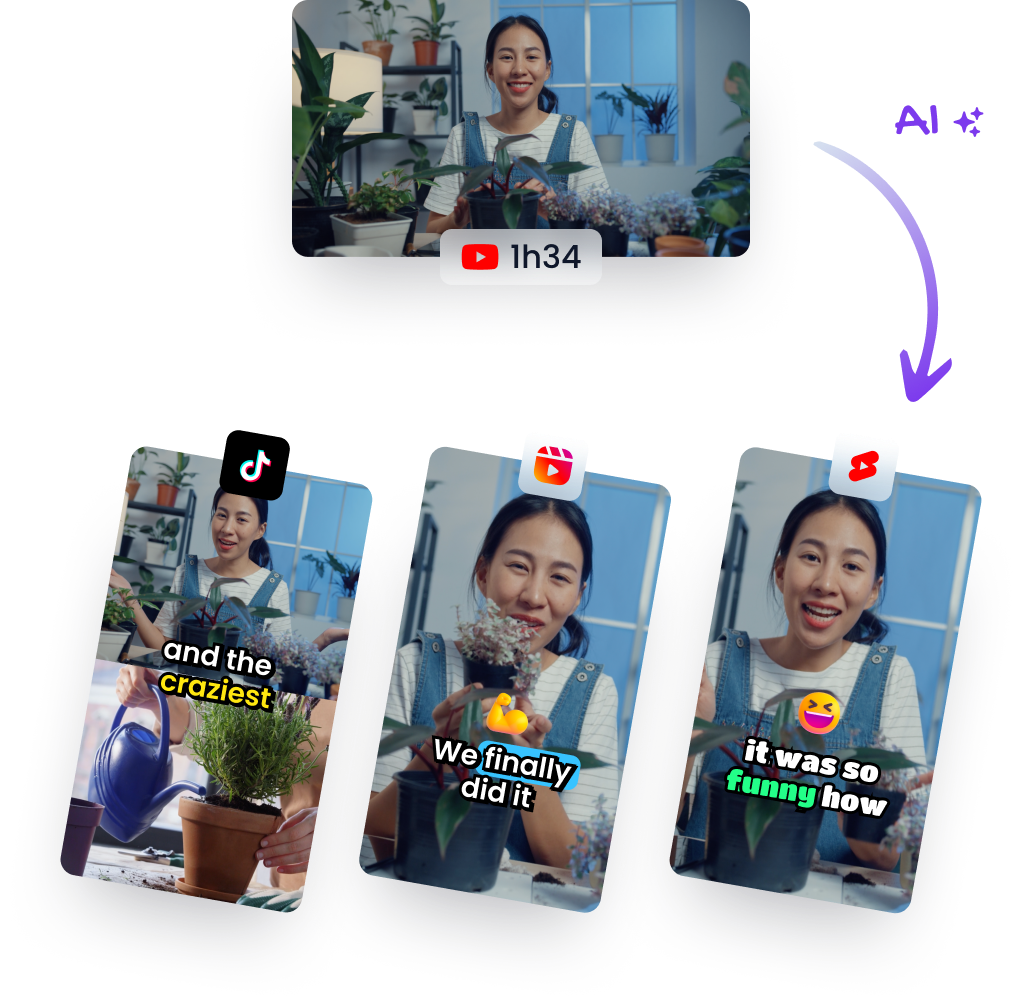
Instead of manually scrubbing through an hour-long podcast or tutorial looking for good moments, specialized AI tools do all the heavy lifting. They analyze your entire video, pinpoint the most engaging parts, and automatically chop them up into vertical clips, complete with dynamic captions.
This workflow is ridiculously efficient. Think about it: you can turn a single one-hour webinar into over ten distinct, viral-ready Shorts. You're not just saving a ton of time; you're multiplying your content output and consistently feeding the Shorts algorithm fresh material.
The Smart Workflow with Klap
Tools like Klap are built specifically for this. All you have to do is drop in a YouTube link or upload a video file, and its AI gets to work. It doesn’t just slice your video randomly; it uses topic detection and even facial analysis to find the most compelling segments—the punchlines, the key takeaways, and those "aha" moments that make people stop scrolling.
From there, it handles three crucial tasks automatically:
- Smart Clipping: The AI identifies potential hooks and engaging narratives buried inside your longer content.
- Auto-Reframing: It reframes your horizontal video into the vertical 9:16 format, making sure the main speaker or action stays perfectly centered.
- Dynamic Captions: It generates animated, easy-to-read captions—a must-have for grabbing attention when people are watching with the sound off.
The platform lays out the entire optimization process for each Short, from generating titles and hashtags to helping you pick the perfect thumbnail frame.

Once the AI works its magic, you get a clean interface where you can quickly review and polish the clips before posting them. It’s a simple final check to make sure everything aligns with your brand's style. If you're looking to automate your workflow, you can check out Klap's AI Shorts maker to see it in action.
Unlocking Growth and Monetization
This strategy isn't just a time-saver; it’s about squeezing every last drop of value from your content. Monetization on YouTube Shorts is exploding, with creators projected to earn a collective $3.1 billion in 2024. This growth is driven by a revenue model that rewards high-engagement clips—many of which are simply repurposed from longer videos.
Turning an overlooked webinar into a series of 50-second, high-retention clips is a direct path to tapping into this new revenue stream.
By consistently repurposing your best stuff, you create multiple new entry points for viewers to discover your channel. A single viral Short can drive thousands of new subscribers directly to your monetized long-form library, creating a powerful growth loop that feeds itself.
Ultimately, this approach lets you scale your production without burning out. You shift your focus from constantly creating from scratch to intelligently amplifying the great content you’ve already made.
Common Questions About Making YouTube Shorts
Jumping into Shorts always brings up a few questions. Getting straight answers is the fastest way to build a strategy you actually feel good about, so let's clear the air on some of the most common things creators wonder about.
We'll cover everything from posting frequency to whether or not you can actually make money doing this. Think of it as your no-nonsense FAQ for getting Shorts right.
How Often Should I Post YouTube Shorts?
Consistency will always win over sheer volume. Sure, the algorithm tends to reward active channels, but posting ten times a day is a fast track to burnout, not a sustainable growth strategy.
For most creators, a great place to start is aiming for 3-5 high-quality Shorts per week. This sets a predictable pace for your audience and keeps your production schedule manageable.
Now, if you're using AI tools like Klap to repurpose longer videos, bumping that up to 1-2 Shorts per day becomes way more achievable. The real secret is finding a rhythm you can maintain for the long haul.
Let your analytics be your guide. Check to see when your audience is most active and schedule your posts around those peak times. A little data-driven timing can give your content a serious initial boost.
Can You Actually Make Money from YouTube Shorts?
Yes, you absolutely can. Monetization is built directly into the Shorts ecosystem through the YouTube Partner Program. It's based on a revenue-sharing model where all the ad revenue from the Shorts feed is collected into one big pool.
That pool is then divided among eligible creators based on their channel's total share of Shorts views. While the revenue per thousand views (RPM) is typically lower than for long-form content, the potential for massive view counts can still add up to real income.
But don't just think about ad revenue. Shorts are an incredible top-of-funnel tool that can also:
- Bring in new subscribers who stick around for your monetized long-form videos.
- Act as bite-sized ads for your products, services, or affiliate links.
- Build the kind of brand awareness that attracts sponsorships and other deals.
Will Posting Shorts Hurt My Long-Form Videos?
This is probably the biggest fear holding creators back, but it’s a myth. YouTube has been clear that the algorithms for Shorts and long-form videos are largely separate.
Here’s a better way to think about it: Shorts are for discovery. They're the handshake that introduces your channel to a massive new audience that might have never found you otherwise.
A good chunk of those new viewers will subscribe and start exploring your deeper, long-form library. Instead of competing, the two formats complement each other, with Shorts feeding growth across your entire channel.
What Is the Best Length for a YouTube Short?
The technical limit is 60 seconds, but the best length is however long it takes you to land your point without adding fluff.
That said, the data shows a pretty clear trend: Shorts that are over 15 seconds tend to perform significantly better. Many of the most viral Shorts fall into the 40-50 second range. This gives you just enough time to set up a hook, build a little narrative, and deliver a satisfying payoff.
The metric that matters most is always retention. If your story is perfect at 25 seconds, then make it 25 seconds.
Ready to stop wasting time and start scaling your content? Klap uses AI to turn your long videos into a steady stream of viral-ready Shorts in minutes. Try it now and see how easy it is to grow your channel.