How to Grow Podcast Audience: 16 Actionable Ways to Get More Listeners
Other
Growing your podcast audience starts with a simple, foundational truth: you have to create a show people actually want to listen to. This means building a high-quality, reliable, and compelling product before you even think about marketing. It all begins with a strong concept, professional execution, and undeniable value for your target listener.
Build a Show People Actually Want to Hear

Before a single download is counted, your podcast's success hinges on its core identity. Too many creators jump straight to promotion, but the most sustainable growth comes from having a product that basically sells itself through quality and consistency.
If you get this foundation right, listeners won't just find you—they'll stay, subscribe, and tell their friends.
Define Your Niche and Value Proposition
Casting a wide net is one of the most common mistakes new podcasters make. Instead of trying to appeal to everyone, you need to zero in on a specific, passionate audience.
Think about it. A podcast about "business" is way too broad. But one about "SaaS growth strategies for bootstrapped founders"? That targets a hungry, well-defined group and makes your content instantly more valuable. Research shows that 68% of podcast listeners tune in to learn new things, so being specific about what you teach is crucial.
Your value proposition is your promise to the listener. What problem are you solving for them? What unique perspective do you bring to the table? This clarity is essential for developing a winning branding strategy that helps you stand out in a ridiculously crowded marketplace. A clear brand identity makes your show memorable.
Key Takeaway: Don't be a generalist in a world of specialists. A narrow niche attracts a more loyal and engaged audience, which is the bedrock of sustainable podcast growth.
Once you’ve nailed your niche, think about the format. Will you be doing interviews, solo commentary, storytelling, or a co-hosted panel? Your format should feel right for both your topic and your personality, creating a signature style that listeners recognize and come back for. If you need some inspiration, you can explore different approaches to podcast content creation.
Nail the Non-Negotiable Technicals
Poor audio quality is the fastest way to lose a potential subscriber. Seriously. A 2023 study by The Podcast Host found that bad audio was the #1 reason listeners abandoned a show. You don't need a professional studio, but investing in a decent USB microphone (like a Blue Yeti or Rode NT-USB) is absolutely non-negotiable.
Here are the technicals you have to master from day one:
- Clear Audio: Get a quality mic and record in a quiet space with soft furnishings (carpets, curtains, etc.) to minimize echo.
- Consistent Editing: Cut out the long pauses, "ums," and technical glitches. A clean edit signals professionalism.
- Balanced Levels: Make sure your voice, any guest audio, and music are all at consistent volumes. Nothing is worse than having to constantly adjust the volume knob.
Establish a Predictable Publishing Cadence
Consistency builds trust and habit. When listeners know they can expect a new episode every Tuesday morning, they start to build your show into their weekly routine. An erratic schedule breaks that trust and makes it nearly impossible to maintain audience momentum.
This predictability is more important than you might think. Data on listener behavior shows that avid podcast consumers listen to an average of 11.2 hours of content weekly. A reliable schedule ensures your show is always part of that rotation.
Ultimately, building a show people want to hear isn't about finding shortcuts. It's about respecting your audience's time by delivering a well-defined, high-quality, and reliable experience every single time they press play.
Get Found with Smart Podcast SEO
You could have the most brilliant podcast in the world, but it doesn't mean much if no one can find it. If you really want to get discovered, you have to start treating your podcast like a searchable product. That means getting serious about podcast SEO.
This isn't about trying to game some mysterious algorithm. It's about making it dead simple for search engines and podcast directories to figure out what your show is about and who it's for.
Think about it. Every time someone types "best marketing interviews" into Spotify or "how to start investing" into Google, they're looking for content just like yours. Your job is to make sure you show up. And that all starts with getting inside the head of your ideal listener.
Start with Listener-Focused Keyword Research
Before you can optimize a single thing, you need to know what your audience is actually searching for. What problems are they trying to solve? What are they curious about? Good keyword research is less about chasing high-volume terms and more about understanding listener intent.
Sure, tools like Ahrefs or Google Keyword Planner are a decent starting point, but the real gold is found in the places your audience already hangs out.
- Go where they are: Spend some time lurking in Reddit threads, niche Facebook groups, and forums related to your topic. What questions pop up over and over? Pay attention to the exact language they use—that's your keyword list right there.
- Spy on the competition: Check out the episode titles of the top podcasts in your space. Notice any recurring themes or phrases? They've already done the hard work of figuring out what topics resonate.
- Use Google's clues: When you search for a topic on Google, that little "People Also Ask" box is a treasure trove. These are real questions from real people, and they make for fantastic episode ideas and keywords.
Once you’ve got a solid list, you can start weaving these phrases into your podcast's DNA—your show title, description, episode titles, and especially your show notes.
Optimize Your Presence on Podcast Directories
Platforms like Apple Podcasts and Spotify are basically massive search engines for audio. Getting your show optimized for these directories is non-negotiable if you want to attract new listeners who are actively looking for something to listen to.
Your show title and description are prime real estate. Instead of just "The Minimalist Home," try something like "The Minimalist Home | Simple Living & Decluttering Tips." It immediately tells both the algorithm and a potential listener exactly what they're going to get. Your description should then expand on this, naturally working in your main keywords.
And please, don't waste your episode titles. "Episode 47 with Jane Doe" tells a listener nothing. A much better approach is "Declutter Your Digital Life with Jane Doe | Minimalist Tech Habits." Which one do you think is more likely to pop up in a search for "digital decluttering"?
Create a Central Hub with a Podcast Website
While optimizing for directories is key, a dedicated website is your secret weapon for visibility on Google. Search engines can't exactly listen to your audio files, but they are experts at crawling text. Your website becomes the text-based home for your show, making every single episode discoverable.
Why a Website Matters: A simple website with show notes and transcripts dramatically increases your searchable surface area. It turns each audio file into a fully indexable blog post that Google can understand, rank, and send organic traffic to.
Your website doesn't need to be fancy. A simple page for each episode with detailed show notes, links to any resources mentioned, and a full transcript is incredibly powerful. Transcripts are SEO gold because they contain every single word you said, creating a keyword-rich document that search engines absolutely love.
Plus, they make your show way more accessible. If you want to get this done without spending hours typing, a reliable podcast transcription tool is a lifesaver.
By combining keyword-rich directory listings with a content-heavy website, you build a powerful, two-pronged SEO strategy. This makes sure you're found not just by people browsing their podcast app, but by anyone online searching for your expertise.
Amplify Your Reach with Content Repurposing
Every single podcast episode you record is a goldmine of content just waiting to be tapped. The biggest mistake podcasters make is falling into the "publish and pray" trap. To really grow your show, you need to work smarter—not just harder—by turning that one long audio file into a full-blown content campaign.
Repurposing isn't about giving yourself more to do. It's about squeezing every last drop of value out of the work you've already finished. When you break down your episodes into smaller, platform-specific pieces, you start meeting potential listeners where they already hang out: scrolling through social media, watching short videos, and browsing visual platforms.
From Audio to Visual: The New Discovery Engine
Let's be real: podcasting is becoming a visual game. If you're still only distributing audio, you're missing out on the biggest discovery engine on the planet—YouTube. Filming your episodes isn't just a "nice to have" anymore; it's one of the most powerful growth levers you can pull.
And the data backs this up. Edison Research found that 34% of weekly podcast listeners say they consume podcasts on YouTube. That’s over a third of your potential audience that you’re missing by not having a video version of your show.
This simple flowchart breaks down the core steps for getting your repurposed content discovered through search engines, which is a huge piece of the puzzle.

As you can see, getting found isn't an accident. It's a deliberate process of figuring out what your audience is searching for, optimizing your content around those topics, and then publishing it where they can find it.
Create a Micro-Content Machine
That hour-long episode you just recorded can easily fuel your social media calendar for a full week, maybe more. The goal here is to find the absolute best moments—the surprising stats, the practical tips, the killer quotes—and package them up to be shared.
Here's what that looks like in practice:
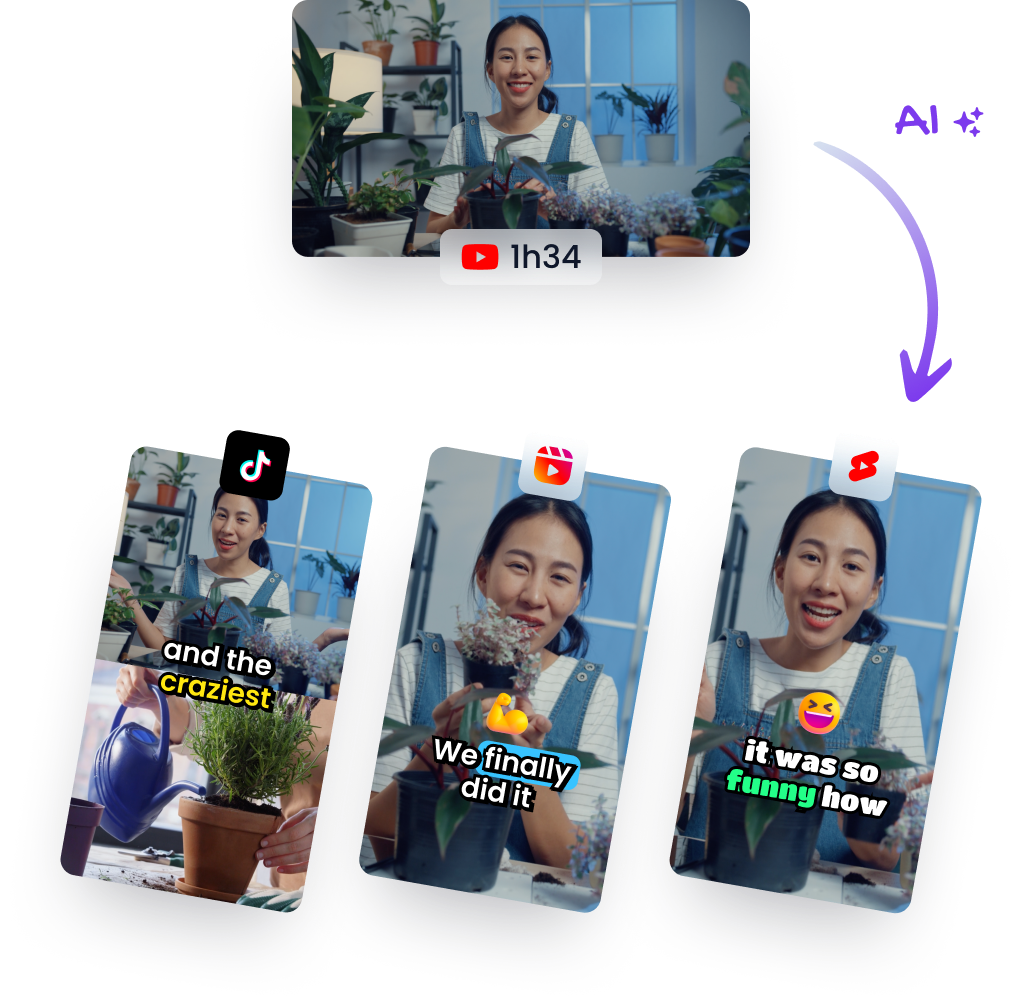
- Short-Form Video Clips: Find 3-5 of the most compelling 60-second moments from your episode. Look for a surprising insight, a controversial take, or a super actionable piece of advice. Add some dynamic captions and push them out as Instagram Reels, TikToks, and YouTube Shorts. These are your hooks.
- Audiograms: If you're sticking to audio-only, audiograms are non-negotiable. They're just static images with an animated waveform and captions, but they're perfect for sharing powerful audio snippets on platforms like Instagram and LinkedIn where audio doesn't just play automatically.
- Quote Graphics: Pull the most memorable lines from your episode and turn them into sharp-looking graphics. These are incredibly shareable on X (formerly Twitter), LinkedIn, and Instagram Stories. They deliver a quick hit of value and build your authority.
Think of your podcast as the top of your content funnel. Every piece of micro-content you spin off from it should act as a signpost, pointing traffic from social media back to the full episode on Apple Podcasts, Spotify, or wherever you host your show.
Modern tools can handle a lot of the heavy lifting. For example, an AI short video generator can scan your long-form video, automatically find the best moments, clip them, and add captions. This can save you hours and hours of tedious editing.
Turn Key Ideas into Written Content
Repurposing doesn't stop with video clips and graphics. Your episode is also the perfect launchpad for written content that can boost your SEO and open up another channel for discovery.
Just take one key theme from your discussion and flesh it out into a blog post on your website. This lets you go deeper, link to more resources, and start ranking for search terms from people who prefer to read their answers. You can also boil down the main takeaways into a quick email newsletter for your subscribers, which is a great way to strengthen the relationship with your core audience.
To help you visualize this, here’s a simple framework for turning one episode into a dozen or more content assets.
Podcast Repurposing Strategy Matrix
This matrix shows how a single long-form podcast episode can be transformed into multiple pieces of content, each designed for a specific platform to maximize your reach.
Original ContentRepurposed FormatTarget PlatformGrowth Goal
1-Hour Video Podcast
3-5 Short Video Clips (60s)
TikTok, Instagram Reels, YouTube Shorts
Attract new top-of-funnel audience
1-Hour Video Podcast
2-3 Audiogram Clips (30-60s)
Instagram Feed, LinkedIn, Facebook
Engage existing audio-focused followers
1-Hour Video Podcast
5-7 Quote Graphics
X (Twitter), Instagram Stories, LinkedIn
Drive conversation and shareability
1-Hour Video Podcast
In-depth Blog Post (1500 words)
Your Website, Medium
Capture long-tail search traffic (SEO)
1-Hour Video Podcast
Email Newsletter Summary
Your Email List
Nurture and retain current subscribers
1-Hour Video Podcast
Full-length Video
YouTube
Build a long-term discoverability engine
By adopting a system like this, you ensure you're reaching every type of content consumer, from the passive scroller to the avid reader. For even more ideas on how to get the most out of your work, check out these 8 B2B Content Repurposing Strategies That Work. When you start treating each episode as a pillar piece of content, you create an entire ecosystem that constantly brings in new listeners from every corner of the internet.
Tap into New Audiences with Strategic Collaborations
Creating amazing content is one half of the growth equation. The other half is getting it in front of the right people.
Honestly, the single fastest way to grow your podcast audience is to borrow trust from someone who has already earned it. This is the magic of strategic collaborations.
When you partner with other creators, you get a warm introduction to an established audience that's already eager to listen to content just like yours. This isn't about competition; it's about building a network where everyone grows together.
Find Your Peers, Not Just Your Competitors
First things first, you need to identify the right people to partner with. Don't just aim for the biggest podcast in your space. Instead, look for shows with a similar audience size and a topic that's complementary, but not identical, to yours. Think of it like a Venn diagram—that sweet spot where your audiences overlap is where you want to be.
I recommend creating a simple spreadsheet to track potential collaborators. Look for podcasts in your niche that are at a similar growth stage. A show with 500 downloads per episode is far more likely to team up with you than one getting 50,000.
- Actually listen to their show: Do their values line up with yours? Is their audience the kind of crowd that would genuinely dig your content?
- Engage authentically first: Before you even think about sending a pitch, interact with their stuff. Leave a thoughtful review, comment on their social media, and show you're a real fan.
- Check their engagement: A podcast with a smaller but super-active community is often more valuable than a huge show with passive listeners.
Craft an Irresistible Outreach Pitch
Once you've got your shortlist, it's time to reach out. Generic, copy-paste emails get deleted on sight. Your pitch needs to be personal, packed with value, and make it incredibly easy for them to say "yes."
Your outreach should clearly and quickly state what's in it for both of you. Instead of a bland, "I'd love to be a guest on your show," frame it around what you can offer their listeners.
Try something like, "I noticed your listeners are really into [specific topic], and I have a unique framework on [your expertise] that I think would give them a ton of value."
Pro Tip: Make your pitch frictionless. Propose 2-3 specific episode ideas that would be a perfect fit for their show. Mention you have all the right recording gear and a quiet space. This shows you're a pro and you respect their time.
Go Beyond Simple Guest Appearances
Being a guest on another podcast is a fantastic start, but don't stop there. Getting creative with your collaborations can unlock even bigger growth opportunities and help you build much deeper relationships in your industry.
Think about other ways you can work together to cross-promote and share audiences. Each type of collaboration has a different goal, from quick audience swaps to more involved content partnerships.
Here are a few powerful models to consider:
- Episode Swaps: This is a simple but super effective tactic. You feature one of their best episodes on your feed, and they do the same with one of yours. It’s a direct endorsement that introduces your entire show to a new, relevant audience with almost no extra production work.
- Co-Hosted Series: For a deeper partnership, think about doing a limited-run series where you and another host tackle a specific topic together over 3-5 episodes. This creates a special "event" that both audiences can get excited about, driving traffic back and forth between your shows.
- Joint Giveaways or Contests: Team up with another podcast (or even a brand in your niche) to run a giveaway. To enter, listeners might need to follow both shows on social media, subscribe to both podcasts, and leave a review. This can create a huge, measurable boost in subscribers and engagement for everyone.
Turn Listeners into a Thriving Community

Getting a new listener is one thing. Keeping them is where the real growth happens.
The secret to a podcast that lasts isn't just acquiring listeners—it's turning them into genuine fans who feel connected to your show. This is where you stop broadcasting at an audience and start building a community with them.
When listeners feel like they're part of something, they do more than just download the latest episode. They become your best marketers. They share your show, tell their friends, and basically become evangelists for what you're building. This is how you create a powerful, self-sustaining growth loop.
Give Your Community a Place to Hang Out
Your podcast feed is a one-way street, which is great for delivering content but terrible for conversation. The magic happens when you open up a two-way dialogue.
Giving your most dedicated fans a central hub to connect with you—and just as importantly, with each other—is one of the best moves you can make. It’s how the conversation continues long after the episode ends.
This doesn't have to be complicated. A few solid options are:
- Discord Servers: Perfect for niche or tech-focused communities. Discord makes it easy to set up channels for specific episode topics, host live chats, and keep the conversation organized.
- Facebook Groups: An oldie but a goodie. With billions of users already on the platform, a private Facebook Group is super accessible and easy for people to join.
- Slack Channels: If your podcast is aimed at a professional or business audience, a Slack channel can provide a more structured environment for networking and deeper discussions.
The key, no matter which platform you pick, is to actually be there. Don't just drop a link to your new episode and ghost. Ask questions, reply to comments, and make it a genuinely welcoming space.
Make Your Audience Part of the Show
Here’s a simple truth: people support what they help create.
When you bring your listeners into the show itself, you give them a real sense of ownership. It’s a game-changer for building loyalty because it shows you’re not just talking into a microphone in an empty room—you're listening back.
A listener who feels heard is a listener who feels valued. Weaving their questions, feedback, and ideas directly into your content is the ultimate form of engagement. It’s a proven way to keep them coming back.
You can start small. A great tool for this is SpeakPipe, which lets listeners leave you audio messages right from your website. Instead of reading a dry email on-air, you can play their actual voice asking a question. It's personal, it's dynamic, and it makes your audience feel like they're co-creating the show right alongside you.
Tell Them Exactly What You Want Them to Do
If you want your audience to do something, you have to ask. And you have to be crystal clear about it.
A simple, direct call-to-action (CTA) at the end of each episode is your best tool for channeling all that listener love into actions that help you grow. Don't hit them with five different requests. Pick one high-impact action per episode and focus on that.
The difference between a weak CTA and a strong one is night and day.
Weak CTA (Vague & Passive)Strong CTA (Specific & Actionable)
"Be sure to rate and review us."
"If you learned something new today, the single best way to say thanks is to leave a quick review on Apple Podcasts. It helps more people find the show."
"Follow us on social media."
"We're debating this episode's main topic right now in our Facebook Group. Come join the conversation and tell us what you think."
"Let us know what you think."
"Got a question about [episode topic]? Head over to [yourwebsite.com/questions] and record it for our Q&A show next month."
When you make your CTAs specific and explain why it matters, you’re not just asking for a favor—you're inviting them to be part of the show's success. It’s this consistent, guided engagement that transforms a scattered audience into a community that actively helps you grow.
Common Questions About Podcast Growth
Even with a killer strategy, growing a podcast is a journey filled with questions. It’s totally normal to wonder if you’re putting your energy in the right places or if you should be doing more.
Let's cut through the noise and tackle the big questions every podcaster asks. I'll give you some clear, no-fluff answers to help you sidestep the common pitfalls and keep your show moving in the right direction.
How Much Should I Spend on Marketing?
This is the question on everyone's mind, but the answer might surprise you: you should start by spending $0.
Seriously. When you're just starting out, your best assets are your own time and creativity, not your wallet. Your entire focus should be on organic growth tactics that don't cost a thing—like being a guest on other podcasts, dialing in your podcast SEO, and turning your long episodes into short, shareable clips. These are the things that build a real, sustainable audience.
Once you have a steady stream of listeners and you can actually see where they're coming from, then you can think about putting a little money behind it. A great starting point is $50-$100 a month for some podcast app ads or a few hyper-targeted social media campaigns.
A key rule of thumb: never pay to get a listener until you've perfected the free ways of attracting and keeping them. Paid ads are just a megaphone for what’s already working; they can't fix a show that isn't connecting organically.
How Long Does It Take to See Real Growth?
Patience isn’t just a virtue in podcasting; it’s a requirement. Sure, a social clip might go viral and give you a sudden spike, but true, lasting growth is a slow burn. According to industry data, the average podcast gets around 141 downloads in its first 30 days. It takes time to build momentum from there.
Why does it take so long? Because you're not just chasing downloads. You're building trust with your listeners, becoming a habit in their week, and creating a back catalog of amazing content that new people can discover and binge.
Here’s a realistic timeline:
- Months 1-3: This is you finding your groove. You're building a small, loyal base, mostly from friends, family, and your existing network. Expect under 200 downloads per episode.
- Months 4-12: Things start to click. Your SEO efforts begin to bear fruit, and collaborations start introducing your show to new audiences. You might be hitting 500-1,000 downloads per episode.
- Year 2 and beyond: You've hit your stride. Your back catalog is now a powerful discovery engine, and word-of-mouth becomes your main growth driver. This is where you can push past 5,000 downloads per episode and beyond.
Which Metric Matters Most for Growth?
Let's be honest: downloads are a vanity metric. It feels good to see that number go up, but it tells you nothing about whether people are actually listening or, more importantly, enjoying your show.
The one metric you should obsess over is listener retention, sometimes called average consumption rate.
You can find this data in your dashboard on platforms like Spotify for Podcasters and Apple Podcasts Connect. It shows you, on average, what percentage of an episode your audience listens to.
A high consumption rate—anything over 60% is fantastic—is the ultimate signal that your content is hitting the mark. It proves that when people press play, they stick around. This is the real sign of a healthy, growing podcast, and it tells you that all your other marketing efforts are bringing in the right people. Nail this, and the download numbers will take care of themselves.
Is It Better to Publish More Frequently?
Consistency will always beat frequency. It is so much better to release one incredible episode every single week, right on schedule, than to drop three mediocre episodes whenever you get around to it.
Your listeners are creatures of habit. They build your show into their commute, their workout, or their morning coffee. If you break that routine by being inconsistent, you give them a reason to forget about you. For most shows, a weekly schedule is the sweet spot. It's frequent enough to stay top-of-mind but gives you enough breathing room to create something you're proud of.
Once you've got your production process down to a science and maybe even have a team helping out, then you can think about upping the frequency. But until that day comes, just focus on nailing that weekly deadline without fail. That reliability is what builds true loyalty.
Ready to turn your podcast episodes into a viral content machine? Klap uses AI to find the best moments from your videos and instantly creates engaging short clips for social media. Stop spending hours editing and start amplifying your reach today. Turn your videos into viral shorts with Klap.