Convert Video For TikTok The Smart Way
Other
Getting your long-form videos ready for TikTok requires a smart workflow. You need a system that lets you turn lengthy content into killer vertical clips without chaining yourself to editing software for hours.
The game plan is straightforward: resize your video to a 9:16 aspect ratio, find a can't-ignore hook, trim it down to under 60 seconds, and add eye-catching captions to stop the scroll.
Why Manual Video Conversion Is Holding You Back
If you’re already creating long-form content like podcasts or YouTube videos, you're sitting on a goldmine of potential TikToks. But the thought of manually digging through all that footage is probably exhausting.
For most creators, the traditional process is a familiar, painful grind.
You spend what feels like an eternity scrubbing through timelines, hunting for that one perfect soundbite. Then you have to reframe your horizontal video for a vertical screen, painstakingly trying to keep your subject from getting awkwardly chopped out of the shot. It’s slow, tedious work that drains your creative energy.
The True Cost of Slow Workflows
This manual approach isn't just a time-suck; it's a strategic handicap. Every hour you pour into repetitive editing is an hour you’re not spending creating new content or engaging with your audience. Creator burnout is a real threat, often fueled by these monotonous but necessary tasks.
And then there's the opportunity cost. TikTok trends move at lightning speed. By the time you’ve manually edited a clip for a trending topic, the moment has likely passed. That lag can be the difference between a video that gets a few hundred views and one that goes viral.
The real problem isn't a lack of good content; it's the bottleneck created by an outdated process. An inefficient workflow directly limits your ability to post consistently, test different hooks, and stay relevant.
Drowning in a Sea of Content
Let’s be real: the sheer volume of content on TikTok makes efficiency non-negotiable. Every minute, a staggering 167,000 videos are watched on the platform. To compete, you need a system that removes the friction from your process. You need a way to publish high-quality, repurposed clips at scale—identifying great moments, adding dynamic captions, and maintaining a consistent schedule.
Thankfully, the right approach can turn this daunting job into a streamlined part of your strategy. An AI TikTok video generator can be a huge help here. This guide will walk you through how to ditch the manual grind and build a workflow that actually works.
Prepping Your Video for an AI Editor
The secret to getting incredible TikTok clips from an AI tool isn't just about the tool—it's about what you feed it.
Think of it like this: garbage in, garbage out. You can't expect an AI to magically create viral moments from a poorly shot, rambling video. The better your original long-form content is, the more high-performing shorts you'll get back.
So, before you upload, take a minute to audit your source file. Is the audio clean and crisp, without annoying background noise? Are the visuals clear and well-lit? An AI is smart, but it can't fix fundamental production mistakes.
Pinpoint Your Viral-Ready Moments
Not all content is created equal. Your job, even before the AI gets involved, is to know where the gold is buried in your longer videos. You're looking for segments that can stand completely on their own and grab someone's attention in three seconds flat.
Scan your content and keep an eye out for moments that pack a punch. Specifically, look for:
- Actionable Tips: Quick, easy-to-digest advice that gives someone an immediate win.
- Controversial Takes: Strong opinions or uncommon perspectives that make people want to jump into the comments.
- Powerful Stories: Short, compelling anecdotes with a clear beginning, middle, and end.
- Surprising Stats: A shocking number or a wild fact that makes viewers stop scrolling and think, "Wait, what?"
These are the building blocks of viral clips. When your original video is full of these gems, you're giving the AI a rich treasure chest to pull from, which dramatically improves the quality of the shorts it generates.
Structure Your Content for Easy Repurposing
The smartest creators I know think about repurposing before they even hit record. Instead of treating a YouTube video or podcast as one long, continuous piece, they structure it as a series of powerful, self-contained ideas. This makes the entire process so much easier later on.
The best way to prep for AI conversion is to record your main content with short-form in mind. Consciously create distinct, digestible segments within your video that can be easily pulled out later.
For example, if you're recording a podcast, take a brief pause between different topics. Those silences create natural edit points. If you're filming a tutorial, clearly announce each new step. This not only improves your long-form content for that audience but also gives an AI perfect signposts to identify the most valuable segments for TikTok.
Your Guide To Automated Video Conversion
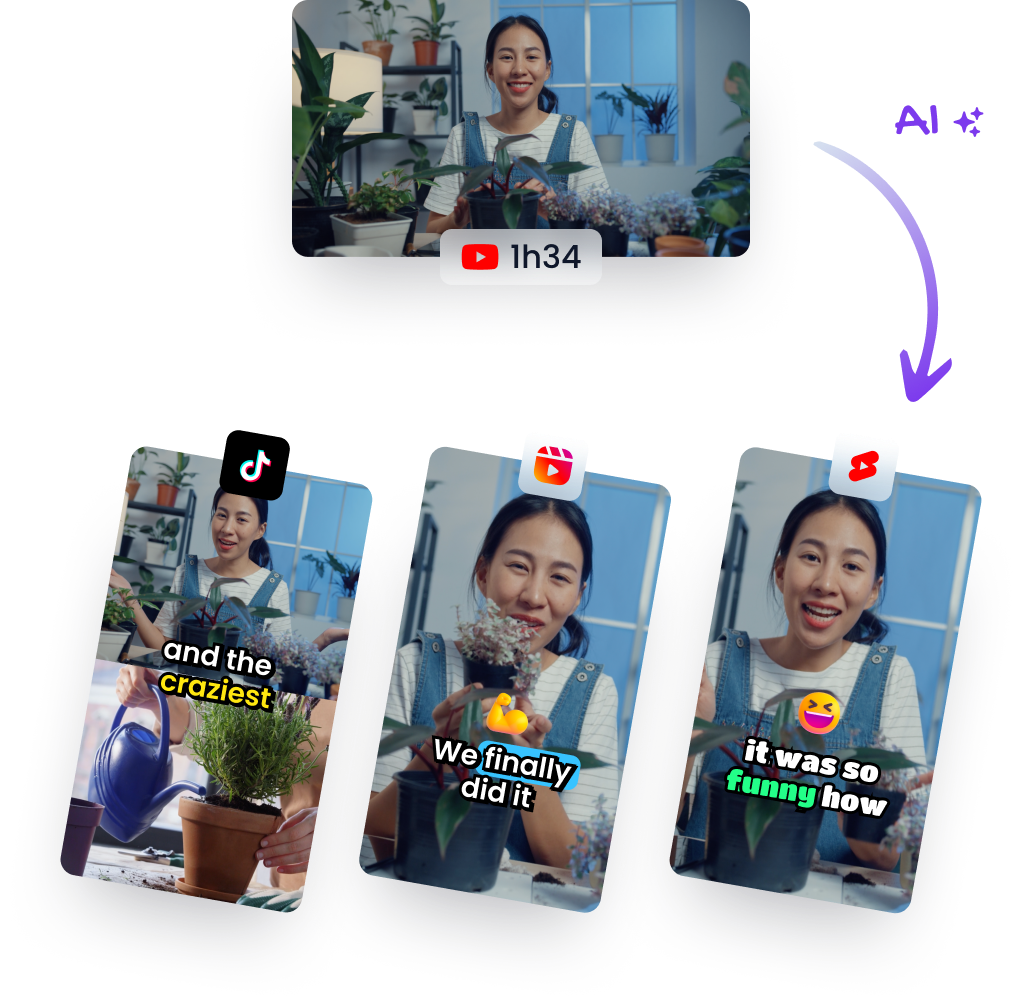
Let’s be honest, manual editing is the old way. The new workflow to convert video for TikTok is faster, smarter, and built for the scale you need today. Tools like Klap use AI to completely automate the most agonizing parts of the process, turning a single YouTube link into a queue of potential TikToks in minutes.
So, how does this work in practice? Instead of endlessly scrubbing through timelines, you just give the AI a link to your long-form video. The AI gets to work, analyzing the transcript, identifying the most engaging topics, and zeroing in on potential viral hooks. It does this based on a deep understanding of what performs well on short-form video platforms.
The goal of this first step is to take your one-hour podcast or 20-minute YouTube video and turn it into a curated list of 10-15 high-potential clips. Each one is already trimmed and ready for your review.
From YouTube Link to Viral Clips
After the AI has done its initial pass, you'll see a gallery of short, vertical clips ready to go. The heavy lifting—finding the right moments, trimming them down, and resizing them to the all-important 9:16 aspect ratio—is already finished. This is where your creative eye comes into play.
Your job shifts from being a video editor bogged down in technical details to a strategic content director. You can quickly flick through the AI's suggestions, tweak the start or end of a clip to make the hook land harder, or swap a weaker moment for a stronger one. The goal here is refinement, not starting from scratch.
The real power of this workflow is the shift in focus. Instead of spending 90% of your time on technical editing and 10% on creative strategy, you flip that ratio on its head.
The Human Touch on AI Suggestions
No AI is perfect, which is why the human review step is so crucial. Once you've picked your best clips, the next phase is polishing up the auto-generated captions. While the AI provides a fantastic starting point, you’ll want to ensure the text perfectly matches your brand’s voice and tone.
This is your chance to:
- Fix transcription errors: Make sure names, technical terms, and unique jargon are spelled correctly.
- Improve readability: Break up long sentences and add punctuation to make the captions flow better.
- Inject personality: Add emojis or adjust the wording to sound more like you and less like a machine.
When you're looking at automated solutions, the thought process is similar to choosing an AI optimization platform. The trick is finding a tool that provides a solid foundation but still gives you the final say on all creative decisions.
This next flowchart visualizes that simple three-step workflow: sourcing your content, auditing it for quality, and structuring it for the AI-powered process.
This process highlights how a little prep upfront makes the automated conversion stage so much more effective.
Manual vs. AI-Powered TikTok Video Conversion
To put the efficiency gains into perspective, let's compare the old way of doing things with the new AI-powered approach. The difference in time, effort, and even the quality of the output is staggering.
TaskManual Method (e.g., Premiere Pro)AI-Powered Method (e.g., Klap)
Finding Clips
Manually scrubbing through hours of footage.
AI scans the transcript and identifies engaging moments automatically.
Trimming
Precise, manual cuts to find the perfect start/end points.
AI suggests multiple pre-trimmed clips based on context.
Reframing to 9:16
Manually adjusting the frame for every clip to keep the subject centered.
Auto-reframing AI keeps the speaker in focus.
Captioning
Typing out subtitles by hand or using clunky auto-transcribers.
Generates dynamic, animated captions instantly.
Time per Clip
30-60 minutes
2-5 minutes (for review and tweaks)
Output Volume
2-3 clips per hour of source video
10-15+ clips per hour of source video
It's clear that relying on AI doesn't just save time—it multiplies your output, allowing you to test more content and find what truly resonates with your audience faster.
The efficiency gains here are impossible to ignore. TikTok’s short-form world moves fast, and for good reason. Data shows that videos under 25 seconds are 50% more likely to rank in the top 10 for a hashtag. Using a smart long-to-short video converter is how you stay in the game.
Mastering Dynamic Reframing And Captions
If you want to successfully convert video for TikTok, a simple, static crop won't cut it. After you’ve pulled your best moments, the real work begins. The next two steps are what separate a video that gets scrolled past from one that stops a viewer in their tracks: dynamic reframing and engaging captions.
Just slapping a 9:16 frame over your wide-screen video is a recipe for a bad viewing experience. The subject—whether it's you talking or a product you're showing off—will inevitably drift out of the shot. It looks sloppy and unprofessional.
This is exactly where dynamic reframing becomes your secret weapon. Modern AI tools don't just crop your video; they analyze the movement within it to keep the action front and center.
Keep The Focus With Smart Framing
Picture a podcast interview with two hosts. A basic centered crop would just show the empty space between them, cutting both speakers in half. It’s unwatchable. Dynamic reframing, on the other hand, intelligently shifts the focus to whoever is speaking at any given moment.
The result feels like the video was natively shot for a vertical screen. This automated process keeps the action centered so the viewer never misses a thing. While you can learn about basic video adjustments on an iPhone to understand the fundamentals, the goal is always the same: guide the viewer’s eye to what matters most.
Make Your Captions A Visual Hook
With 80% of social media videos being watched on mute, captions are no longer optional—they're essential. But boring, static text at the bottom of the screen isn't enough to hold attention these days.
Your best bet is to make the captions a dynamic, visual part of the video itself.
Your captions should do more than just repeat what's being said. They should act as a visual anchor, using color, motion, and even emojis to keep the viewer's eyes glued to the screen.
Think about the wildly popular "karaoke-style" subtitles where each word lights up as it's spoken. This technique is brilliant for two reasons:
- It makes your message easy to follow: Anyone can understand what's happening, even in a noisy or distracting environment.
- It keeps people watching: The constant motion gives the viewer's eyes something to track, which can seriously increase your watch time.
This is why a good subtitle generator is a creator's best friend. You can also strategically place emojis to highlight key points or add a bit of personality, making your video feel more like a conversation.
Here’s a quick look at caption tactics that actually work:
TacticWhy It WorksExample
Word-by-Word Animation
Creates constant motion that holds attention.
Highlighting each word as it is spoken.
Strategic Emojis
Adds visual flair and emotional context.
Using a 💡 emoji next to a "big idea."
Color Pops
Draws the eye to crucial keywords.
Making your most important word bold and yellow.
Ultimately, great reframing and captions work together. They create a seamless, native-feeling experience that makes people forget your viral TikTok ever started as a horizontal YouTube video.
Optimizing Your Clips For The TikTok Algorithm
Alright, you've turned your long-form video into a punchy, vertical clip. The technical part is over, but don't hit "publish" just yet. A perfectly edited video is only half the battle—the other half is packaging it so the TikTok algorithm can't ignore it.
Your goal here is simple: give TikTok every possible signal that your content is valuable and needs to be shown to more people.
This starts with your video description, which is more important than most creators realize. Think of the first line as your second hook. Ask a provocative question, state a controversial opinion, or tease the final outcome of the video. You want to create an "open loop" that viewers feel an urge to close by watching until the end.
The Art Of The Hashtag Mix
Hashtags are your direct line to the algorithm. They tell it who should see your video, but just throwing in generic tags like #fyp is a rookie mistake. A much smarter strategy involves a balanced mix that attracts the right audience.
Here's an actionable approach:
- Broad Hashtags (1-2): These are your high-volume, general tags like #businesstips or #creatorlife. They cast a wide net and give your video a shot at initial widespread reach.
- Niche Hashtags (2-3): Now, get more specific. If your video is about podcasting, use tags like #podcastingtips or #podcastgrowth. This zeroes in on people actively searching for your content.
- Community Hashtags (1-2): This is where you build loyalty. Use tags specific to your audience, like #klapcreators, or a unique tag you've created for a series. It helps your die-hard fans find you and builds a real community.
This layered approach helps your content find its ideal viewers, which leads to higher engagement rates—the metric the algorithm cares about most.
TikTok's user base is massive and highly engaged, with users spending an average of 95 minutes per day on the app. After a video goes viral, profile views can skyrocket, turning casual scrollers into dedicated followers. You can discover more insights about these TikTok statistics and see how other creators are crushing it.
Leverage Trends Without Losing Your Voice
Trending audio is like a cheat code for visibility, but it comes with a catch. Just slapping a popular song over your talking-head video often feels awkward and disjointed, and can drown out your actual message.
Instead of just using the sound, try to integrate it. Can you time your cuts to the beat? Does the audio’s vibe relate to your topic? The best use of trending audio is when it complements your content, not competes with it.
A smart tactic is to add a popular sound in the background at a very low volume—think 1-5%. It's just enough to give the algorithm the signal it's looking for without distracting from what you're saying.
This final optimization stage is what separates a pretty good clip from a great post. Nail your description, get strategic with hashtags, and use trends thoughtfully to give your carefully crafted video the algorithmic push it deserves.
Common Questions About Turning Videos into TikToks
Even with a killer workflow, a few questions always pop up when you start repurposing video content for TikTok consistently. Let's tackle some of the most common hurdles creators face.
The first thing everyone asks about is length. Yes, TikTok allows videos up to 10 minutes long, but that doesn't mean you should use it. For repurposed clips, the sweet spot is between 15 and 60 seconds.
In fact, clips under 20 seconds often get the highest completion rates, which is a huge signal to the algorithm. The goal is to land one powerful idea per clip, not cram an entire video's worth of information into a short.
Can I Convert A Wide-Angle Video?
Absolutely—and this is where modern tools really save the day. It’s a huge concern if you're filming podcasts or interviews with a wide shot that shows multiple people.
AI-powered reframing is a game-changer here. It analyzes who's talking and automatically shifts the 9:16 frame to keep them in focus. This avoids that awkward, amateur look of a static crop where your speaker wanders out of the shot. Plus, you can almost always make manual tweaks to get the final look just right.
Does TikTok Penalize Repurposed Content?
This myth just won't die. Let's be clear: TikTok doesn't penalize repurposed content. It penalizes lazy content.
If you just dump a raw, horizontal YouTube video onto the platform with giant black bars at the top and bottom, it will flop. That kind of content sticks out and gets scrolled past instantly.
But a video that’s been properly converted to a vertical format, punched up with dynamic captions, and led by a strong hook? The algorithm sees that as fresh, native content. It has every chance to perform just as well as something filmed directly in the app, and yes, it can definitely go viral.
The platform rewards content that respects the viewer experience. As long as your repurposed video looks and feels like it was made for TikTok, the algorithm will treat it like any other native video.
How Many Clips Can I Get From One Video?
This comes down to the value density of your original video. It's all about quality over quantity.
Think of it this way:
- A one-hour, super-detailed podcast interview could easily give you 15-20 fantastic, standalone clips.
- On the other hand, a quick 10-minute tutorial might only have 3-5 truly strong, actionable moments worth pulling.
The goal isn't to just slice your video into as many tiny pieces as you can. The real skill is in spotting the most powerful segments that can stand on their own and deliver genuine value to a brand new audience.
Ready to stop wasting time and start multiplying your content? Klap uses AI to turn your long-form videos into a steady stream of viral-ready shorts in minutes. Try it for yourself and see how easy it is to grow your audience at https://klap.app.